Loading...
Done
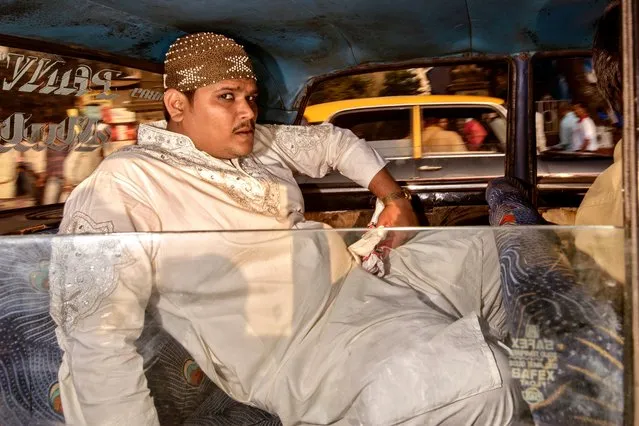
“I’m not scared of breaking the fourth wall”, Wallace has said of the photos where the subject is clearly aware of him taking the shot. “If they are looking at you in a photograph most photographers will think, oh, that’s not a good image. (But) people like to be involved and in the picture. You can see what they are thinking, see them talking”. (Photo by Dougie Wallace/The Guardian)

In Dougie Wallace’s photos of Mumbai taxis, the chatter, yelling, and constant horns of the city are almost audible. A selection of his images is on show at Gayfield Creative Spaces, Edinburgh, as part of the Retina photography festival until 30 July. For four years, the Glasgow-born Wallace focused his photos on one kind of taxi in particular: the Premier Padmini, a 1960s workhorse painted in black and yellow. Locally known as “Kaali-Peeli”, there were once more than 60,000 of them in the Indian city. But thanks to laws restricting pollution, the cars now are fast disappearing from Mumbai’s streets. (Photo by Dougie Wallace/The Guardian)
Details
13 Jul 2016 13:50:00
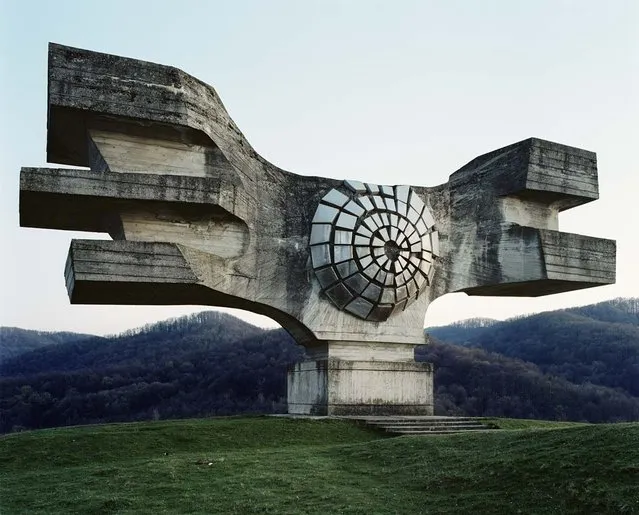
The monument of Ilirska Bistrica was designed by Janez Lenassi and built in 1965. It is dedicated to Slovenian soldiers that fell in World War II. (Photo by Jan Kempenaers)

The brutalist war memorials found throughout the former Yugoslavia were weird enough when they were built in the 1960s and 70s. Today, separated by the end of an architectural movement and the disintegration of the country, they seem almost alien. Belgian photographer Jan Kempenaers treats them purely as artistic objects in his book, “Spomenik”, named for the Serb-Croat word for monument. Known for photographing geographical oddities, Kempenaers was captivated by the spomenik after seeing them in an art encyclopedia. After hearing that many had been destroyed or abandoned, he set out to record what was left. (Photo by Jan Kempenaers)
Details
18 Aug 2014 09:07:00
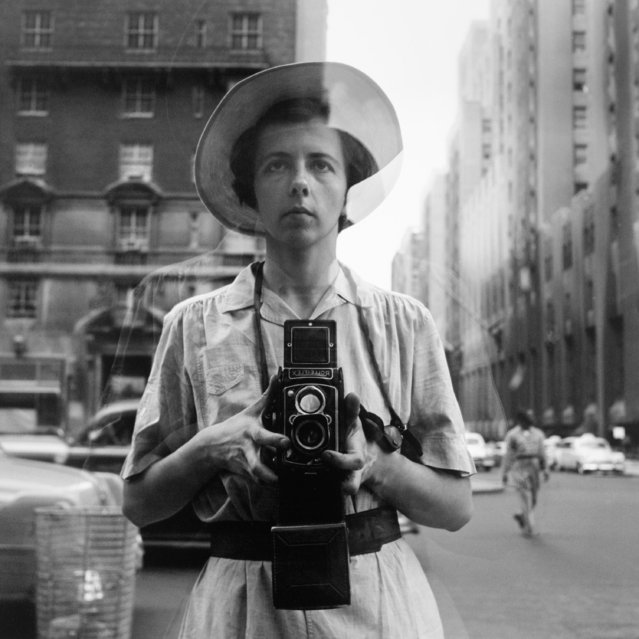
This 1950s photo provided by the Estate of Vivian Maier and John Maloof Collection shows Maier in a self-portrait as she looks into a storefront wearing a hat in New York. (Photo by Vivian Maier/Estate of Vivian Maier and John Maloof Collection via AP Photo)

This 1950s photo provided by the Estate of Vivian Maier and John Maloof Collection shows Maier in a self-portrait as she looks into a storefront wearing a hat in New York. New research about Maier shows the enigmatic Chicago nanny was obsessive about honing her skills as a photographer starting in 1950. (Photo by Vivian Maier/Estate of Vivian Maier and John Maloof Collection via AP Photo)
Details
29 Sep 2017 07:40:00
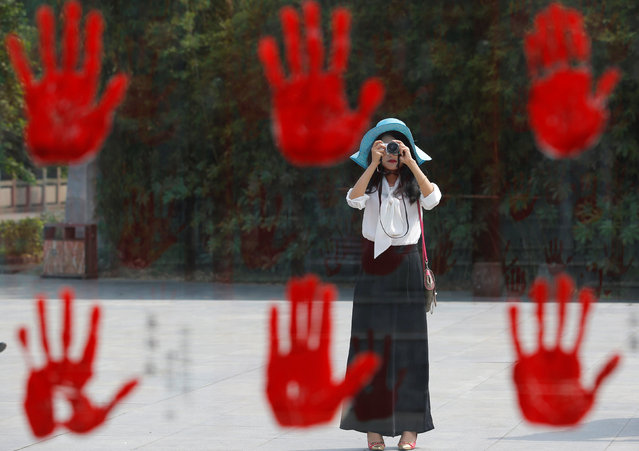
A visitor takes a picture of a display bearing hand prints of war heroes from the War of Resistance against Japan, at Jianchuan Museum Cluster in Anren, Sichuan Province, China, May 13, 2016. (Photo by Kim Kyung-Hoon/Reuters)

A visitor takes a picture of a display bearing hand prints of war heroes from the War of Resistance against Japan, at Jianchuan Museum Cluster in Anren, Sichuan Province, China, May 13, 2016. Tucked away in southwestern China's Sichuan province, a private collector stands virtually alone in exhibiting relics from the 1966-1976 Cultural Revolution. Monday marks the 50th anniversary of the start of the political movement, with no official commemorations planned. Official records whitewash the details of both periods, but admit that Mao made major mistakes. (Photo by Kim Kyung-Hoon/Reuters)
Details
16 May 2016 10:49:00
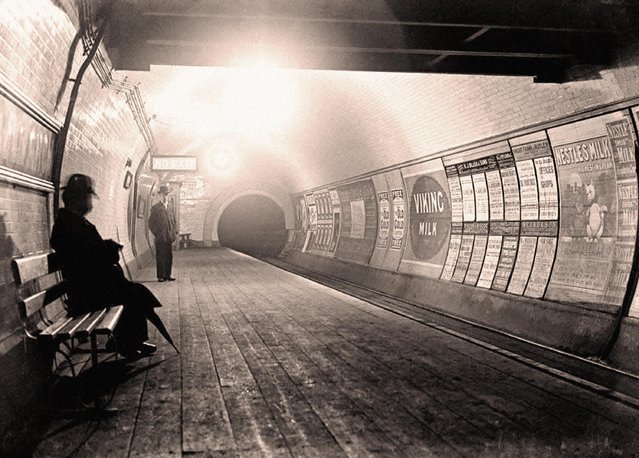
A man sits waiting for a train on the London Underground in 1890, when the platform floors were still made from wooden floorboards. (Photo by Hi-Story/Alamy Stock Photo)

A man sits waiting for a train on the London Underground in 1890, when the platform floors were still made from wooden floorboards. (Photo by Hi-Story/Alamy Stock Photo)
Details
31 May 2017 06:53:00
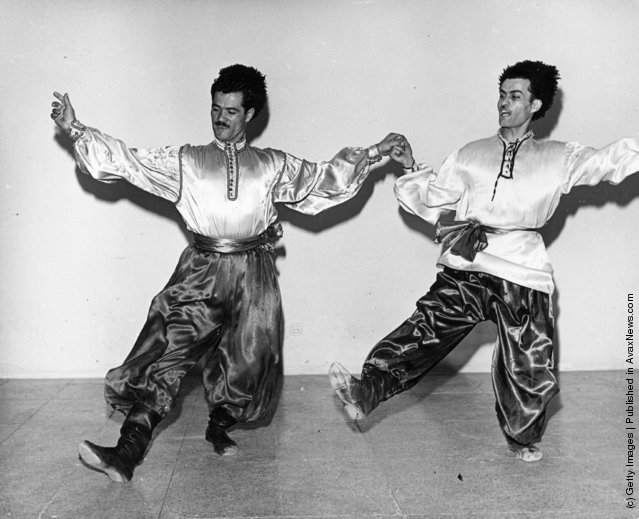
1961: Two traditional folk dancers performing in Teheran, Iran

Two traditional folk dancers performing in Teheran, Iran. (Photo by Keystone Features/Getty Images). 25th January 1961
Details
07 Dec 2011 12:54:00
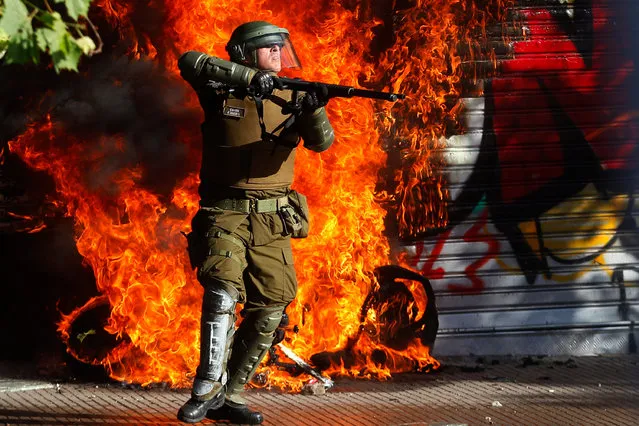
A member of the riot police gets ready to repel the attacks of protesters during a protest against President Sebastian Piñera during the seventh day of protests against President Sebastian Piñera on October 24, 2019 in Santiago, Chile. Although President Sebastian Piñera announced measures to improve equality, unions called for a national strike and demonstrations continue as casualties are now at least 18. Demands behind the protest include issues like health care, pension system, privatization of water, public transport, education, social mobility and corruption. (Photo by Marcelo Hernandez/Getty Images)

A member of the riot police gets ready to repel the attacks of protesters during a protest against President Sebastian Piñera during the seventh day of protests against President Sebastian Piñera on October 24, 2019 in Santiago, Chile. Although President Sebastian Piñera announced measures to improve equality, unions called for a national strike and demonstrations continue as casualties are now at least 18. Demands behind the protest include issues like health care, pension system, privatization of water, public transport, education, social mobility and corruption. (Photo by Marcelo Hernandez/Getty Images)
Details
26 Oct 2019 00:07:00


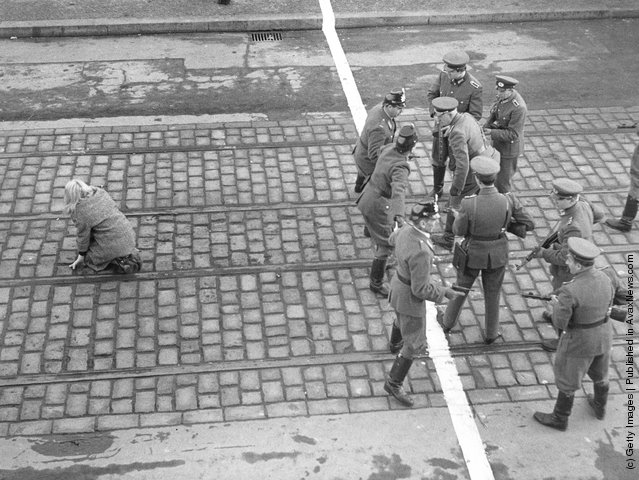
“The Berlin Wall (German: Berliner Mauer) was a barrier constructed by the German Democratic Republic (GDR, East Germany) starting on 13 August 1961, that completely cut off West Berlin from surrounding East Germany and from East Berlin. The barrier included guard towers placed along large concrete walls, which circumscribed a wide area (later known as the “death strip”) that contained anti-vehicle trenches, “fakir beds” and other defenses. The Soviet-dominated Eastern Bloc officially claimed that the wall was erected to protect its population from fascist elements conspiring to prevent the “will of the people” in building a socialist state in East Germany. However, in practice, the Wall served to prevent the massive emigration and defection that marked Germany and the communist Eastern Bloc during the post-World War II period”. – Wikipedia

Photo: West Berlin policemen and East German Volkspolizei face each other across the border in Berlin, circa 1955. (Photo by Three Lions/Hulton Archive/Getty Images)
Details
22 May 2011 10:49:00