Loading...
Done


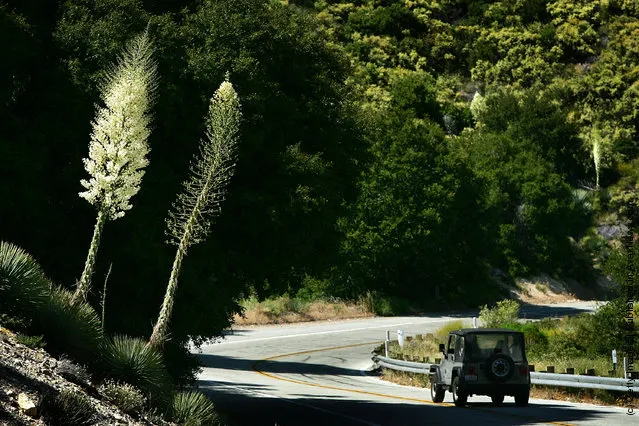
“Yucca is a genus of perennial shrubs and trees in the agave family, Agavaceae. Its 40-50 species are notable for their rosettes of evergreen, tough, sword-shaped leaves and large terminal panicles of white or whitish flowers. They are native to the hot and dry (arid) parts of North America, Central America, South America, and the Caribbean. Early reports of the species were confused with the cassava (Manihot esculenta). Consequently, Linnaeus mistakenly derived the generic name from the Carib word for the latter, yuca. It is also colloquially known in the midwest United States as “Ghosts in the graveyard”, as it is commonly found growing in rural graveyards and when in bloom the flowers appear as an apparition floating.” – Wikipedia

Photo: A yucca standing among flowers bursts forth a very large stalk of flowers as a heavy wildflower bloom on June 21, 2005 in the Angeles National Forest northwest of La Canada, California. (Photo by David McNew/Getty Images)
Details
29 Mar 2011 07:31:00
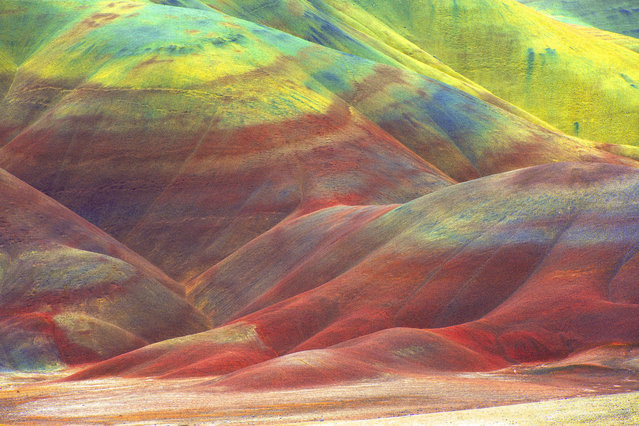
Layers of breathtaking colour streak the rolling hills of this vast desert, making the landscape appear as though it has been tie-dyed. The natural phenomenon, nicknamed the “Painted Desert”, was formed when the area was once a river floodplain. (Photo by Mark Brodkin/Solent News/SIPA Press)

Layers of breathtaking colour streak the rolling hills of this vast desert, making the landscape appear as though it has been tie-dyed. The natural phenomenon, nicknamed the “Painted Desert”, was formed when the area was once a river floodplain. Each colour corresponds to a different underground geological feature – rocks which have seemingly dyed the layers of earth above. Formed from volcanic activity, the hills at the John Day Fossil Beds National Monument in East Central Oregon, USA, are almost bursting with colour. Pictured: The colourful hills at the John Day Fossil Beds National Monument in East Central Oregon, USA. (Photo by Mark Brodkin/Solent News/SIPA Press)
Details
30 Jul 2014 11:00:00
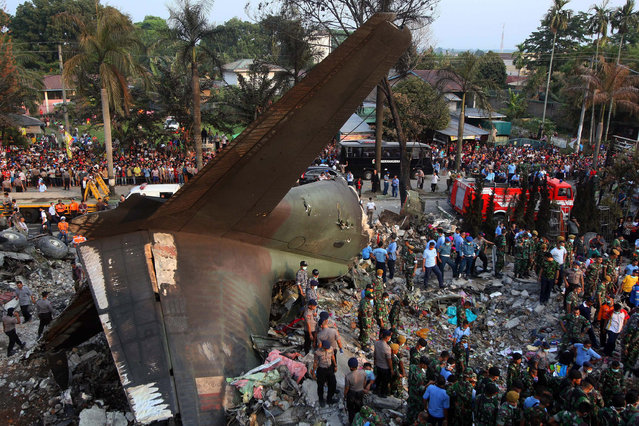
Indonesian rescuers search for victims of the crashed military airplane in Medan, North Sumatra, Indonesia, 30 June 2015. At least people 49 people were killed after an Indonesian military plane crashed in North Sumatra and burst into flames, officials said. Air Force chief Air Marshal Agus Supriatna said there were no survivors after the plane ploughed into houses and commercial buildings in Medan, the country's third largest city. (Photo by Dedi Sahputra/EPA)

Indonesian rescuers search for victims of the crashed military airplane in Medan, North Sumatra, Indonesia, 30 June 2015. At least people 49 people were killed after an Indonesian military plane crashed in North Sumatra and burst into flames, officials said. Air Force chief Air Marshal Agus Supriatna said there were no survivors after the plane ploughed into houses and commercial buildings in Medan, the country's third largest city. The plane left Jakarta with 113 people aboard, including military personnel and their relatives, but it was not clear how many continued the journey to Medan after stopovers in Pekanbaru and Dumai, Agus said. (Photo by Dedi Sahputra/EPA)
Details
01 Jul 2015 13:30:00
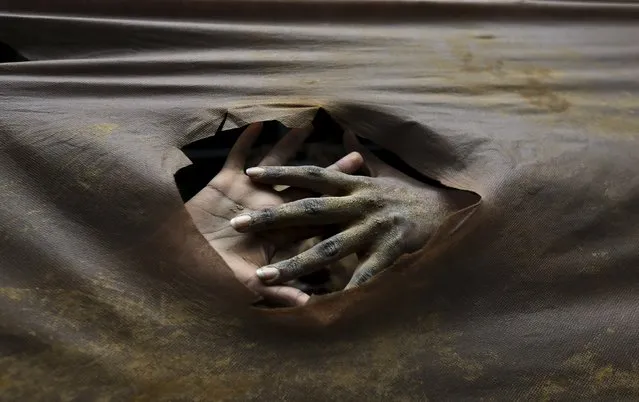
An environmental activist performs during a protest in front of the headquarters of Brazilian mining company Vale SA in downtown Rio de Janeiro, Brazil, November 16, 2015. (Photo by Sergio Moraes/Reuters)

An environmental activist performs during a protest in front of the headquarters of Brazilian mining company Vale SA in downtown Rio de Janeiro, Brazil, November 16, 2015. The collapse of two dams at a Brazilian mine, owned by Vale SA and BHP Billiton Ltd, has cut off drinking water for quarter of a million people and saturated waterways downstream with dense orange sediment that could wreck the ecosystem for years to come. Nine people were killed, 19 are still listed as missing and 500 people were displaced from their homes when the dams burst at an iron ore mine in southeastern Brazil on November 5. (Photo by Sergio Moraes/Reuters)
Details
18 Nov 2015 08:00:00


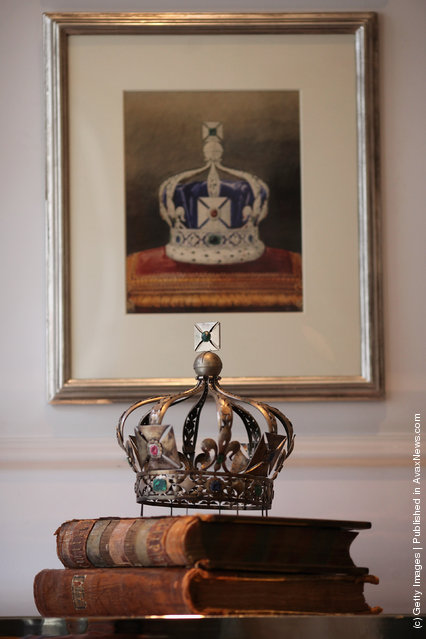
A preparatory model of the Imperial State Crown of India worn in 1911 by King George V stands next to original ledgers dating from 1735 in Garrard's flagship store in Mayfair on April 6, 2011 in London, England. Garrard is the world's oldest jewellers having been founded by George Wickes in 1735 and soon after appointed as goldsmith to the Prince of Wales. For over 160 years Garrard held the title of Crown Jeweller, bestowed by Queen Victoria in 1843, Garrard have served six successive monarchs. They have produced several royal crowns as well as the engagement ring presented to Kate Middleton by Prince William and formerly Princess Diana's engagement ring. (Photo by Oli Scarff/Getty Images)
Details
17 Apr 2011 10:22:00
Brian Tomlinsons ink artwork. (Photo by Brian Tomlinsons/Caters News Agency)

These ink-redible, explosive masterpieces are like say-what-you see inkblots tests only in water. The vibrant colors burst from Brian Tomlinsons works, appearing as though they may be coloured ash clouds from an erupting volcano, rather than simply everyday substances. By doing so, Brian challenges viewers to identify what images can be imagined when mixing one fluid with another. In order to shoot the series, entitled Liquid Ink Art, Brain, 40, drops different coloured inks into a fish tank full of water before capturing high-speed shots with a flash. Here: Brian Tomlinsons ink artwork. (Photo by Brian Tomlinsons/Caters News Agency)
Details
15 Jun 2017 08:32:00
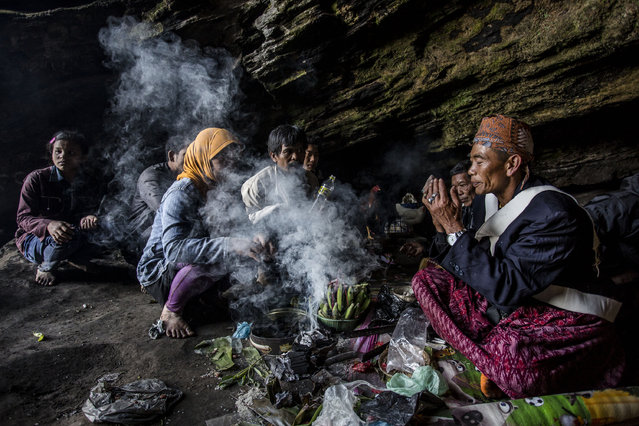
A Tenggerese shaman praying for worshippers at Widodaren cave during the Tenggerese Hindu Yadnya Kasada festival on July 31, 2015 in Probolinggo, East Java, Indonesia. The festival is the main festival of the Tenggerese people and lasts about a month. On the fourteenth day, the Tenggerese make the journey to Mount Bromo to make offerings of rice, fruits, vegetables, flowers and livestock to the mountain gods by throwing them into the volcano's caldera. (Photo by Ulet Ifansasti/Getty Images)

A Tenggerese shaman praying for worshippers at Widodaren cave during the Tenggerese Hindu Yadnya Kasada festival on July 31, 2015 in Probolinggo, East Java, Indonesia. The festival is the main festival of the Tenggerese people and lasts about a month. On the fourteenth day, the Tenggerese make the journey to Mount Bromo to make offerings of rice, fruits, vegetables, flowers and livestock to the mountain gods by throwing them into the volcano's caldera. The origin of the festival lies in the 15th century when a princess named Roro Anteng started the principality of Tengger with her husband Joko Seger, and the childless couple asked the mountain Gods for help in bearing children. The legend says the Gods granted them 24 children but on the provision that the 25th must be tossed into the volcano in sacrifice. The 25th child, Kesuma, was finally sacrificed in this way after initial refusal, and the tradition of throwing sacrifices into the caldera to appease the mountain Gods continues today. (Photo by Ulet Ifansasti/Getty Images)
Details
01 Aug 2015 12:07:00
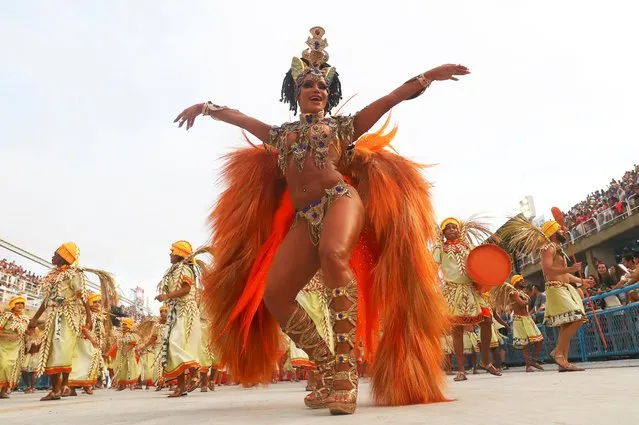
A reveller from Unidos da Tijuca samba school performs during the first night of the Carnival parade at the Sambadrome in Rio de Janeiro, Brazil on March 4, 2019. (Photo by Pilar Olivares/Reuters)

A reveller from Unidos da Tijuca samba school performs during the first night of the Carnival parade at the Sambadrome in Rio de Janeiro, Brazil on March 4, 2019. (Photo by Pilar Olivares/Reuters)
Details
08 Mar 2019 00:05:00