Loading...
Done
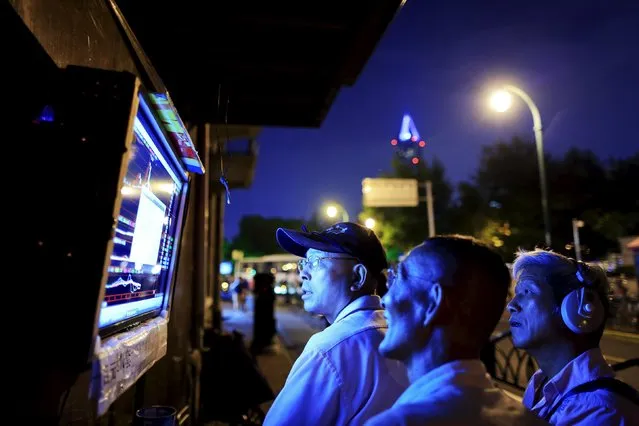
Shen Yuxi (L), introduces analysis software to investors at a “street stock salon” in central Shanghai, China, September 5, 2015. Shen carries a TV screen on his electronic bike to the "salon" every weekends where he sets it up on the wall outside a brokerage house. Shen's been selling analysis software at "the salon" for more than 10 years. (Photo by Aly Song/Reuters)

Some are in it just for the money, others to help buy a meal. Then there are those who trade for fun or to spend time among friends. Millions of investors – pensioners, security guards, high-school students – dominate China's stock markets, conducting about 80 percent of all trades. Retirees gather in brokerage houses dotted around China also to enjoy some company and savour the air conditioning on hot days. Some start as young as 13, trading from home with an eye on future careers in finance. Winning isn't guaranteed. This year, among the most turbulent in China's financial history, its stock markets more than doubled in the six months to May, only to crash amid concerns that growth in the country, which makes everything from cars to steel, is slowing faster than previously thought. (Photo by Aly Song/Reuters)
Details
13 Oct 2015 08:00:00
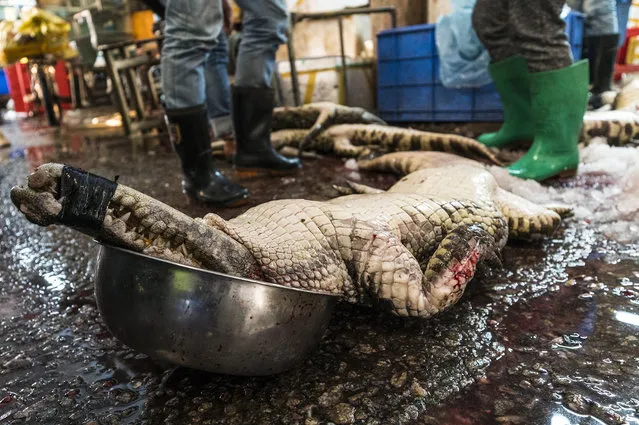
A dead crocodile is seen on Huangsha Seafood Market in Guangzhou, Guandong Province, China, 22 January 2018. Tsukiji Market of China or Huangsha Seafood Market is biggest one in Southern China and one of the biggest in China, as there are literally hundreds of different varieties of fish and seafood scattered throughout the market. Since the proximity of the fish market is so close to the Zhujiang River, it's quite easy for the large fishing vessels and fishermen to unload their fresh catch right at the market, which ensures that the fish and seafood remain fresh. Fish and other seafood are coming there from all around the globe. Seafood Market is full of different kinds of live fish, live shellfish, and live seafood on display in crystal clear tanks and it's common to see 5-star chefs, retailers and expats to source for fresh and high-quality seafood supplies for reasonable prices. While it is a wholesale fish market, since many Guangzhou restaurants and businesses come to purchase their seafood here, the public is welcome to come and even purchase. Many local Chinese have the vendors slice up fresh salmon fillets to take home or carry seafood into one of the nearby specialty restaurants, where they will cook if for them and serve it with vegetables and other side dishes of their choice. One of the biggest attractions for both, tourists and buyers, on market are crocodiles, which are brought there alive in wooden cases with taped jaws so they can?t accidentally bite. They are from crocodile farms from Guangdong, China and from Vietnam. Crocodile meat is popular in most Asian countries and it is consider as delicate one. Crocodiles weight from 10 to 25 kg and bigger ones are about 2 years old. They cost about 70 RMB (8.90 EURO) when bout as whole, or if you buy as parts most expensive and appreciated parts are paws 120 RMB (15.26 EURO) per kg, and tail 100 RMB (12.72 EURO) per kg. (Photo by Aleksandar Plavevski/EPA/EFE)

A dead crocodile is seen on Huangsha Seafood Market in Guangzhou, Guandong Province, China, 22 January 2018. Tsukiji Market of China or Huangsha Seafood Market is biggest one in Southern China and one of the biggest in China, as there are literally hundreds of different varieties of fish and seafood scattered throughout the market. (Photo by Aleksandar Plavevski/EPA/EFE)
Details
17 Apr 2020 00:05:00
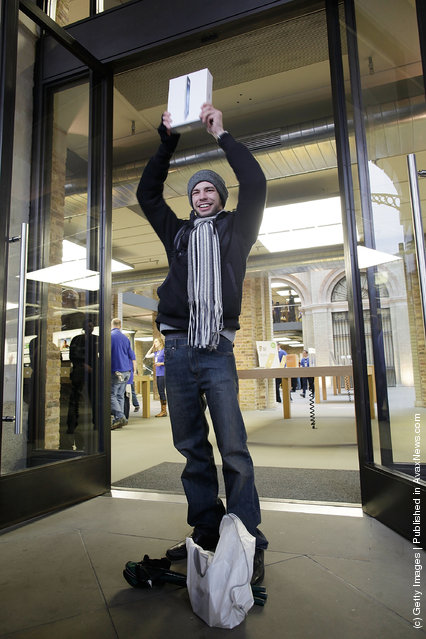
Craig Jobbins, first buyer of the new iPad to leave the Apple Store, poses for photographers in Covent Garden on March 16, 2012 in London

Craig Jobbins, first buyer of the new iPad to leave the Apple Store, poses for photographers in Covent Garden on March 16, 2012 in London, England. (Photo by Matthew Lloyd/Getty Images)
Details
18 Mar 2012 09:05:00
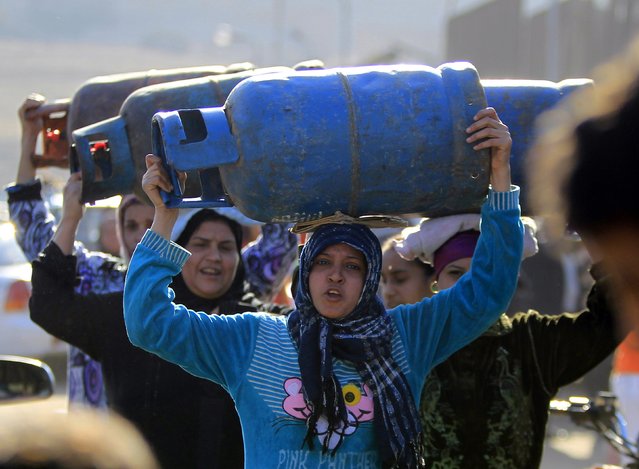
Women carry gas cylinders to fill them at a distribution point in Cairo January 19, 2015. Egypt is going through its worst energy crisis in decades and is seeking fresh sources of natural gas, which powers most of its homes and factories. (Photo by Mohamed Abd El Ghany/Reuters)

Women carry gas cylinders to fill them at a distribution point in Cairo January 19, 2015. Egypt is going through its worst energy crisis in decades and is seeking fresh sources of natural gas, which powers most of its homes and factories. (Photo by Mohamed Abd El Ghany/Reuters)
Details
20 Jan 2015 13:21:00
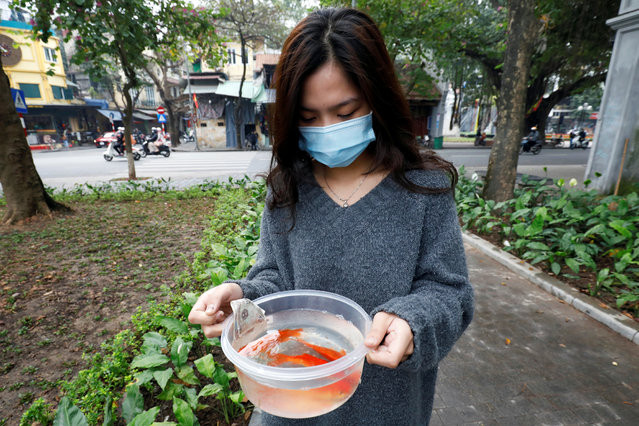
A woman prepares to release carps to Hoan Kiem lake on Kitchen God's Day as part of the traditional Vietnamese Lunar New Year celebrations, the biggest festival of the year in Hanoi, Vietnam on February 4, 2021. (Photo by Kham via Reuters)

A woman prepares to release carps to Hoan Kiem lake on Kitchen God's Day as part of the traditional Vietnamese Lunar New Year celebrations, the biggest festival of the year in Hanoi, Vietnam on February 4, 2021. (Photo by Kham via Reuters)
Details
17 Mar 2021 10:17:00
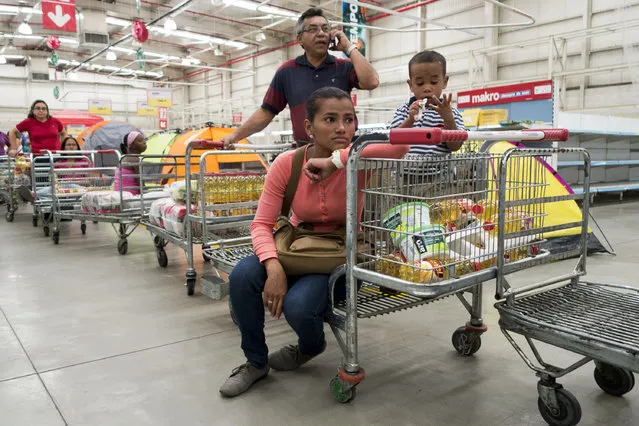
People line up to pay inside a Makro supermarket in Caracas, January 9, 2015. (Photo by Jorge Silva/Reuters)

People line up to pay inside a Makro supermarket in Caracas, January 9, 2015. Venezuela's socialist government decreed an “economic emergency” on Friday that will expand its powers and published the first data in a year that shows the depth of a recession fueled by low oil prices and a sputtering state-led model. (Photo by Jorge Silva/Reuters)
Details
18 Jan 2016 08:03:00
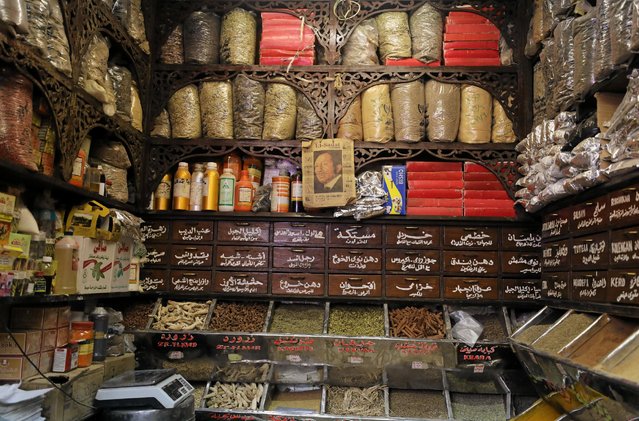
General view of a herbal store in Cairo, Egypt January 10, 2017. (Photo by Mohamed Abd El Ghany/Reuters)

General view of a herbal store in Cairo, Egypt January 10, 2017. In an economic crisis that has led to a shortage of medicines, Egyptians are skipping trips to drug stores and instead turning to herbal remedies to treat every-day illnesses. (Photo by Mohamed Abd El Ghany/Reuters)
Details
13 Jan 2017 08:43:00
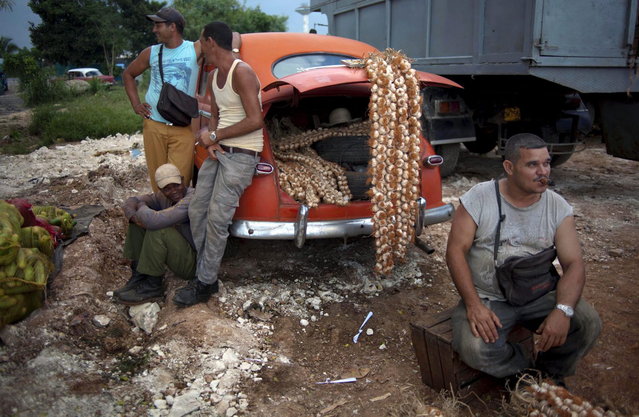
In this September 30, 2013 photo, farmers wait for customers next to their 1950s Chevrolet loaded with garlic for sale at the 114th Street Market on the outskirts of Havana, Cuba. The market s bustle is a result of economic reforms begun in 2010 by President Raul Castro, which includes relaxing rules on private farming. (Photo by Ramon Espinosa/AP Photo)

In this September 30, 2013 photo, farmers wait for customers next to their 1950s Chevrolet loaded with garlic for sale at the 114th Street Market on the outskirts of Havana, Cuba. The market s bustle is a result of economic reforms begun in 2010 by President Raul Castro, which includes relaxing rules on private farming. (Photo by Ramon Espinosa/AP Photo)
Details
02 Oct 2013 11:32:00