Loading...
Done
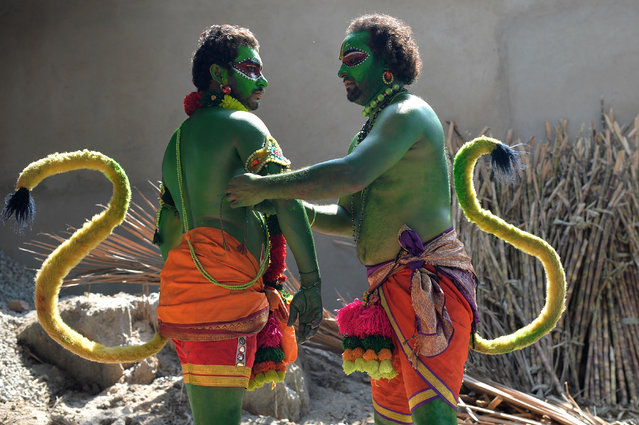
Indian artists dress up as the Hindu deity “Hanuman” – the monkey God in Hindu mythology – to mark the Rama Navami festival in Bangalore on March 25, 2018. Rama Navami is a spring Hindu festival that celebrates the birthday of the deity Rama. He is particularly important to the Vaishnavism tradition of Hinduism, as the seventh avatar of Vishnu. (Photo by Manjunath Kiran/AFP Photo)

Indian artists dress up as the Hindu deity “Hanuman” – the monkey God in Hindu mythology – to mark the Rama Navami festival in Bangalore on March 25, 2018. Rama Navami is a spring Hindu festival that celebrates the birthday of the deity Rama. He is particularly important to the Vaishnavism tradition of Hinduism, as the seventh avatar of Vishnu. (Photo by Manjunath Kiran/AFP Photo)
Details
27 Mar 2018 00:03:00
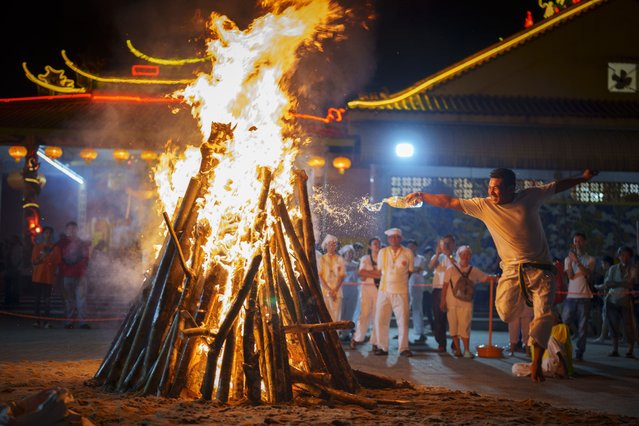
A man set wood on fire to prepare for worshippers to walk barefoot over burning coals during the Nine Emperor Gods festival at a temple in Kuala Lumpur, Malaysia, Monday, October 7, 2024. (Photo by Vincent Thian/AP Photo)

A man set wood on fire to prepare for worshippers to walk barefoot over burning coals during the Nine Emperor Gods festival at a temple in Kuala Lumpur, Malaysia, Monday, October 7, 2024. (Photo by Vincent Thian/AP Photo)
Details
23 Oct 2024 02:39:00
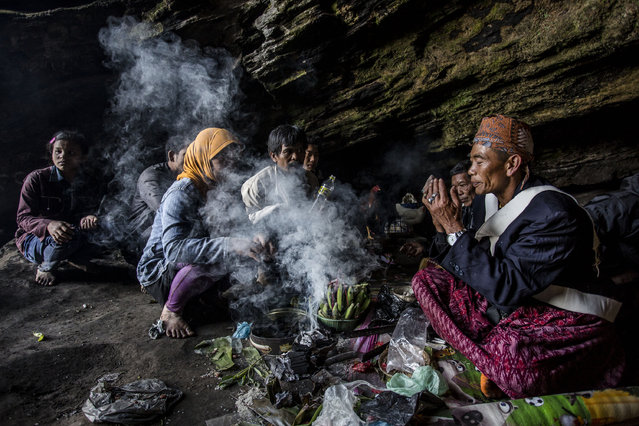
A Tenggerese shaman praying for worshippers at Widodaren cave during the Tenggerese Hindu Yadnya Kasada festival on July 31, 2015 in Probolinggo, East Java, Indonesia. The festival is the main festival of the Tenggerese people and lasts about a month. On the fourteenth day, the Tenggerese make the journey to Mount Bromo to make offerings of rice, fruits, vegetables, flowers and livestock to the mountain gods by throwing them into the volcano's caldera. (Photo by Ulet Ifansasti/Getty Images)

A Tenggerese shaman praying for worshippers at Widodaren cave during the Tenggerese Hindu Yadnya Kasada festival on July 31, 2015 in Probolinggo, East Java, Indonesia. The festival is the main festival of the Tenggerese people and lasts about a month. On the fourteenth day, the Tenggerese make the journey to Mount Bromo to make offerings of rice, fruits, vegetables, flowers and livestock to the mountain gods by throwing them into the volcano's caldera. The origin of the festival lies in the 15th century when a princess named Roro Anteng started the principality of Tengger with her husband Joko Seger, and the childless couple asked the mountain Gods for help in bearing children. The legend says the Gods granted them 24 children but on the provision that the 25th must be tossed into the volcano in sacrifice. The 25th child, Kesuma, was finally sacrificed in this way after initial refusal, and the tradition of throwing sacrifices into the caldera to appease the mountain Gods continues today. (Photo by Ulet Ifansasti/Getty Images)

Details
01 Aug 2015 12:07:00
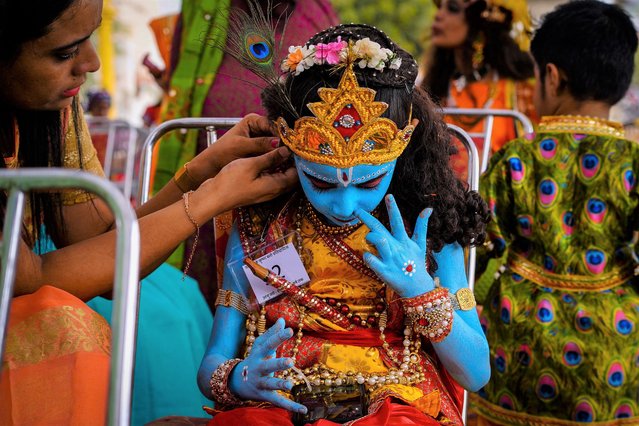
A child dressed as Hindu god Krishna watches a mobile phone as a woman gives finishing touches to his costume on the occasion of “Janmashtami” festival marking the birth of Krishna in Ajmer on August 30, 2021. (Photo by Himanshu Sharma/AFP Photo)

A child dressed as Hindu god Krishna watches a mobile phone as a woman gives finishing touches to his costume on the occasion of “Janmashtami” festival marking the birth of Krishna in Ajmer on August 30, 2021. (Photo by Himanshu Sharma/AFP Photo)
Details
07 Sep 2021 08:31:00
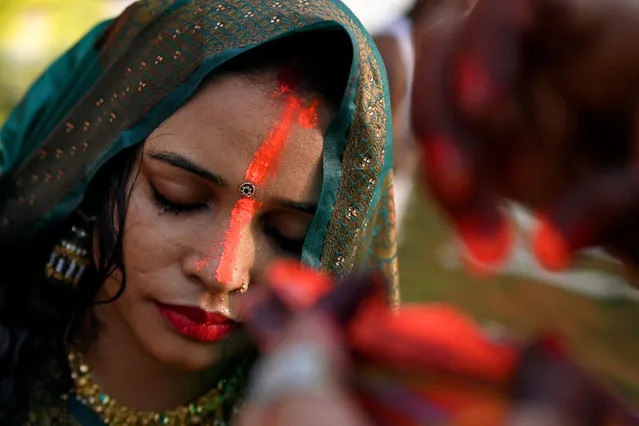
A devotee offers prayers to Sun God while standing inside an artificial pond near the banks of river Yamuna on the occasion of the Hindu festival of “Chhath Puja” in New Delhi on October 30, 2022. (Photo by Sajjad Hussain/AFP Photo)

A devotee offers prayers to Sun God while standing inside an artificial pond near the banks of river Yamuna on the occasion of the Hindu festival of “Chhath Puja” in New Delhi on October 30, 2022. (Photo by Sajjad Hussain/AFP Photo)
Details
08 Nov 2022 04:18:00
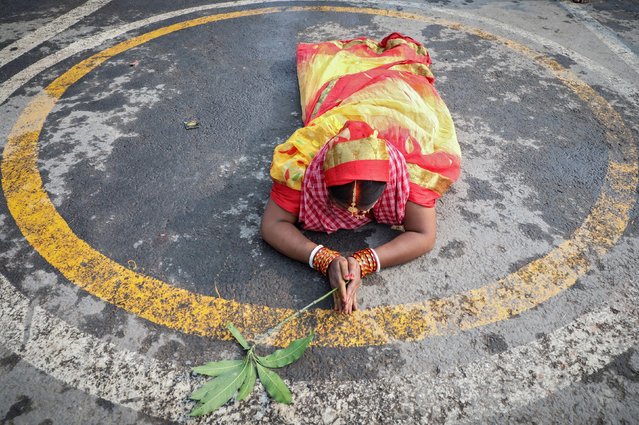
A Hindu devotee lies on the banks of river Ganges she worships the Sun god during the religious festival of Chhath Puja, amidst the spread of the coronavirus disease (COVID-19), in Kolkata, India November 20, 2020. (Photo by Rupak De Chowdhuri/Reuters)

A Hindu devotee lies on the banks of river Ganges she worships the Sun god during the religious festival of Chhath Puja, amidst the spread of the coronavirus disease (COVID-19), in Kolkata, India on November 20, 2020. (Photo by Rupak De Chowdhuri/Reuters)
Details
25 Nov 2020 00:01:00
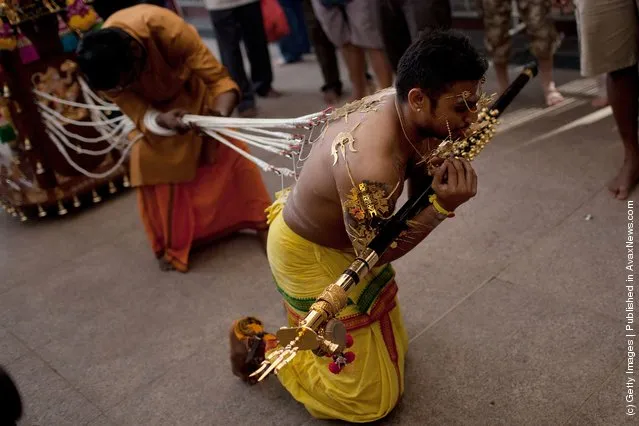
Singapore Hindus Celebrate Thaipusam Festival

“Kavadi Attam is a dance performed by the devotees during the ceremonial worship of Murugan, the Tamil God of War. It is often performed during the festival of Thaipusam and emphasizes debt bondage. The Kavadi itself is a physical burden through which the devotees implore for help from the God Murugan”. – Wikipedia

Photo: A devotee pulls his procession burden connected by hooks pierced in his back during the Thaipusam procession at Sri Srinivasa Perumal Temple on February 7, 2012 in Singapore. (Photo by Chris McGrath/Getty Images)
Details
07 Feb 2012 10:22:00
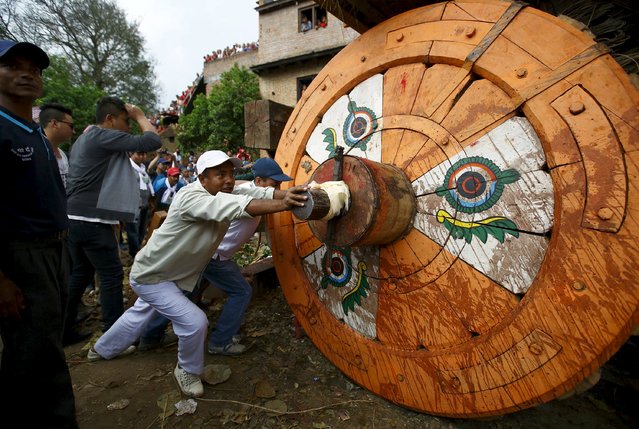
Devotees push the chariot of Rato Machhindranath during the chariot festival at Bungamati in Lalitpur April 22, 2015. Rato Machhindranath is known as the god of rain and both Hindus and Buddhists worship Machhindranath for good rain to prevent drought during the rice harvest season. (Photo by Navesh Chitrakar/Reuters)

Devotees push the chariot of Rato Machhindranath during the chariot festival at Bungamati in Lalitpur April 22, 2015. Rato Machhindranath is known as the god of rain and both Hindus and Buddhists worship Machhindranath for good rain to prevent drought during the rice harvest season. (Photo by Navesh Chitrakar/Reuters)
Details
23 Apr 2015 12:21:00