Loading...
Done
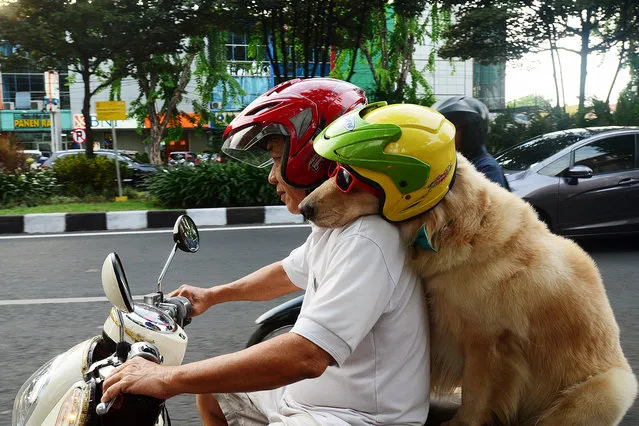
Cool rider Ace on the back on the motorbike, on January 12, 2015, in Surabaya, Indonesia. A pair of dogs enjoy a bit of bark-and-ride – as they weave through Indonesiaís traffic on the back of a motorcycle. Wearing red-framed sunglasses and a helmet the two golden retrievers happily sandwich their owner on the fast bike. (Photo by Jefta Images/Barcroft Media/ABACAPress)

Cool rider Ace on the back on the motorbike, on January 12, 2015, in Surabaya, Indonesia. A pair of dogs enjoy a bit of bark-and-ride – as they weave through Indonesiaís traffic on the back of a motorcycle. Wearing red-framed sunglasses and a helmet the two golden retrievers happily sandwich their owner on the fast bike. Unsurprisingly, the sight of the docile dogs hitching a fast ride in Surabaya, Indonesia, attracts a lot of attention from onlookers. Ace and Armani have been riding since they were just a few months old and now at the age of three the pair jump onto the bike whenever they think their owner is heading out. (Photo by Jefta Images/Barcroft Media/ABACAPress)
Details
29 Jan 2015 11:28:00
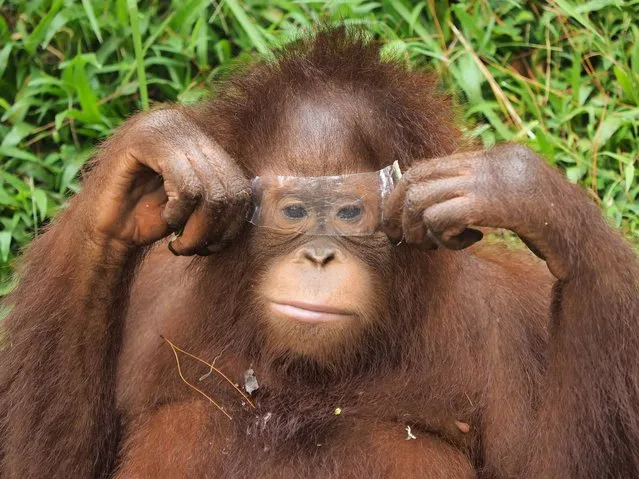
This sumatran orangutan named Kulsum was captured playing with a piece of broken bottle making a pair of makeshift sunglasses to ward off the sun in Jakarta, Indonesia in November 2022. Sumatran orangutans are critically endangered of the three orangutan species and are only found in the north of the Indonesian Island of Sumatra. An orangutan has a long lifespan and can live up to 30 years in the wild with many living up to 50. (Photo by Syahrul Ramadan/Media Drum Images)

This sumatran orangutan named Kulsum was captured playing with a piece of broken bottle making a pair of makeshift sunglasses to ward off the sun in Jakarta, Indonesia in November 2022. Sumatran orangutans are critically endangered of the three orangutan species and are only found in the north of the Indonesian Island of Sumatra. An orangutan has a long lifespan and can live up to 30 years in the wild with many living up to 50. (Photo by Syahrul Ramadan/Media Drum Images)
Details
15 Dec 2022 02:10:00
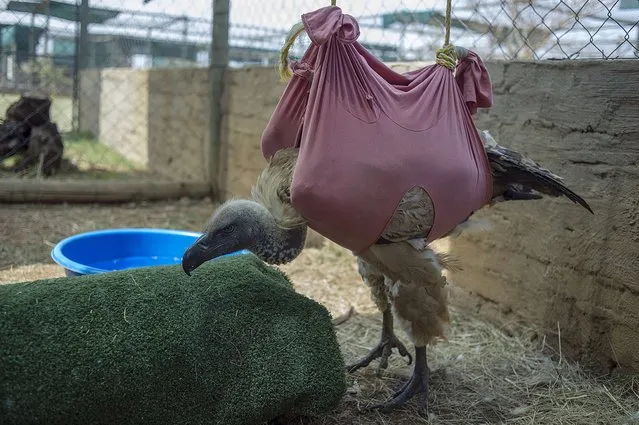
An injured vulture is treated at the VulPro Vulture Rehabilitation Centre in Hartebeepoortdam in the Magalisburg region on September 15, 2015. Confined to southern Africa, just under 4,000 breeding pairs of Cape Vultures remain in the wild, mostly in South Africa, Lesotho and Botswana. Unless conservation efforts are successful, Africa's largest vulture species may be facing eventual extinction. (Photo by Mujahid Safodien/AFP Photo)

An injured vulture is treated at the VulPro Vulture Rehabilitation Centre in Hartebeepoortdam in the Magalisburg region on September 15, 2015. Confined to southern Africa, just under 4,000 breeding pairs of Cape Vultures remain in the wild, mostly in South Africa, Lesotho and Botswana. Unless conservation efforts are successful, Africa's largest vulture species may be facing eventual extinction. (Photo by Mujahid Safodien/AFP Photo)
Details
19 Sep 2015 12:27:00
Photogenic Shar Pei And Cat Are The Cutest of Best Friends

Paddington the Shar Pei dog and his best friend cat named Butler are perhaps the cutest pair you've ever seen. The two of them live with their owner Annie Jacob and three other cats in Tasmania on the south coast of Australia and are pretty much inseparable.
Details
01 Dec 2015 11:13:00


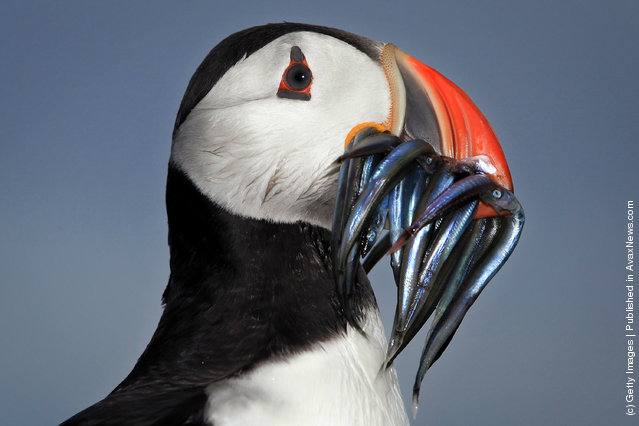
A Puffin returns to it's nest with a beak full of sand eels on June 25, 2011 on Inner Farne, England. The Farne Islands, which are run by the National Trust, are situated two to three miles off the Northumberland coastline. The archipeligo of 16-28 separate islands (depending on the tide) make the summer home to approximately 100,000 pairs of breeding seabirds including around 36,000 Puffins, 32,000 Guillemots and 2,000 pairs of Arctic Terns. The species of birds which nest in internationally important numbers include Shag, Sandwich Tern and Arctic Tern. The coastline around The Farnes are also the breeding ground to one of Europe's largest Grey Seal colonies with around 4,000 adults giving birth to 1500 pups every year. (Photo by Dan Kitwood/Getty Images)
Details
27 Jun 2011 12:58:00
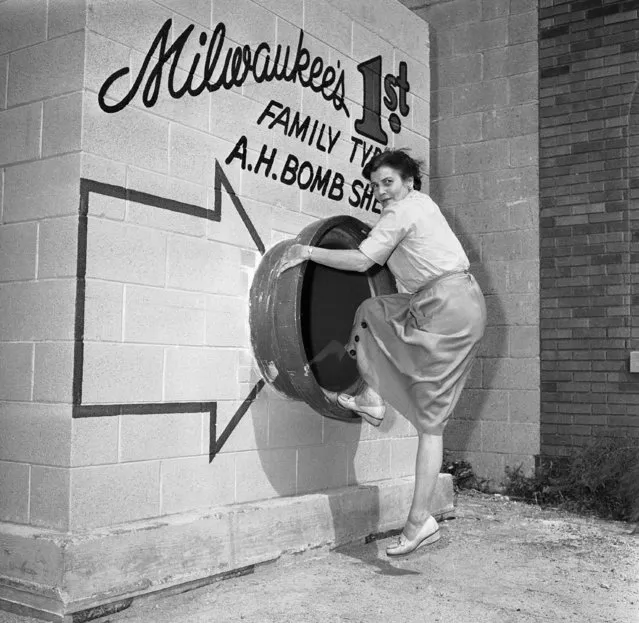
Mrs. Marie Graskamp of Milwaukee shows the different positions one might assume when entering the bomb shelter in Milwaukee  September 3, 1958. This circular entrance is about three feet in diameter. This is the entrance (according to the builders) that would connect to the cellar of a home assuming the shelter was in the ground for added protection. (Photo by AP Photo)

Mrs. Marie Graskamp of Milwaukee shows the different positions one might assume when entering the bomb shelter in Milwaukee September 3, 1958. This circular entrance is about three feet in diameter. This is the entrance (according to the builders) that would connect to the cellar of a home assuming the shelter was in the ground for added protection. If a bombing should occur, all members of family would proceed to the cellar and then through the circular port into the shelter. (Photo by AP Photo)
Details
04 Sep 2015 12:44:00
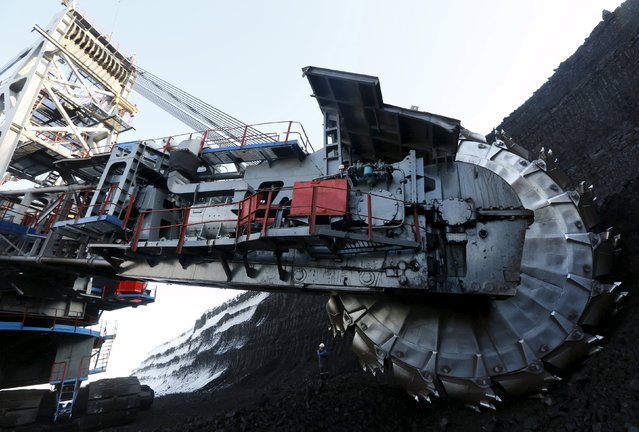
Master Sergey Suprun uses a portable radio set as he stands near a rotary dredge which works on the coal face of the Borodinsky opencast colliery, near the Siberian town of Borodino, east of Krasnoyarsk, Russia October 27, 2015. The Borodinsky colliery, 9 km (5.6 miles) long and more than 100 meters (328 feet) deep, annually produces more than 20 million tons of coal and is considered to be the biggest opencast coal mine in Russia, according to official representatives. (Photo by Ilya Naymushin/Reuters)

Master Sergey Suprun uses a portable radio set as he stands near a rotary dredge which works on the coal face of the Borodinsky opencast colliery, near the Siberian town of Borodino, east of Krasnoyarsk, Russia October 27, 2015. The Borodinsky colliery, 9 km (5.6 miles) long and more than 100 meters (328 feet) deep, annually produces more than 20 million tons of coal and is considered to be the biggest opencast coal mine in Russia, according to official representatives. (Photo by Ilya Naymushin/Reuters)
Details
31 Oct 2015 08:01:00
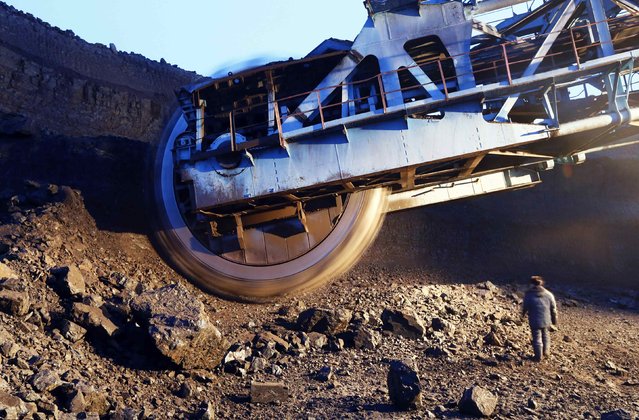
An employee walks near a rotary dredge which works on the coal face of the Borodinsky opencast colliery, near the Siberian town of Borodino, east of Krasnoyarsk, December 9, 2014. The Borodinsky colliery, 9 km (5.6 miles) long and more than 100 meters (328 feet) deep, annually produces more than 20 million tons of coal and is considered to be the biggest opencast coal mine in Russia, according to official representatives. (Photo by Ilya Naymushin/Reuters)

An employee walks near a rotary dredge which works on the coal face of the Borodinsky opencast colliery, near the Siberian town of Borodino, east of Krasnoyarsk, December 9, 2014. The Borodinsky colliery, 9 km (5.6 miles) long and more than 100 meters (328 feet) deep, annually produces more than 20 million tons of coal and is considered to be the biggest opencast coal mine in Russia, according to official representatives. (Photo by Ilya Naymushin/Reuters)
Details
11 Dec 2014 13:29:00