Loading...
Done
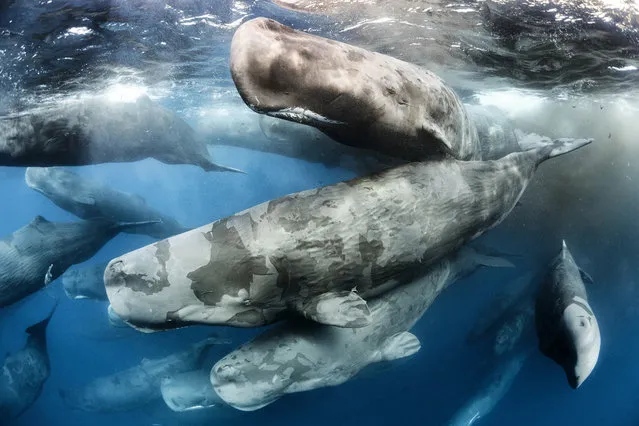
Giant gathering by Tony Wu. “The first indication that something extraordinary was going on were the blows, huge numbers of them – the exhalations of huge numbers of whales. Entering the water, the photographer witnessed an extraordinary scene. Hundreds, possibly thousands, of sperm whales were twirling and twisting through the water, bumping and rubbing against each other, and there was a cacophony of sound – the pulsation, buzz, creak and crackle of whale communication. The picture shows just a fraction of the scene, with the whales stacked up below. Undoubtedly, this was a clan gathering”. (Photo by Tony Wu/Unforgettable Underwater Photography/NHM)

A new book published by the UK Natural History Museum showcases some of the most memorable underwater photographs taken over the last few decades in its annual wildlife photographer of the year competition. Here: Giant gathering by Tony Wu. “The first indication that something extraordinary was going on were the blows, huge numbers of them – the exhalations of huge numbers of whales. Entering the water, the photographer witnessed an extraordinary scene”. (Photo by Tony Wu/Unforgettable Underwater Photography/NHM)
Details
17 Apr 2018 00:03:00
A demonstrator is carried away by plain-clothes police during a march against government reforms and cost-cutting measures in Brussels , October 7, 2015. (Photo by Francois Lenoir/Reuters)

A demonstrator is carried away by plain-clothes police during a march against government reforms and cost-cutting measures in Brussels , October 7, 2015. (Photo by Francois Lenoir/Reuters)
Details
10 Oct 2015 07:59:00
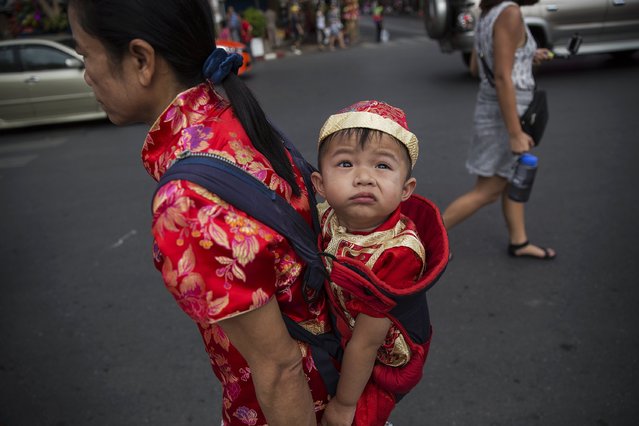
A woman carries her child, both wearing traditional red clothes celebrating the Chinese Lunar New Year in Bangkok February 19, 2015. (Photo by Damir Sagolj/Reuters)

A woman carries her child, both wearing traditional red clothes celebrating the Chinese Lunar New Year in Bangkok February 19, 2015. (Photo by Damir Sagolj/Reuters)
Details
20 Feb 2015 12:07:00
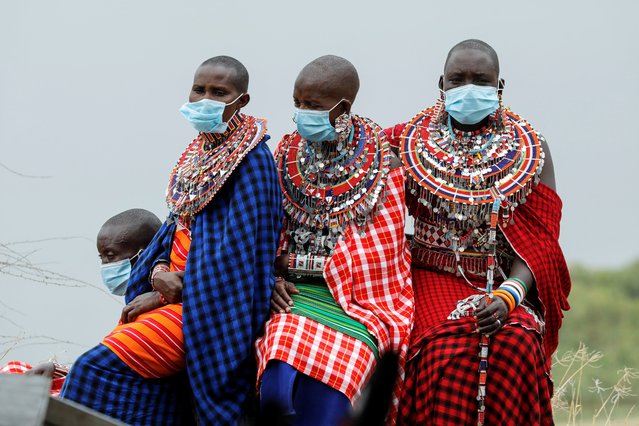
Masai women dressed in traditional clothes wear surgical masks as they wait for a ceremony marking World Elephant Day in the Amboseli National Park, Kenya, August 12, 2020. (Photo by Baz Ratner/Reuters)

Masai women dressed in traditional clothes wear surgical masks as they wait for a ceremony marking World Elephant Day in the Amboseli National Park, Kenya, August 12, 2020. (Photo by Baz Ratner/Reuters)
Details
23 Aug 2020 00:01:00
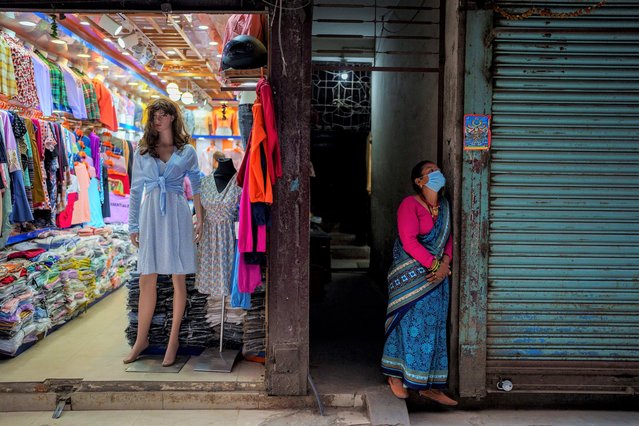
A Nepalese woman wearing a mask as a precaution against the coronavirus stands next to the clothing store in Kathmandu, Nepal, Tuesday, April 26, 2022. (Photo by Niranjan Shrestha/AP Photo)

A Nepalese woman wearing a mask as a precaution against the coronavirus stands next to the clothing store in Kathmandu, Nepal, Tuesday, April 26, 2022. (Photo by Niranjan Shrestha/AP Photo)
Details
19 Aug 2022 04:44:00
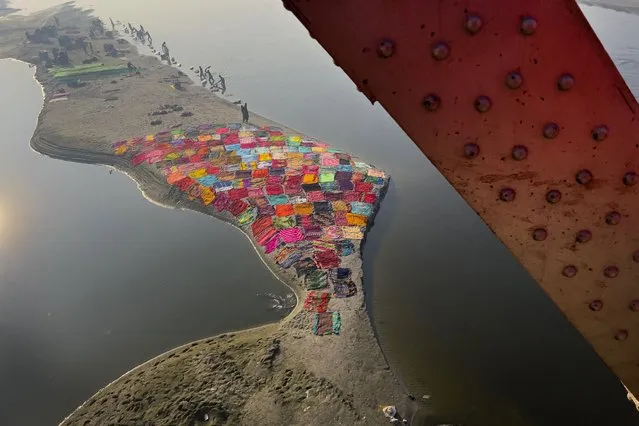
Washermen put their clothes out to dry on the banks of the River Yamuna as seen from a railway bridge near Agra, India, Saturday, December 17, 2022. (Photo by Rajesh Kumar Singh/AP Photo)

Washermen put their clothes out to dry on the banks of the River Yamuna as seen from a railway bridge near Agra, India, Saturday, December 17, 2022. (Photo by Rajesh Kumar Singh/AP Photo)
Details
22 Dec 2022 05:33:00
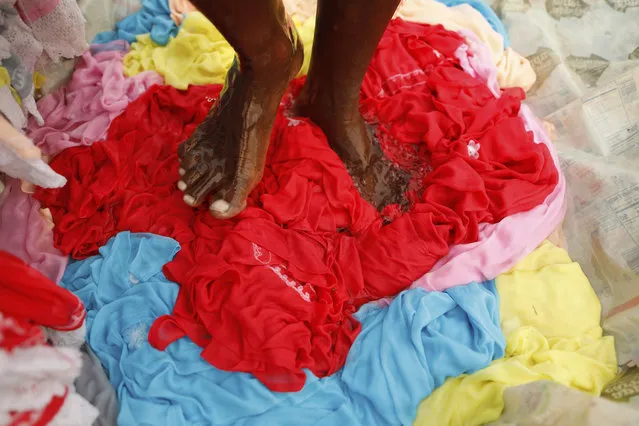
A dhobi, or a washerman washes cloths on the banks of the River Gomti in Lucknow, India, Saturday, September 12, 2020. Dhobis are traditional laundry workers who wash clothes by hand and dry them in the sun, an occupation which has been in existence for generations. Most cities in India have a Dhobi Ghat, or washermen's area, where the city's pile of clothes is laundered. This practice is still popular in India, despite of modern technology. Around 1,000 families work in Lucknow's Dhobi Ghat. However, in light of the novel coronavirus, their wages have decreased drastically. With each family earning around US$100-200 per month. (Photo by Rajesh Kumar Singh/AP Photo)

A dhobi, or a washerman washes cloths on the banks of the River Gomti in Lucknow, India, Saturday, September 12, 2020. Dhobis are traditional laundry workers who wash clothes by hand and dry them in the sun, an occupation which has been in existence for generations. Most cities in India have a Dhobi Ghat, or washermen's area, where the city's pile of clothes is laundered. This practice is still popular in India, despite of modern technology. Around 1,000 families work in Lucknow's Dhobi Ghat. However, in light of the novel coronavirus, their wages have decreased drastically. With each family earning around US$100-200 per month. (Photo by Rajesh Kumar Singh/AP Photo)

Details
25 Sep 2020 00:03:00
Water Babies

A toddler held by her father swims underwater during a swimming class for babies at Lane Cove pool February 16, 2007 in Sydney, Australia. (Photo by Ian Waldie/Getty Images)
Details
06 Dec 2011 13:30:00