Loading...
Done
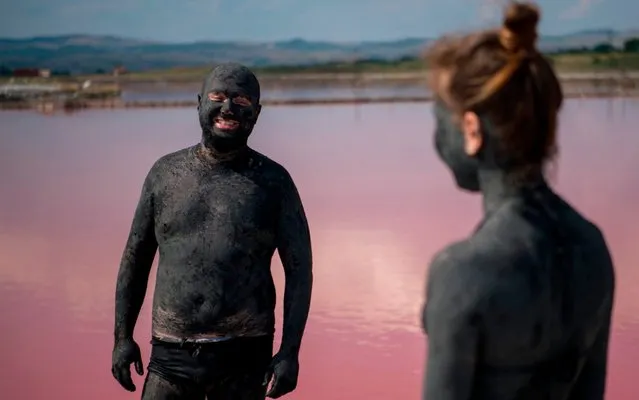
A couple covered in mud wait for it to dry at the Salt-works lakes near the Black Sea town of Burgas in Bulgaria on July 25, 2019. Thousands of tourists visit the red salt lakes for mud baths, which are believed to help the healing of muscular disorders and rheumatism. (Photo by Nikolay Doychinov/AFP Photo)

A couple covered in mud wait for it to dry at the Salt-works lakes near the Black Sea town of Burgas in Bulgaria on July 25, 2019. Thousands of tourists visit the red salt lakes for mud baths, which are believed to help the healing of muscular disorders and rheumatism. (Photo by Nikolay Doychinov/AFP Photo)
Details
28 Jul 2019 00:07:00
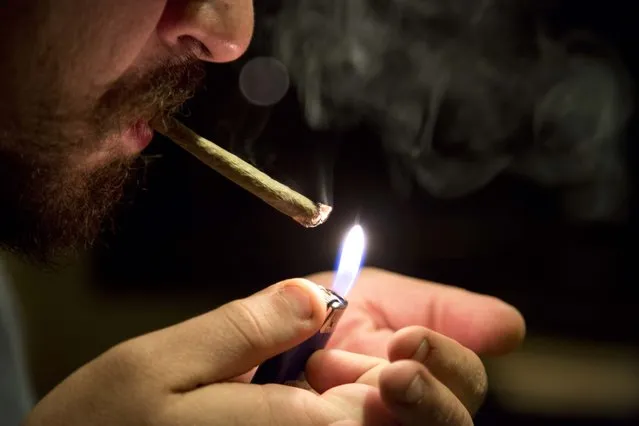
In this October 29, 2013 photo, Daniel smokes marijuana inside his apartment where he uses a hydroponics system to grow his weed in Mexico City. “I'm not a narco, dude. I just like to smoke”, said Daniel, who spoke on condition that his last name not be used because, he said, his home-grow operation is "super-illegal" despite being for personal use only. (Photo by Eduardo Verdugo/AP Photo)

In this October 29, 2013 photo, Daniel smokes marijuana inside his apartment where he uses a hydroponics system to grow his weed in Mexico City. “I'm not a narco, dude. I just like to smoke”, said Daniel, who spoke on condition that his last name not be used because, he said, his home-grow operation is "super-illegal" despite being for personal use only. (Photo by Eduardo Verdugo/AP Photo)
Details
17 Mar 2015 11:49:00
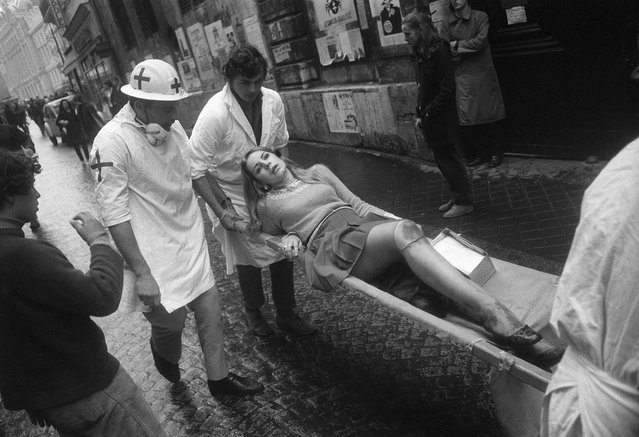
A wounded student is transported by first-aid workers during riots on the Boulevard Saint-Michel, Paris, France, May 6, 1968. (Photo by Gökşin Sipahioğlu/SIPA Press)

Fifty years ago, as France exploded in mass protests, words scrawled on the walls of the Sorbonne summed up the revolutionary zeal of the time: “Run free, comrade, we’ve left the old world behind!”. Sexual liberation, artistic creativity and anti-capitalism were the order of the day. For those who were there, it was an unforgettable time. Here: A wounded student is transported by first-aid workers during riots on the Boulevard Saint-Michel, Paris, France on May 6, 1968. (Photo by Gökşin Sipahioğlu/SIPA Press)
Details
25 May 2018 00:06:00
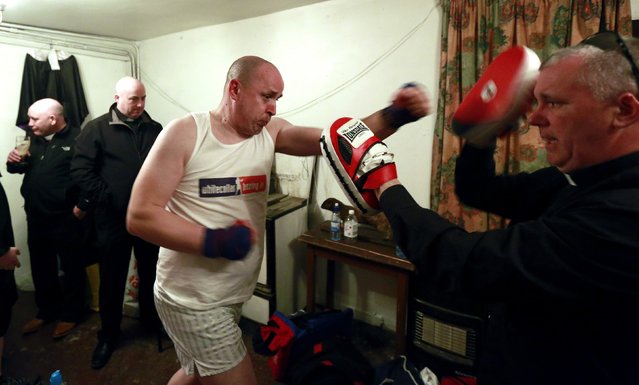
Fr Pierre Pepper (C) warms up before his amateur boxing match in the town of Banagher in County Offaly March 15, 2015. (Photo by Cathal McNaughton/Reuters)

Fr Pierre Pepper (C) warms up before his amateur boxing match in the town of Banagher in County Offaly March 15, 2015. Fr Pepper has spent the last two months training for an amateur boxing match to raise proceeds for charity. (Photo by Cathal McNaughton/Reuters)
Details
17 Mar 2015 12:08:00
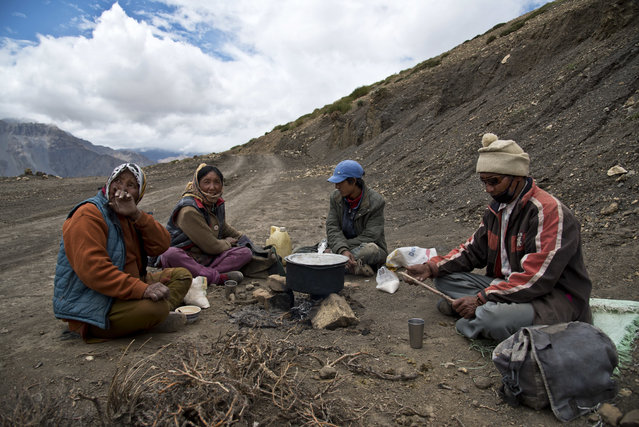
In this August 17, 2016, photo, from left to right, Chhering Chodom, 60, Tashi Yangzom, 50, Lobsang Chhering, 27, and Dorje Tandup, 58, drink milk tea on the side of the road. For centuries, the sleepy valley nestled in the Indian Himalayas remained a hidden Buddhist enclave forbidden to outsiders. Enduring the harsh year-round conditions of the high mountain desert, the people of Spiti Valley lived by a simple communal code – share the Earth's bounty, be hospitable to neighbors, and eschew greed and temptation at all turns. That's all starting to change, for better or worse. Since India began allowing its own citizens as well as outsiders to visit the valley in the early 1990s, tourism and trade have boomed. And the marks of modernization, such as solar panels, asphalt roads and concrete buildings, have begun to appear around some of the villages that dot the remote landscape at altitudes above 4,000 meters (13,000 feet). (Photo by Thomas Cytrynowicz/AP Photo)

In this August 17, 2016, photo, from left to right, Chhering Chodom, 60, Tashi Yangzom, 50, Lobsang Chhering, 27, and Dorje Tandup, 58, drink milk tea on the side of the road. For centuries, the sleepy valley nestled in the Indian Himalayas remained a hidden Buddhist enclave forbidden to outsiders. Enduring the harsh year-round conditions of the high mountain desert, the people of Spiti Valley lived by a simple communal code – share the Earth's bounty, be hospitable to neighbors, and eschew greed and temptation at all turns. That's all starting to change, for better or worse. (Photo by Thomas Cytrynowicz/AP Photo)
Details
15 Sep 2016 09:22:00
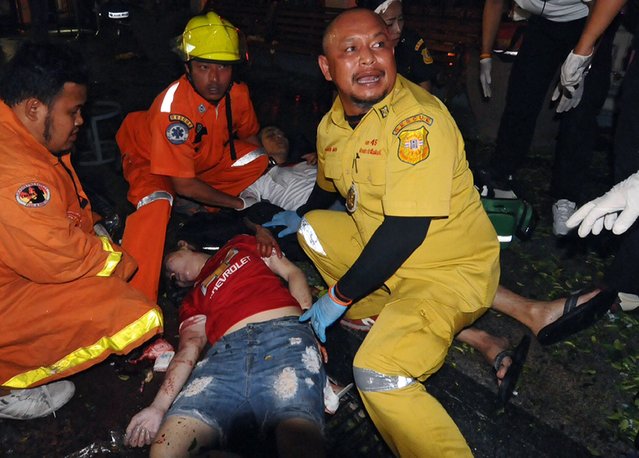
Thai emergency staff help the injured after the scene of an explosion near Erawan Shrine, central Bangkok, Thailand, 17 August 2015. An explosion in a busy commercial district in the Thai capital killed at least 15 people. Witnesses said the explosion happened around 7:15 pm (12:15 GMT) at the Rajprasong Intersection, a business area famous among tourists and locals for a revered Hindu shrine. (Photo by EPA/Stringer)

Thai emergency staff help the injured after the scene of an explosion near Erawan Shrine, central Bangkok, Thailand, 17 August 2015. An explosion in a busy commercial district in the Thai capital killed at least 15 people. Witnesses said the explosion happened around 7:15 pm (12:15 GMT) at the Rajprasong Intersection, a business area famous among tourists and locals for a revered Hindu shrine. (Photo by EPA/Stringer)
Details
18 Aug 2015 14:15:00
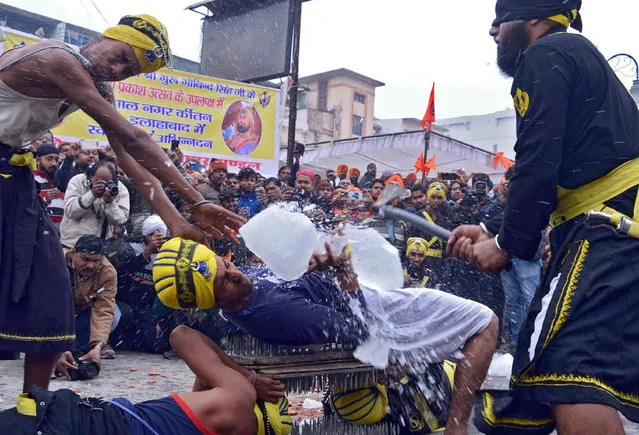
Sikh devotee take part in Nagar Keertan procession on the occasion of Guru Gobind Singh birth anniversary in Allahabad, India on December 29, 2016. (Photo by Prabhat Kumar Verma/Pacific Press via ZUMA Wire/Rex Features/Shutterstock)

Sikh devotee take part in Nagar Keertan procession on the occasion of Guru Gobind Singh birth anniversary in Allahabad, India on December 29, 2016. Guru Gobind Singh, born Gobind Rai (1666 – 1708), was the 10th Sikh Guru, a spiritual master, warrior, poet and philosopher. When his father, Guru Tegh Bahadur, was beheaded for refusing to convert to Islam, Guru Gobind Singh was formally installed as the leader of the Sikhs at age nine, becoming the last of the living Sikh Gurus. (Photo by Prabhat Kumar Verma/Pacific Press via ZUMA Wire/Rex Features/Shutterstock)
Details
31 Dec 2016 10:27:00
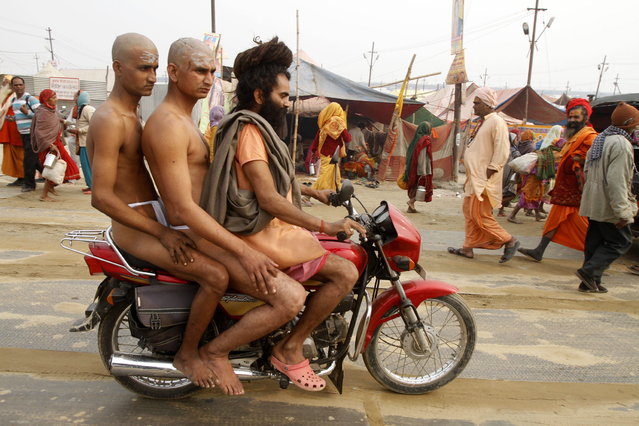
Two Hindu holy men of the Juna Akhara sect  are being take on a motorcycle by their teacher as they got delayed for a rituals that are believed to rid them of all ties in this life and dedicate themselves to serving God as a “Naga” or naked holy men, at Sangam, the confluence of the Ganges and Yamuna River during the Maha Kumbh festival in Allahabad, India, Wednesday, February 6, 2013. (Photo by Rajesh Kumar Singh/AP Photo)

Two Hindu holy men of the Juna Akhara sect are being take on a motorcycle by their teacher as they got delayed for a rituals that are believed to rid them of all ties in this life and dedicate themselves to serving God as a “Naga” or naked holy men, at Sangam, the confluence of the Ganges and Yamuna River during the Maha Kumbh festival in Allahabad, India, Wednesday, February 6, 2013. The significance of nakedness is that they will not have any worldly ties to material belongings, even something as simple as clothes. This ritual that transforms selected holy men to Naga can only be done at the Kumbh festival. (Photo by Rajesh Kumar Singh/AP Photo)
Details
07 Feb 2013 10:11:00