Loading...
Done
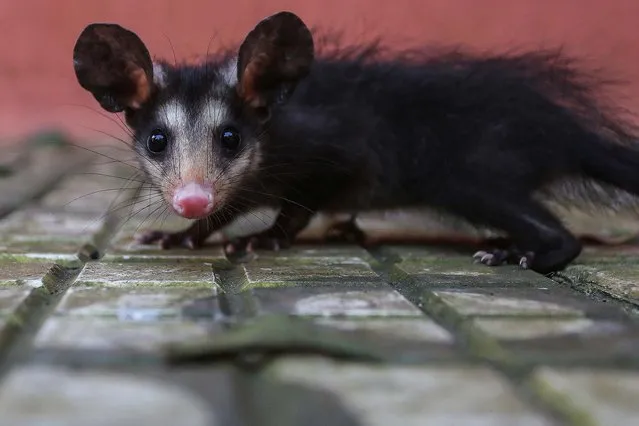
Photo taken on September 19, 2015 shows a baby Brazilian opossum at the “Parque Estoril” zoo in Sao Bernardo do Campo of Sao Paulo, Brazil. According to local press, the “Parque Estoril” zoo houses currently 23 orphan cubs of wild animals rescued in the south region of Sao Paulo, victims of illegal wildlife trade or problems caused by urban growth. (Photo by Rahel Patrasso/Xinhua via ZUMA Wire)

Photo taken on September 19, 2015 shows a baby Brazilian opossum at the “Parque Estoril” zoo in Sao Bernardo do Campo of Sao Paulo, Brazil. According to local press, the “Parque Estoril” zoo houses currently 23 orphan cubs of wild animals rescued in the south region of Sao Paulo, victims of illegal wildlife trade or problems caused by urban growth. According to the zoo, all the animals arrived in the last three months, and many of them, not being able to be reintroduced to their natural habitat, will be used as examples in environmental education classes. (Photo by Rahel Patrasso/Xinhua via ZUMA Wire)
Details
26 Sep 2015 08:00:00
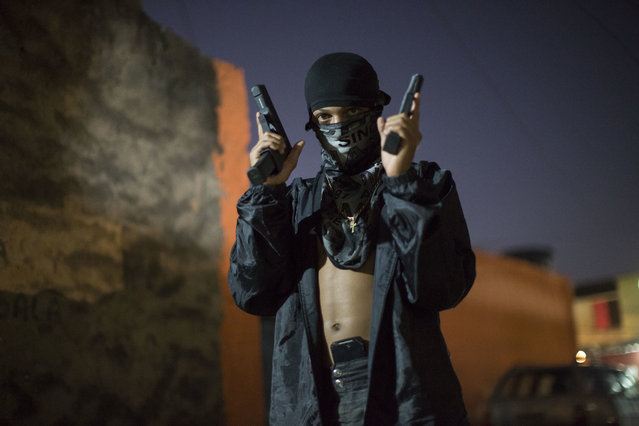
In this July 11, 2016 photo, a young, masked drug trafficker poses for photos holding his guns at a slum in Rio de Janeiro, Brazil. Teenagers openly tote guns while they work as guards, lookouts and distributors for drug lords operating just a few miles from where hundreds of thousands and tourists and athletes will be for the Aug. 5-21 Olympic Games. (Photo by Felipe Dana/AP Photo)

In this July 11, 2016 photo, a young, masked drug trafficker poses for photos holding his guns at a slum in Rio de Janeiro, Brazil. Teenagers openly tote guns while they work as guards, lookouts and distributors for drug lords operating just a few miles from where hundreds of thousands and tourists and athletes will be for the Aug. 5-21 Olympic Games. (Photo by Felipe Dana/AP Photo)
Details
24 Jul 2016 10:47:00
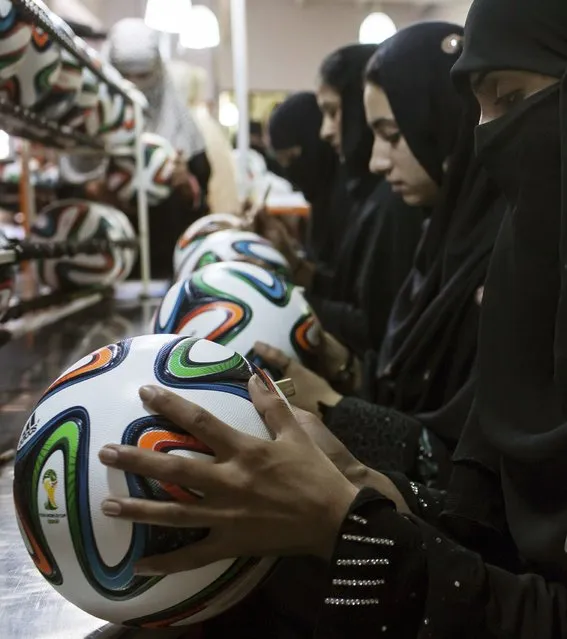
Employees conduct a final check to fix any cavities in the seams of balls inside the soccer ball factory that produces official match balls for the 2014 World Cup in Brazil, in Sialkot, Punjab province May 16, 2014. (Photo by Sara Farid/Reuters)

Employees conduct a final check to fix any cavities in the seams of balls inside the soccer ball factory that produces official match balls for the 2014 World Cup in Brazil, in Sialkot, Punjab province May 16, 2014. It was when he felt the roar of the crowd at the 2006 World Cup in Germany that Pakistani factory owner Khawaja Akhtar first dreamt up a goal of his own: to manufacture the ball for the biggest soccer tournament on the planet. Last year he finally got his chance – but only 33 days to make it happen. (Photo by Sara Farid/Reuters)
Details
26 May 2014 13:59:00
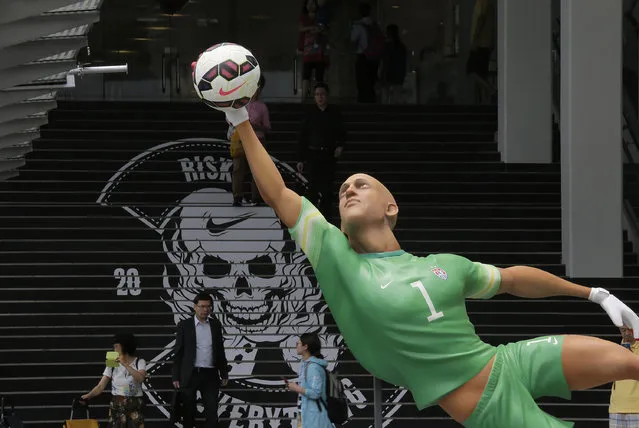
A giant size figure of the United States' goalkeeper Tim Howard is displayed outside a shopping mall in Hong Kong, Thursday, June 12, 2014, to promote the upcoming 2014 World Cup in Brazil. A total of seven 3.5 meters to 4 meters (11 feet 6 inch to 13 feet one inch) tall figures of famous players attract many soccer fans. (Photo by Vincent Yu/AP Photo)

A giant size figure of the United States' goalkeeper Tim Howard is displayed outside a shopping mall in Hong Kong, Thursday, June 12, 2014, to promote the upcoming 2014 World Cup in Brazil. A total of seven 3.5 meters to 4 meters (11 feet 6 inch to 13 feet one inch) tall figures of famous players attract many soccer fans. (Photo by Vincent Yu/AP Photo)
Details
13 Jun 2014 11:31:00
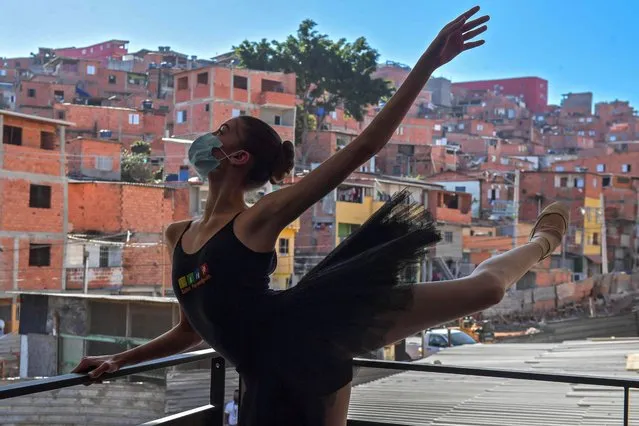
Mariana Sousa, student of the Ballet Paraisopolis, warms up during a rehearse in Paraisopolis favela, outskirts of Sao Paulo, Brazil on August 27, 2020, amid the new coronavirus COVID-19 pandemic. The 200 ballet students of Paraisopolis, the second largest favela in Sao Paulo, restarted rehearsals after five months with a coreography about a police operation that put their community in mourning last year. (Photo by Nelson Almeida/AFP Photo)

Mariana Sousa, student of the Ballet Paraisopolis, warms up during a rehearse in Paraisopolis favela, outskirts of Sao Paulo, Brazil on August 27, 2020, amid the new coronavirus COVID-19 pandemic. The 200 ballet students of Paraisopolis, the second largest favela in Sao Paulo, restarted rehearsals after five months with a coreography about a police operation that put their community in mourning last year. (Photo by Nelson Almeida/AFP Photo)
Details
11 Sep 2020 00:03:00
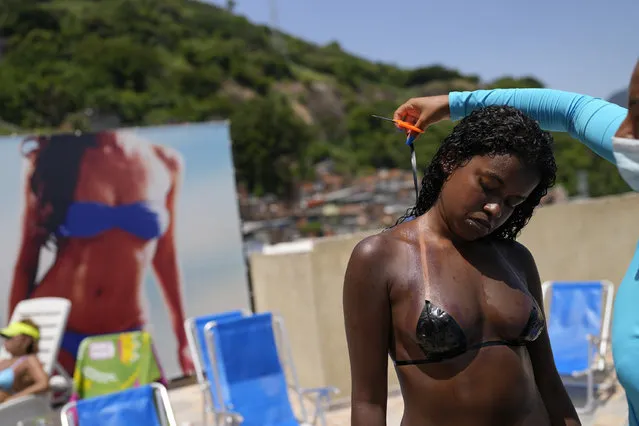
Sabrina Crespo da Silva removes electrical tape from a client at her Sabrina Bronze rooftop salon, where she offers the service of taping on bikini tops which create crisp tan lines, in the Turano favela of Rio de Janeiro, Brazil, Thursday, January 27, 2022. Even though beaches reopened amid the COVID-19 pandemic, some clients using Sabrina's rooftop service say they are still anxious about returning to the crowded seashore and potentially catching the virus. (Photo by Silvia Izquierdo/AP Photo)

Sabrina Crespo da Silva removes electrical tape from a client at her Sabrina Bronze rooftop salon, where she offers the service of taping on bikini tops which create crisp tan lines, in the Turano favela of Rio de Janeiro, Brazil, Thursday, January 27, 2022. Even though beaches reopened amid the COVID-19 pandemic, some clients using Sabrina's rooftop service say they are still anxious about returning to the crowded seashore and potentially catching the virus. (Photo by Silvia Izquierdo/AP Photo)
Details
29 Jan 2022 07:06:00
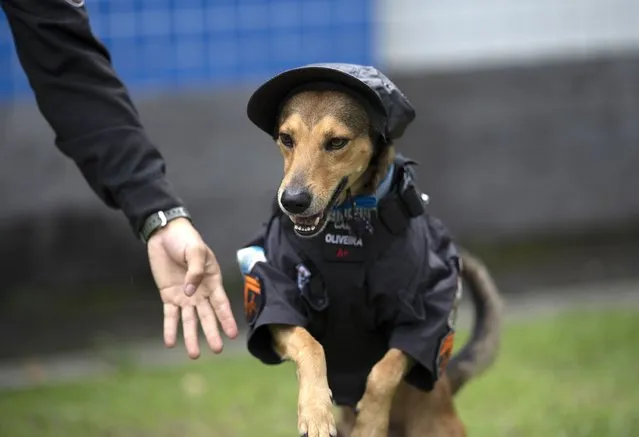
Police Cpl. Cristiano de Oliveira offers a hand to police dog “Corporal Oliveira”, at the 17 Military Police Battalion's station, in Rio de Janeiro, Brazil, Thursday, April 7, 2022. Oliveira is one of two rescue dogs that have turned into local mascots and budding online influencers after joining their rescuers' ranks. (Photo by Silvia Izquierdo/AP Photo)

Police Cpl. Cristiano de Oliveira offers a hand to police dog “Corporal Oliveira”, at the 17 Military Police Battalion's station, in Rio de Janeiro, Brazil, Thursday, April 7, 2022. Oliveira is one of two rescue dogs that have turned into local mascots and budding online influencers after joining their rescuers' ranks. (Photo by Silvia Izquierdo/AP Photo)
Details
14 Apr 2022 06:22:00
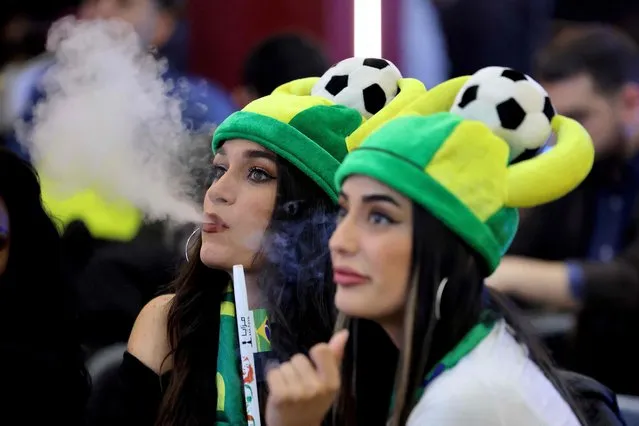
Lebanese women smoke nargileh (water pipe) and watch a streaming broadcast of the FIFA World Cup 2022 group G soccer match between Brazil and Switzerland, at a café-restaurant in the area of Sabtiyeh, north of Beirut, on November 28, 2022. Lebanon being hit hard by the economic crisis, the country did not obtain the rights to broadcast the 2022 World Cup this year, depriving Lebanese fans of the World Cup. (Photo by Joseph Eid/AFP Photo)

Lebanese women smoke nargileh (water pipe) and watch a streaming broadcast of the FIFA World Cup 2022 group G soccer match between Brazil and Switzerland, at a café-restaurant in the area of Sabtiyeh, north of Beirut, on November 28, 2022. Lebanon being hit hard by the economic crisis, the country did not obtain the rights to broadcast the 2022 World Cup this year, depriving Lebanese fans of the World Cup. (Photo by Joseph Eid/AFP Photo)
Details
22 Dec 2022 05:45:00