Loading...
Done
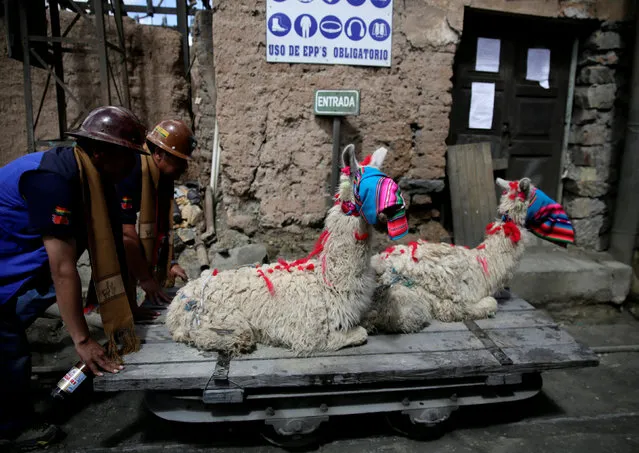
Independent miners transport llamas to sacrifice them for good fortune during the year as part of Andean carnival celebrations, outside the Mina Itos on the outskirts of Oruro, Bolivia February 24, 2017. (Photo by David Mercado/Reuters)

Independent miners transport llamas to sacrifice them for good fortune during the year as part of Andean carnival celebrations, outside the Mina Itos on the outskirts of Oruro, Bolivia February 24, 2017. (Photo by David Mercado/Reuters)
Details
26 Feb 2017 00:03:00
Shortlisted: “Two big eyes” by Miao Yong (Zejiang province, China). Damselflies look over the leaves. “I was photographing insects in a park near my home when suddenly I found two damselflies in the grass. They kept flying and it was very difficult to focus until suddenly they parked behind a leaf”. (Photo by Miao Yong/2017 Royal Society of Biology Photographer of the Year)

Shortlisted: “Two big eyes” by Miao Yong (Zejiang province, China). Damselflies look over the leaves. “I was photographing insects in a park near my home when suddenly I found two damselflies in the grass. They kept flying and it was very difficult to focus until suddenly they parked behind a leaf”. (Photo by Miao Yong/2017 Royal Society of Biology Photographer of the Year)
Details
16 Oct 2017 09:04:00
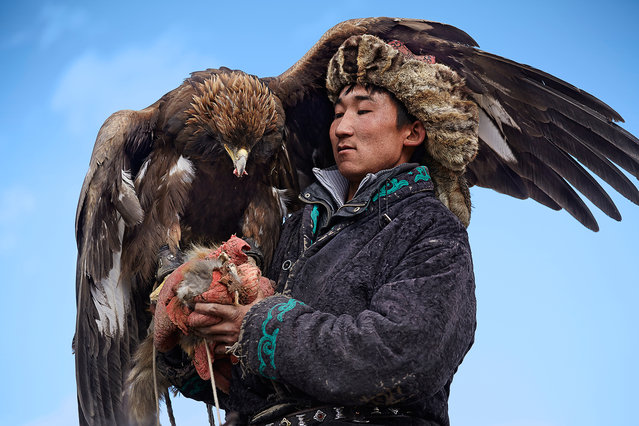
In one of the planet’s most desolate and harsh terrains, the Altai Mountains which run from Siberia in Russia down to Mongolia’s Gobi Desert, hunting with eagles is currently only practiced by a handful of Kyrgyz and Kazakhs. This form of falconry, the practice of hunting with the aid of birds of prey, can be traced back as far as 4,000 years in Central Asia. (Photo by Tariq Zaidi/The Washington Post)

In one of the planet’s most desolate and harsh terrains, the Altai Mountains which run from Siberia in Russia down to Mongolia’s Gobi Desert, hunting with eagles is currently only practiced by a handful of Kyrgyz and Kazakhs. This form of falconry, the practice of hunting with the aid of birds of prey, can be traced back as far as 4,000 years in Central Asia. Here: after a successful hunt, a proud hunter rewards his eagle by feeding it the lungs of the prey, which is considered the most highly prized part of the animal. (Photo by Tariq Zaidi/The Washington Post)

Details
22 Aug 2015 12:46:00
Two young women embrace in bed together, both wearing white lace underwear. (Photo by Popperfoto/Getty Images)

Two young women embrace in bed together, both wearing white lace underwear. (Photo by Popperfoto/Getty Images)
Details
12 Dec 2016 10:43:00
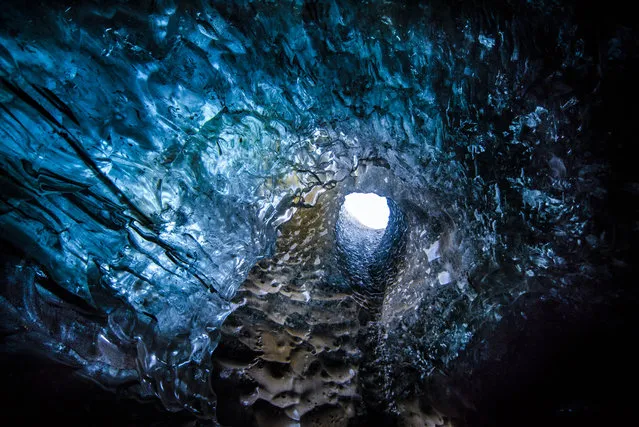
The ice caves, taken in the Vatnajokull National Park in Iceland, on November 11, 2017. (Photo by Matej Kriz/Caters News Agency)

These frozen caves seem almost otherworldly as they daylight illuminates them. Matej Kriz’s shots reveal the beauty of the brilliant caves, but he’s also very aware of how deadly they can be. The photographer captured the amazing shots in the Vatnajokull National Park on the Breidamerkurjokull glacier tongue. Here: The ice caves, taken in the Vatnajokull National Park in Iceland, on November 11, 2017. (Photo by Matej Kriz/Caters News Agency)
Details
17 Jan 2018 07:45:00
Photographer holding digital camera during photoshoot of fashion model. (Photo by grinvalds/Getty Images)

Photographer holding digital camera during photoshoot of fashion model. (Photo by grinvalds/Getty Images)
Details
20 Oct 2023 00:29:00
“One in Eight Hundred” by Mario Wezel, from Germany, is the winner of the “People” category. The title refers to the odds given to Martin and Karina at their prenatal screening before their daughter, Emmy, was born. The five-year-old from Denmark has Down's Syndrome. (Photo by Mario Wezel/Sony World Photography Awards)

“One in Eight Hundred” by Mario Wezel, from Germany, is the winner of the “People” category. The title refers to the odds given to Martin and Karina at their prenatal screening before their daughter, Emmy, was born. The five-year-old from Denmark has Down's Syndrome. (Photo by Mario Wezel/Sony World Photography Awards)
Details
02 May 2014 10:53:00
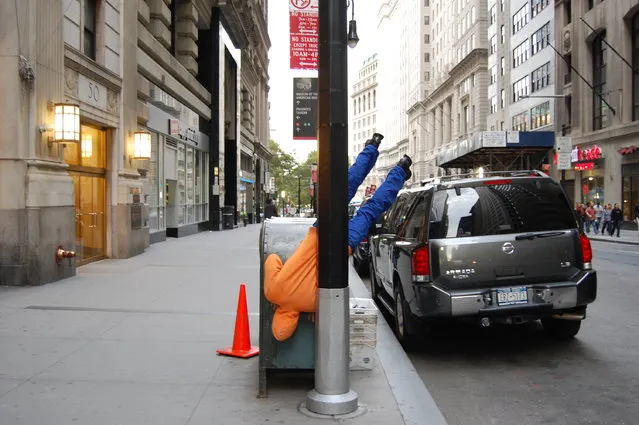
Willi Dorner, Bodies in Urban Spaces, September 26, 2010

“Bodies in urban spaces” is a temporarily intervention in diversified urban architectonical environment. The intention of “bodies in urban spaces” is to point out the urban functional structure and to uncover the restricted movement possibilities and behavior as well as rules and limitations. Photo: “Bodies in Urban Spaces”, September 26, 2010. (Photos by Andrew Russeth)
Details
16 Sep 2013 09:32:00