Loading...
Done
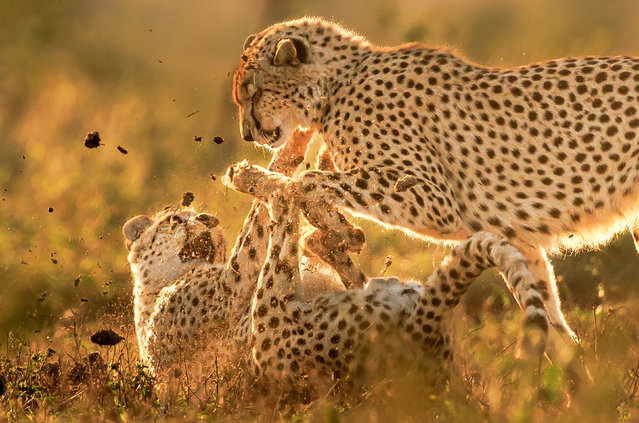
Play-fighting cheetah siblings at the Zimanga game reserve in South Africa in the second decade of November 2024 were spotted by Gavin Bickerton-Jones, an amateur photographer, who said: “It is a bit scary at first being so close, but also a privilege for them to let you share their space”. (Photo by Gavin Bickerton-Jones/Solent News)

Play-fighting cheetah siblings at the Zimanga game reserve in South Africa in the second decade of November 2024 were spotted by Gavin Bickerton-Jones, an amateur photographer, who said: “It is a bit scary at first being so close, but also a privilege for them to let you share their space”. (Photo by Gavin Bickerton-Jones/Solent News)
Details
24 Nov 2024 03:43:00
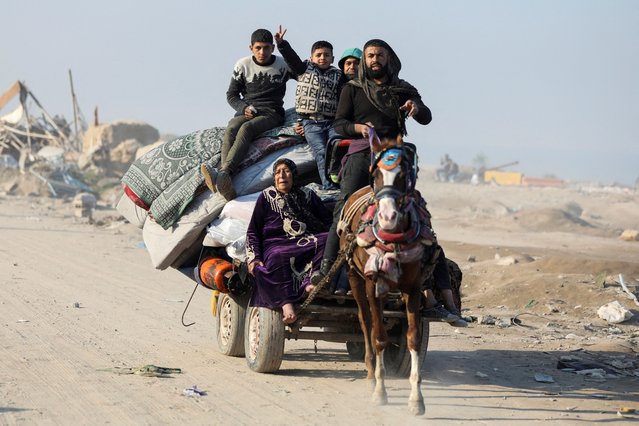
Palestinians, who were displaced to the south at Israel's order during the war, make their way as they return to their homes in northern Gaza, amid a ceasefire between Israel and Hamas, in Gaza City, on January 29, 2025. (Photo by Dawoud Abu Alkas/Reuters)

Palestinians, who were displaced to the south at Israel's order during the war, make their way as they return to their homes in northern Gaza, amid a ceasefire between Israel and Hamas, in Gaza City, on January 29, 2025. (Photo by Dawoud Abu Alkas/Reuters)
Details
07 Feb 2025 02:32:00
The Guinness World Record for the fastest tortoise in the world is held by Bertie, a South African leopard tortoise, who covered 5.49 metres in 19.59 seconds. (Photo by Paul Michael Hughes/Guinness World Records/PA Wire Press Association)

The Guinness World Record for the fastest tortoise in the world is held by Bertie, a South African leopard tortoise, who covered 5.49 metres in 19.59 seconds. (Photo by Paul Michael Hughes/Guinness World Records/PA Wire Press Association)
Details
16 Sep 2025 04:17:00
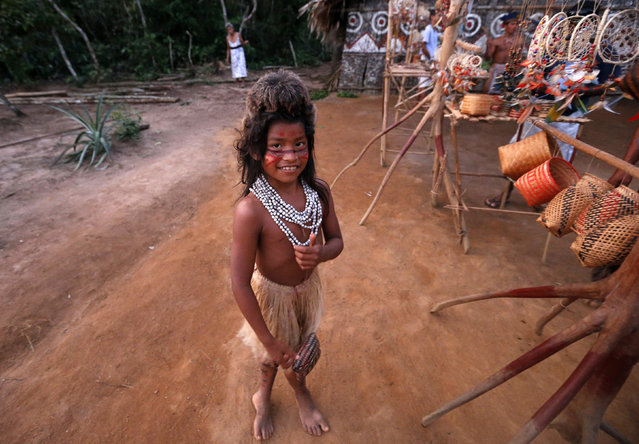
A girl of the Amazonian Tatuyo tribe poses while waiting to sell crafts to tourists in her village in the Rio Negro (Black River) near Manaus city, a World Cup host city, June 23, 2014. Because of their proximity to host city Manaus and their warm welcome, the Tatuyo have enjoyed three weeks of brisk business thanks to the World Cup. Usually, they host between 10 and 30 tourists a day. During the World Cup, this number has rocketed to 250 a day, They have become richer and other communities now come to them to sell them juices and fishes. (Photo by Andres Stapff/Reuters)

A girl of the Amazonian Tatuyo tribe poses while waiting to sell crafts to tourists in her village in the Rio Negro (Black River) near Manaus city, a World Cup host city, June 23, 2014. Because of their proximity to host city Manaus and their warm welcome, the Tatuyo have enjoyed three weeks of brisk business thanks to the World Cup. Usually, they host between 10 and 30 tourists a day. During the World Cup, this number has rocketed to 250 a day, They have become richer and other communities now come to them to sell them juices and fishes. (Photo by Andres Stapff/Reuters)
Details
27 Jun 2014 10:30:00
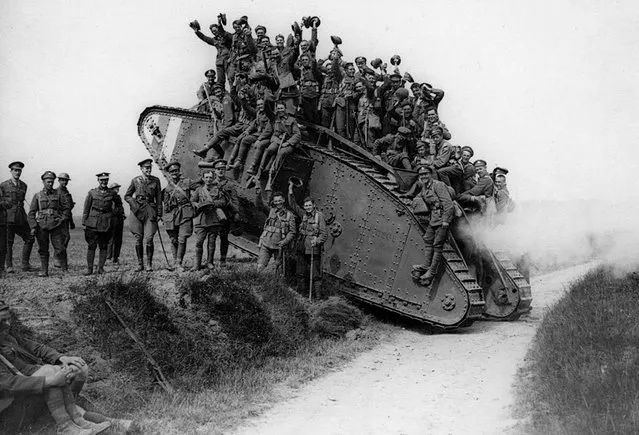
These black-and-white photos are taken from the new book “Armoured Warfare in the First World War 1916 – 1918” by Anthony Tucker-Jones and published by Pen & Sword Military. “Interestingly the British, French and Germans took completely different approaches with varying results”. The British military produced “Little Willie” in Autumn 1915 weighing 18 tonnes, which had a crew of two plus four gunners. “Inspired by a tracked artillery tractor “Little Willie” was referred to as a water tank – hence the name tank – to ensure secrecy”, said Anthony. “This led to the strange looking Mark I with its peculiar rhomboid shape, designed to cross trenches with guns in sponsons on either side. The Germans saw the tank as unchivalrous and were slow to grasp its utility. They favoured the Stormtrooper (specialist soldiers used to infiltrate enemy trenches) and artillery, not the tank”, said Anthony. “However, they didn’t hesitate to make use of captured British tanks. Although the tank helped secure victory and German soldiers dubbed it “Germany’s Downfall” the country was ultimately brought to its knees by the Allies blockade”. Here: British troops hitch a ride on a Mark IV after the massed tank fleet spearheading attack at Cambrai on November 20, 1917. (Photo by Anthony Tucker-Jones/Mediadrumworld.com)

These black-and-white photos are taken from the new book “Armoured Warfare in the First World War 1916 – 1918” by Anthony Tucker-Jones and published by Pen & Sword Military. Here: British troops hitch a ride on a Mark IV after the massed tank fleet spearheading attack at Cambrai on November 20, 1917. (Photo by Anthony Tucker-Jones/Mediadrumworld.com)
Details
23 Feb 2017 00:02:00
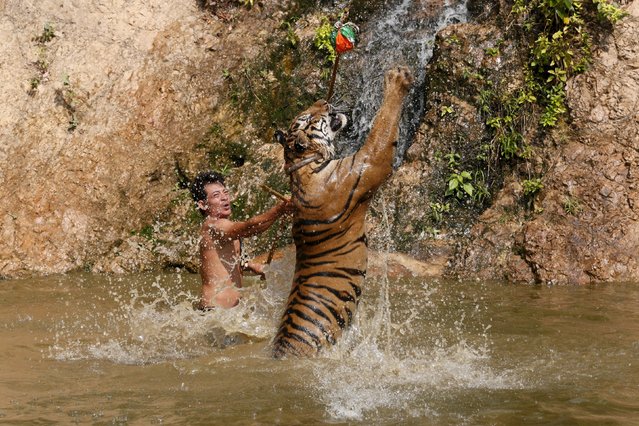
A tiger jumps while being trained at the Tiger Temple in Kanchanaburi province, west of Bangkok, Thailand, February 25, 2016. Thailand's controversial Tiger Temple, dogged for years by talk that it supplies the black market and mistreats its animals, is fighting to keep the big cats after wildlife authorities rejected a bid to extend a zoo licence that expired in 2013. (Photo by Chaiwat Subprasom/Reuters)

A tiger jumps while being trained at the Tiger Temple in Kanchanaburi province, west of Bangkok, Thailand, February 25, 2016. Thailand's controversial Tiger Temple, dogged for years by talk that it supplies the black market and mistreats its animals, is fighting to keep the big cats after wildlife authorities rejected a bid to extend a zoo licence that expired in 2013. The Buddhist temple, home to more than 100 tigers, has been investigated for suspected links to wildlife trafficking and wildlife activists have accused it of illegal breeding of the animals. Thai wildlife authorities have sent ten of the temple's tigers to a wildlife sanctuary. But the temple, which bills itself as a wildlife sanctuary, has denied links to illegal trafficking, and wants to hold on to its tigers. (Photo by Chaiwat Subprasom/Reuters)

Details
29 Feb 2016 11:56:00
Victor Peralta from Uruguay gestures during the fourth International Tattoo Convention in Quito, September 25, 2016. (Photo by Kevin Granja/Reuters)

Victor Peralta from Uruguay gestures during the fourth International Tattoo Convention in Quito, September 25, 2016. (Photo by Kevin Granja/Reuters)
Details
27 Sep 2016 09:37:00
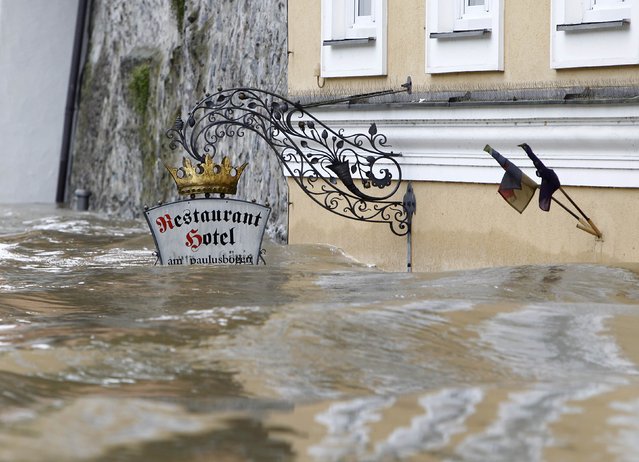
The sign above the door of restaurant and hotel 'Am Paulusbogen' is partially submerged in the flooded centre of the Bavarian town of Passau, about 200 km (124 miles) north-east of Munich June 3, 2013. Torrential rain in the south and south-east of Germany caused heavy flooding over the weekend, forcing people to evacuate their homes. (Photo by Michaela Rehle/Reuters)

The sign above the door of restaurant and hotel “Am Paulusbogen” is partially submerged in the flooded centre of the Bavarian town of Passau, about 200 km (124 miles) north-east of Munich June 3, 2013. (Photo by Michaela Rehle/Reuters)
Details
05 Jun 2013 08:43:00