Loading...
Done
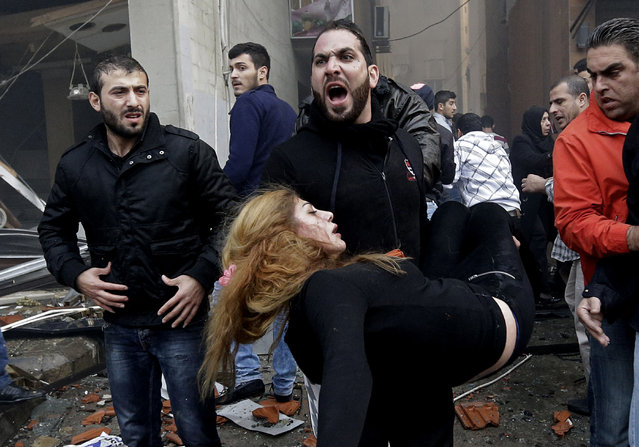
A Lebanese man carries an injured woman away from the site of a car bomb explosion in a Shiite area and stronghold of the Lebanese militant group Hezbollah at the southern suburb of Beirut, Thursday January 2, 2014. A large explosion has rocked a stronghold of the Shiite Hezbollah group in the southern suburbs of the Lebanese capital. (Photo by Hussein Malla/AP Photo)

A Lebanese man carries an injured woman away from the site of a car bomb explosion in a Shiite area and stronghold of the Lebanese militant group Hezbollah at the southern suburb of Beirut, Thursday January 2, 2014. A large explosion has rocked a stronghold of the Shiite Hezbollah group in the southern suburbs of the Lebanese capital. (Photo by Hussein Malla/AP Photo)
Details
04 Jan 2014 14:47:00
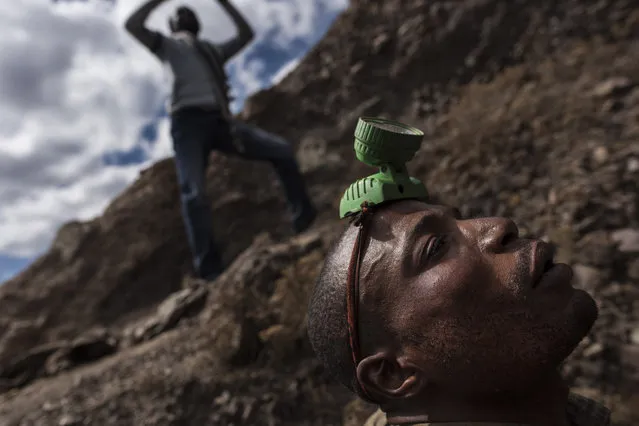
A “creuseur”, or digger, a plastic lantern on his head, readies to enter a copper and cobalt mine in Kawama, Democratic Republic of Congo on June 8, 2016. Cobalt is used in the batteries for electric cars and mobile phones. Working conditions are dangerous, often with no safety equipment or structural support for the tunnels. The diggers say they are paid on average US$2-3/day. (Photo by Michael Robinson Chavez/The Washington Post)

A “creuseur”, or digger, a plastic lantern on his head, readies to enter a copper and cobalt mine in Kawama, Democratic Republic of Congo on June 8, 2016. Cobalt is used in the batteries for electric cars and mobile phones. Working conditions are dangerous, often with no safety equipment or structural support for the tunnels. The diggers say they are paid on average US$2-3/day. (Photo by Michael Robinson Chavez/The Washington Post)
Details
30 Dec 2016 10:29:00


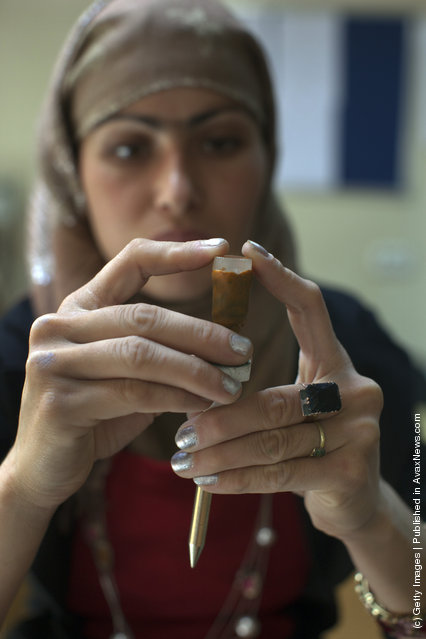
Student, Shoukria positions a stone for cutting at the Turquoise Mountain Gem cutting class on May 18, 2011, in Kabul, Afghanistan. The mineral resources of Afghanistan are relatively unexplored even with Afghanistan's mineral wealth of coal, copper, gold and iron ore, with precious and semiprecious stones, including high-quality emerald, lapis lazuli, red garnet and ruby. Given the country's remote and rugged terrain, on-going instability plus an inadequate infrastructure and transportation means that mining is still difficult. While many are trying to bring positive changes, Afghanistan's mining industry uses unregulated, primitive methods and outdated equipment. (Photo by Paula Bronstein/Getty Images)
Details
22 May 2011 09:11:00
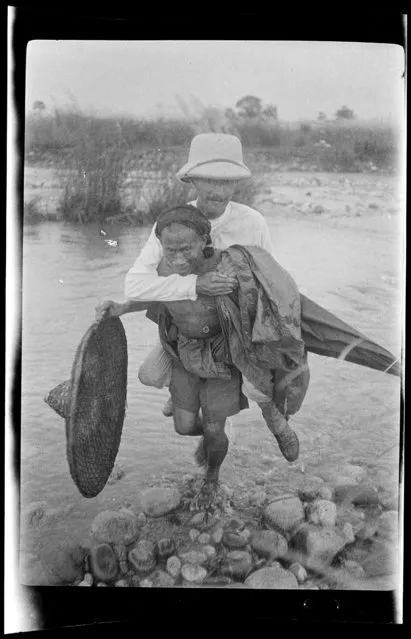
Hillcoat Riding Fu Tu. China, An Xian, 1917-1919. (Photo by Sidney David Gamble)

“Sidney D. Gamble (July 12, 1890 – 1968) was born in Cincinnati, Ohio, to David Berry and Mary Huggins Gamble; grandson of James Gamble, who, with William Procter, founded Procter & Gamble in 1837. in 1912 he graduated magna cum laude from Princeton University with a Bachelor of Literature degree and was elected to Phi Beta Kappa. He visited China for four extended periods, 1908, 1917–1919, 1924–27, and 1931–1932, doing Christian social work for the Y.M.C.A and conducting social surveys. He is now best known for his remarkable and extensive photographs of Peking and North China.” – Wikipedia. (Photo by Sidney David Gamble via Duke University Libraries)

Photo: Hillcoat Riding Fu Tu. China, An Xian, 1917-1919. P.S. All photos are available in high resolution.
Details
16 Aug 2012 11:24:00
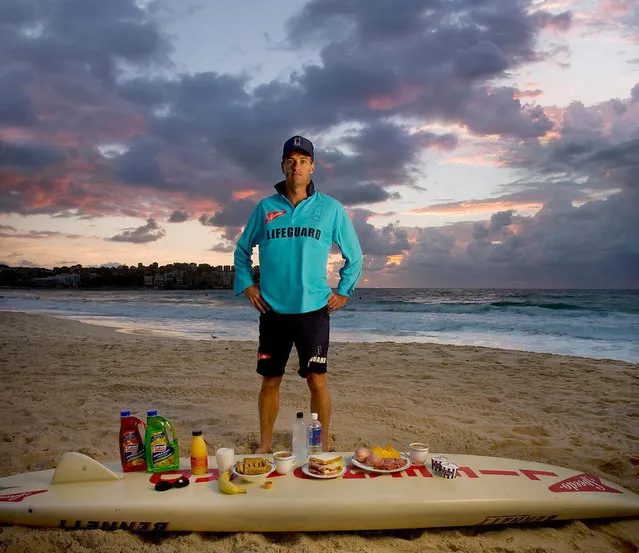
What the World Eats By Peter Menzel And Faith D'Aluisio Part 1

A stunning photographic collection featuring portraits of people from 30 countries and the food they eat in one day. In this fascinating study of people and their diets, 80 profiles are organized by the total number of calories each person puts away in a day. Featuring a Japanese sumo wrestler, a Massai herdswoman, world-renowned Spanish chef Ferran Adria, an American competitive eater, and more, these compulsively readable personal stories also include demographic particulars, including age, activity level, height, and weight. Essays from Harvard primatologist Richard Wrangham, journalist Michael Pollan, and others discuss the implications of our modern diets for our health and for the planet. This compelling blend of photography and investigative reportage expands our understanding of the complex relationships among individuals, culture, and food.
Details
23 Apr 2014 14:34:00
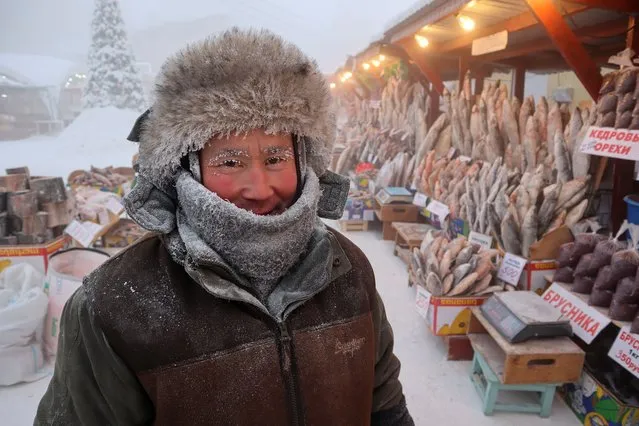
Vendor Yegor Dyachkovsky, 45, poses for a picture at an open-air market on a frosty day in Yakutsk, Russia, January 15, 2023. Yakutsk, one of the Russia's north-most cities, is hit by an extreme cold snap as the air temperature on Sunday (January 15) plunged as low as minus 51 degrees Celsius (minus 59.8 degrees Fahrenheit). (Photo by Roman Kutukov/Reuters)

Vendor Yegor Dyachkovsky, 45, poses for a picture at an open-air market on a frosty day in Yakutsk, Russia, January 15, 2023. Yakutsk, one of the Russia's north-most cities, is hit by an extreme cold snap as the air temperature on Sunday (January 15) plunged as low as minus 51 degrees Celsius (minus 59.8 degrees Fahrenheit). (Photo by Roman Kutukov/Reuters)
Details
02 Feb 2023 21:36:00
Students perform during a “Bhangra” folk dance competition at a university in Amritsar on October 29, 2024. (Photo by Narinder Nanu/AFP Photo)

Students perform during a “Bhangra” folk dance competition at a university in Amritsar on October 29, 2024. (Photo by Narinder Nanu/AFP Photo)
Details
19 Nov 2024 03:39:00
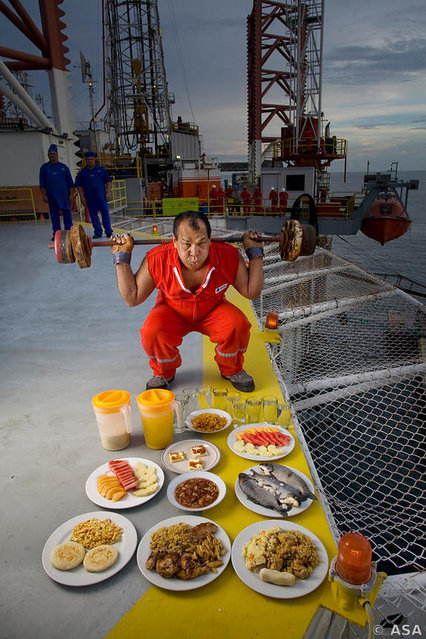
What the World Eats By Peter Menzel And Faith D'Aluisio Part 2

A stunning photographic collection featuring portraits of people from 30 countries and the food they eat in one day. In this fascinating study of people and their diets, 80 profiles are organized by the total number of calories each person puts away in a day. Featuring a Japanese sumo wrestler, a Massai herdswoman, world-renowned Spanish chef Ferran Adria, an American competitive eater, and more, these compulsively readable personal stories also include demographic particulars, including age, activity level, height, and weight. Essays from Harvard primatologist Richard Wrangham, journalist Michael Pollan, and others discuss the implications of our modern diets for our health and for the planet. This compelling blend of photography and investigative reportage expands our understanding of the complex relationships among individuals, culture, and food.
Details
02 May 2014 09:20:00