Loading...
Done
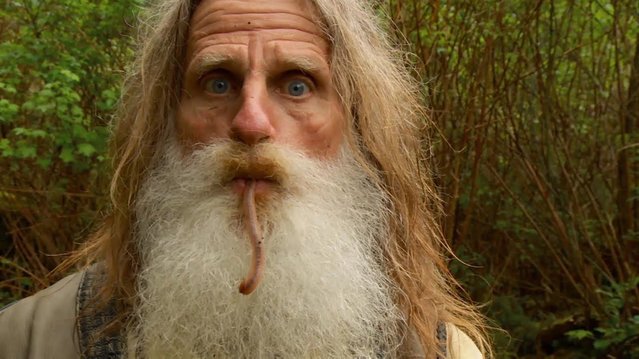
Mick Dodge AKA "The Barefoot Sensei

If you were to meet this guy in the woods, especially if it’s nighttime, you’d probably think that it’s a local troll or a yeti. However, in reality, he’s no yeti. His name is Mick Dodge, and before deciding to live in the woods, he was a marine for six years at Fort Lewis. It is hard to tell what moved him to leave the busy life of the city and start living in the Hoh Rain Forest. It could have been that he decided the leave the stressful life of the city, or maybe he simply loves the solitary life of a hermit. Another thing that is peculiar about Mick Dodge is that most of the time he walks barefoot, hence the nickname “The Barefoot Sensei”.
Details
27 Nov 2014 14:54:00
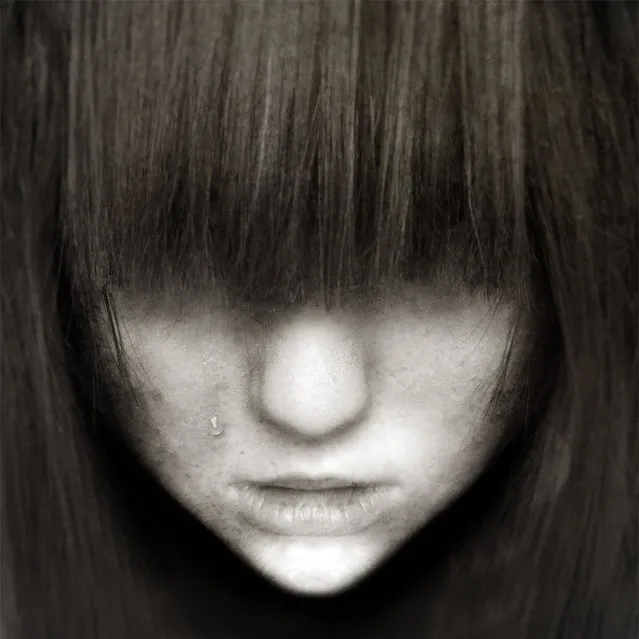
“Remember”. (Federico Bebber)

“Federico Bebber was born in 1974 in Udine, Italy. Since 1998 he deals with digital art. He uses digital tools based on photography. His creative process usually takes place slowly and at night”. Photo: “Remember”. (Photo by Federico Bebber)


Details
29 Jan 2013 12:24:00
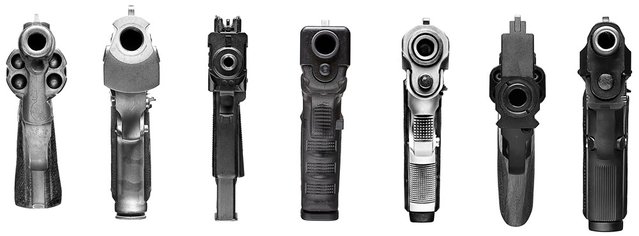
“Point Blank” – Gun Series by Peter Andrew. (Photo by Peter Andrew)

“Guns have a massive amount of power associated with them. They are designed to kill. We decided to photograph portraits of them in a similar way you might photograph a powerful person. Like powerful people, pistols have this “perfect” quality that we wanted to explore. As we started shooting them, we could see flaws in their design. Metal burring around the barrels, scratches in the metal. This imperfection and detail were very interesting to us; connecting us back to these images as portraits”. – Peter Andrew. (Photo by Peter Andrew/Simon Duffy/Derek Blais)
Details
26 Aug 2013 10:03:00
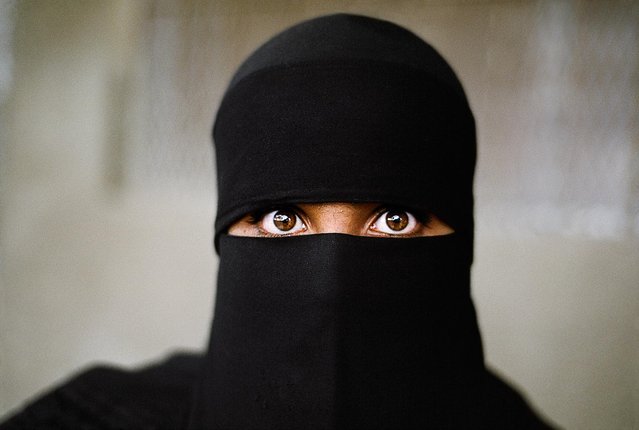
Sanaa, Yemen. (Photo by Steve McCurry)

Sanaa, Yemen. (Photo by Steve McCurry)
Details
13 Sep 2013 10:57:00
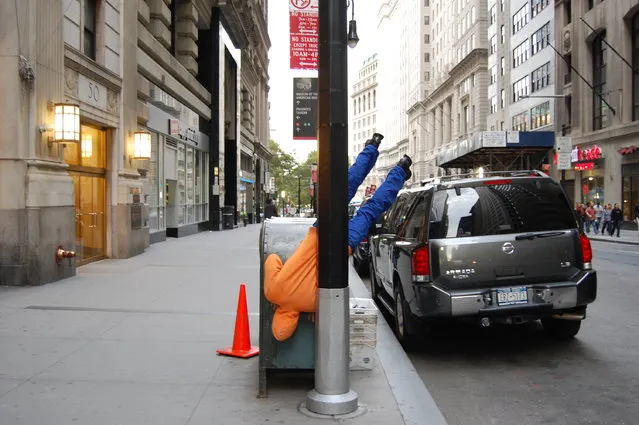
Willi Dorner, Bodies in Urban Spaces, September 26, 2010

“Bodies in urban spaces” is a temporarily intervention in diversified urban architectonical environment. The intention of “bodies in urban spaces” is to point out the urban functional structure and to uncover the restricted movement possibilities and behavior as well as rules and limitations. Photo: “Bodies in Urban Spaces”, September 26, 2010. (Photos by Andrew Russeth)
Details
16 Sep 2013 09:32:00
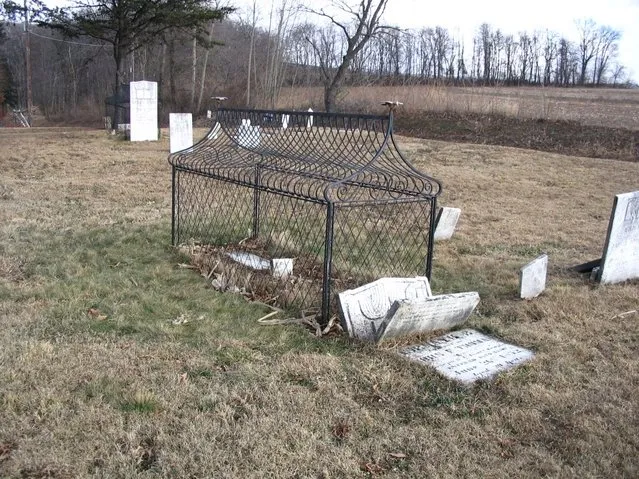
Mortsafe - Protection From The Dead

Mortsafes were contraptions designed to protect graves from disturbance. Resurrectionists had supplied the schools of anatomy in Scotland since the early 18th century. This was due to the necessity for medical students to learn anatomy by attending dissections of human subjects, which was frustrated by the very limited allowance of dead bodies – for example the corpses of executed criminals – granted by the government, which controlled the supply.
Details
29 Nov 2013 12:03:00
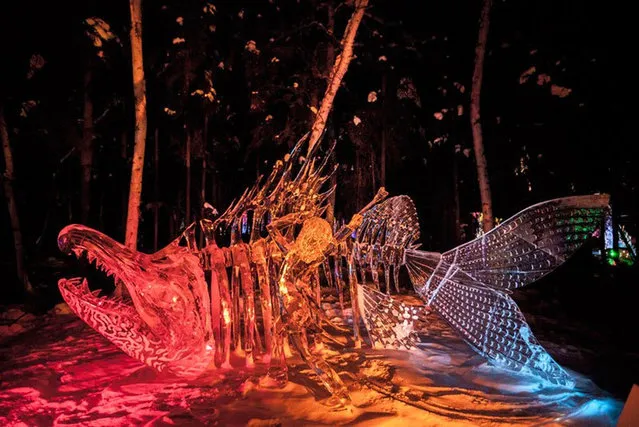
Ice Alaska – World Ice Art Championships 2013

Every year in Fairbanks, Alaska, the World Ice Art Championships takes place, and it is no cute little side hobby. Praised as one of the world’s largest ice sculpting competitions and exhibitions, the World Ice Art Championships has grown into a month-long event featuring more than 70 teams from around the world. The works are stunning and often massive in both size and visual appeal.


Details
23 Dec 2013 08:12:00
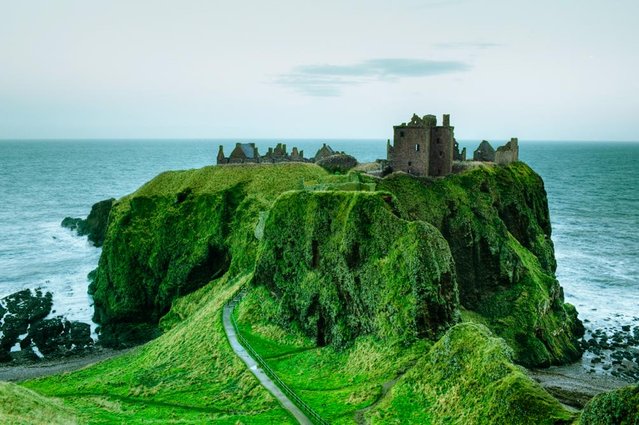
Dunnottar Castle In Scottish

Dunnottar Castleis a ruined medieval fortress located upon a rocky headland on the north-east coast of Scotland, about 3 kilometres (1.9 mi) south of Stonehaven. The surviving buildings are largely of the 15th and 16th centuries, but the site is believed to have been fortified in the Early Middle Ages. Dunnottar has played a prominent role in the history of Scotland through to the 18th-century Jacobite risings because of its strategic location and the strength of its situation. Dunnottar is best known as the place where the Honours of Scotland, the Scottish crown jewels, were hidden from Oliver Cromwell's invading army in the 17th century. The property of the Keiths from the 14th century, and the seat of the Earl Marischal, Dunnottar declined after the last Earl forfeited his titles by taking part in the Jacobite rebellion of 1715. The castle was restored in the 20th century and is now open to the public.
Details
13 Jan 2014 11:31:00