Loading...
Done
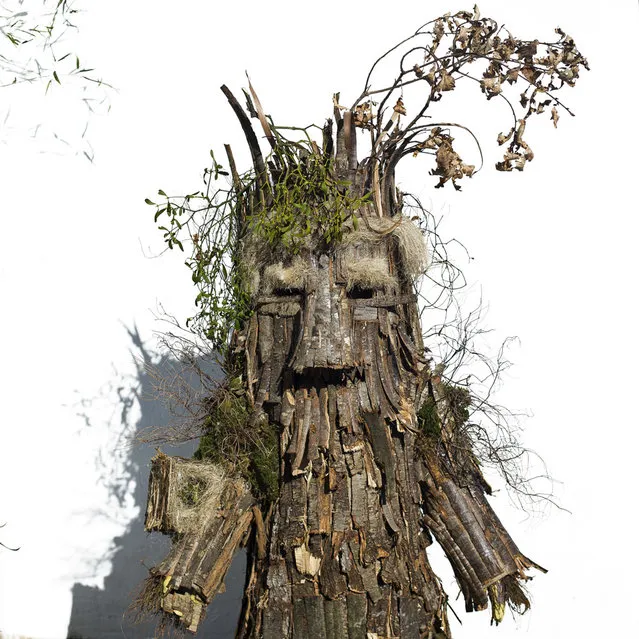
A man dressed as a  “Trapajon”, representing entities of nature, poses for a picture after taking part in the Vijanera Festival in Silio, northern Spain, Sunday, Jan. 6, 2013. The Vijanera masquerade, of pre-Roman origin, is the first carnival of the year in Europe symbolizing the triumph of good over evil and involving the participation of crowds of residents wearing different masks, animal skins and brightly colored clothing with its own complex function and symbolism and becoming the living example of the survival of archaic cults to nature. (Photo by Daniel Ochoa de Olza/AP Photo)

A man dressed as a “Trapajon”, representing entities of nature, poses for a picture after taking part in the Vijanera Festival in Silio, northern Spain, Sunday, Jan. 6, 2013. The Vijanera masquerade, of pre-Roman origin, is the first carnival of the year in Europe symbolizing the triumph of good over evil and involving the participation of crowds of residents wearing different masks, animal skins and brightly colored clothing with its own complex function and symbolism and becoming the living example of the survival of archaic cults to nature. (Photo by Daniel Ochoa de Olza/AP Photo)
Details
19 Jan 2013 13:01:00
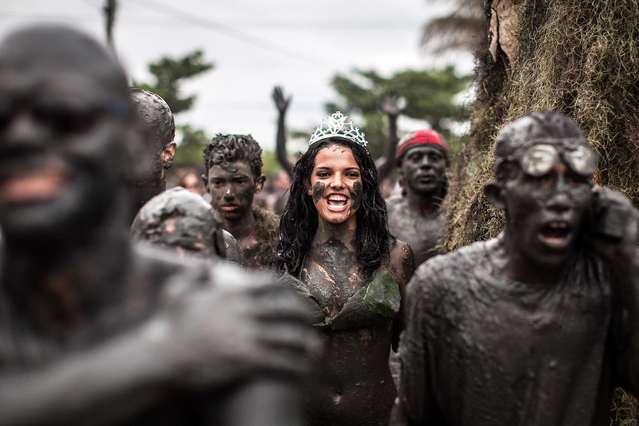
Revelers participate in the traditional Bloco da Lama (Mud block) carnival in Parati, Rio de Janeiro State, Brazil, on February 9, 2013. The event, which was begun by two men in a playful manner in 1986, has now become a traditional carnival in which participants disguised as primitives with rags, lianas or skulls and bones, dive in the mud. (Photo by Victor Moriyama/AFP Photo)

Revelers participate in the traditional Bloco da Lama (Mud block) carnival in Parati, Rio de Janeiro State, Brazil, on February 9, 2013. The event, which was begun by two men in a playful manner in 1986, has now become a traditional carnival in which participants disguised as primitives with rags, lianas or skulls and bones, dive in the mud. (Photo by Victor Moriyama/AFP Photo)
Details
12 Feb 2013 14:10:00
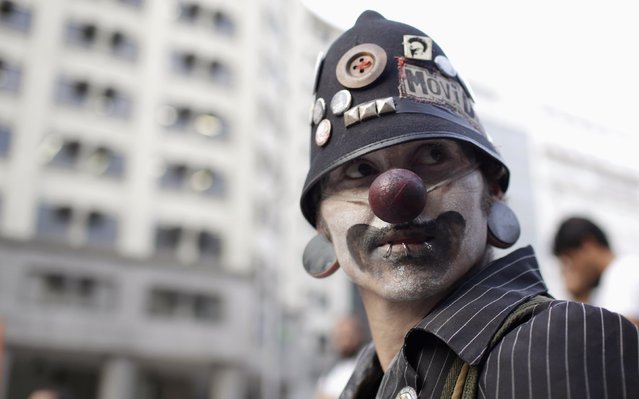
A demonstrator attends a protest against fare hikes for city buses in Rio de Janeiro January 16, 2015. Amid a marked economic downturn and high inflation, bus fares went up in Sao Paulo, Brazil's largest city, from 3 to 3.50 reais, and in Rio, the former capital, from 3.0 to 3.40 reais. (Photo by Mauro Pimentel/Reuters)

A demonstrator attends a protest against fare hikes for city buses in Rio de Janeiro January 16, 2015. Amid a marked economic downturn and high inflation, bus fares went up in Sao Paulo, Brazil's largest city, from 3 to 3.50 reais, and in Rio, the former capital, from 3.0 to 3.40 reais. (Photo by Mauro Pimentel/Reuters)
Details
18 Jan 2015 13:42:00
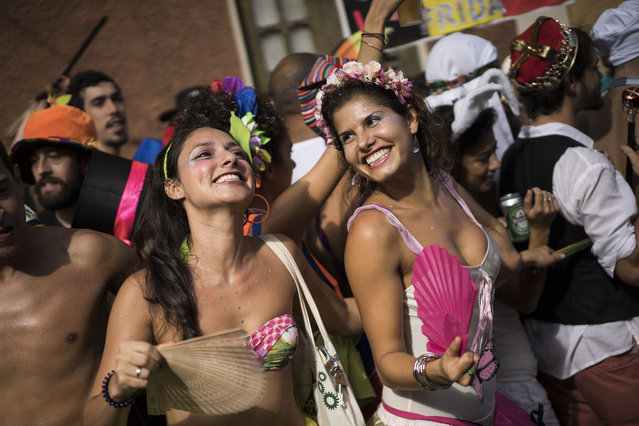
Revelers dance during the “Ceu na Terra”, or Heaven on earth, carnival parade in Rio de Janeiro, Brazil, Saturday, February 7, 2015. Rio's over-the-top Carnival is the highlight of the year for many local residents. Hundreds of thousands of merrymakers are beginning to take to the streets in open-air “blocos” parties. (Photo by Felipe Dana/AP Photo)

Revelers dance during the “Ceu na Terra”, or Heaven on earth, carnival parade in Rio de Janeiro, Brazil, Saturday, February 7, 2015. Rio's over-the-top Carnival is the highlight of the year for many local residents. Hundreds of thousands of merrymakers are beginning to take to the streets in open-air “blocos” parties. (Photo by Felipe Dana/AP Photo)
Details
10 Feb 2015 12:33:00
In this March 18, 2015 photo, Andrea, better known as Loira, which is the Portuguese word for 'blonde," poses for a portrait in an open-air crack cocaine market, known as a “cracolandia” or crackland where users can buy crack, and smoke it in plain sight, day or night, in Rio de Janeiro, Brazil. Andrea says she is married and has a home, but she keeps returning to crackland to feed her addiction. (Photo by Felipe Dana/AP Photo)

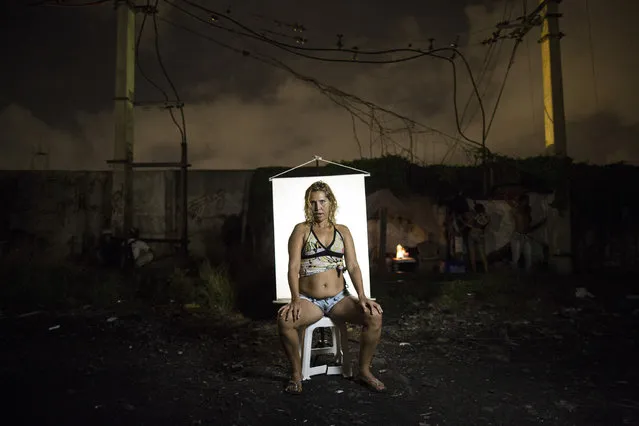
In this March 18, 2015 photo, Andrea, better known as Loira, which is the Portuguese word for “blonde”, poses for a portrait in an open-air crack cocaine market, known as a “cracolandia” or crackland where users can buy crack, and smoke it in plain sight, day or night, in Rio de Janeiro, Brazil. Andrea says she is married and has a home, but she keeps returning to crackland to feed her addiction. (Photo by Felipe Dana/AP Photo)
Details
09 Apr 2015 13:05:00
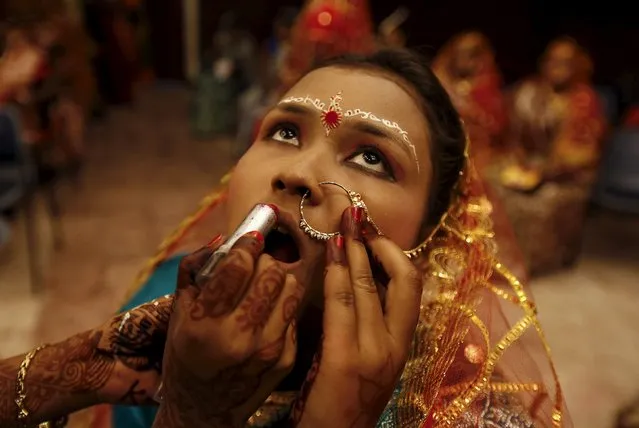
A bride gets her make-up done before the start of a mass marriage ceremony in Kolkata, India, February 14, 2016. A total of 150 tribal Hindu, Muslim and Christian couples from various villages across the state took their wedding vows on Sunday during the day-long mass marriage ceremony organised by a social organisation, the organisers said. (Photo by Rupak De Chowdhuri/Reuters)

A bride gets her make-up done before the start of a mass marriage ceremony in Kolkata, India, February 14, 2016. A total of 150 tribal Hindu, Muslim and Christian couples from various villages across the state took their wedding vows on Sunday during the day-long mass marriage ceremony organised by a social organisation, the organisers said. (Photo by Rupak De Chowdhuri/Reuters)
Details
15 Feb 2016 10:44:00
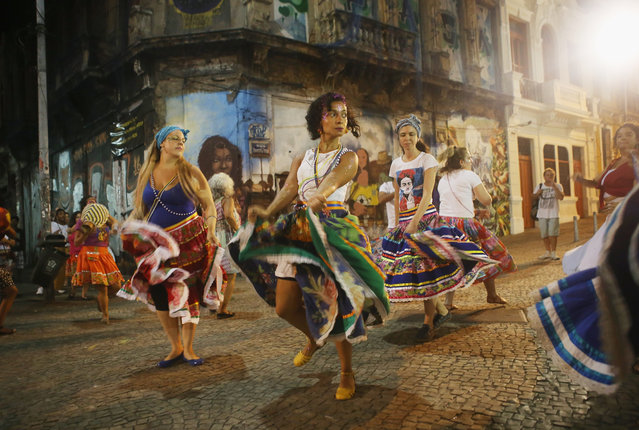
Dancers perform on their way to attend a rally with former President Luiz Inacio Lula da Silva, “Lula”, supporting President Dilma Rousseff in the historic Lapa neighborhood on April 11, 2016 in Rio de Janeiro, Brazil. Brazil's congressional impeachment committee approved the motion to proceed with President Dilma Rousseff's impeachment process today. A full vote by the lower house of Congress on the impeachment is scheduled for Sunday to decide whether she will face trial. (Photo by Mario Tama/Getty Images)

Dancers perform on their way to attend a rally with former President Luiz Inacio Lula da Silva, “Lula”, supporting President Dilma Rousseff in the historic Lapa neighborhood on April 11, 2016 in Rio de Janeiro, Brazil. Brazil's congressional impeachment committee approved the motion to proceed with President Dilma Rousseff's impeachment process today. A full vote by the lower house of Congress on the impeachment is scheduled for Sunday to decide whether she will face trial. (Photo by Mario Tama/Getty Images)
Details
13 Apr 2016 09:48:00
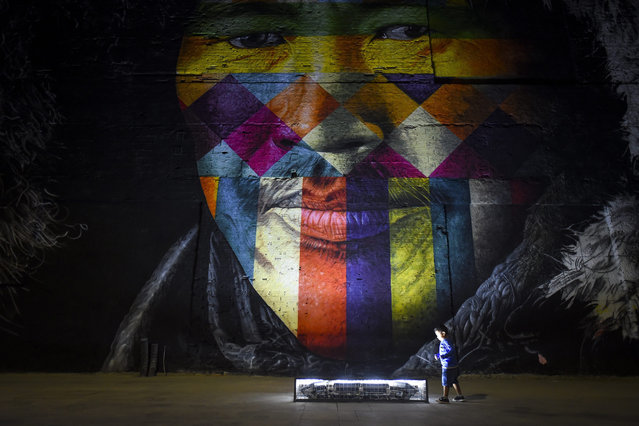
A child plays in front of “Etnias”, a large graffiti wall by Brazilian graffiti artist Eduardo Kobra created ahead of the Rio 2016 Olympic Games at Porto Maravilha in Rio de Janeiro, Brazil, 30 July 2016. The Olympics start on 05 August. Eduardo Kobra hopes to set a Guinness World Record for the largest graffiti created by a single artist. (Photo by Lukas Coch/EPA)

A child plays in front of “Etnias”, a large graffiti wall by Brazilian graffiti artist Eduardo Kobra created ahead of the Rio 2016 Olympic Games at Porto Maravilha in Rio de Janeiro, Brazil, 30 July 2016. The Olympics start on 05 August. Eduardo Kobra hopes to set a Guinness World Record for the largest graffiti created by a single artist. (Photo by Lukas Coch/EPA)
Details
01 Aug 2016 10:35:00