Loading...
Done
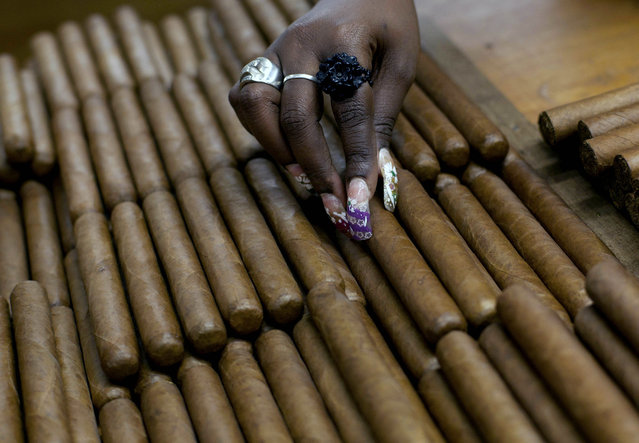
This March 1, 2013 file photo shows a worker selecting cigars at the H. Upmann cigar factory, where people can take tours as part of the 15th annual Cigar Festival in Havana, Cuba. (Photo by Ramon Espinosa/AP Photo)

This March 1, 2013 file photo shows a worker selecting cigars at the H. Upmann cigar factory, where people can take tours as part of the 15th annual Cigar Festival in Havana, Cuba. (Photo by Ramon Espinosa/AP Photo)
Details
03 Dec 2016 11:13:00
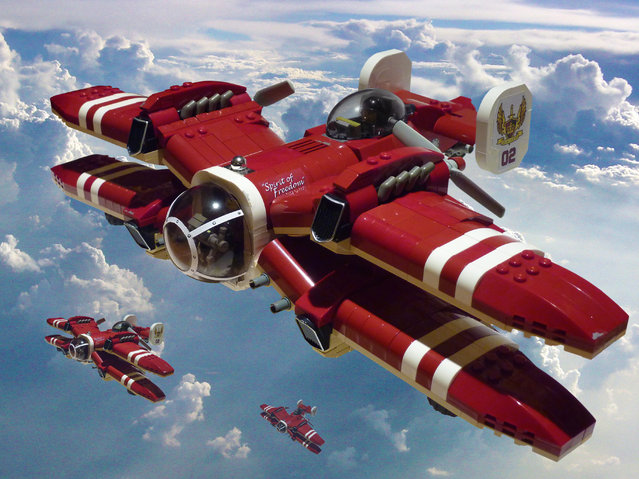
“The V-30 Warhawk was designed by Blackshaw Avionics as a long-range fighter and was primarily used by the Arcadian Air Force for escort duties. . (Jon Hall)

“The V-30 Warhawk was designed by Blackshaw Avionics as a long-range fighter and was primarily used by the Arcadian Air Force for escort duties. The plane pictured is the “Spirit of Freedom” and was one of the four planes that escorted the Arcadian Royal Airship during and after the Great War. The three other fighters were the “Spirit of Hope”, the “Spirit of Justice” and the “Spirit of Destiny”. All pilots were hand-picked by the Head of Airborne Forces and included some of the very finest pilots in the Kingdom. The crew consisted of one pilot and one gunner although both cabins were fitted so that if either crew member was killed the other could take over their duties. Each Warhawk was fitted with four Haverlock “Banshee” engines and four 24mm machine guns”. (Photo and comment by Jon Hall)


Details
11 Feb 2013 10:36:00
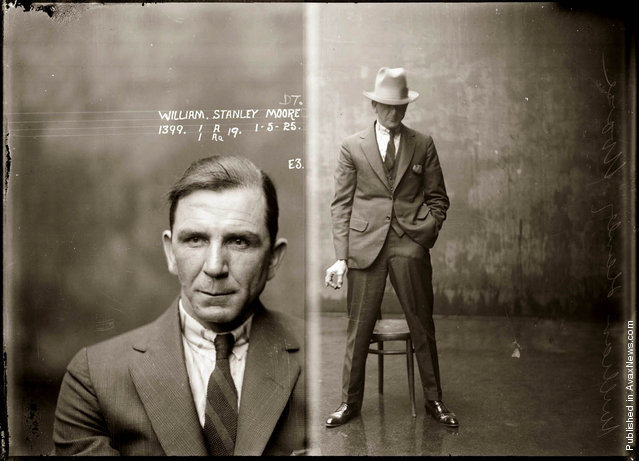
Mug shot of William Stanley Moore, 1 May 1925, Central Police Station, Sydney

Mug shot of William Stanley Moore, 1 May 1925, Central Police Station, Sydney. This picture appears in the Photo Supplement to the NSW Police Gazette, 28 July, 1926 captioned: “Opium dealer. Operates with large quantities of faked opium and cocaine. A wharf labourer; associates with water front thieves and drug traders”. (Photo by NSW Police Forensic Photography Archive, Justice & Police Museum, Histiric Houses Trust of NSW)
Details
24 Apr 2012 11:46:00
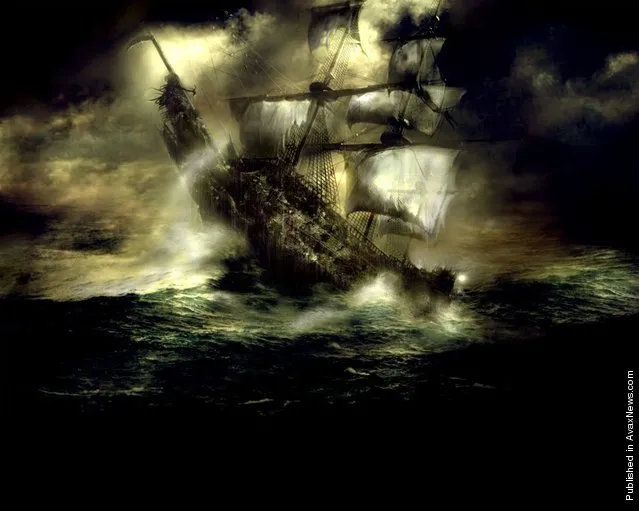
Ocean voyage

Do you think that history is a science? Well, not exactly. First, and foremost, history is the state's “legend of wars”, it’s official regalia. Of course, public historians are not interested in scientific truth – quite the opposite. In this respect, any attempt to present a state’s history as altruistic and benevolent as possible is welcomed and encouraged – as opposed to any revisionism attempts that may be more accurate. In this matter, Chinese have surpassed us all – they revised in highly creative manner (but rather shamelessly) the technology already invented by Europeans, a process that resulted in oldest state on the planet. Here is an interesting paradox: ask any sinologist about the Middle Kingdom during second century B.C., and he will describe it to you in such a vivid manner as if he has been living there all his life – but as soon as you will ask him to describe Chinese history in the 19-20th centuries… let's say, his eagerness will be greatly diminished. However, we will discuss China in a different article, and in the meantime we will try to understand how exactly historic “legend of wars” is formed and functions – based on a specific and well-known example. A great example is Ferdinand Magellan's first voyage around the world.

Details
14 Nov 2011 09:11:00
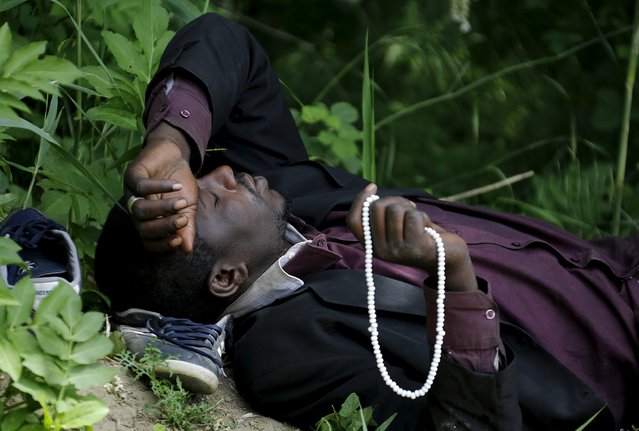
An  immigrant from Mali rests at the Greek-Macedonian border before an attempt to flee to Macedonia  May 13, 2015 village of Idomeni in Kilkis prefecture May 13, 2015. (Photo by Yannis Behrakis/Reuters)

An immigrant from Mali rests at the Greek-Macedonian border before an attempt to flee to Macedonia May 13, 2015 village of Idomeni in Kilkis prefecture May 13, 2015. Hundreds of mostly Afghan, Syrian, and African immigrants cross daily from Greece into Macedonia on their way to northern European countries; most of them are turned back by Macedonian border guards. (Photo by Yannis Behrakis/Reuters)
Details
17 May 2015 11:50:00
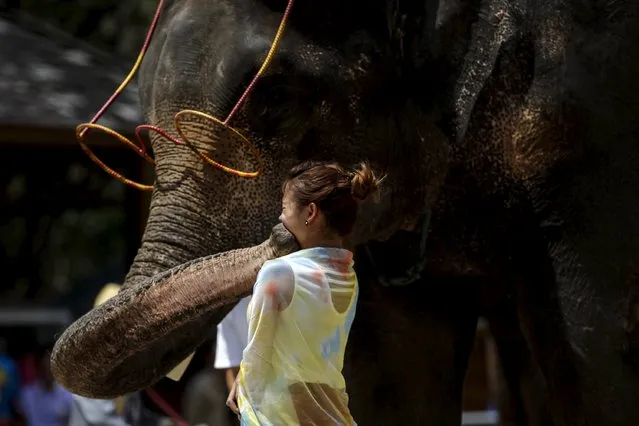
An elephant “kisses” a visitor during a show at an elephant training school in Xishuangbanna, Yunnan province, April 18, 2015. Some 16 elephants live at the school and give four 30-minute performances everyday for visitors. (Photo by Wong Campion/Reuters)

An elephant “kisses” a visitor during a show at an elephant training school in Xishuangbanna, Yunnan province, April 18, 2015. Some 16 elephants live at the school and give four 30-minute performances everyday for visitors. (Photo by Wong Campion/Reuters)
Details
25 Apr 2015 09:41:00
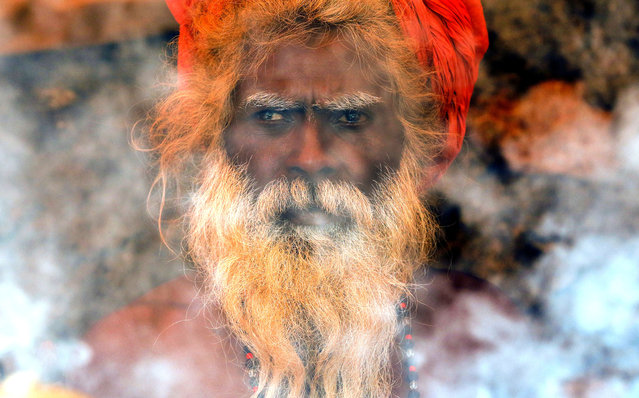
A Naga sadhu, or naked Hindu holy man, performs a ritual inside his tent during Kumbh Mela, or Pitcher festival, at Trimbakeshwar, India, Friday, August 28, 2015. Hindus believe taking a dip in the waters of a holy river during the festival will cleanse them of their sins. The festival is held four times every 12 years. (Photo by Rajanish Kakade/AP Photo)

A Naga sadhu, or naked Hindu holy man, performs a ritual inside his tent during Kumbh Mela, or Pitcher festival, at Trimbakeshwar, India, Friday, August 28, 2015. Hindus believe taking a dip in the waters of a holy river during the festival will cleanse them of their sins. The festival is held four times every 12 years. (Photo by Rajanish Kakade/AP Photo)
Details
29 Aug 2015 11:44:00
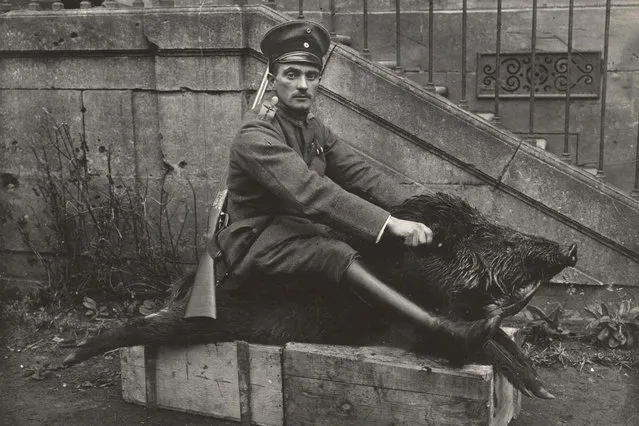
A German Air Force Officer sits astride a dead boar outside a house where he is stationed near the Western Front, in this 1918 handout picture. This picture is part of a previously unpublished set of World War One (WWI) images from a private collection. The pictures offer an unusual view of varied and contrasting aspects of the conflict, from high tech artillery to mobile pigeon lofts, and from officers partying in their headquarters to the grim reality of life and death in the trenches. The year 2014 marks the centenary of the start of the war. (Photo by Reuters/Archive of Modern Conflict London)

A German Air Force Officer sits astride a dead boar outside a house where he is stationed near the Western Front, in this 1918 handout picture. This picture is part of a previously unpublished set of World War One (WWI) images from a private collection. The pictures offer an unusual view of varied and contrasting aspects of the conflict, from high tech artillery to mobile pigeon lofts, and from officers partying in their headquarters to the grim reality of life and death in the trenches. The year 2014 marks the centenary of the start of the war. (Photo by Reuters/Archive of Modern Conflict London)
Details
26 Jun 2014 12:13:00