Loading...
Done


Soviet cosmonaut and the first man to travel in space, Yury Alekseyvich Gagarin (1934–1968) arriving in London for a Russian trade fair. (Photo by Douglas Miller/Getty Images)
Details
11 Apr 2011 10:24:00
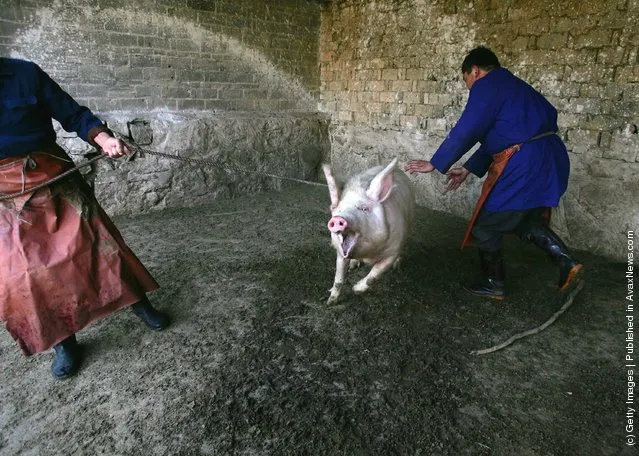
Pig

Chinese butchers catch a pig to slaughter on January 31, 2005 in Jinzhai County, Anhui Province, China. (Photo by Cancan Chu/GettyImages)
Details
20 Aug 2011 12:17:00
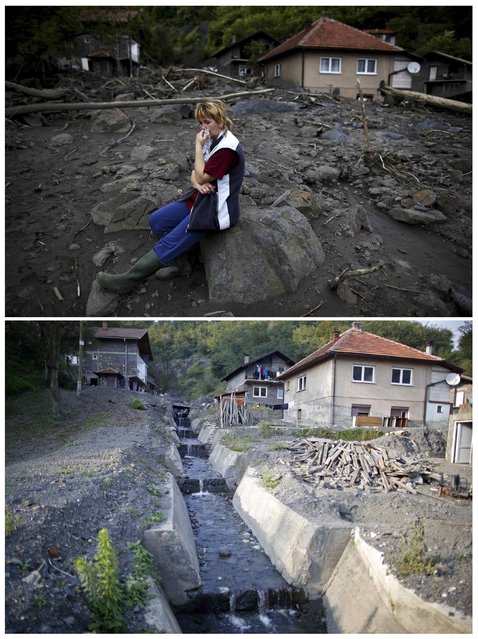
A combination photo shows Fata Kovacevic reacting near her flood-damaged house during floods May 20, 2014 (top) and the same place after floods October 8, 2014 in Topcic Polje. (Photo by Dado Ruvic/Reuters)

A combination photo shows Fata Kovacevic reacting near her flood-damaged house during floods May 20, 2014 (top) and the same place after floods October 8, 2014 in Topcic Polje. (Photo by Dado Ruvic/Reuters)
Details
09 Oct 2014 12:18:00
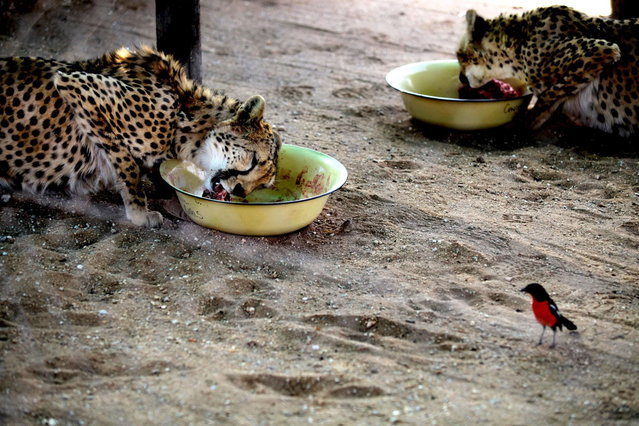
Young cheetahs eat meat at The Cheetah Conservation Fund (CCF) center in Otjiwarongo, Namibia, on August 13, 2013. The CCF started breeding Anatolian livestock dogs to promote cheetah-friendly farming after some 10,000 big cats – the current total worldwide population – were killed or moved off farms in the 1980s.  Up to 1,000 cheetahs were being killed a year, mostly by farmers who saw them as livestock killers. But the use of dogs has slashed losses for sheep and goat farmers and led to less retaliation against the vulnerable cheetah. (Photo by Jennifer Bruce/AFP Photo)

Young cheetahs eat meat at The Cheetah Conservation Fund (CCF) center in Otjiwarongo, Namibia, on August 13, 2013. The CCF started breeding Anatolian livestock dogs to promote cheetah-friendly farming after some 10,000 big cats – the current total worldwide population – were killed or moved off farms in the 1980s. Up to 1,000 cheetahs were being killed a year, mostly by farmers who saw them as livestock killers. But the use of dogs has slashed losses for sheep and goat farmers and led to less retaliation against the vulnerable cheetah. (Photo by Jennifer Bruce/AFP Photo)
Details
29 Aug 2013 10:56:00
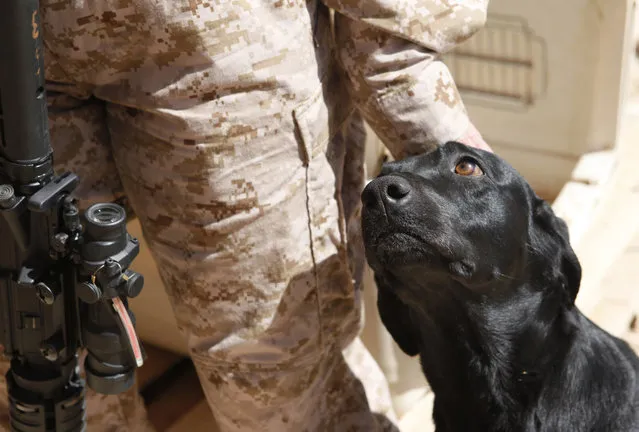
Afghanistan: Dogs of War Part 2

Throughout the course of the long war in Afghanistan, Coalition troops have relied on thousands of military working dogs to help keep them safe, and make their jobs easier. The dogs are trained to detect explosives, to find illegal drugs, to search for missing comrades, or target enemy combatants. Not only are they active on the front lines, but behind the lines they serve as therapy dogs, service dogs, and loyal companions. They also share the same risks as the ground troops, suffering injuries and sometimes death on the battlefields. Gathered here are images of these dogs and their handlers in Afghanistan and back home, from over the past several years, part of the ongoing series here on Afghanistan.

Details
05 Jun 2014 21:10:00


Racegoers make their way home after Ladies Day on the second day of the Grand National meeting at Aintree Racecourse on April 9, 2010 in Aintree, England. Friday is traditionally Ladies day at the three-day meeting of the world famous Grand National, where fashion is as important as the racing. (Photo by Christopher Furlong/Getty Images)
Details
10 Apr 2011 08:45:00
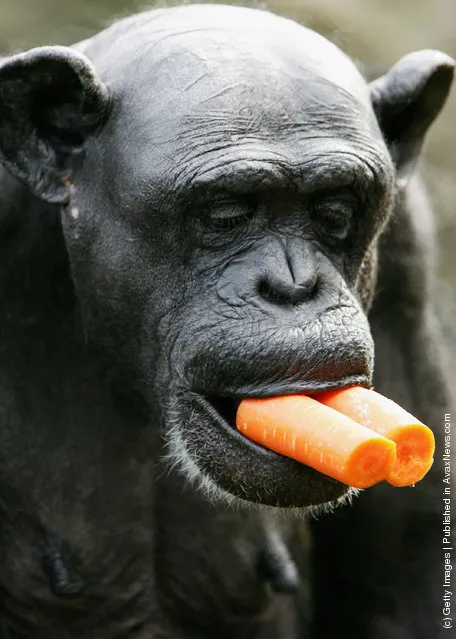
Female Chimpanzee eats carrots

Female Chimpanzee “Fifi” eats carrots as she sits in her enclosure at Taronga Zoo on her 60th birthday May 21, 2007 in Sydney, Australia. Fifi is the oldest of the Zoo's chimp population, which consists of 19 individuals. (Photo by Ian Waldie/Getty Images)
Details
07 Aug 2011 12:48:00
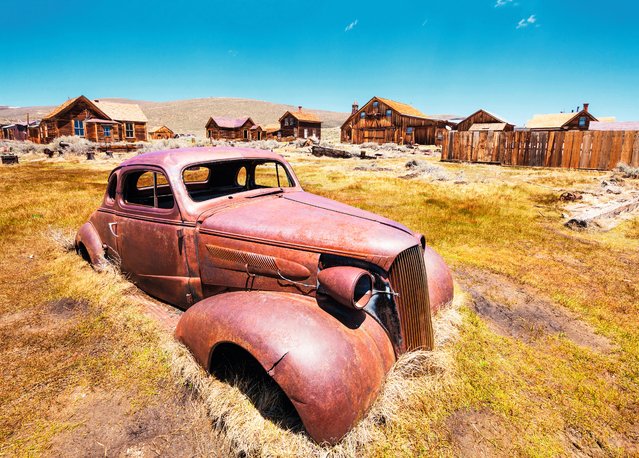
Bodie, Mono County, California. Gold was discovered at Bodie in 1859 (just after the initial California gold rush) and it went from mining camp to boomtown. Its decline began in 1880, when word spread of new boomtowns elsewhere. The Standard Consolidated Mine closed in 1913, and four years later the Bodie Railway was abandoned. By 1940 the population was down to 40. Today, Bodie is maintained in a state of arrested decay as a visitor attraction. (Photo by Alamy Stock Photo)

Kieron Connolly’s new book of photographs of more than 100 once-busy and often elegant buildings gives an idea of how the world might look if humankind disappeared. Here: Bodie, Mono County, California. Gold was discovered at Bodie in 1859 (just after the initial California gold rush) and it went from mining camp to boomtown. Its decline began in 1880, when word spread of new boomtowns elsewhere. The Standard Consolidated Mine closed in 1913, and four years later the Bodie Railway was abandoned. By 1940 the population was down to 40. Today, Bodie is maintained in a state of arrested decay as a visitor attraction. (Photo by Alamy Stock Photo)
Details
07 Sep 2016 09:50:00