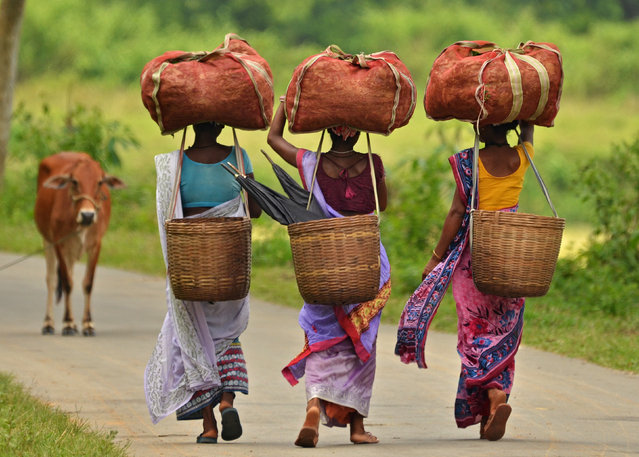
Workers carry sacks of tea leaves at a tea estate in Nagaon district in the northeastern state of Assam, India, August 22, 2016. (Photo by Reuters/Stringer)
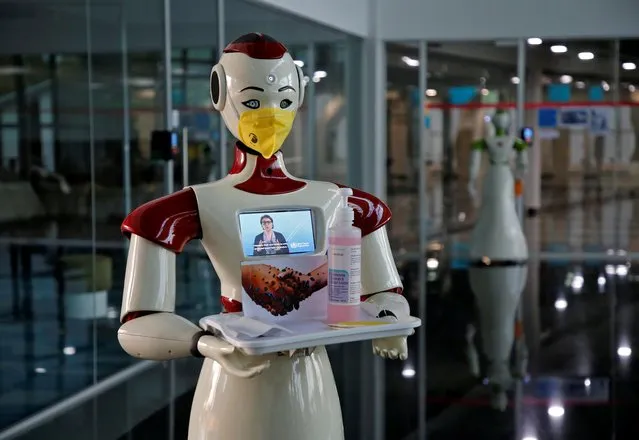
A robot, developed by start-up firm Asimov Robotics, holds a tray with face masks and sanitizer after the two robots were launched to spread awareness about the coronavirus, in Kochi, India, March 17, 2020. (Photo by Sivaram V/Reuters)
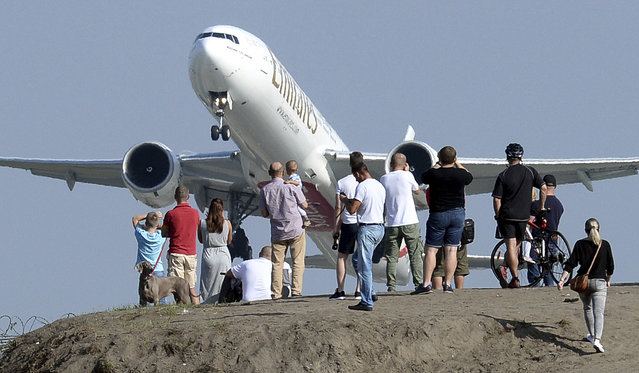
People gather on a hill near the Chopin Airport to watch aeroplanes taking off, in Warsaw, Poland, Sunday, September 9, 2018. (Photo by Alik Keplicz/AP Photo)
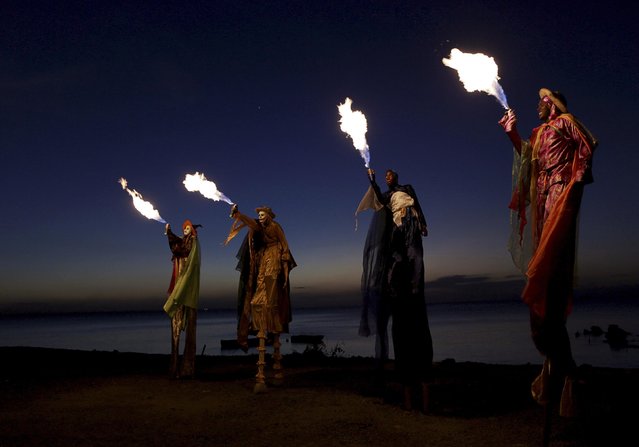
Members of the Kaisokah Moko Jumbies perform with fire on the waterfront near their San Fernando, Trinidad base February 10, 2015. (Photo by Andrea De Silva/Reuters)
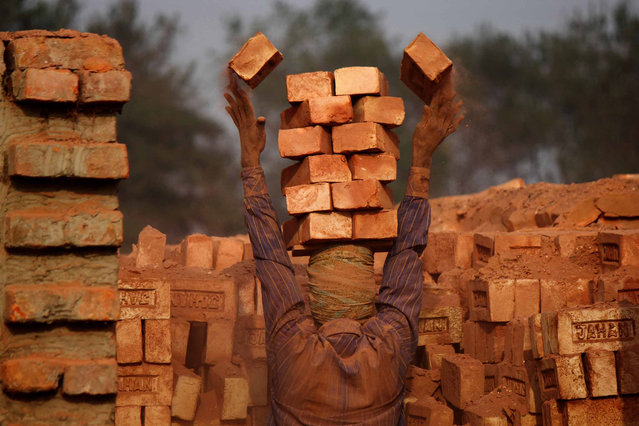
The shoemaker in Turkey, the potato seller in Vietnam, and the weaver in Bolivia are among the billions of low-income entrepreneurs who make the world go round. They are also the type of people who can benefit significantly from microfinance. Every year, the Consultative Group To Assist The Poor (or CGAP) hosts a photo contest asking entrants to submit photos based around the idea of microfinance.The purpose of the contest is to give amateur and professional photographers a chance to show the different ways that poor households manage their financial lives and make their lives better through financial inclusion. Photo: South Asia Regional Winner – “Bricks Worker”, Bangladesh. A private enterprise worker is working at a brick field. These small businesses are creating new job opportunities for many poor people. (Photo by Moksumul Haque)