Loading...
Done
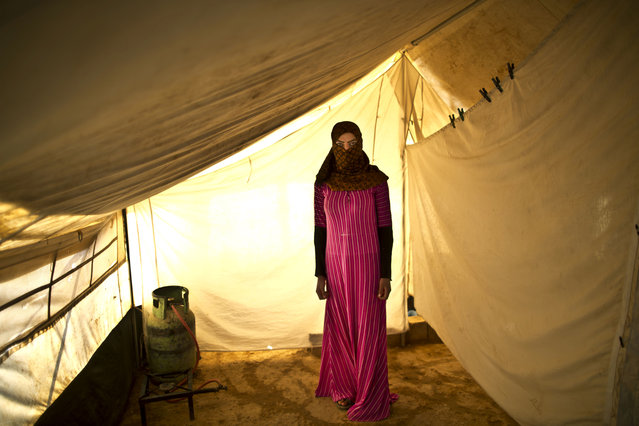
In this Monday, March 16, 2015 photo, Syrian refugee Samira Helal, 17, who is two months pregnant, poses for a portrait at  inside her tent at an informal tented settlement near the Syrian border, on the outskirts of Mafraq, Jordan. Nearly 3.8 million Syrians have fled their country and are now registered as refugees, according to the U.N. Most face increasingly desperate circumstances. (Photo by Muhammed Muheisen/AP Photo)

In this Monday, March 16, 2015 photo, Syrian refugee Samira Helal, 17, who is two months pregnant, poses for a portrait at inside her tent at an informal tented settlement near the Syrian border, on the outskirts of Mafraq, Jordan. Nearly 3.8 million Syrians have fled their country and are now registered as refugees, according to the U.N. Most face increasingly desperate circumstances. (Photo by Muhammed Muheisen/AP Photo)
Details
08 Apr 2015 11:11:00
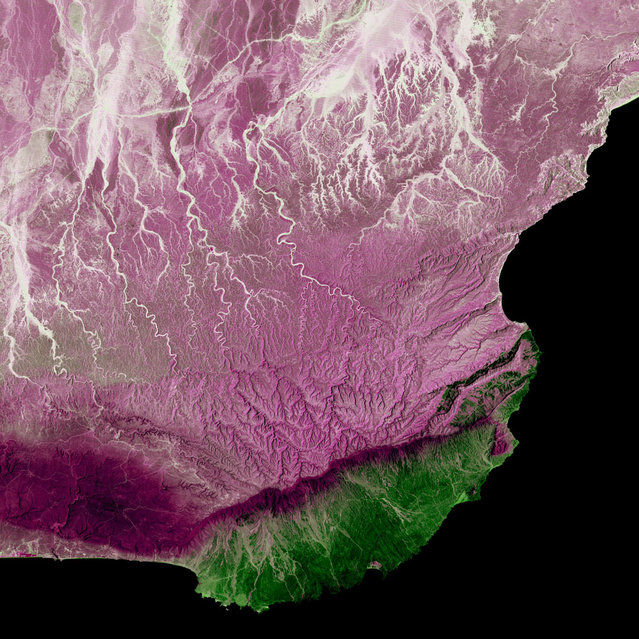
Dhofar Region, Oman. Much of Oman is desert, but the Arabian Sea coast in the Dhofar region represents a startling difference in climate. This coastal region catches the monsoon rains, or khareef, during the summer months. Drenching rains fall primarily on the mountainous ridge that separates the lush, fertile areas along the coast from the arid interior, recharging streams, waterfalls and springs that provide plentiful water supplies in the fertile lowlands for the remainder of the year. Image taken by Landsat 5 on April 2, 2005. (Photo by USGS/NASA)

Dhofar Region, Oman. Much of Oman is desert, but the Arabian Sea coast in the Dhofar region represents a startling difference in climate. This coastal region catches the monsoon rains, or khareef, during the summer months. Drenching rains fall primarily on the mountainous ridge that separates the lush, fertile areas along the coast from the arid interior, recharging streams, waterfalls and springs that provide plentiful water supplies in the fertile lowlands for the remainder of the year. Image taken by Landsat 5 on April 2, 2005. (Photo by USGS/NASA)
Details
25 Dec 2012 11:13:00
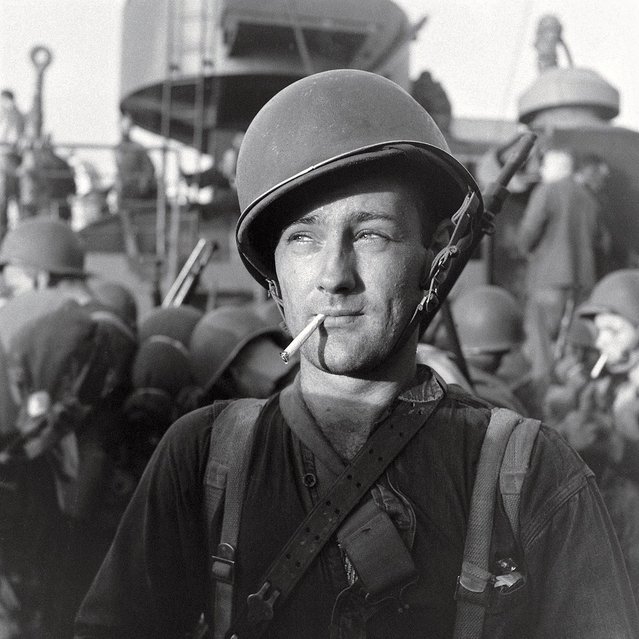
An American Marine readies to land on Guadalcanal during the five-month struggle for the island between late 1942 and early 1943. Three thousand miles south of Tokyo, Guadalcanal was a major shipping point for military supplies. The Allied victory there in February, 1943, marked a major turning point in the war after a string of Japanese victories in the Pacific. (Photo by Joe Scherschel/Time & Life Pictures)

An American Marine readies to land on Guadalcanal during the five-month struggle for the island between late 1942 and early 1943. Three thousand miles south of Tokyo, Guadalcanal was a major shipping point for military supplies. The Allied victory there in February, 1943, marked a major turning point in the war after a string of Japanese victories in the Pacific. (Photo by Joe Scherschel/Time & Life Pictures)
Details
10 Mar 2013 12:50:00
Perpetual Calendar By Arina Pozdnyak

We place too much value into something as elusive as time. This is the lesson that Arina Pozdnyak, the creator of Perpetual Calendar, is trying to teach us. Days fly by, and even months are mere speckles of sand in an hourglass of eternity. People do not realize that the time given to us by fate cannot be measured using months or even years. It is measured using emotions and impressions. If a person lives to be 150 years old without experiencing any emotions, he might as well have lived one day, for all it’s worth. On the other hand, a person who lived an exciting, fulfilling life, read countless books and cherished every moment that he had, is actually the one who lived a longer life, even if in reality his flame was snuffed out much too soon. (Photo by Arina Pozdnyak)
Details
30 Oct 2014 13:33:00
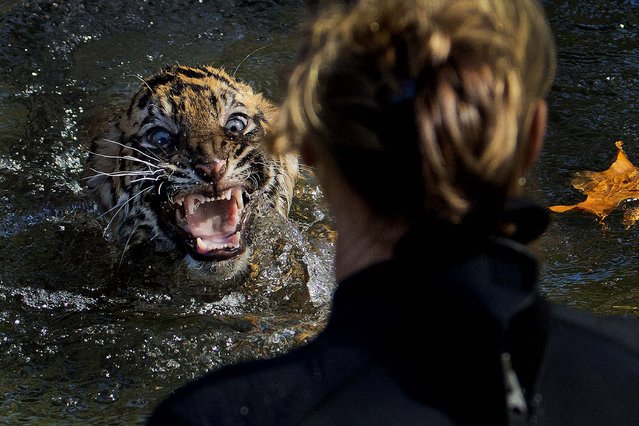
A three-month-old Sumatran tiger cub named “Bandar” shows his displeasure after being dunked in the tiger exhibit moat for a swim reliability test at the National Zoo in Washington, on November 6, 2013. All cubs born at the zoo must take a swim test before being allowed to roam in the exhibit. Bandar passed his test. (Photo by Manuel Balce Ceneta/Associated Press)

A three-month-old Sumatran tiger cub named “Bandar” shows his displeasure after being dunked in the tiger exhibit moat for a swim reliability test at the National Zoo in Washington, on November 6, 2013. All cubs born at the zoo must take a swim test before being allowed to roam in the exhibit. Bandar passed his test. (Photo by Manuel Balce Ceneta/Associated Press)
Details
09 Nov 2013 12:51:00
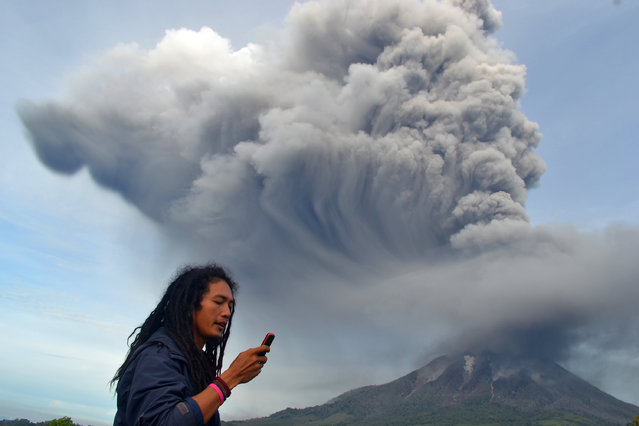
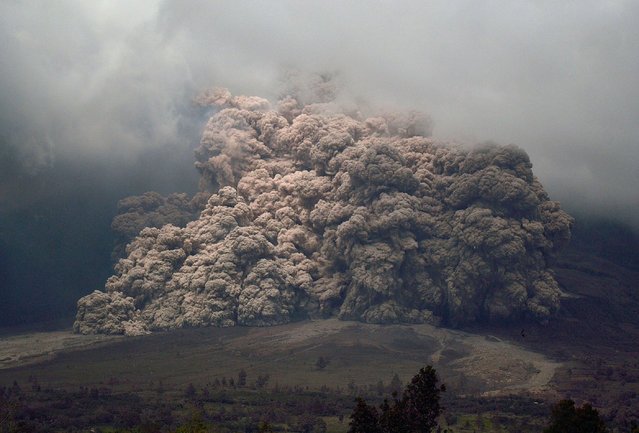
A man uses his mobile phone as Mount Sinabung continues to erupt, with hot smoke spewing from the volcano, in the Karo district on the north of Indonesia's Sumatra island on November 18, 2013. Officials said a week ago at more than 5,000 people had fled their homes since the volcano erupted early this month. (Photo by Sutanta Aditya/AFP Photo)

Starting in September, Indonesia's Mount Sinabung began erupting yet again. In the days that followed, ash and smoke were shot into the air multiple times. As a result, nearby towns turned gray from repeated blows by the volcano. Photo: A man uses his mobile phone as Mount Sinabung continues to erupt, with hot smoke spewing from the volcano, in the Karo district on the north of Indonesia's Sumatra island on November 18, 2013. Officials said a week ago at more than 5,000 people had fled their homes since the volcano erupted early this month. (Photo by Sutanta Aditya/AFP Photo)
Details
22 Nov 2013 08:08:00
Sinabung mount spews ash to the air during an eruption near from Karo, North Sumatra on January 7, 2014. An Indonesian volcano that has erupted relentlessly for months shot volcanic ash into the air 30 times on January 4, forcing further evacuations with more than 20,000 people now displaced, an official said. (Photo by Sutanta Aditya/AFP Photo)

Sinabung mount spews ash to the air during an eruption near from Karo, North Sumatra on January 7, 2014. An Indonesian volcano that has erupted relentlessly for months shot volcanic ash into the air 30 times on January 4, forcing further evacuations with more than 20,000 people now displaced, an official said. (Photo by Sutanta Aditya/AFP Photo)
Details
09 Jan 2014 09:33:00
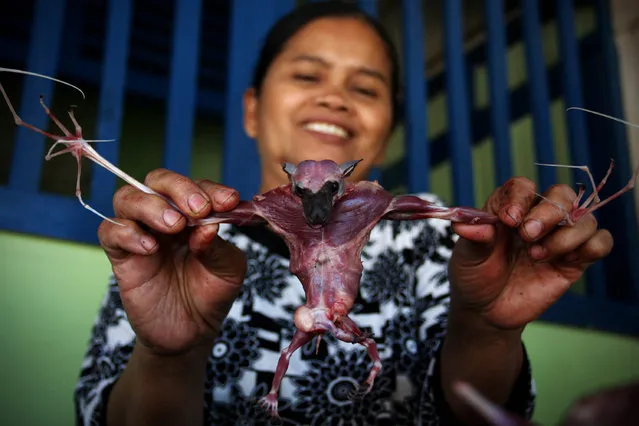
Bat seller Sukarwati shows a skinned bat on July 30, 2009 in Yogyakarta, Indonesia. Sukarwati and her family have hunted bats in the Imogiri region for generations, capturing more than 800 bats per month. The Sukarwati family believe that the meat from the bat heals asthma and respiratory problems and it is a great honour for them knowing that the meat that they provide will help ease people's health ailments

Bat seller Sukarwati shows a skinned bat on July 30, 2009 in Yogyakarta, Indonesia. Sukarwati and her family have hunted bats in the Imogiri region for generations, capturing more than 800 bats per month. The Sukarwati family believe that the meat from the bat heals asthma and respiratory problems and it is a great honour for them knowing that the meat that they provide will help ease people's health ailments. (Photo by Ulet Ifansasti)
Details
20 Sep 2012 08:57:00