Loading...
Done
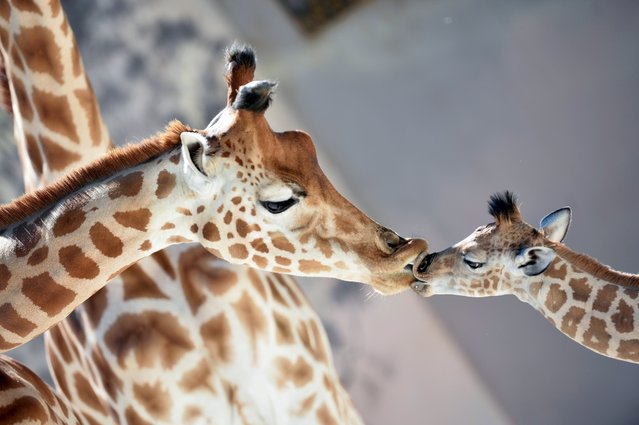
Baby giraffe of Niger (Giraffa Camelopardalis) “Kenai” (R), born on August 25, 2016, kisses his mother “Dioni” on August 31, 2016 at the zoo of La Fleche, northwestern France. (Photo by Jean-Francois Monier/AFP Photo)

Baby giraffe of Niger (Giraffa Camelopardalis) “Kenai” (R), born on August 25, 2016, kisses his mother “Dioni” on August 31, 2016 at the zoo of La Fleche, northwestern France. (Photo by Jean-Francois Monier/AFP Photo)
Details
04 Sep 2016 09:14:00
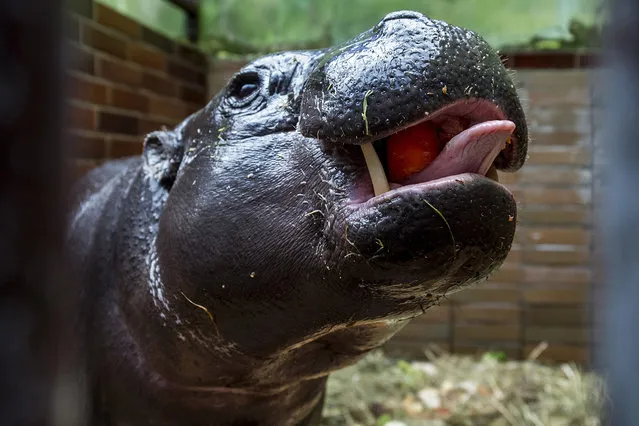
Female of pygmy hippopotamus called Malaya from Netherlands in zoo in Dvur Kralove nad Labem, Czech Republic, February 22, 2016. (Photo by David Tanecek/CTK via ZUMA Press)

Female of pygmy hippopotamus called Malaya from Netherlands in zoo in Dvur Kralove nad Labem, Czech Republic, February 22, 2016. (Photo by David Tanecek/CTK via ZUMA Press)
Details
28 Feb 2016 10:44:00
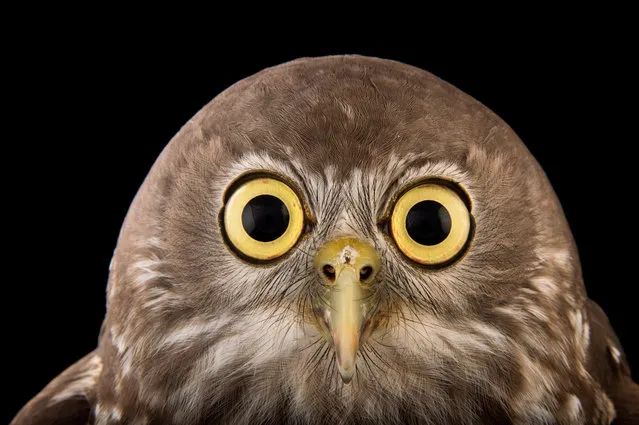
The National Geographic Photo Ark is a travelling exhibition of photographer Joel Sartore’s quest to create a photo archive of biodiversity around the world. So far, Sartore has captured studio portraits of more than 6,000 species – a number that he hopes to double. On 1 July, the ark will open at Melbourne zoo – the first time it has been exhibited in the southern hemisphere. More than 50 portraits will be on display, including many of Australian endangered animals being protected by programs at the zoo itself. These captions have been edited from text supplied by Melbourne zoo. Here: Barking owl. So-named because its call sounds like a barking dog, these birds are native to Australia, Indonesia and Papua New Guinea. In Victoria they are listed as an endangered species, and in 2003 there were estimated to be fewer than 50 breeding pairs. The main threat to the species in Victoria is loss of habitat, especially large trees with hollows in which they can nest and on which many of their prey depend. Apart from a bark, they may utter a chilling scream when they feel threatened. (Photo by Joel Sartore/National Geographic Photo Ark/The Guardian)

The National Geographic Photo Ark is a travelling exhibition of photographer Joel Sartore’s quest to create a photo archive of biodiversity around the world. So far, Sartore has captured studio portraits of more than 6,000 species – a number that he hopes to double. On 1 July, the ark will open at Melbourne zoo – the first time it has been exhibited in the southern hemisphere. More than 50 portraits will be on display, including many of Australian endangered animals being protected by programs at the zoo itself. These captions have been edited from text supplied by Melbourne zoo. Here: Barking owl. (Photo by Joel Sartore/National Geographic Photo Ark/The Guardian)
Details
01 Jul 2017 07:45:00
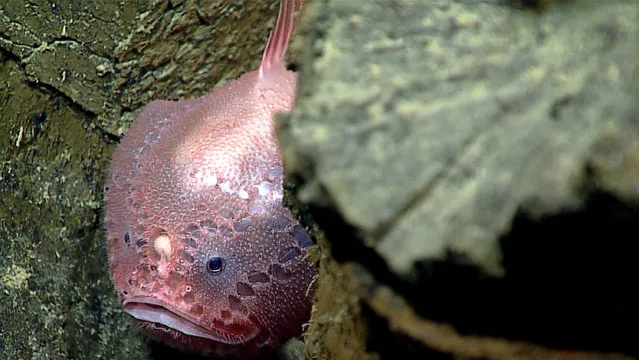
This April 30, 2016 image made available by NOAA shows a deep sea anglerfish living between pillow basalt rock formations, during a deepwater exploration of the Marianas Trench Marine National Monument area in the Pacific Ocean near Guam and Saipan. The ambush predator waits for prey to be attracted by its lure, located between its eyes, and gulps it with its large mouth. (Photo by NOAA Office of Ocean Exploration and Research via AP Photo)

This April 30, 2016 image made available by NOAA shows a deep sea anglerfish living between pillow basalt rock formations, during a deepwater exploration of the Marianas Trench Marine National Monument area in the Pacific Ocean near Guam and Saipan. The ambush predator waits for prey to be attracted by its lure, located between its eyes, and gulps it with its large mouth. (Photo by NOAA Office of Ocean Exploration and Research via AP Photo)
Details
21 Oct 2016 12:30:00
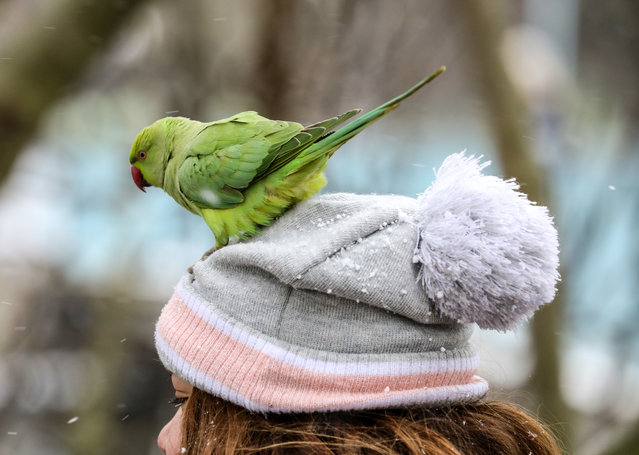
A parakeets lands on a woman's head at St James' Park in London, United Kingdom on February 9, 2021. London has been experiencing snow as the Storm Darcy hits the city. (Photo by Brett Cove/SOPA Images/Sipa USA)

A parakeets lands on a woman's head at St James' Park in London, United Kingdom on February 9, 2021. London has been experiencing snow as the Storm Darcy hits the city. (Photo by Brett Cove/SOPA Images/Sipa USA)
Details
21 Feb 2021 08:52:00
A Hindu devotee offers prayers at the Sangam, the confluence of three rivers – the Ganges, the Yamuna and the mythical Saraswati, to take a ritualistic bath during Makar Sankranti festival that falls during the annual traditional fair of Magh Mela festival, one of the most sacred pilgrimages in Hinduism, in Prayagraj, India. Friday, January 14, 2022. (Photo by Rajesh Kumar Singh/AP Photo)

A Hindu devotee offers prayers at the Sangam, the confluence of three rivers – the Ganges, the Yamuna and the mythical Saraswati, to take a ritualistic bath during Makar Sankranti festival that falls during the annual traditional fair of Magh Mela festival, one of the most sacred pilgrimages in Hinduism, in Prayagraj, India. Friday, January 14, 2022. (Photo by Rajesh Kumar Singh/AP Photo)
Details
26 Jan 2022 07:40:00
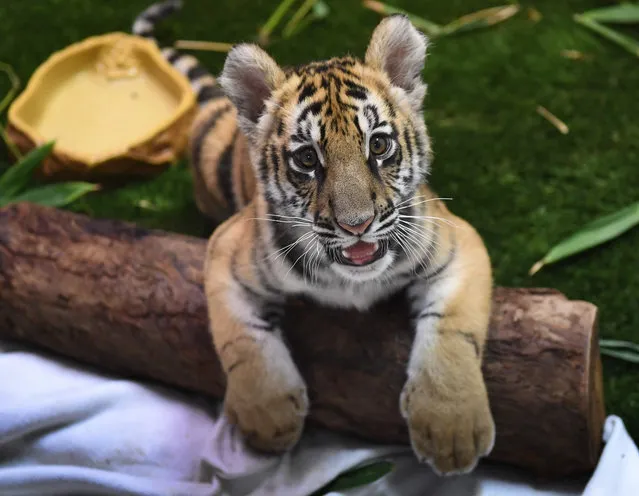
A young Bengal tiger cub smuggled into the US and seized at the Mexico border is displayed for the media during Operation Jungle Book at the US Fish and Wildlife Service in Torrance, California on October 20, 2017. Operation Jungle Book, a law enforcement initiative led by the US Fish and Wildlife Service that targeted wildlife smuggling, resulting in federal criminal charges against defendants who allegedly participated in the illegal importation and/ or transportation of numerous animal species – including a tiger, monitor lizards, cobras, Asian “lucky” fish, exotic songbirds and several coral species. (Photo by Mark Ralston/AFP Photo)

A young Bengal tiger cub smuggled into the US and seized at the Mexico border is displayed for the media during Operation Jungle Book at the US Fish and Wildlife Service in Torrance, California on October 20, 2017. Operation Jungle Book, a law enforcement initiative led by the US Fish and Wildlife Service that targeted wildlife smuggling, resulting in federal criminal charges against defendants who allegedly participated in the illegal importation and/ or transportation of numerous animal species – including a tiger, monitor lizards, cobras, Asian “lucky” fish, exotic songbirds and several coral species. (Photo by Mark Ralston/AFP Photo)
Details
29 Oct 2017 08:30:00
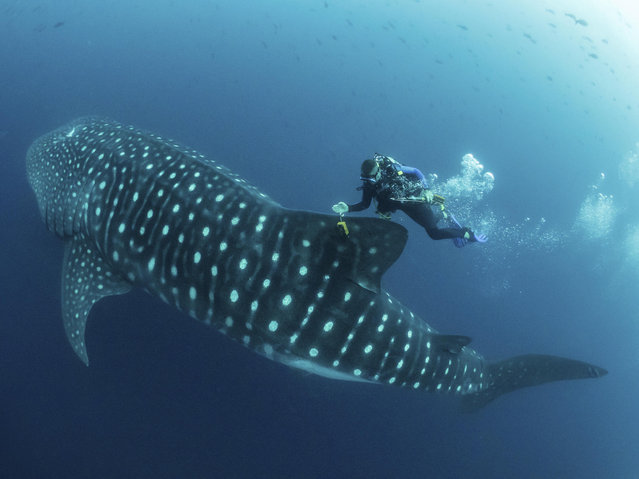
In this 2017 photo provided by Simon Pierce, Jonathan Green checks on a fin-mounted satellite tag on a whale shark in the Galapagos Islands area of Ecuador.  Despite typically being bigger than a double-decker bus, the elusive whale shark has only tiny, almost useless teeth. It's also one of the least understood animals in the ocean. (Photo by Simonjpierce.com via AP Photo)

In this 2017 photo provided by Simon Pierce, Jonathan Green checks on a fin-mounted satellite tag on a whale shark in the Galapagos Islands area of Ecuador. Despite typically being bigger than a double-decker bus, the elusive whale shark has only tiny, almost useless teeth. It's also one of the least understood animals in the ocean. (Photo by Simonjpierce.com via AP Photo)
Details
02 Mar 2018 00:03:00