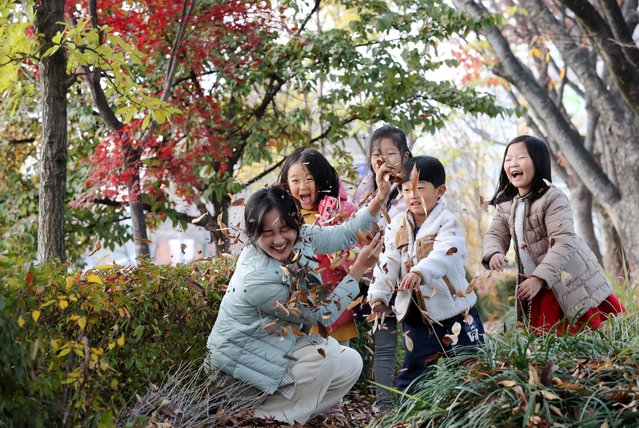
On the November 24, 2025, children are making human faces by collecting fallen leaves in the forest in front of the Yuseong-gu Office in Daejeon. (Photo by Shin Hyeon-jong)
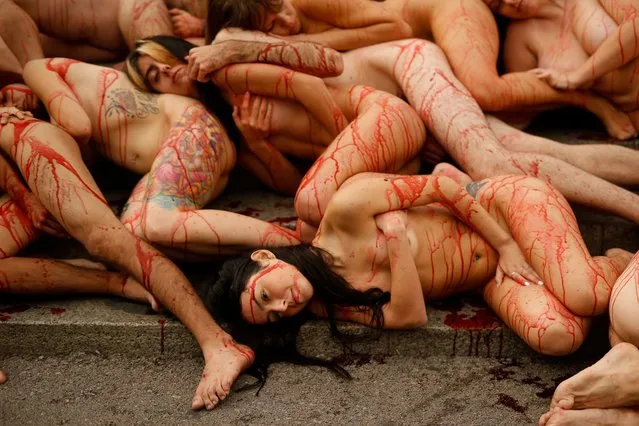
Naked activists take part in a protest against fur trade, called by international non profit animal rights organisation AnimaNaturalis, in Barcelona, on December 1, 2019, on the eve of the opening of the UN Climate Change Conference COP25. (Photo by Pau Barrena/AFP Photo)
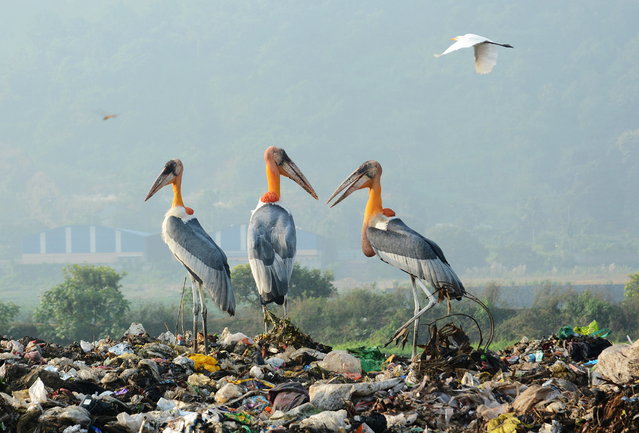
A flock of Adjutants storks sit on a garbage dump at Borgaon in Guwahati, Assam, India, 17 October 2019. Wildlife activists and environmentalists have protested in the past for shifting the garbage dump to another site since it is situated near the Deepor Beel Bird Sanctuary. (Photo by EPA/EFE/Stringer)
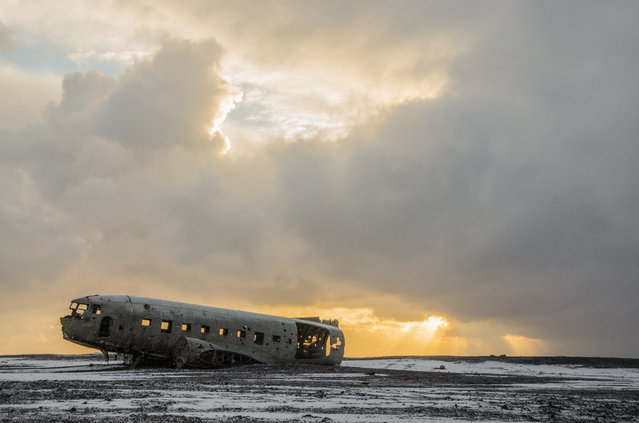
Shortlisted: Sólheimasandur aircraft crash site, Iceland by Ollie Conway. (Photo by Ollie Conway/Historic Photographer of the Year Awards 2019/The Guardian)
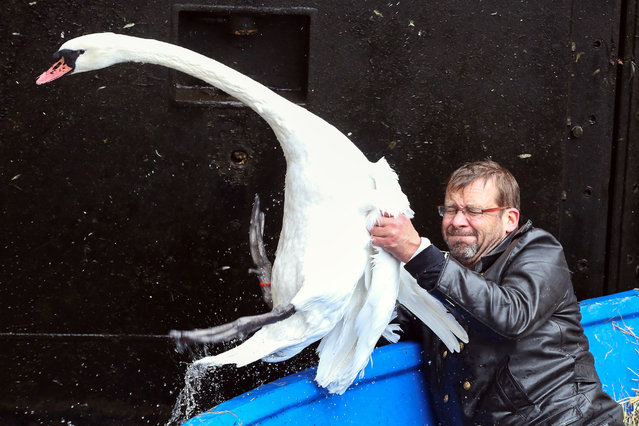
Olaf Niess catches swans on the river Alster near the town hall in Hamburg, Germany, 17 November 2015. The Alster swans are moving to their ice-free winter quarters on the Eppendorf Muehlenteich millpond until spring. (Photo by Bodo Marks/EPA)
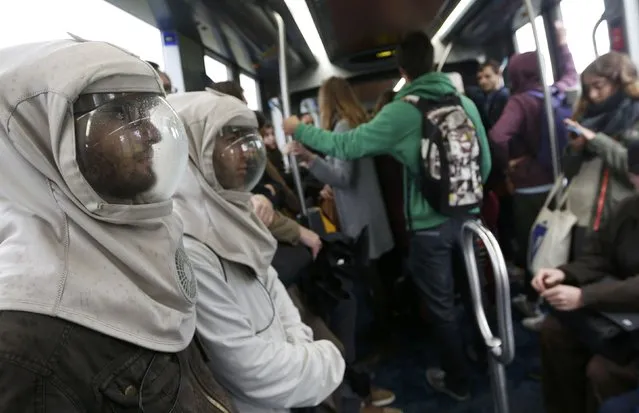
French twins Thomas and Vincent (L) Seris take the tram in Bordeaux, November 12, 2014. Born with Xeroderma Pigmentosum (XP), the twins cannot be exposed to the sun and its ultraviolet (UV) light, which could provoke precocious cancers due to an autosomal recessive genetic disorder of DNA repair. Colloquially referred to as Children of the Night (Les Enfants de la Lune) the Seris twins are among 70 to 80 people in France who suffer from the genetic defect. The French association “Les Enfants de la Lune” reports that there are between five and ten thousand such cases in the world. Thomas and Vincent have been testing a new protective mask for the last year which is transparent and ventilated and developed by several hospitals in France. (Photo by Regis Duvignau/Reuters)