Loading...
Done
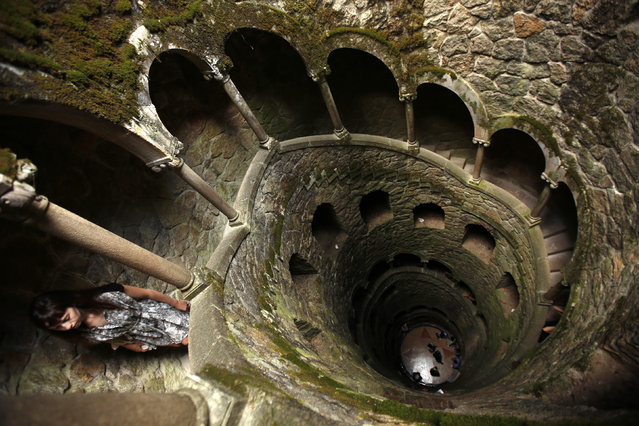
A visitor walks inside the initiation well at Quinta da Regaleira in Sintra October 6, 2014. (Photo by Rafael Marchante/Reuters)

A visitor walks inside the initiation well at Quinta da Regaleira in Sintra October 6, 2014. Sintra became the first centre of European Romantic architecture in the 19th century, which influenced the development of landscape architecture throughout Europe. It was classified as a World Heritage Site by UNESCO in 1995. Its monuments are visited by more than 1.5 million of tourists every year, according to local media. (Photo by Rafael Marchante/Reuters)
Details
28 Oct 2014 12:35:00
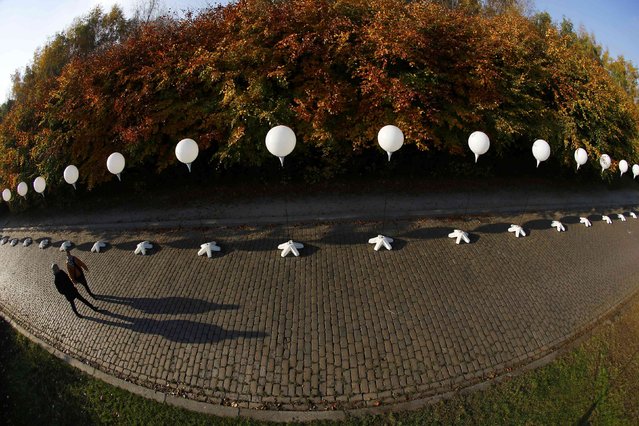
People walk under stands with balloons placed along the former Berlin Wall location at Mauerpark, which will be used in the installation “Lichtgrenze” (Border of Light) in Berlin November 7, 2014. A part of the inner city of Berlin will be temporarily divided from November 7 to 9, with a light installation featuring 8000 luminous white balloons to commemorate the 25th anniversary of the fall of the Berlin Wall. (Photo by Pawel Kopczynski/Reuters)

People walk under stands with balloons placed along the former Berlin Wall location at Mauerpark, which will be used in the installation “Lichtgrenze” (Border of Light) in Berlin November 7, 2014. A part of the inner city of Berlin will be temporarily divided from November 7 to 9, with a light installation featuring 8000 luminous white balloons to commemorate the 25th anniversary of the fall of the Berlin Wall. (Photo by Pawel Kopczynski/Reuters)
Details
07 Nov 2014 12:30:00
A woman presents an Afro-Colombian hairstyle during the 9th contest of Afro-hairdressers, in Cali, Valle del Cauca departament, Colombia, on May 12, 2013. The Afro hairstyles have their origins in the time of slavery, when women sat to comb their children hair after work. (Photo by Luis Robayo/AFP Photo)

A woman presents an Afro-Colombian hairstyle during the 9th contest of Afro-hairdressers, in Cali, Valle del Cauca departament, Colombia, on May 12, 2013. The Afro hairstyles have their origins in the time of slavery, when women sat to comb their children hair after work. (Photo by Luis Robayo/AFP Photo)
Details
13 May 2013 11:01:00
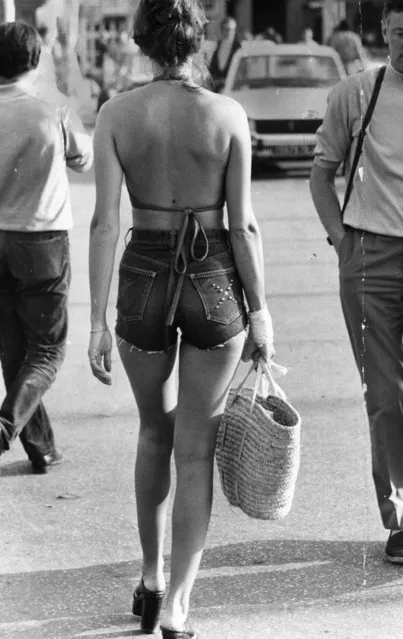
A woman wearing cut-off jeans and a halter-neck sun top in St Tropez, 1972. (Photo by Roy Jones/Getty Images)

A woman wearing cut-off jeans and a halter-neck sun top in St Tropez, 1972. (Photo by Roy Jones)
Details
20 May 2013 12:32:00
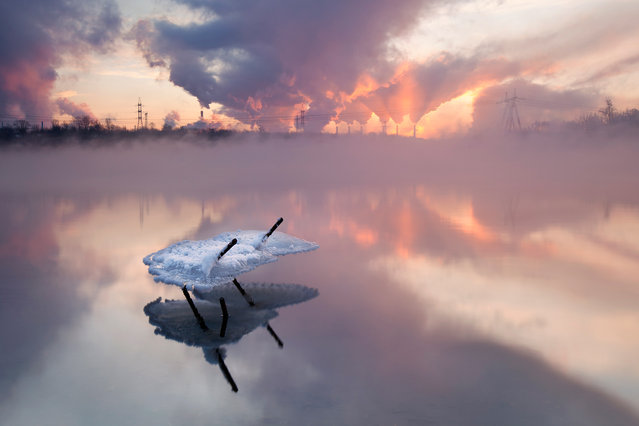
“Winter shapes, Moscow river”. Moscow river at this part is never covered by ice. When the temperature is very low it's possible to see a strong fog. Morning light and pipes of the oli factory creates a fantastic landscape. Photo location: Moscow, Russia. (Photo and caption by Sergey Rumyantsev/National Geographic Photo Contest)

“Winter shapes, Moscow river”. Moscow river at this part is never covered by ice. When the temperature is very low it's possible to see a strong fog. Morning light and pipes of the oli factory creates a fantastic landscape. Photo location: Moscow, Russia. (Photo and caption by Sergey Rumyantsev/National Geographic Photo Contest)
Details
11 Dec 2013 08:33:00
A combination of pictures shows people taking photos of themselves in Tiananmen Square as they celebrate National Day marking the 67th anniversary of the founding of the People's Republic of China, in Beijing October 1, 2016. (Photo by Damir Sagolj/Reuters)

A combination of pictures shows people taking photos of themselves in Tiananmen Square as they celebrate National Day marking the 67th anniversary of the founding of the People's Republic of China, in Beijing October 1, 2016. (Photo by Damir Sagolj/Reuters)
Details
03 Oct 2016 09:31:00
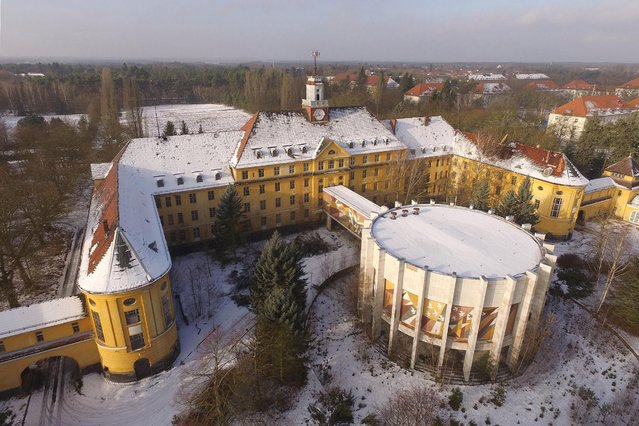
In this aerial view the officers' building and an auditorium stand at the former Soviet military base on January 26, 2017 in Wuensdorf, Germany. (Photo by Sean Gallup/Getty Images)

In this aerial view the officers' building and an auditorium stand at the former Soviet military base on January 26, 2017 in Wuensdorf, Germany. Wuensdorf, once called “The Forbidden City”, was the biggest base for the Soviet armed forces in communist East Germany from 1945 until the last Soviet troops left in the early 1990s following the end of the Cold War and the reunification of Germany. (Photo by Sean Gallup/Getty Images)
Details
01 Feb 2017 06:02:00
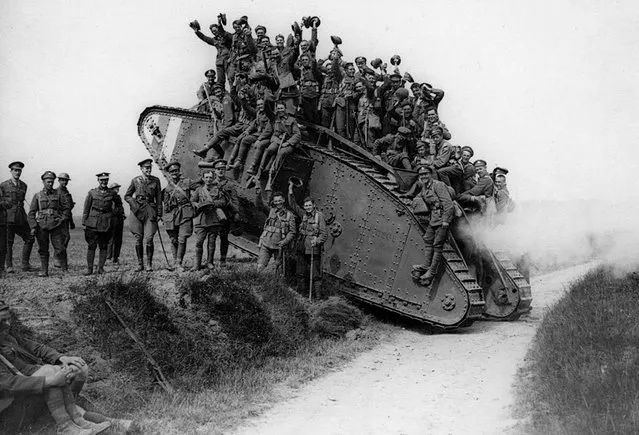
These black-and-white photos are taken from the new book “Armoured Warfare in the First World War 1916 – 1918” by Anthony Tucker-Jones and published by Pen & Sword Military. “Interestingly the British, French and Germans took completely different approaches with varying results”. The British military produced “Little Willie” in Autumn 1915 weighing 18 tonnes, which had a crew of two plus four gunners. “Inspired by a tracked artillery tractor “Little Willie” was referred to as a water tank – hence the name tank – to ensure secrecy”, said Anthony. “This led to the strange looking Mark I with its peculiar rhomboid shape, designed to cross trenches with guns in sponsons on either side. The Germans saw the tank as unchivalrous and were slow to grasp its utility. They favoured the Stormtrooper (specialist soldiers used to infiltrate enemy trenches) and artillery, not the tank”, said Anthony. “However, they didn’t hesitate to make use of captured British tanks. Although the tank helped secure victory and German soldiers dubbed it “Germany’s Downfall” the country was ultimately brought to its knees by the Allies blockade”. Here: British troops hitch a ride on a Mark IV after the massed tank fleet spearheading attack at Cambrai on November 20, 1917. (Photo by Anthony Tucker-Jones/Mediadrumworld.com)

These black-and-white photos are taken from the new book “Armoured Warfare in the First World War 1916 – 1918” by Anthony Tucker-Jones and published by Pen & Sword Military. Here: British troops hitch a ride on a Mark IV after the massed tank fleet spearheading attack at Cambrai on November 20, 1917. (Photo by Anthony Tucker-Jones/Mediadrumworld.com)
Details
23 Feb 2017 00:02:00