Loading...
Done


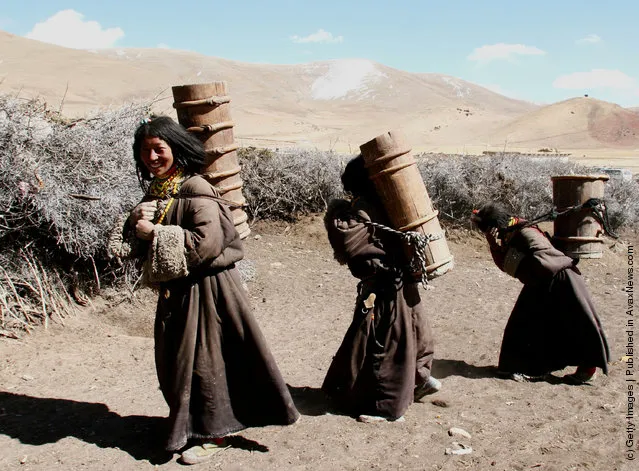
Kangba women carry barrels to fetch water at a village on April 10, 2005 in Zuogong County of Tibet, China. Kangba people began to fetch water with the traditional barrels hundreds of years ago. Kangba people are one of the Tibetan tribes living in Kangba Region, a juncture area of Sichuan and Yunnan Provinces and the Tibet Autonomous Region. Kangba people are famous for their beauty, toughness and straightforwardness. (Photo by China Photos/Getty Images)
Details
31 Mar 2011 10:31:00


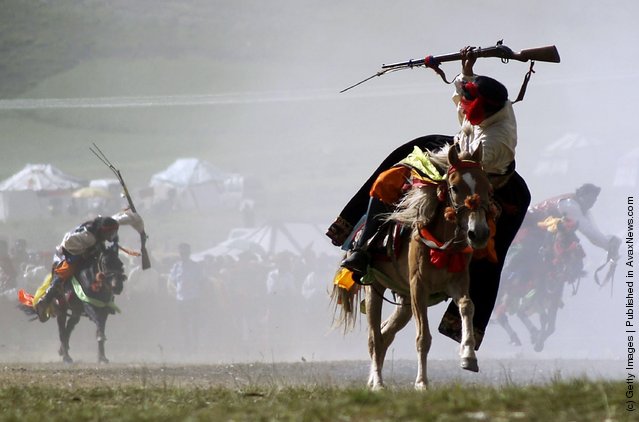
A Tibetan rider fires his weapon as he perfoms his riding skills at the Qinghai Yushu Horse Racing Festival on July 27, 2007 in Yushu County of Yushu Tibetan Autonomous Prefecture, Qinghai Province, northwest China. The Horse Racing Festival of Tibetan nomads in Yushu Prefecture falls in late July and early August on the Tibetan calendar. During the festival, various equestrian skills will be performed along with singing, dancing and costume shows. (Photo by China Photos/Getty Images)
Details
03 Apr 2011 12:33:00
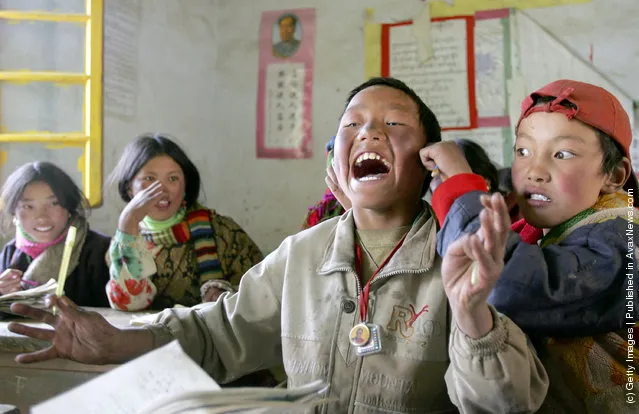
Free Xiangnong Primary School At Ganzi Tibetan

Tibetan students play at a class break at the Xiangnong primary school on April 15, 2005 in Kangding County of Ganzi Tibetan Autonomous Prefecture, Sichuan Province, southwest China. There is only one teahcer in the Tagong Village, 12 Tibetan students get free education from him in Xiangnong primary school. (Photo by China Photos/Getty Images)
Details
27 Aug 2011 14:40:00
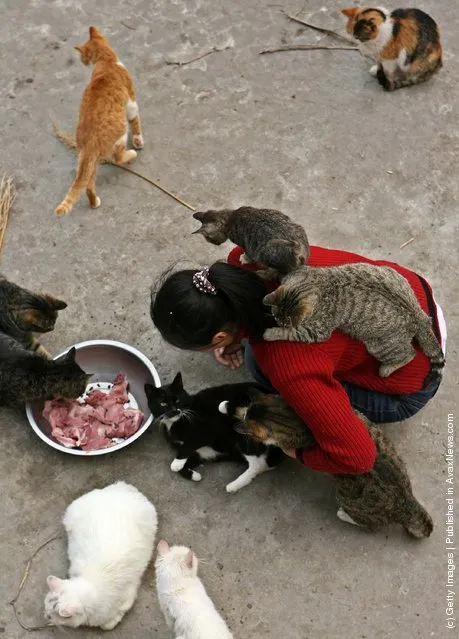
Animal Lover Duo Zirong's Family And Their Adopted Cats

Chinese woman Duo Zirong feeds stray cats at her home February 14, 2006 in Shanghai, China. Duo Zirong, a Daur ethnic minority group woman from Inner Mongolia and reported as the “Cat Woman”, has housed about 300 cats with her Shanghainese husband Liu Junluo and mother-in-law. (Photo by China Photos/Getty Images)
Details
09 Oct 2011 08:57:00
Hong Kong's He Jianxin performs at the Wushu Women's Nandao competition for the 19th Asian Games in Hangzhou, China, Tuesday, September 26, 2023. (Photo by Ng Han Guan/AP Photo)

Hong Kong's He Jianxin performs at the Wushu Women's Nandao competition for the 19th Asian Games in Hangzhou, China, Tuesday, September 26, 2023. (Photo by Ng Han Guan/AP Photo)
Details
05 Oct 2023 02:17:00
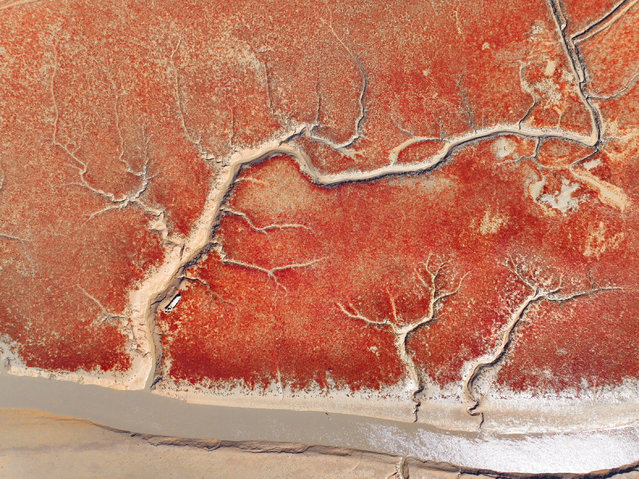
A photo taken on October 20, 2024, shows various patterns left on the beach after the ebb tide at the Yanghe Estuary wetland in Jiaozhou Bay in Qingdao, Shandong province, China. (Photo by Costfoto/NurPhoto/Rex Features/Shutterstock)

A photo taken on October 20, 2024, shows various patterns left on the beach after the ebb tide at the Yanghe Estuary wetland in Jiaozhou Bay in Qingdao, Shandong province, China. (Photo by Costfoto/NurPhoto/Rex Features/Shutterstock)
Details
13 Nov 2024 02:53:00
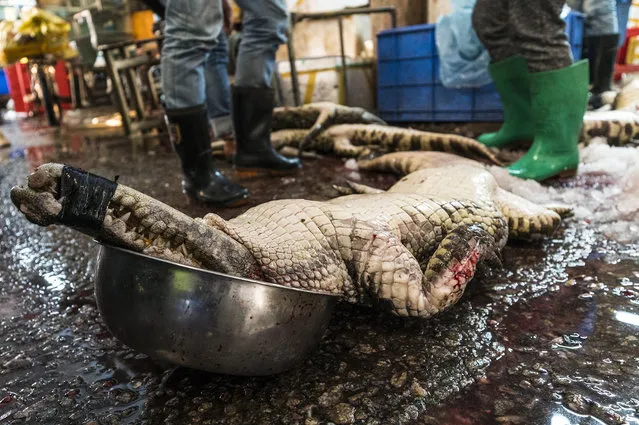
A dead crocodile is seen on Huangsha Seafood Market in Guangzhou, Guandong Province, China, 22 January 2018. Tsukiji Market of China or Huangsha Seafood Market is biggest one in Southern China and one of the biggest in China, as there are literally hundreds of different varieties of fish and seafood scattered throughout the market. Since the proximity of the fish market is so close to the Zhujiang River, it's quite easy for the large fishing vessels and fishermen to unload their fresh catch right at the market, which ensures that the fish and seafood remain fresh. Fish and other seafood are coming there from all around the globe. Seafood Market is full of different kinds of live fish, live shellfish, and live seafood on display in crystal clear tanks and it's common to see 5-star chefs, retailers and expats to source for fresh and high-quality seafood supplies for reasonable prices. While it is a wholesale fish market, since many Guangzhou restaurants and businesses come to purchase their seafood here, the public is welcome to come and even purchase. Many local Chinese have the vendors slice up fresh salmon fillets to take home or carry seafood into one of the nearby specialty restaurants, where they will cook if for them and serve it with vegetables and other side dishes of their choice. One of the biggest attractions for both, tourists and buyers, on market are crocodiles, which are brought there alive in wooden cases with taped jaws so they can?t accidentally bite. They are from crocodile farms from Guangdong, China and from Vietnam. Crocodile meat is popular in most Asian countries and it is consider as delicate one. Crocodiles weight from 10 to 25 kg and bigger ones are about 2 years old. They cost about 70 RMB (8.90 EURO) when bout as whole, or if you buy as parts most expensive and appreciated parts are paws 120 RMB (15.26 EURO) per kg, and tail 100 RMB (12.72 EURO) per kg. (Photo by Aleksandar Plavevski/EPA/EFE)

A dead crocodile is seen on Huangsha Seafood Market in Guangzhou, Guandong Province, China, 22 January 2018. Tsukiji Market of China or Huangsha Seafood Market is biggest one in Southern China and one of the biggest in China, as there are literally hundreds of different varieties of fish and seafood scattered throughout the market. (Photo by Aleksandar Plavevski/EPA/EFE)
Details
17 Apr 2020 00:05:00


“Kumbh Mela is a mass Hindu pilgrimage in which Hindus gather at the Ganges river. The normal Kumbh Mela is celebrated every 3 years, the Ardh (half) Kumbh Mela is celebrated every six years at Haridwar and Prayag, the Purna (complete) Kumbh takes place every twelve years, at four places (Prayag (Allahabad), Haridwar, Ujjain, and Nashik). The Maha (great) Kumbh Mela which comes after 12 “Purna Kumbh Melas”, or 144 years, is held at Allahabad.

The last Ardh Kumbh Mela was held over a period of 45 days beginning in January 2007, more than 70 million Hindu pilgrims took part in the Ardh Kumbh Mela at Prayag, and on January 15, the most auspicious day of the festival of Makar Sankranti, more than 5 million participated. The previous Maha Kumbh Mela, held in 2001, was attended by around 60 million people, making it at the time the largest gathering anywhere in the world in recorded history”. – Wikipedia

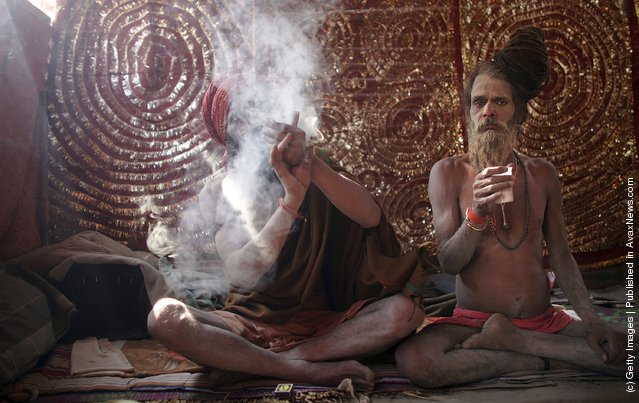
Photo: Sadhus (holy men) smoke at their camp near the ritual site at Sangam, the confluence of the Ganges, Yamuna and mythical Saraswati rivers during the Ardh Kumbh Mela festival (Half Pitcher festival) January 18, 2007 in Allahabad, India. Millions of Hindu pilgrims have flocked to the largest religious gathering in the world which lasts for 45 days in northern India. The festival commemorates the mythical conflict between gods and demons over a pitcher filled with the “nectar of immortality”. Devotees believe that taking a holy dip in the Ganges at this time washes away their sins and paves the path to salvation. (Photo by Mario Tama/Getty Images)

Details
30 Jun 2011 10:27:00