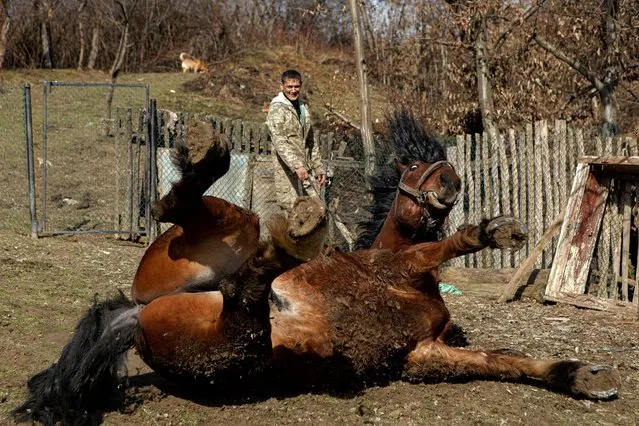
A horse rolls in mud in the Romani camp in Velykyi Bereznyi urban-type settlement, Zakarpattia Region, western Ukraine on February 28, 2021. (Photo by Ukrinform/Rex Features/Shutterstock)
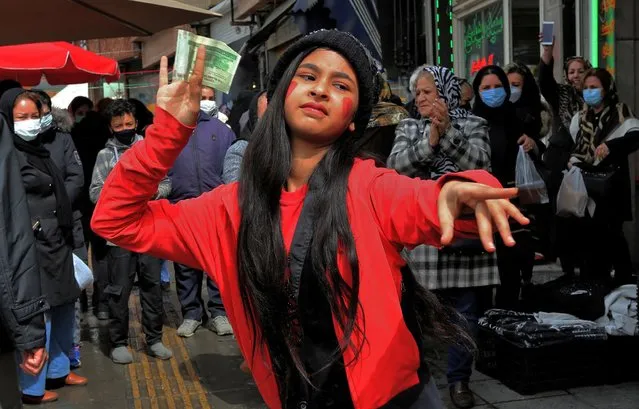
An Iranian girl wearing a costume inspired in the fictional folklore character Hajji Firuz, dances in Tehran on March 17, 2021 as Iranians prepare to celebrate Noruz, the Iranian New Year. Noruz, “new day” in Persian, is the New Year festivity celebrated in Iran as well as in Afghanistan and Kurdish regions in several countries. It begins with the spring equinox and symbolises rebirth. (Photo by Atta Kenare/AFP Photo)
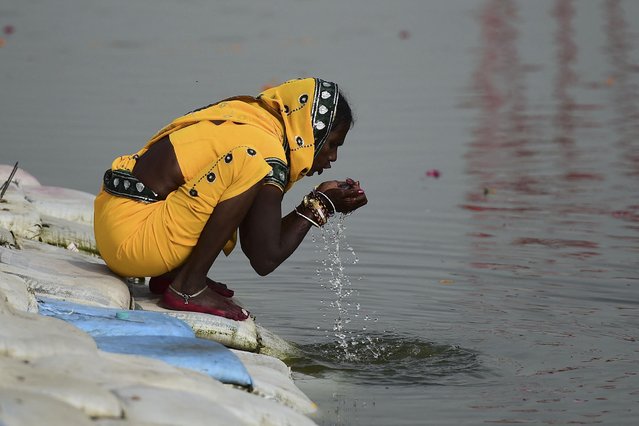
A Hindu devotee drinks water from the Ganges River at the Sangam area, the confluence of rivers Ganges, Yamuna, and the mythical Saraswati, in Allahabad on March 16, 2021. (Photo by Sanjay Kanojia/AFP Photo)
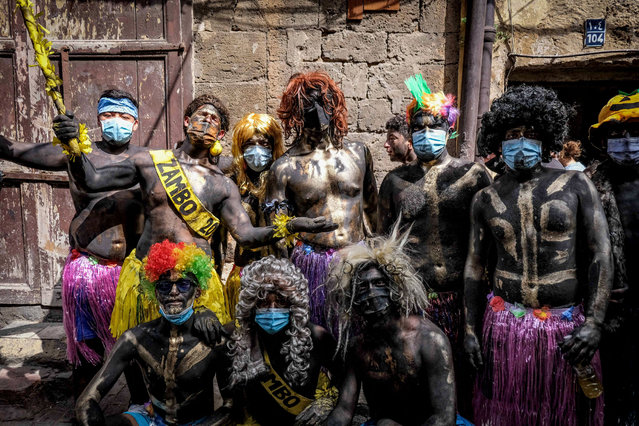
Carnival participants dressed in costume and wearing body paint pose for a group picture during the annual Zambo carnival held in Lebanon's northern city of Tripoli on March 14, 2021, marking the last period of excess on the eve of the Christian Greek Orthodox lent. The inspiration of the annual Zambo celebration is unclear, despite it being a tradition that stretches back over a century to when an emigrant to Brazil returned to his native Tripoli bringing the carnival with him. (Photo by Ibrahim Chalhoub/AFP Photo)
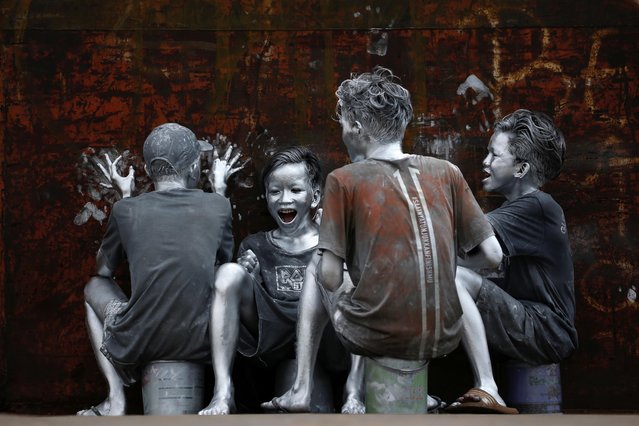
Youths, who covered themselves from head to toe in silver paint to become “manusia silver” (silvermen), as part of their act to make a living, laugh as they ride on the back of a truck in Jakarta, Indonesia, March 31, 2021. (Photo by Willy Kurniawan/Reuters)
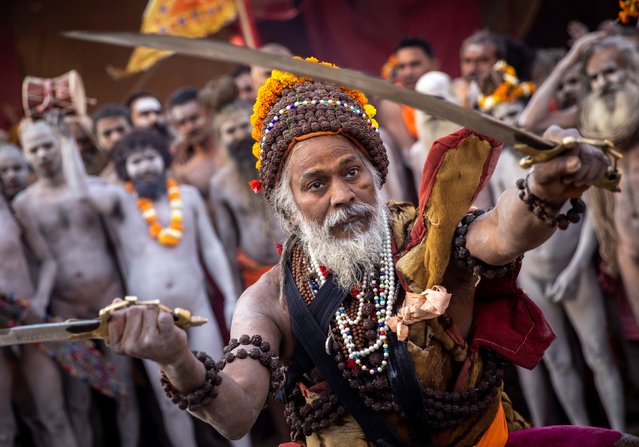
Naga Sadhus, or Hindu holy men, participate in the procession for taking a dip in the Ganges river during Shahi Snan at “Kumbh Mela”, or the Pitcher Festival, amidst the spread of the coronavirus disease (COVID-19), in Haridwar, India, April 12, 2021. (Photo by Danish Siddiqui/Reuters)
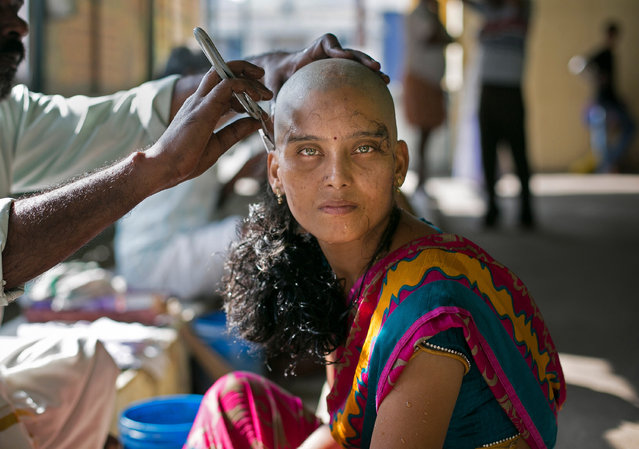
28 year old Rupa has her hair shaven to donate to the Gods at the Thiruthani Murugan Temple November 10, 2016 in Thiruttani, India. Rupa donated her hair with the wish that her daughter's illness is cured. The process of shaving ones hair and donating it to the Gods is known as tonsuring. It is common for Hindu believers to tonsure their hair at a temple as a young child, and also to celebrate a wish coming true, such as the birth of a baby or the curing of an illness. The “temple hair”, as it's known, is then auctioned off to a processing plant and then sold as pricey wigs and weaves in the US, Europe and Africa. (Photo by Allison Joyce/Getty Images)