Loading...
Done
Cuban-Spanish actress Ana de Armas, who played Cuban secret agent Paloma in 2021’s “No Time to Die”. (Photo by Sportsphoto Ltd./Allstar)

Cuban-Spanish actress Ana de Armas, who played Cuban secret agent Paloma in 2021’s “No Time to Die”. (Photo by Sportsphoto Ltd./Allstar)
Details
27 Nov 2025 03:27:00
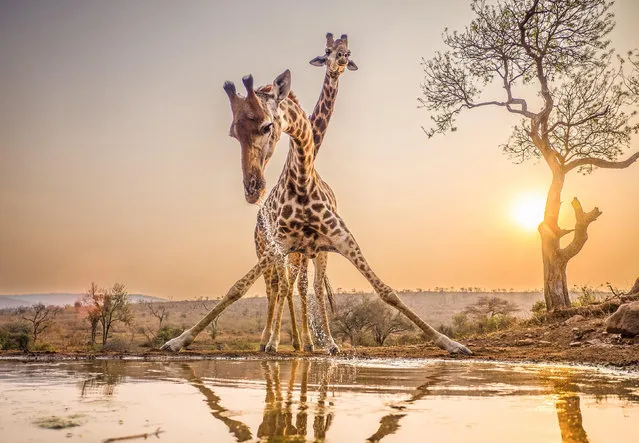
A giraffe appears almost to be doing the splits as it bends to drink at a watering hole on a reserve in Mkuze, South Africa in September 2023. (Photo by Peter Batty/Solent News)

A giraffe appears almost to be doing the splits as it bends to drink at a watering hole on a reserve in Mkuze, South Africa in September 2023. (Photo by Peter Batty/Solent News)
Details
27 Dec 2023 20:10:00
The Lun-class Ekranoplane was used by the Soviet Navy starting in 1987, and wasn't retired until the late 1990s, after the Soviet Union's fall. (Igor113)

“The Lun-class ekranoplan (NATO reporting name Duck) was a ground effect vehicle (GEV) designed by Rostislav Evgenievich Alexeev and used by the Soviet and Russian navies from 1987 until sometime in the late 1990s. It “flew” using the lift generated by the ground effect of its large wings when close to the surface of the water – about four metres or less. Although they might look similar and/or have related technical characteristics, ekranoplans like the Lun are not aircraft, seaplanes, hovercraft, or hydrofoils – ground effect is a separate technology altogether. The International Maritime Organization classifies these vehicles as maritime ships. The name Lun comes from the Russian for harrier”. – Wikipedia (Photo by Igor113)
Details
08 Aug 2014 10:51:00
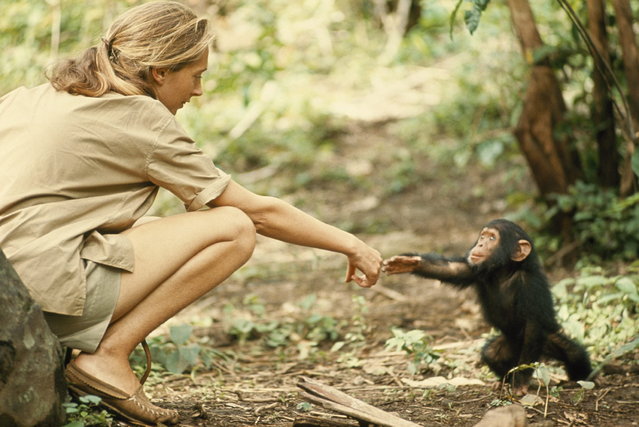
Tanzania, 1964. A touching moment between primatologist and National Geographic grantee Jane Goodall and young chimpanzee Flint at Tanzania's Gombe Stream Reserve. (Photo by Hugo van Lawick

Tanzania, 1964. A touching moment between primatologist and National Geographic grantee Jane Goodall and young chimpanzee Flint at Tanzania's Gombe Stream Reserve. (Photo by Hugo van Lawick via National Geographic)
Details
16 Jan 2013 09:59:00
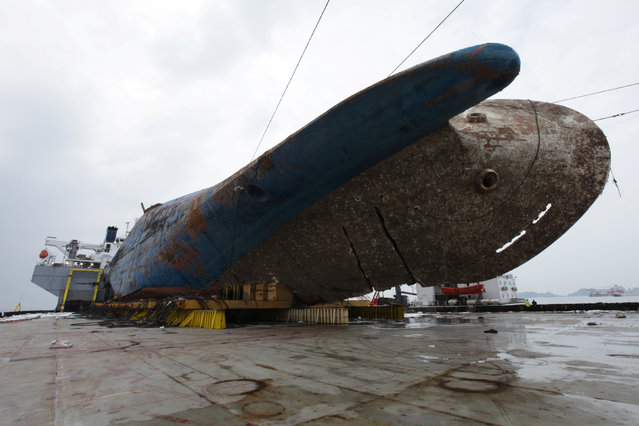
The sunken ferry Sewol sits on a semi-submersible ship during its salvage operations at the sea off Jindo, South Korea, in this handout picture provided by the Ministry of Oceans and Fisheries and released by Yonhap on March 26, 2017. (Photo by Reuters/Yonhap/The Ministry of Oceans and Fisheries)

The sunken ferry Sewol sits on a semi-submersible ship during its salvage operations at the sea off Jindo, South Korea, in this handout picture provided by the Ministry of Oceans and Fisheries and released by Yonhap on March 26, 2017. (Photo by Reuters/Yonhap/The Ministry of Oceans and Fisheries)
Details
22 Apr 2020 00:05:00
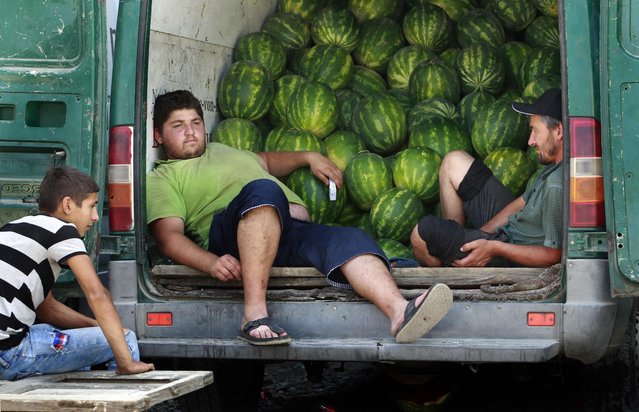
Georgian men take a break from selling fruit and vegetable at a street market in Tbilisi, Georgia, Wednesday, July 20, 2016. (Photo by Shakh Aivazov/AP Photo)

Georgian men take a break from selling fruit and vegetable at a street market in Tbilisi, Georgia, Wednesday, July 20, 2016. (Photo by Shakh Aivazov/AP Photo)
Details
02 Aug 2016 08:05:00
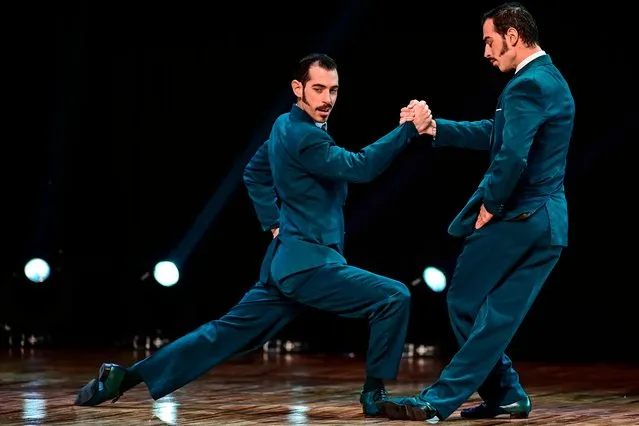
Argentinian twin dancers Nicolas Filipeli and German Filipeli perform during the Tango Stage final competition at the Tango Dance World Championship in Buenos Aires on August 21, 2019. (Photo by Ronaldo Schemidt/AFP Photo)

Argentinian twin dancers Nicolas Filipeli and German Filipeli perform during the Tango Stage final competition at the Tango Dance World Championship in Buenos Aires on August 21, 2019. (Photo by Ronaldo Schemidt/AFP Photo)
Details
25 Aug 2019 00:07:00
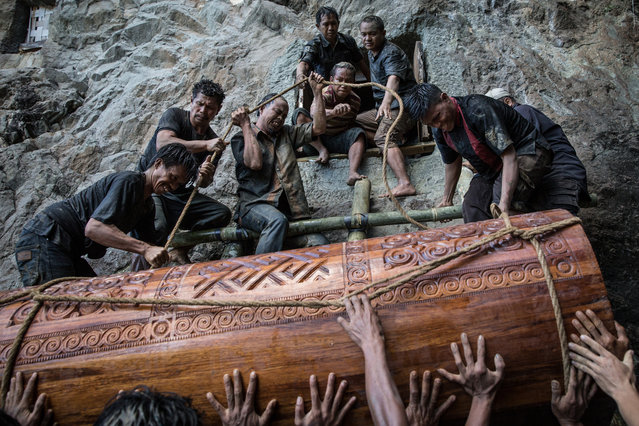
It is said that Torajans are people who “live to die”. For this Indonesian ethnic group, funerals are such extravagant events that they sometimes attract tourists. Families can postpone burials years (and the deceased are considered sick and hosted at home until the funeral) until the family can raise enough money and gather as many relatives as possible. And then it’s a jubilant multiday social event with a parade, dances and animal sacrifices. Agung Parameswara photographed these funerary practices when he traveled to South Sulawesi province, where the Torajans live. But often, their funeral isn’t the last time the dead are seen. In August, crypts are opened, coffins are slid back out and bodies delicately unsheathed. This tender ritual is known as Ma’Nene, which is customarily performed every few years. (Photo by Agung Parameswara/The Washington Post)

It is said that Torajans are people who “live to die”. For this Indonesian ethnic group, funerals are such extravagant events that they sometimes attract tourists. Families can postpone burials years (and the deceased are considered sick and hosted at home until the funeral) until the family can raise enough money and gather as many relatives as possible. And then it’s a jubilant multiday social event with a parade, dances and animal sacrifices. Agung Parameswara photographed these funerary practices when he traveled to South Sulawesi province, where the Torajans live. (Photo by Agung Parameswara/The Washington Post)

Details
06 Oct 2016 09:15:00