Sunrise over the River Thames and Tower Bridge in London today morning on January 28, 2024. It has been forecast that Sahara dust will be in the atmosphere. (Photo by Alister Gooding/Picture Exclusive)
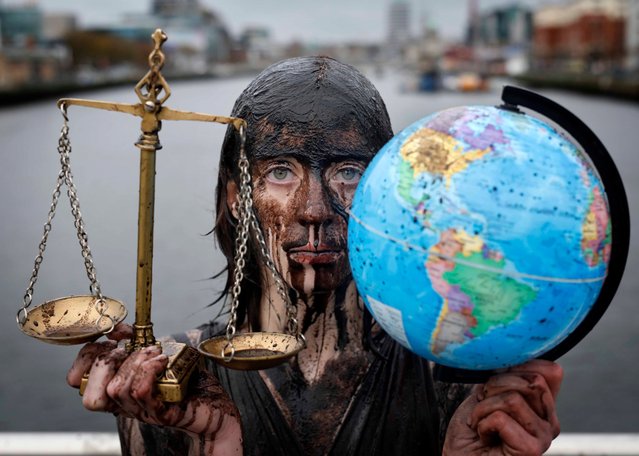
A climate campaigner in Dublin on November 9, 2024 dresses as Lady Justice to demand that world leaders commit to a fast, fair and funded phase-out of all fossil fuels when they gather in Azerbaijan on Monday for the Cop29 climate conference. (Photo by Stedman Photography)
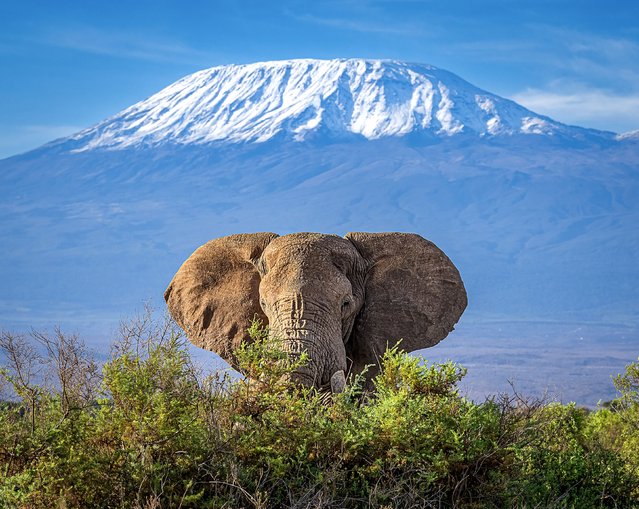
Mount Kilimanjaro looms behind an elephant at Amboseli National Park in southern Kenya, 2024. (Photo byYaron Schmid/YS Wildlife Photography/Solent News)
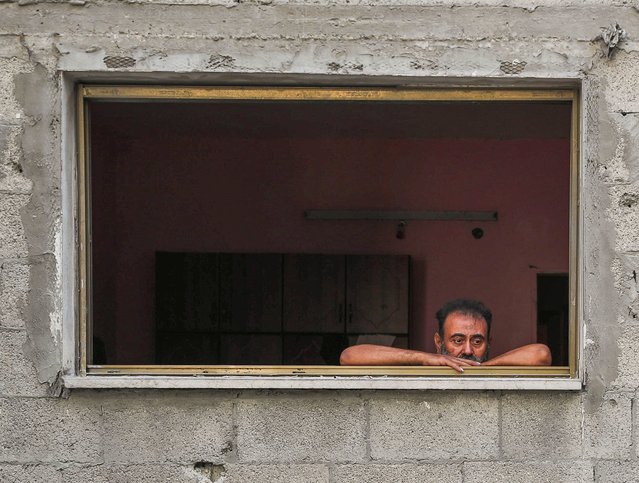
A man looks out of a window as Palestinians inspect the site and search for casualties of an overnight Israeli air strike on a house at al-Shati (Beach) refugee camp, in Gaza City, on July 15, 2025. (Photo by Mahmoud Issa/Reuters)
A large stainless steel shovel lies on top of steamed crabs at the A.E. Phillips & Son Inc. crab picking house on Hooper's Island in Fishing Creek, Maryland August 26, 2015. Workers speed through the lump and back fin meat inside the crabs while leaving the more tedious task of picking the claws to others. (Photo by Jonathan Ernst/Reuters)
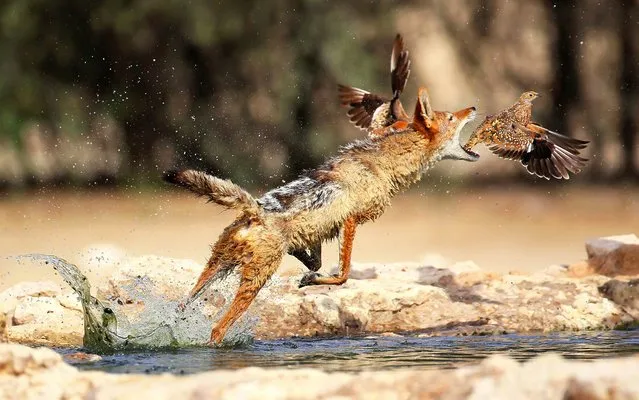
Against the scorching sun, a hungry jackal chases a flock of birds looking for a quick morning snack. Taken in South Africa's Kgalagadi Transfrontier National Park, these images capture the moment a lone hunter tries, and then succeeds, in his pursuit. (Photo by John Mullineux/Solent News)
“One in Eight Hundred” by Mario Wezel, from Germany, is the winner of the “People” category. The title refers to the odds given to Martin and Karina at their prenatal screening before their daughter, Emmy, was born. The five-year-old from Denmark has Down's Syndrome. (Photo by Mario Wezel/Sony World Photography Awards)
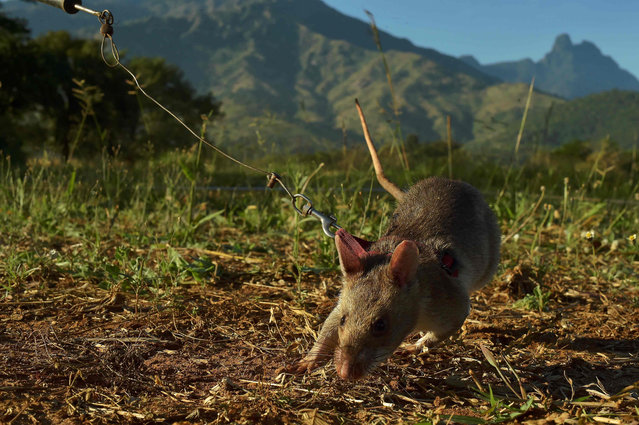
An African giant pouched rat sniffs for traces of landmine explosives at APOPO's training facility in Morogoro on June 17, 2016. APOPO trains the rats to detect both tuberculosis and landmines at its facility. Every year landmines kill or maim thousands of people worldwide. The trained rats sniff for explosive and so are able to detect the presence of landmines far faster than conventional methods which involve metal detection. (Photo by Carl De Souza/AFP Photo)