Supporters of Trinamool Congress (TMC) celebrate after learning the initial poll results of the West Bengal Assembly elections, in Kolkata, India May 19, 2016. (Photo by Rupak De Chowdhuri/Reuters)
A boy holds the remains of a mortar shell which hit a residential building in the village of Staromikhailovka, outside the separatist-held city of Donetsk, Ukraine, May 24, 2016. (Photo by Alexander Ermochenko/Reuters)
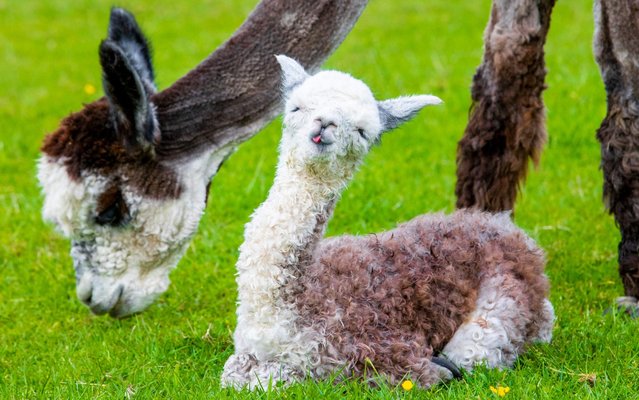
Staff at a Scottish farm say they are “absolutely delighted” to have welcomed a baby alpaca into the world this morning, June 6, 2019. Mum, Nunavut, gave birth to the baby boy huacaya alpaca, which has not yet been named, weighing 9.6kg. Stuart Ramsay, the owner of Velvet Hall Alpacas, in Innerleithen, Scottish Borders said he was surprised when the baby was born an “unusual rose grey colour”. (Photo by South West News Service)
Parade-goers walk in the annual West Indian Day Parade on September 02, 2019 in the Brooklyn borough of New York City. The annual celebration of Caribbean culture is one of the largest of its kind and features dozens of floats and costumed participants that make their way down Flatbush Avenue. (Photo by Yana Paskova/Getty Images)
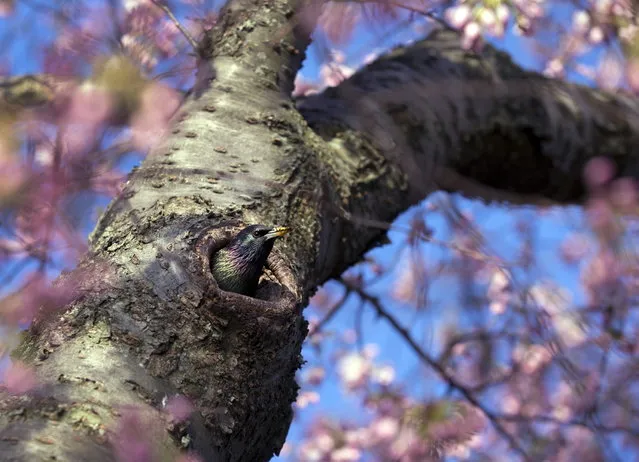
A nesting bird peeks out of the budding Japanese Yoshino cherry tree along the Tidal Basin in Washington, Sunday, April 7, 2013. Despite repeated predictions peak blossom time for the historic cherry trees is not yet here, but almost, almost. (Photo by Carolyn Kaster/AP Photo)
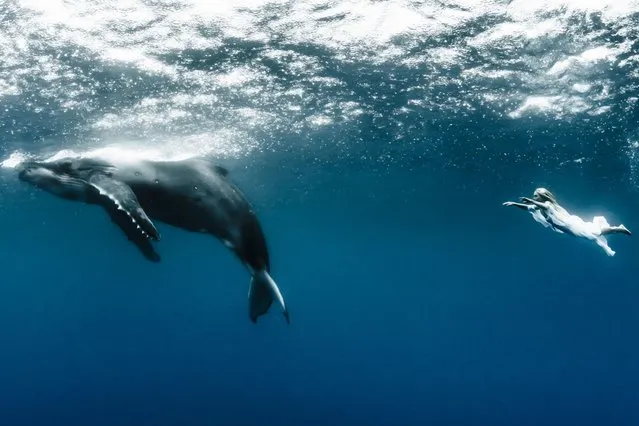
“Emmy” award-winning cinematographer, Shawn Heinrichs teamed up with model and diver Hannah Fraser to carry out a unique underwater conservation fashion shoot in a remote location in the South Pacific Ocean. The pair are aiming to raise awareness for the plight of the marine mammals at the hands of whalers. During the ten day shoot Fraser swam and glided with pilot and humpback whales. Photo: “In this startling image model Hannah Fraser appears to be “dancing” with the giant whale ”. (Photo by Shawn Heinrichs/Barcroft Media)
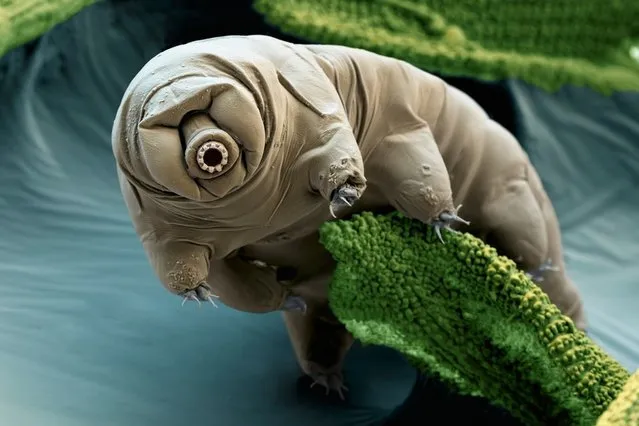
“Tardigrades (commonly known as waterbears or moss piglets) are small, water-dwelling, segmented animals with eight legs. Tardigrades were first discovered in 1773 by Johann August Ephraim Goeze, who called them kleiner Wasserbär, meaning “little water bear” in German. The name Tardigrada means “slow walker” and was given by Lazzaro Spallanzani in 1777. The name water bear comes from the way they walk, reminiscent of a bear's gait. The biggest adults may reach a body length of 1.5 millimetres (0.059 in), the smallest below 0.1 mm. Freshly hatched tardigrades may be smaller than 0.05 mm”. – Wikipedia. Photo: Tardigrades. (Photo by SPL/East News)