Loading...
Done
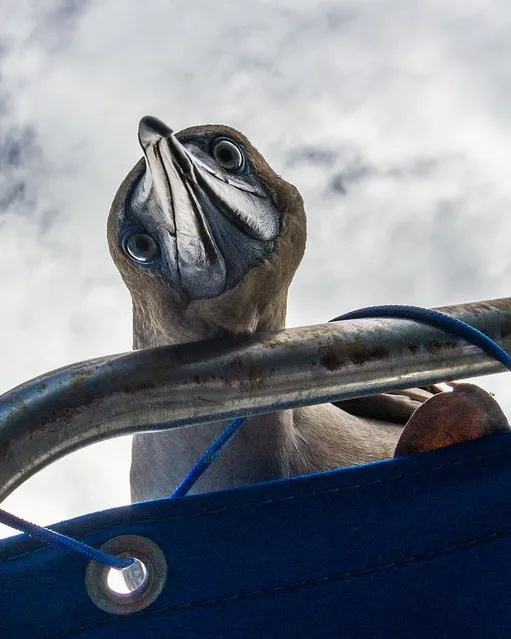
“Close-up. We had a juvenile Red-Footed Booby come visit us on the sun deck. I got some closeups with my ultrawide 11-16mm Tokina”. (Photo by Carl Fredrickson)

Situated in the Pacific Ocean some 620 miles (1,000 km) from the South American continent, these 19 islands and the surrounding marine reserve have been called a unique “living museum and showcase of evolution”. Photo: “Close-up. We had a juvenile Red-Footed Booby come visit us on the sun deck. I got some closeups with my ultrawide 11-16mm Tokina”. (Photo by Carl Fredrickson)
Details
04 Sep 2013 11:49:00
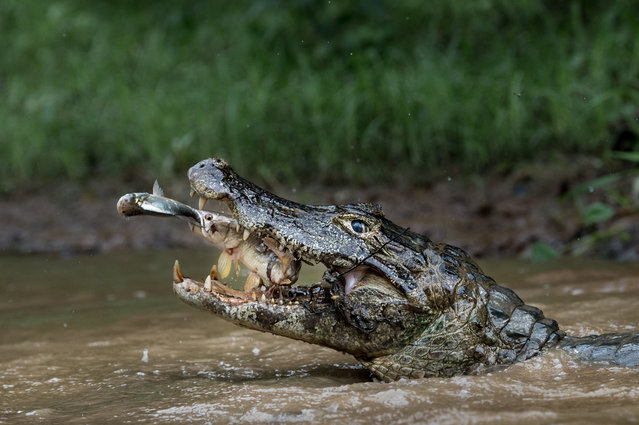
Second place, nature: double trapping. Picture taken in the Brazilian Pantanal ... when I downloaded the CF did not want to believe it ... The nature knows we always give magnificent events but sometimes extraordinary. (Photo by Massimiliano Bencivenni/National Geographic Travel Photographer of the Year Contest)

Second place, Nature: double trapping. Picture taken in the Brazilian Pantanal ... when I downloaded the CF did not want to believe it ... The nature knows we always give magnificent events but sometimes extraordinary. (Photo by Massimiliano Bencivenni/National Geographic Travel Photographer of the Year Contest)
Details
02 Jul 2016 12:53:00
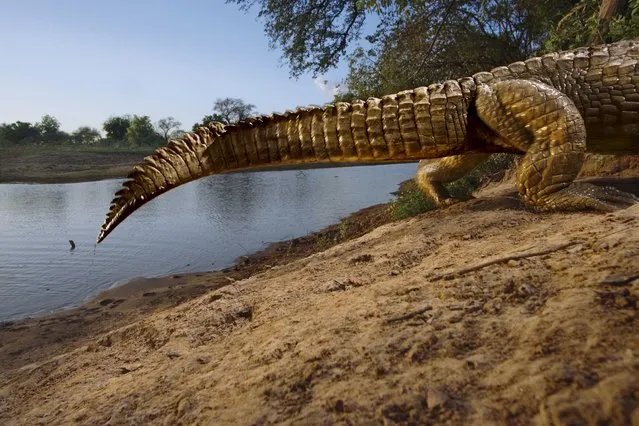
CT4 Crocodile cave on the Salamat river. Set up with Nathan Williamson last chip rain came while we were with the nomads. (Photo by Michael Nichols/National Geographic)

National Geographic has created “Air, Land & Sea: the 50 greatest wildlife photographs” exhibition. Here: CT4 Crocodile cave on the Salamat river. Set up with Nathan Williamson last chip rain came while we were with the nomads. (Photo by Michael Nichols/National Geographic)
Details
13 Sep 2018 00:03:00
A woman falls as police move in to disperse protesters in Trafalgar Square in London on September 26, 2020, at a “We Do Not Consent!” mass rally against vaccination and government restrictions designed to fight the spread of the novel coronavirus, including the wearing of masks and taking tests for the virus. (Photo by Justin Tallis/AFP Photo)

A woman falls as police move in to disperse protesters in Trafalgar Square in London on September 26, 2020, at a “We Do Not Consent!” mass rally against vaccination and government restrictions designed to fight the spread of the novel coronavirus, including the wearing of masks and taking tests for the virus. (Photo by Justin Tallis/AFP Photo)
Details
28 Sep 2020 00:07:00
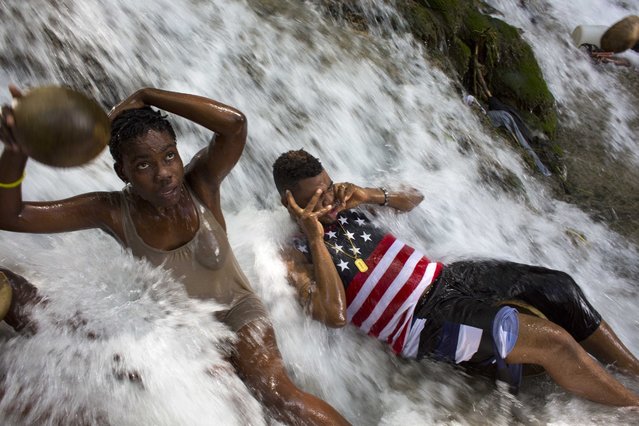
Voodoo pilgrims bathe in a waterfall believed to have purifying powers during the annual celebration in Saut d' Eau, Haiti, Saturday, July 16, 2016. Annually, the falls are the site of a large, important religious pilgrimage, during the festival of Our Lady of Carmel, from July 14–16. A Eucharistic rite is held during the festival, as well as various vodou rituals, but the penultimate devotional activity is bathing in the waters of the falls, and asking favors of the Virgin or Erzulie. After bathing, voodoo pilgrims throw away the dresses they wore to the site, and don new clothes for good luck. (Photo by Dieu Nalio Chery/AP Photo)

Voodoo pilgrims bathe in a waterfall believed to have purifying powers during the annual celebration in Saut d' Eau, Haiti, Saturday, July 16, 2016. Annually, the falls are the site of a large, important religious pilgrimage, during the festival of Our Lady of Carmel, from July 14–16. A Eucharistic rite is held during the festival, as well as various vodou rituals, but the penultimate devotional activity is bathing in the waters of the falls, and asking favors of the Virgin or Erzulie. After bathing, voodoo pilgrims throw away the dresses they wore to the site, and don new clothes for good luck. (Photo by Dieu Nalio Chery/AP Photo)
Details
18 Jul 2016 13:02:00
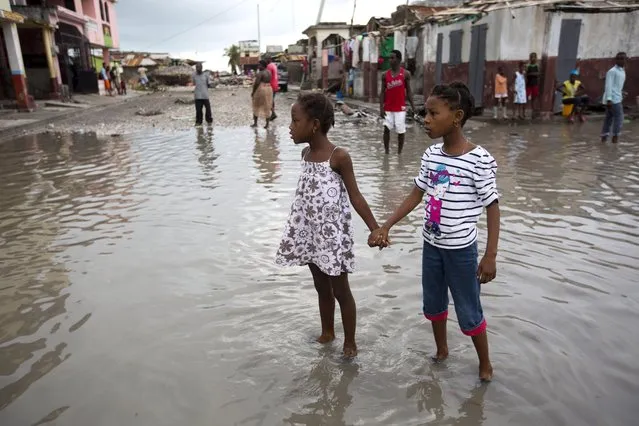
Girls hold hands as they help each other wade through a flooded street after the passing of Hurricane Matthew in Les Cayes, Haiti, Thursday, October 6, 2016. Two days after the storm rampaged across the country's remote southwestern peninsula, authorities and aid workers still lack a clear picture of what they fear is the country's biggest disaster in years. (Photo by Dieu Nalio Chery/AP Photo)

Girls hold hands as they help each other wade through a flooded street after the passing of Hurricane Matthew in Les Cayes, Haiti, Thursday, October 6, 2016. Two days after the storm rampaged across the country's remote southwestern peninsula, authorities and aid workers still lack a clear picture of what they fear is the country's biggest disaster in years. (Photo by Dieu Nalio Chery/AP Photo)
Details
07 Oct 2016 09:32:00
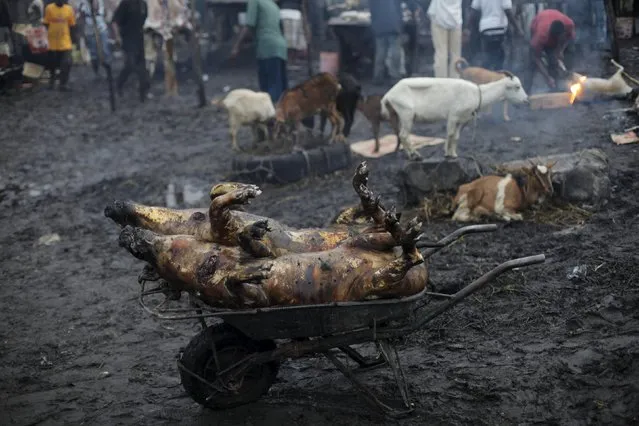
A wheelbarrow loaded with two butchered pigs is seen at La Saline slaughterhouse in Port-au-Prince, Haiti, March 19, 2015. Reuters photographer Andres Martinez Casares: “The grunts of a pig or the bleating of a goat are one thing. Then there's the sound of animals about to be killed. That's something else. If you haven't heard that before, it's quite something. It's very early in the morning when this happens, well before dawn. Day after day, it's the same toil over and over again”. (Photo by Andres Martinez Casares/Reuters)

A wheelbarrow loaded with two butchered pigs is seen at La Saline slaughterhouse in Port-au-Prince, Haiti, March 19, 2015. Reuters photographer Andres Martinez Casares: “The grunts of a pig or the bleating of a goat are one thing. Then there's the sound of animals about to be killed. That's something else. If you haven't heard that before, it's quite something... (Photo by Andres Martinez Casares/Reuters)
Details
30 Jan 2016 13:10:00
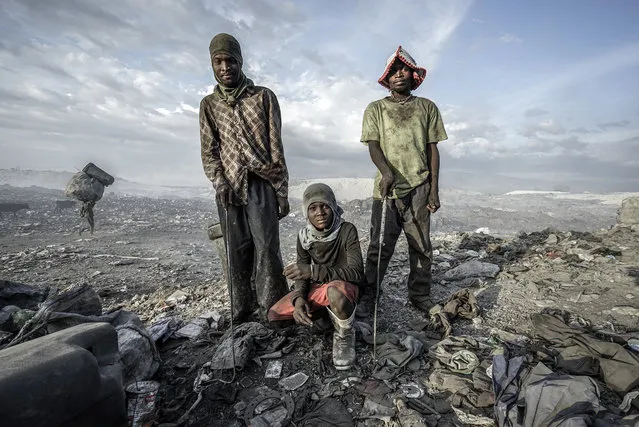
In a 200-acre-plus dump 5 kilometers north of Haiti’s capital, Port-au-Prince, hundreds of men, women and children scavenge day and night through the burning wasteland. They earn $12 to $15 a day – on a good day – for recycling plastics as well as clothing, household items and aluminum (for smelting). Some 5,000 tons of waste is created each day in the Port-au-Prince area. (Photo and caption by Giles Clarke/Getty Images Reportage)

In a 200-acre-plus dump 5 kilometers north of Haiti’s capital, Port-au-Prince, hundreds of men, women and children scavenge day and night through the burning wasteland. They earn $12 to $15 a day – on a good day – for recycling plastics as well as clothing, household items and aluminum (for smelting). Some 5,000 tons of waste is created each day in the Port-au-Prince area. (Photo and caption by Giles Clarke/Getty Images Reportage)
Details
02 Feb 2015 11:21:00