Loading...
Done
Pottenstein Celebrates Epiphany

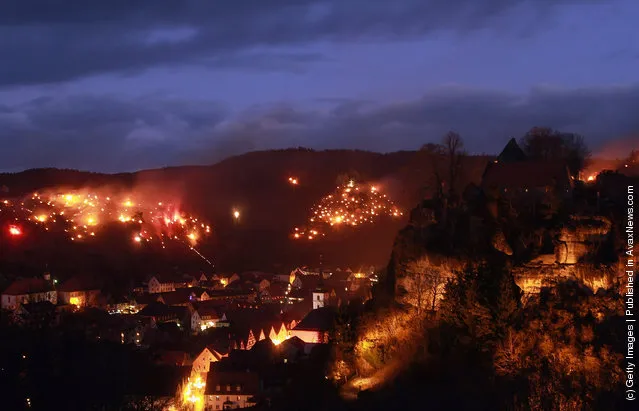
Controlled fires lit by residents glow in the hills over the village of Pottenstein during the annual Epiphany celebration on January 6, 2012 in Pottenstein, Germany. The ceremony, which also includes a procession with torches through the village center, is part of a tradition going back to 1905. Pottenstein was once a pilgrimage destination. (Photo by Johannes Simon/Getty Images)
Details
07 Jan 2012 13:28:00
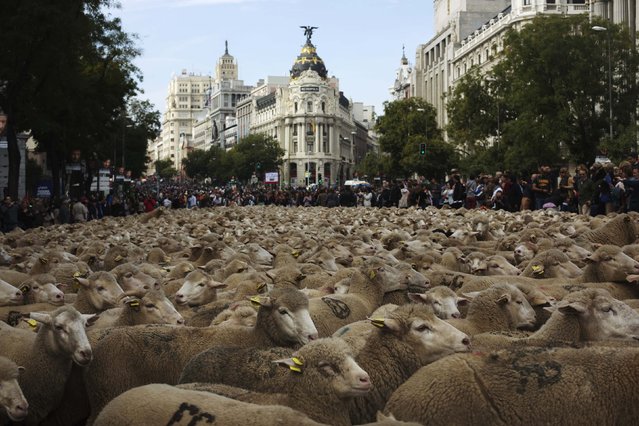
Sheep are herded during the annual sheep parade through Madrid November 2, 2014. (Photo by Susana Vera/Reuters)

Sheep are herded during the annual sheep parade through Madrid November 2, 2014. Shepherds parade the sheep through the city every year in order to exercise their right to use traditional routes to migrate their livestock from northern Spain to winter grazing pasture land in southern Spain. (Photo by Susana Vera/Reuters)
Details
03 Nov 2014 12:23:00
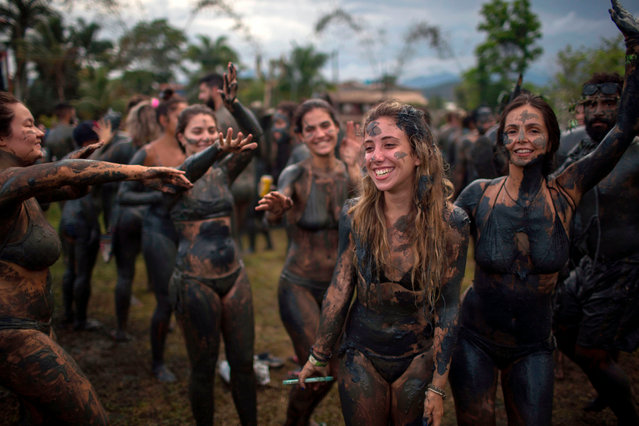
Revellers celebrate during the “Bloco da Lama”, a mud carnival, in Paraty, Brazil, on February 10, 2018. (Photo by Mauro Pimentel/AFP Photo)

Revellers celebrate during the “Bloco da Lama”, a mud carnival, in Paraty, Brazil, on February 10, 2018. “Bloco da Lama” started in 1986 by teenagers playing with mud and became a traditional event at the historical city of Paraty. (Photo by Mauro Pimentel/AFP Photo)
Details
13 Feb 2018 05:58:00
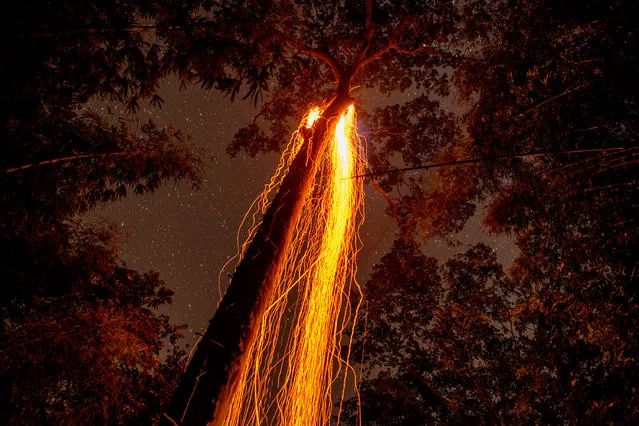
Bees are sensitive to light, which makes them follow the glowing embers down to the ground. (Photo by Hasnoor Hussain/The Guardian)

During the spring harvest season, a group of traditional Malaysian honey hunters travel to the rainforest near the Thai border to collect honeycombs from giant bees – and risk their lives climbing 200ft trees. Here: Bees are sensitive to light, which makes them follow the glowing embers down to the ground. (Photo by Hasnoor Hussain/The Guardian)
Details
22 Oct 2016 10:26:00
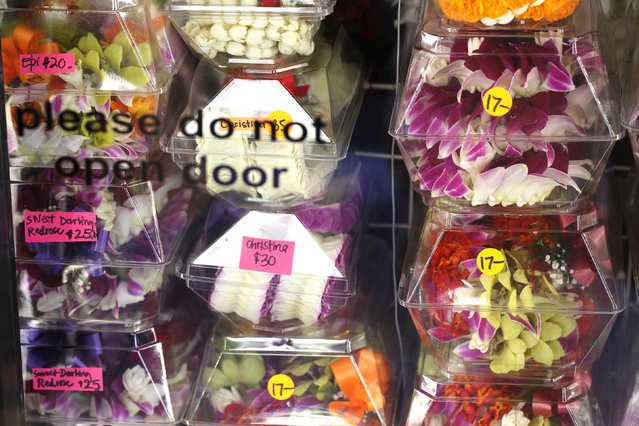
A selection of hand-made leis, traditional Hawaiian necklaces made of flowers and worn mostly on special occasions, fill a cooler at Lin's Lei Shop in the Chinatown district of Honolulu, Hawaii December 22, 2015. Hawaii, whose economy depends heavily on tourism, sees a brief lull in visitors each year in January and February. But in addition to the usual tourist destinations, the state shows a unique overlay of mainland U.S. culture atop tropical beauty year-round. (Photo by Jonathan Ernst/Reuters)

A selection of hand-made leis, traditional Hawaiian necklaces made of flowers and worn mostly on special occasions, fill a cooler at Lin's Lei Shop in the Chinatown district of Honolulu, Hawaii December 22, 2015. Hawaii, whose economy depends heavily on tourism, sees a brief lull in visitors each year in January and February. But in addition to the usual tourist destinations, the state shows a unique overlay of mainland U.S. culture atop tropical beauty year-round. (Photo by Jonathan Ernst/Reuters)
Details
16 Jan 2016 08:00:00
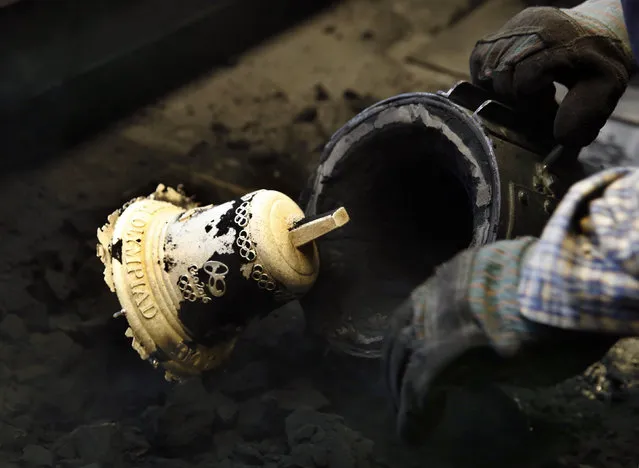
Serge Huguenin of the Blondeau foundry takes the newly melted bell out of the mould in La Chaux-de-Fonds, Switzerland January 21, 2016. At this year's Summer Olympics in Rio de Janeiro, no matter how elaborate the opening ceremony or how sophisticated the live broadcasts, the final lap of athletics races will be announced the traditional way by ringing an old-fashioned bell. (Photo by Denis Balibouse/Reuters)

Serge Huguenin of the Blondeau foundry takes the newly melted bell out of the mould in La Chaux-de-Fonds, Switzerland January 21, 2016. At this year's Summer Olympics in Rio de Janeiro, no matter how elaborate the opening ceremony or how sophisticated the live broadcasts, the final lap of athletics races will be announced the traditional way by ringing an old-fashioned bell. Omega, the official timekeeper of the event, has ordered 21 bells, forged almost entirely by hand by Blondeau's Bell Foundry in the Jura Mountains in Switzerland. Each last-lap bell is branded with the RIO 2016 logo and circled with the words “2016 GAMES OF THE XXXI OLYMPIAD”. (Photo by Denis Balibouse/Reuters)
Details
02 Feb 2016 13:51:00
A schoolgirl is soaked with water thrown by an elephant in a preview of the upcoming Songkran Festival celebration, the Thai traditional New Year, also known as the water festival in the ancient world heritage city of Ayutthaya, Thailand, 11 April 2016. The annual elephant Songkran is held to promote the tourism industry prior the three-day Songkran Festival which starts on 13-15 April annually and is celebrated with splashing water and putting powder on each others faces as a symbolic sign of cleansing and washing away the sins from the old year. (Photo by Diego Azubel/EPA)

A schoolgirl is soaked with water thrown by an elephant in a preview of the upcoming Songkran Festival celebration, the Thai traditional New Year, also known as the water festival in the ancient world heritage city of Ayutthaya, Thailand, 11 April 2016. The annual elephant Songkran is held to promote the tourism industry prior the three-day Songkran Festival which starts on 13-15 April annually and is celebrated with splashing water and putting powder on each others faces as a symbolic sign of cleansing and washing away the sins from the old year. (Photo by Diego Azubel/EPA)
Details
12 Apr 2016 11:32:00
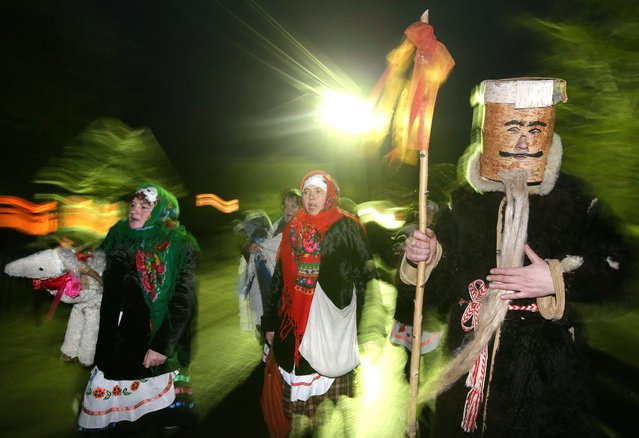
Belarussians in costumes sing songs during the traditional rite of Shchadrets (Schedry vecher or Generous Eve) in the village of Osovo, some 190 km from Minsk, Belarus, 13 January 2015. Shchadrets is a Belarusian folk holiday celebrated on the New Year's Eve in accordance with the Julian calendar (Old New Year). (Photo by Tatyana Zenkovich/EPA)

Belarussians in costumes sing songs during the traditional rite of Shchadrets (Schedry vecher or Generous Eve) in the village of Osovo, some 190 km from Minsk, Belarus, 13 January 2015. Shchadrets is a Belarusian folk holiday celebrated on the New Year's Eve in accordance with the Julian calendar (Old New Year). The holiday is similar to Koliady, when youth in costumes walk from house to house singing holiday songs, performing, and asking for a reward afterwards. (Photo by Tatyana Zenkovich/EPA)
Details
17 Jan 2015 12:21:00