Loading...
Done
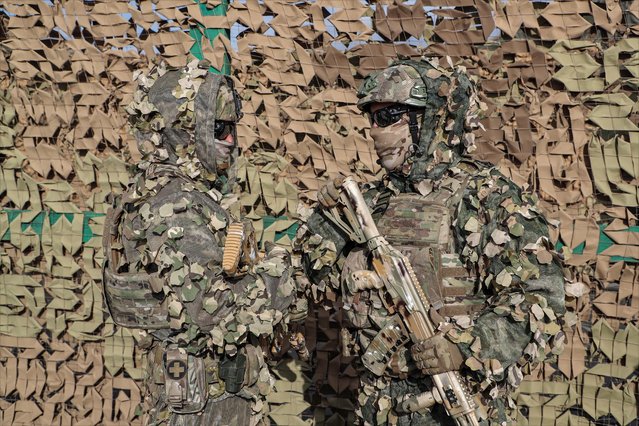
Russian servicemen display military camouflage equipments during the joint military anti-terrorist command and staff exercise of the armed forces of the Shanghai Cooperation Organization member states Peace Mission-2021 at the Donguz training ground in the Orenburg region, Russia, 23 September 2021. More than 3.4 thousand servicemen from Russia, India, China, Pakistan, Tajikistan, Uzbekistan, Kazakhstan, Kyrgyzstan and more than 600 units of weapons, military and special equipment are involved in the exercise Peace Mission-2021. (Photo by Maxim Shipenkov/EPA/EFE)

Russian servicemen display military camouflage equipments during the joint military anti-terrorist command and staff exercise of the armed forces of the Shanghai Cooperation Organization member states Peace Mission-2021 at the Donguz training ground in the Orenburg region, Russia, 23 September 2021. More than 3.4 thousand servicemen from Russia, India, China, Pakistan, Tajikistan, Uzbekistan, Kazakhstan, Kyrgyzstan and more than 600 units of weapons, military and special equipment are involved in the exercise Peace Mission-2021. (Photo by Maxim Shipenkov/EPA/EFE)
Details
03 Oct 2021 03:31:00
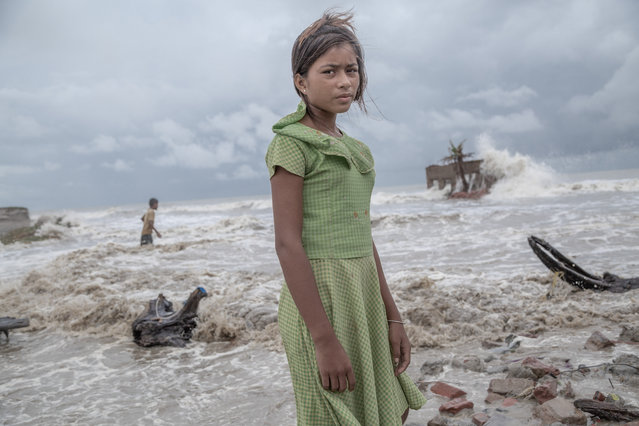
A girl, standing before her tea shop, which is completely ruined by sea water in Frazerganj, Sundarbans, India on August 18, 2020. After Cyclone Aila struck the Sundarbans in 2009, it became clear that frequent cyclonic events will turn the residents of Sundarbans into climate refugees. Within May 5, 2019 – May 25, 2021, Sundarbans faced cyclones- Fani, Bulbul, Amphan & Yaas – each devastating enough to justify the fear of mass displacement. (Photo by Supratim Bhattacharjee/Mangrove Photography Awards)

A girl, standing before her tea shop, which is completely ruined by sea water in Frazerganj, Sundarbans, India on August 18, 2020. After Cyclone Aila struck the Sundarbans in 2009, it became clear that frequent cyclonic events will turn the residents of Sundarbans into climate refugees. Within May 5, 2019 – May 25, 2021, Sundarbans faced cyclones- Fani, Bulbul, Amphan & Yaas – each devastating enough to justify the fear of mass displacement. (Photo by Supratim Bhattacharjee/Mangrove Photography Awards)
Details
26 Sep 2024 03:06:00
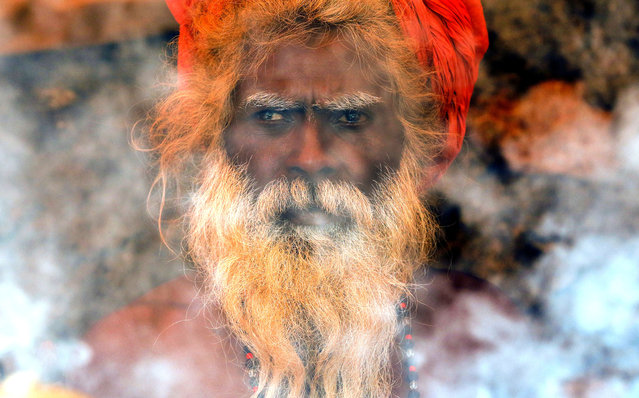
A Naga sadhu, or naked Hindu holy man, performs a ritual inside his tent during Kumbh Mela, or Pitcher festival, at Trimbakeshwar, India, Friday, August 28, 2015. Hindus believe taking a dip in the waters of a holy river during the festival will cleanse them of their sins. The festival is held four times every 12 years. (Photo by Rajanish Kakade/AP Photo)

A Naga sadhu, or naked Hindu holy man, performs a ritual inside his tent during Kumbh Mela, or Pitcher festival, at Trimbakeshwar, India, Friday, August 28, 2015. Hindus believe taking a dip in the waters of a holy river during the festival will cleanse them of their sins. The festival is held four times every 12 years. (Photo by Rajanish Kakade/AP Photo)
Details
29 Aug 2015 11:44:00
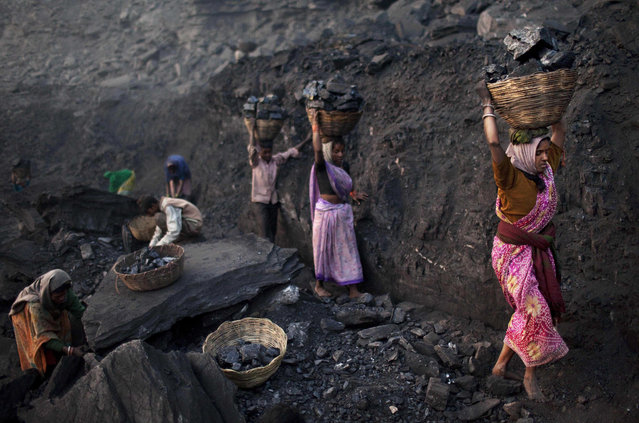
In this Friday, January 7, 2011 photo, people carry baskets of coal scavenged illegally at an open-cast mine in the village of Bokapahari in the eastern Indian state of Jharkhand where a community of coal scavengers live and work. The world's biggest coal users – China, the United States and India – have boosted coal mining in 2017, in an abrupt departure from last year's record global decline for the heavily polluting fuel and a setback to efforts to rein in climate change emissions. (Photo by Kevin Frayer/AP Photo)

In this Friday, January 7, 2011 photo, people carry baskets of coal scavenged illegally at an open-cast mine in the village of Bokapahari in the eastern Indian state of Jharkhand where a community of coal scavengers live and work. The world's biggest coal users – China, the United States and India – have boosted coal mining in 2017, in an abrupt departure from last year's record global decline for the heavily polluting fuel and a setback to efforts to rein in climate change emissions. (Photo by Kevin Frayer/AP Photo)
Details
28 Jun 2017 08:08:00
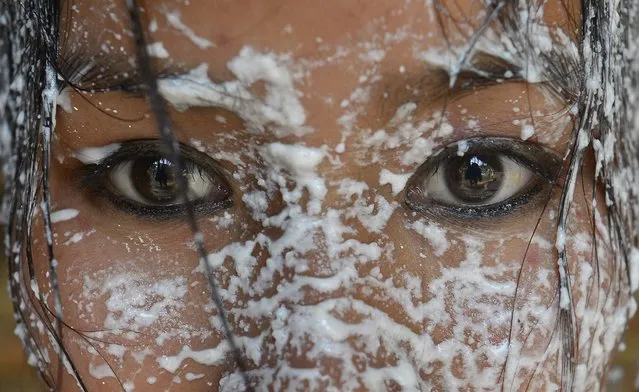
A picture made available on 13 May 2016 shows A Tiwa girl performing her traditional dance as they celebrated the Wanchuwa festival in Karbi Anglong District of Assam state, India, 11 May 2016. Wanchuwa is one of the most important festivals of the Tiwa tribal community living in the hills as it is related with agriculture which is the mainstay of their economy. Tiwas pray for a bountiful harvest during this festival and to protect their crops from pest and other natural calamities. (Photo by EPA/Stringer)

A picture made available on 13 May 2016 shows A Tiwa girl performing her traditional dance as they celebrated the Wanchuwa festival in Karbi Anglong District of Assam state, India, 11 May 2016. Wanchuwa is one of the most important festivals of the Tiwa tribal community living in the hills as it is related with agriculture which is the mainstay of their economy. Tiwas pray for a bountiful harvest during this festival and to protect their crops from pest and other natural calamities. Tiwa is a major tribe of Assam state who practice Jhum or shifting cultivation for their living in the hills. (Photo by EPA/Stringer)
Details
14 May 2016 11:45:00
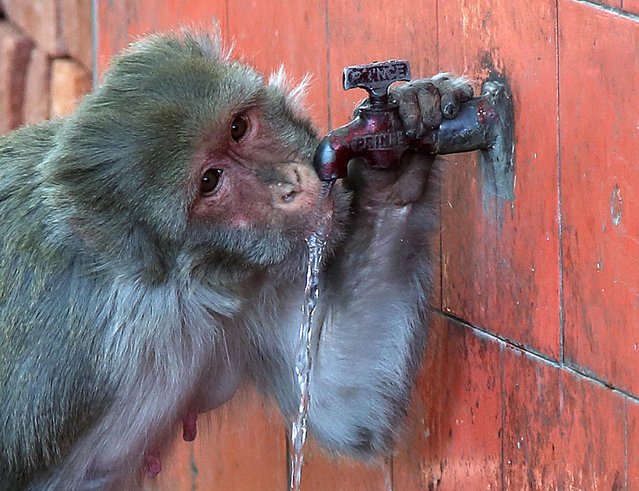
A monkey drinks water from a tap on a hot afternoon in Jammu, the winter capital Kashmir, India, 17 May 2016. Temperatures of around 42 degrees Celsius were forecast in the region. According to the news reports the Indian government decided to divert water by its river interlinking plans from rivers like Brahmaputra and the Ganges towards those rivers facing the drought likesituation . Many Indian states have been affected by drought and have been hit hard by water scarcity. (Photo by Jaipal Singh/EPA)

A monkey drinks water from a tap on a hot afternoon in Jammu, the winter capital Kashmir, India, 17 May 2016. Temperatures of around 42 degrees Celsius were forecast in the region. According to the news reports the Indian government decided to divert water by its river interlinking plans from rivers like Brahmaputra and the Ganges towards those rivers facing the drought likesituation . Many Indian states have been affected by drought and have been hit hard by water scarcity. (Photo by Jaipal Singh/EPA)
Details
22 May 2016 07:00:00
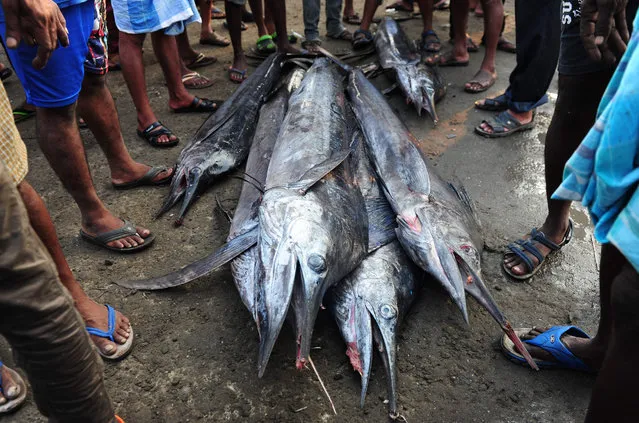
Indian men stand around sword fish for sale at a harbour a harbour in Chennai on June 5, 2016, as fishermen return with their catch after a 45-day fishing ban on the east coast of India. Authorities in the southern Indian state of Tamil Nadu had imposed a 45-day ban on fishing by mechanised vessels to protect marine life, with only “country boats” operating within five nautical miles off the coast. (Photo by Arun Sankar/AFP Photo)

Indian men stand around sword fish for sale at a harbour a harbour in Chennai on June 5, 2016, as fishermen return with their catch after a 45-day fishing ban on the east coast of India. Authorities in the southern Indian state of Tamil Nadu had imposed a 45-day ban on fishing by mechanised vessels to protect marine life, with only “country boats” operating within five nautical miles off the coast. (Photo by Arun Sankar/AFP Photo)
Details
06 Jun 2016 11:24:00
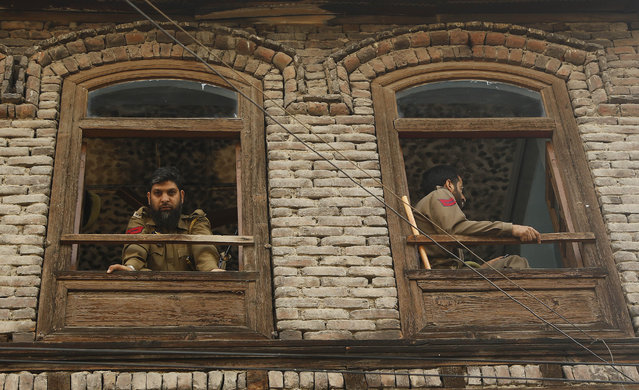
Indian policemen keep guard from the window of a residential house during curfew in Srinagar, Indian controlled Kashmir, Wednesday, July 13, 2016. Curfew imposed in the disputed Himalayan region continues for the fifth consecutive day to suppress anti-India violence following the Friday killing of Burhan Wani, chief of operations of Hizbul Mujahideen, Kashmir's largest rebel group. (Photo by Mukhtar Khan/AP Photo)

Indian policemen keep guard from the window of a residential house during curfew in Srinagar, Indian controlled Kashmir, Wednesday, July 13, 2016. Curfew imposed in the disputed Himalayan region continues for the fifth consecutive day to suppress anti-India violence following the Friday killing of Burhan Wani, chief of operations of Hizbul Mujahideen, Kashmir's largest rebel group. (Photo by Mukhtar Khan/AP Photo)
Details
14 Jul 2016 09:44:00