Loading...
Done
A demonstrator uses a slingshot during a protest against Chile's government in Santiago, Chile on November 8, 2019. (Photo by Pablo Sanhueza/Reuters)

A demonstrator uses a slingshot during a protest against Chile's government in Santiago, Chile on November 8, 2019. (Photo by Pablo Sanhueza/Reuters)
Details
04 Feb 2020 00:01:00
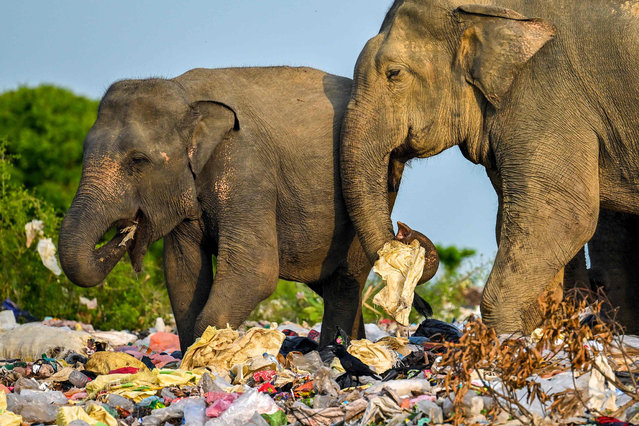
This picture taken on June 3, 2023 shows wild elephants eating rubbish mixed with plastic waste at a dump in the eastern district of Ampara. (Photo by Ishara S. Kodikara/AFP Photo)

This picture taken on June 3, 2023 shows wild elephants eating rubbish mixed with plastic waste at a dump in the eastern district of Ampara. (Photo by Ishara S. Kodikara/AFP Photo)
Details
23 Jul 2023 03:35:00
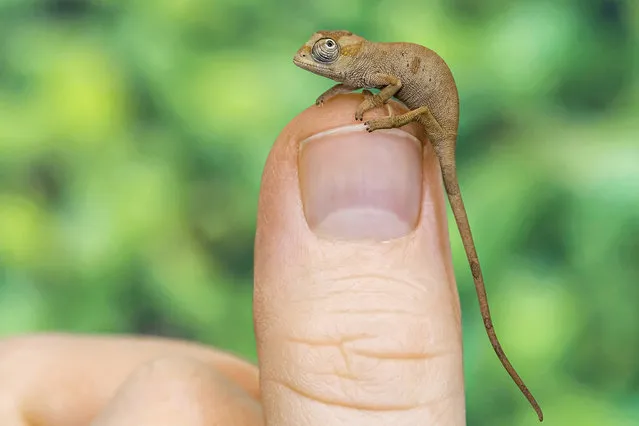
A young rednose dwarf chameleon (Kinyongia oxyrhina) perches on a zookeeper’s thumb at the Tiergarten Schönbrunn in Vienna on September 12, 2023. The chameleons were found by customs officers in a suitcase in 2021, and have bred at the zoo. (Photo by Daniel Zupanc/Newsflash)

A young rednose dwarf chameleon (Kinyongia oxyrhina) perches on a zookeeper’s thumb at the Tiergarten Schönbrunn in Vienna on September 12, 2023. The chameleons were found by customs officers in a suitcase in 2021, and have bred at the zoo. (Photo by Daniel Zupanc/Newsflash)
Details
24 Sep 2023 03:17:00
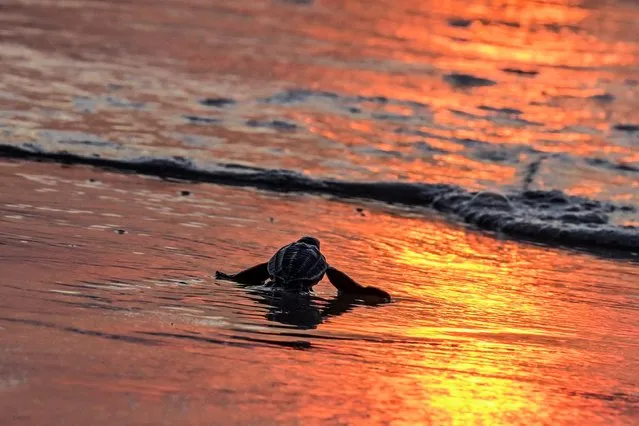
An Olive Ridley sea turtle hatchling releases into the sea at Lhoknga beach, Indonesia's Aceh province on January 16, 2024. (Photo by Chaideer Mahyuddin/AFP Photo)

An Olive Ridley sea turtle hatchling releases into the sea at Lhoknga beach, Indonesia's Aceh province on January 16, 2024. (Photo by Chaideer Mahyuddin/AFP Photo)
Details
03 Feb 2024 08:12:00
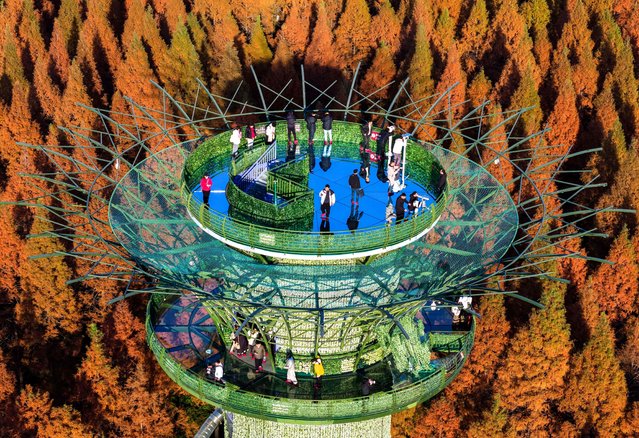
People visit the Yellow Sea forest park as the leaves of Dawn Redwoods turn red and yellow in winter in Yancheng, eastern China's Jiangsu province on December 4, 2025. (Photo by AFP Photo/China Stringer Network)

People visit the Yellow Sea forest park as the leaves of Dawn Redwoods turn red and yellow in winter in Yancheng, eastern China's Jiangsu province on December 4, 2025. (Photo by AFP Photo/China Stringer Network)
Details
10 Dec 2025 05:04:00
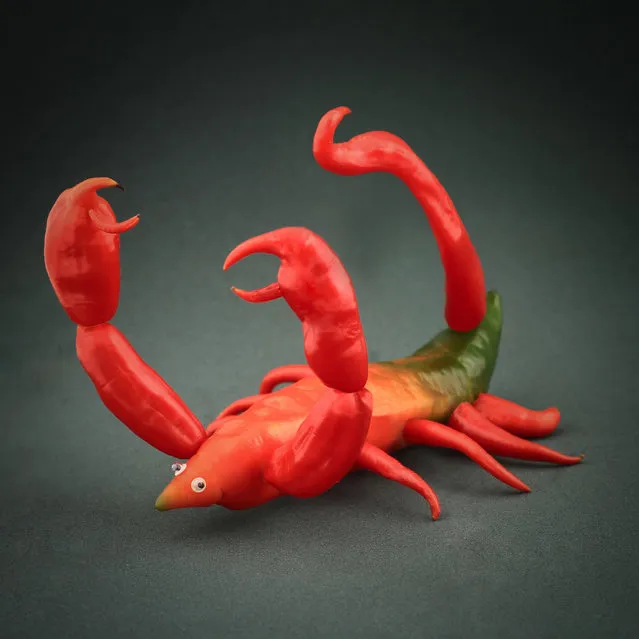
“Red Pepperpion. (Photo by Vanessa Dualib)

“Red Pepperpion. Red Pepperpions are secretive, nocturnal arachilli which can be spotted in kitchens of arid climates all around the world.

Red Pepperpions are equipped with a delicious (and depending on the quantity...deadly!) stinger at the end of its tail. If you happen to get bitten (or if you bite him!) it will produce a burning sensation on your taste nerves.

However, there is no need to worry, since the fact is that his potent stinger is usually only used when hunting or whenever the Pepperpion feels like he might become part of someones meal...

At daylight or when encountering a larger foe, such as a Saucier Chef, they retreat into burrows inside the fridge or hide beneath the oven”. (Photo and comment by Vanessa Dualib)


Details
08 Feb 2013 09:24:00
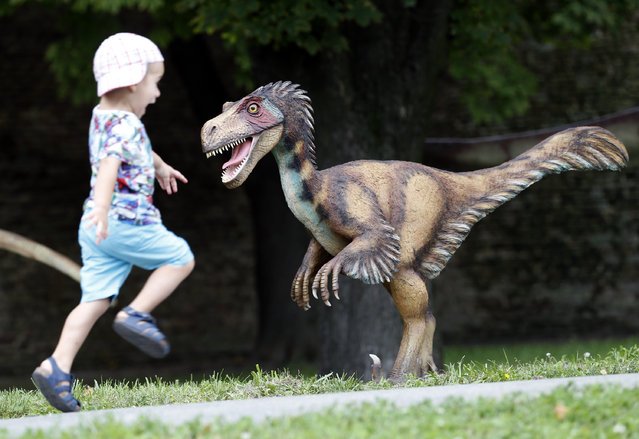
A boy runs past one of the exhibits during the Dinosaurs exhibition in Belgrade, Serbia, Thursday, August 21, 2014. “Dino Park” has opened at Belgrade's Kalemegdan Fortress. (Photo by Darko Vojinovic/AP Photo)

A boy runs past one of the exhibits during the Dinosaurs exhibition in Belgrade, Serbia, Thursday, August 21, 2014. “Dino Park” has opened at Belgrade's Kalemegdan Fortress. (Photo by Darko Vojinovic/AP Photo)
Details
23 Aug 2014 11:56:00
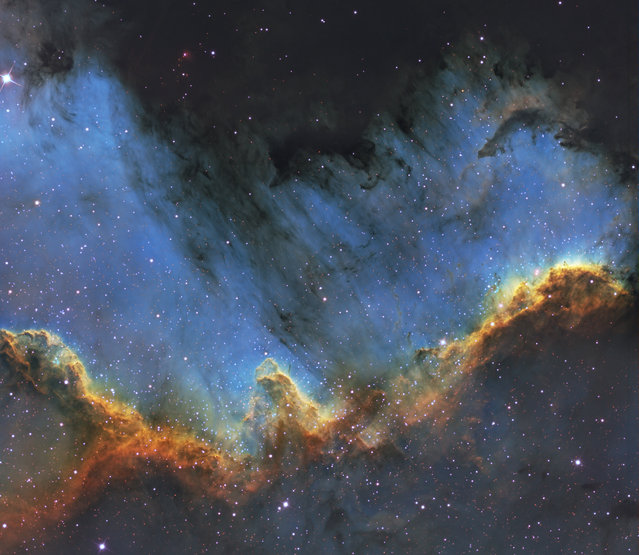
The Cygnus Wall is in the southern  area of NGC7000 also known as the North America Nebula. It is approximately 1800 light years from Earth, and is in the constellation Cygnus. The Wall is an energized shock front and contains the most concentrated star formations in the nebula. The size of the North America Nebula is about 4 full moons. (Bill Snyder)

Amateur astronomer Bill Snyder has been involved with astrophotography since 2007. Photo: The Cygnus Wall is in the southern area of NGC7000 also known as the North America Nebula. It is approximately 1800 light years from Earth, and is in the constellation Cygnus. The Wall is an energized shock front and contains the most concentrated star formations in the nebula. The size of the North America Nebula is about 4 full moons. (Photo and caption by Bill Snyder)
Details
30 Oct 2013 09:15:00