Loading...
Done
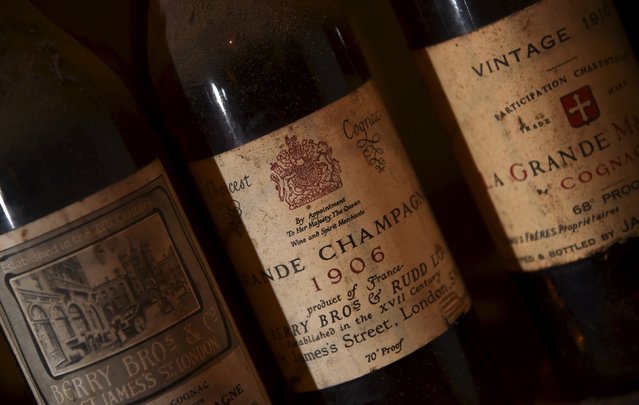
Bottles of vintage cognac, with a royal warrant stamp, are seen in storage inside Berry Bros and Rudd wine merchants in central London, Britain, August 21, 2015. Berry Bros. & Rudd, which started as grocers over 300 years ago in St. James's, central London, has two royal warrants. (Photo by Toby Melville/Reuters)

Bottles of vintage cognac, with a royal warrant stamp, are seen in storage inside Berry Bros and Rudd wine merchants in central London, Britain, August 21, 2015. Berry Bros. & Rudd, which started as grocers over 300 years ago in St. James's, central London, has two royal warrants. Every year Queen Elizabeth grants about 20 royal warrants, the gold emblem of the British monarchy, in a practice dating back to medieval times. The warrant holders can display the certificate and use the royal coat of arms in their marketing. The warrants lasting five years can help businesses break into new markets overseas, using their role as supplier to the royal family as a gauge of quality. On September 9, Queen Elizabeth will overtake Queen Victoria as Britain's longest-serving monarch. (Photo by Toby Melville/Reuters)
Details
03 Sep 2015 12:37:00
Luling, Louisiana US. New evidence contradicts previous claims of the relative safety of glyphosate, the world’s most widely used herbicide, which is manufactured here. It is often used in conjunction with seeds that have been genetically modified to tolerate its application, meaning that anyone consuming these crops is eating a genetically modified plant, and whatever residue of the pesticide that remains. (Photo by J. Henry Fair/Industrial Scars/Papadakis Publisher)

Luling, Louisiana, US. New evidence contradicts previous claims of the relative safety of glyphosate, the world’s most widely used herbicide, which is manufactured here. It is often used in conjunction with seeds that have been genetically modified to tolerate its application, meaning that anyone consuming these crops is eating a genetically modified plant, and whatever residue of the pesticide that remains. (Photo by J. Henry Fair/Industrial Scars/Papadakis Publisher)
Details
25 Oct 2016 10:40:00
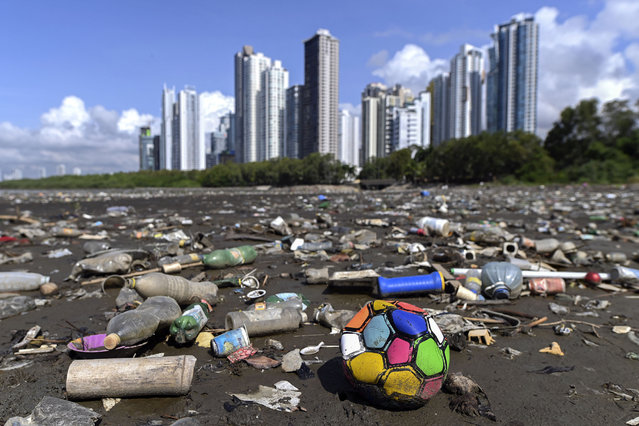
Garbage, including plastic waste, is seen at the beach of Costa del Este, in Panama City, on April 19, 2021. Every two weeks, Marine Biology students descend about five meters in the sea to take care of a coral nursery of the staghorn species (Acropora cervicornis) in Portobelo, Panama, with which they aim to restore reefs damaged by climate change and pollution, as part of the Reef2Reef project. (Photo by Luis Acosta/AFP Photo)

Garbage, including plastic waste, is seen at the beach of Costa del Este, in Panama City, on April 19, 2021. Every two weeks, Marine Biology students descend about five meters in the sea to take care of a coral nursery of the staghorn species (Acropora cervicornis) in Portobelo, Panama, with which they aim to restore reefs damaged by climate change and pollution, as part of the Reef2Reef project. (Photo by Luis Acosta/AFP Photo)
Details
21 Jun 2021 07:30:00
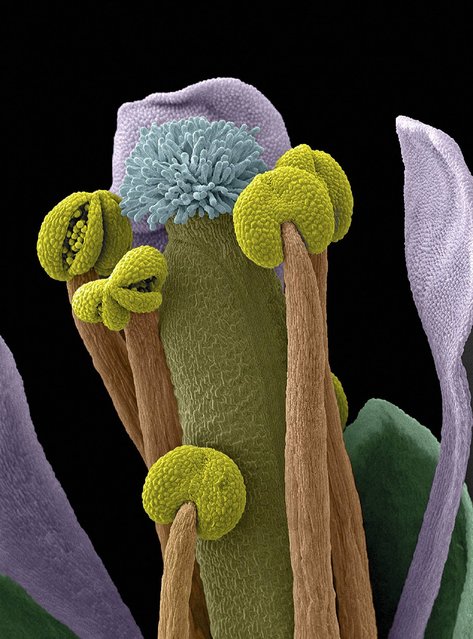
Scanning electron micrograph (SEM) of an Arabidopsis thaliana flower, also commonly known as thale cress. Some of the anthers are open, revealing pollen grains ready for dispersal. Arabidopsis was the first plant to have its entire genome sequenced and is widely used as a model organism in molecular and plant biology. Horizontal width of image is 1200 microns. Magnification 100x. (Photo by Stefan Eberhard/Wellcome Images)

Beautiful, strange and occasionally alarming pictures from the shortlist for this year’s Wellcome image awards – which celebrate the very best in science photography and imaging – from an x-ray of a bat to a micrograph of a kidney stone. The exhibition opens on 12 March at three science centres and the Museum of Science and Industry in Manchester. Photo: Scanning electron micrograph (SEM) of an Arabidopsis thaliana flower, also commonly known as thale cress. Some of the anthers are open, revealing pollen grains ready for dispersal. Arabidopsis was the first plant to have its entire genome sequenced and is widely used as a model organism in molecular and plant biology. Horizontal width of image is 1200 microns. Magnification 100x. (Photo by Stefan Eberhard/Wellcome Images)
Details
11 Mar 2014 05:58:00
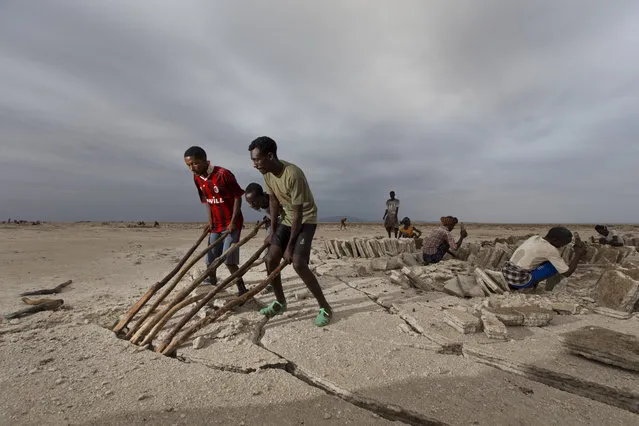
February 8, 2014 – Danakil Desert, Ethiopia: Workers mining salt at the quarry. (Photo by Ziv Koren/Polaris)

Inside the Afar Triangle in Ethiopia’s Danakil desert, camel caravans are used to carry salt. For centuries, the essential mineral has been mined by the Afar people, known for their ability to withstand extremes. The terrain is rugged, travelers are scarce and so are motor vehicles, where the average annual temperature is the highest in the world, and can rise to 122 degrees Fahrenheit, 50 degrees Celsius. (Photo by Ziv Koren/Polaris)
Details
30 Apr 2014 08:17:00
The Nasir al-mulk or “Pink” mosque in Shiraz, Iran. (Photo by Mohammad Reza Domiri Ganj)

Amateur Iranian photographer Mohammad Reza Domiri Ganji, 23 likes to learn as much as he can about a site before he photographs it. Then he utilizes a variety of wide-angle and fisheye lenses, as well as occasional panoramic techniques to create beautiful new, often mind-bending images. He usually shoots the architectural wonders of Iran, and hopes that the Iranian government will allow him to travel further from home in pursuit of other iconic architectural treasures. Photo: The Nasir al-mulk or “Pink” mosque in Shiraz, Iran. (Photo by Mohammad Reza Domiri Ganj)
Details
17 Aug 2014 08:58:00
Edible Art By Sandra Van Den Broek

Sandra van den Broek from Netherlands creates the cutest character bento for her children’s. She’ll start by sketching the meal and prepares it with scissors, knives and toothpicks. Although you wouldn’t say, it usually takes Sandra only one hour to make a meal. She likes to make something practical, something for everyone to be able to follow. And if you look closely, you can see that it wouldn’t be too hard to make these bentos yourself.
Details
04 Sep 2014 10:29:00
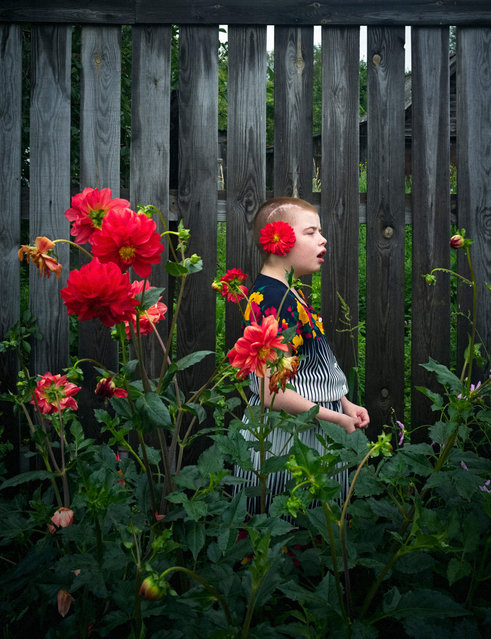
Portrait of a girl from the neuropsychiatric boarding facility for girls. (Photo by Anastasia Rudenko)

“Elat’ma, the Ryazan Oblast region of Russia. This small town is only 300 kilometers (186 miles) from modern Moscow but remains 60 years in the past, dominated by the spirit of socialism. The air of the communist ‘50s can be seen in the town’s architecture, celebrations and other occurrences. But neither its beauty nor its ties to a socialist past brought photographer Anastasia Rudenko to this village. Elat’ma is unique in that it functions as a town for mentally disabled people”. – Michelle Cohan via CNN. (Photo by Anastasia Rudenko)
Details
09 Sep 2014 08:20:00