Loading...
Done
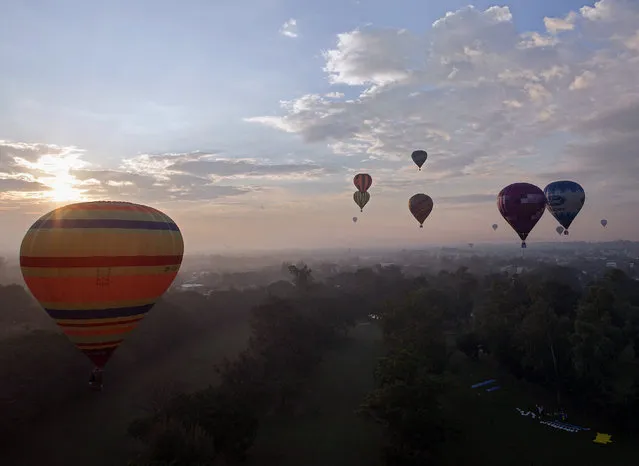
Hot air balloons fly over the sky in Chiang Mai province, northern Thailand, December 6, 2014. The two-day International Balloon festival 2014 featuring balloon pilots from Germany, Spain, Netherlands, Britain, and Czech Republic is held on December 06-07 2014 to celebrate Thai King Bhumibol Adulyadej's 87th birthday and also aimed to promote the tourism industry in Chiang Mai northern city. (Photo by Pongmanat Tasiri/EPA)

Hot air balloons fly over the sky in Chiang Mai province, northern Thailand, December 6, 2014. The two-day International Balloon festival 2014 featuring balloon pilots from Germany, Spain, Netherlands, Britain, and Czech Republic is held on December 06-07 2014 to celebrate Thai King Bhumibol Adulyadej's 87th birthday and also aimed to promote the tourism industry in Chiang Mai northern city. (Photo by Pongmanat Tasiri/EPA)
Details
13 Dec 2014 11:55:00
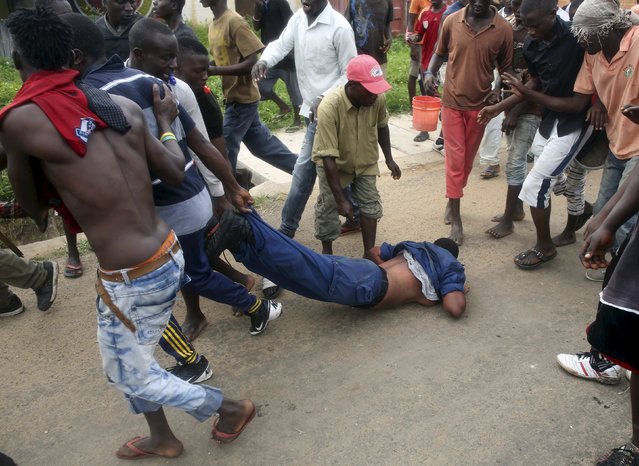
Protesters drag a female police officer accused of shooting a protester in the Buterere neighbourhood of Bujumbura, Burundi, May 12, 2015. (Photo by Goran Tomasevic/Reuters)

From house breaking in Johannesburg to hippos on the loose in Tbilisi to rioters attacking a policewoman in Burundi, Reuters photographers tell the story behind some of the most iconic pictures of the year. Here: Protesters drag a female police officer accused of shooting a protester in the Buterere neighbourhood of Bujumbura, Burundi, May 12, 2015. Goran Tomasevic: Protesters started throwing stones at a group of police, who then started to run away. The policewoman in the photo, Medikintos Inabeza, 33, got left behind and then some protesters started to push her, saying that she had shot a female protestor in the stomach with an AK47 rifle. I didn't see anything of that. There were 5 or 10 protesters pushing the policewoman at first, then others came and joined in. Up to 20 or 30 protesters were surrounding her at one point. The protesters kicked and beat her very badly; I also saw a couple of knives. I thought they were going to kill her... (Photo by Goran Tomasevic/Reuters)
Details
11 Dec 2015 08:06:00
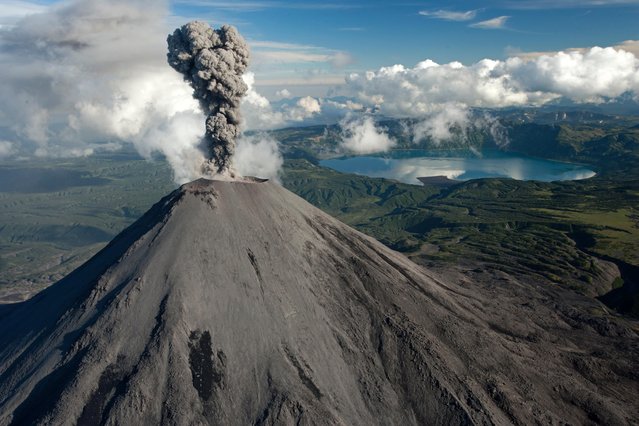
Russia From Above: “An Explosive Scene”. The 1,486-meter-high Karymskii Volcano in Kamchatka. (Photo by Sergey Fomin)

Since 2003, photographer Sergey Fomin has been shooting Russia’s most attractive natural, historical, and architectural objects from different aircrafts. Photo: “An Explosive Scene”. The 1,486-meter-high Karymskii Volcano in Kamchatka. (Photo by Sergey Fomin)
Details
28 Sep 2014 11:39:00
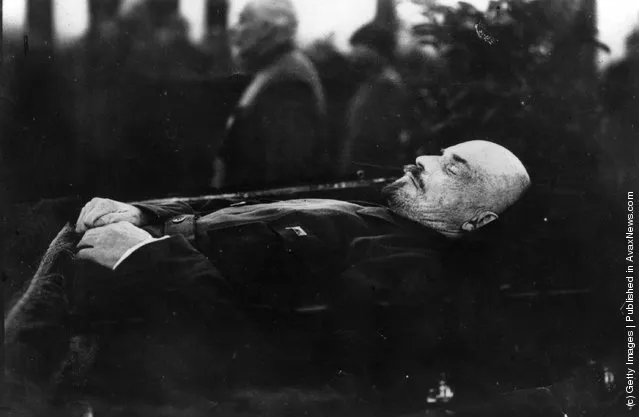
1924:  Vladimir Ilyich Lenin lying in state in the Kremlin

Photo: Vladimir Ilyich Lenin (1870 – 1924) lying in state in the Kremlin. (Photo by Hulton Archive/Getty Images). 1924

Important! For the same article in Russian language click here.

Something quite intriguing is happening within Russian-speaking internet during the last few – should you type a fully academic inquiry (at least, according to Russian academic requirements) in national search engines for "Lenin's mausoleum" – the first thing you get (even in top 10 searches) is website pages talking about black magic and occult. Website authors view this construction differently, but unconditionally agree on one thing: the mausoleum of the "leader of the world proletariat” – the essence of a magical artifact, a sort of “energy vampire”. It was built with a certain purpose: to drain the energy out of miserable Soviet citizens on one hand; and to poison the anthroposphere of one-sixth part of the earth with its vibes (the exact territory that was occupied by the former Soviet Union), depriving the Russian people of will to resist on the other hand. Complete nonsense? No doubt. Nevertheless, an intriguing one. Well, probably because some oddities do exist in mausoleum's history. These oddities are the thing we are going to discuss this time. First, let me refresh you memory on the subject.
Details
16 Oct 2011 11:27:00
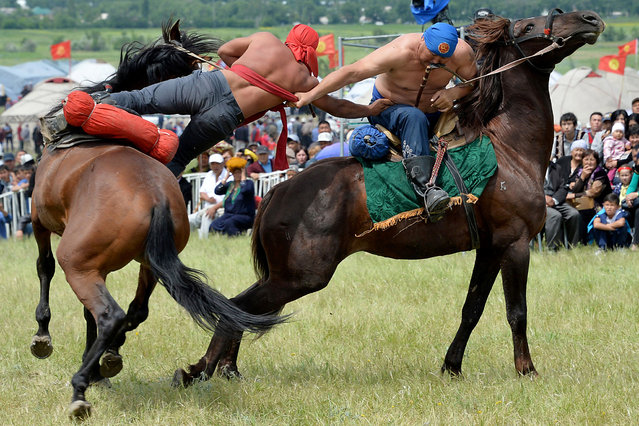
Kyrgyz men on horseback compete during their traditional game of “Oodarysh” during the celebrations of the 90th anniversary formation of the Chui region in the village of Kuntu some 20 kms from Bishkek on May 27, 2016. (Photo by Vyacheslav Oseledko/AFP Photo)

Kyrgyz men on horseback compete during their traditional game of “Oodarysh” during the celebrations of the 90th anniversary formation of the Chui region in the village of Kuntu some 20 kms from Bishkek on May 27, 2016. (Photo by Vyacheslav Oseledko/AFP Photo)
Details
28 May 2016 12:31:00
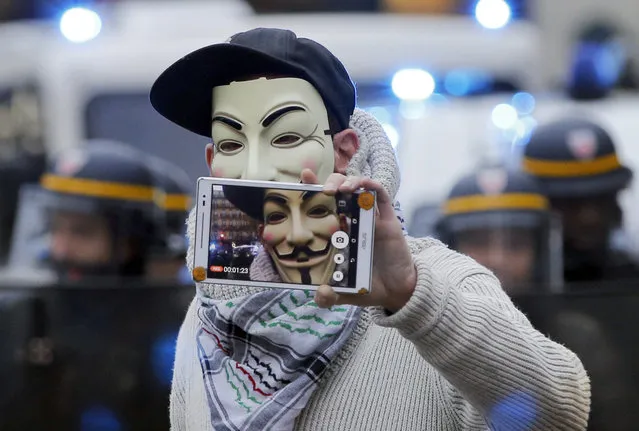
An activist takes a selfie during a protest ahead of the 2015 Paris Climate Conference, in Paris, Sunday, November 29, 2015. (Photo by Christophe Ena/AP Photo)

An activist takes a selfie during a protest ahead of the 2015 Paris Climate Conference, in Paris, Sunday, November 29, 2015. More than 140 world leaders are gathering around Paris for high-stakes climate talks that start Monday, and activists are holding marches and protests around the world to urge them to reach a strong agreement to slow global warming. (Photo by Christophe Ena/AP Photo)
Details
01 Dec 2015 08:03:00
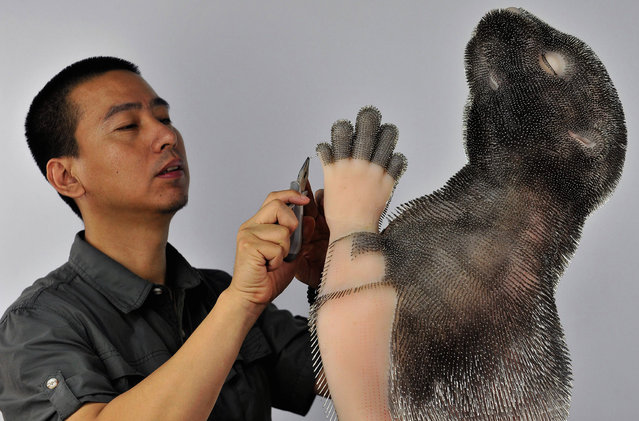
Professor Xie Yong works on an art installation of a beaver, which is made out of plastic and around 300,000 needles, in Shenyang, Liaoning province, July 23, 2013. The needles, according to Xie, represent the pain felt by animals when their fur is taken off to produce clothing. (Photo by Reuters/Stringer)

Professor Xie Yong works on an art installation of a beaver, which is made out of plastic and around 300,000 needles, in Shenyang, Liaoning province, July 23, 2013. The needles, according to Xie, represent the pain felt by animals when their fur is taken off to produce clothing. (Photo by Reuters/Stringer)
Details
27 Jul 2013 09:15:00
Ocean voyage

Do you think that history is a science? Well, not exactly. First, and foremost, history is the state's “legend of wars”, it’s official regalia. Of course, public historians are not interested in scientific truth – quite the opposite. In this respect, any attempt to present a state’s history as altruistic and benevolent as possible is welcomed and encouraged – as opposed to any revisionism attempts that may be more accurate. In this matter, Chinese have surpassed us all – they revised in highly creative manner (but rather shamelessly) the technology already invented by Europeans, a process that resulted in oldest state on the planet. Here is an interesting paradox: ask any sinologist about the Middle Kingdom during second century B.C., and he will describe it to you in such a vivid manner as if he has been living there all his life – but as soon as you will ask him to describe Chinese history in the 19-20th centuries… let's say, his eagerness will be greatly diminished. However, we will discuss China in a different article, and in the meantime we will try to understand how exactly historic “legend of wars” is formed and functions – based on a specific and well-known example. A great example is Ferdinand Magellan's first voyage around the world.

Details
14 Nov 2011 09:11:00