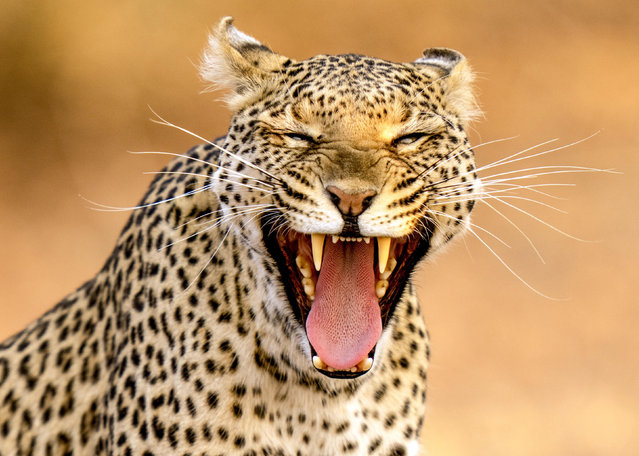
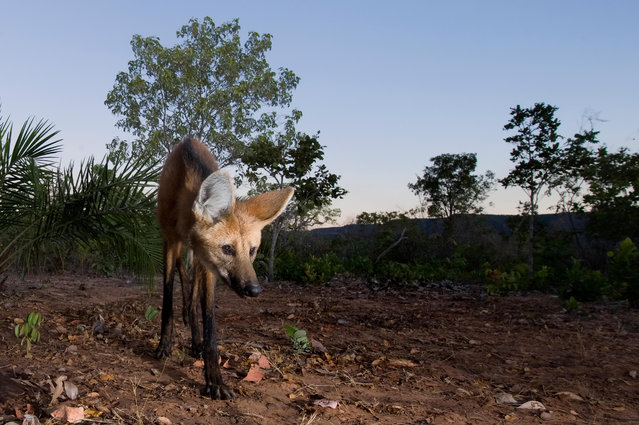
Global wildlife populations will decline by 67% by 2020 unless urgent action is taken to reduce human impact on species and ecosystems, warns the biennial Living Planet Index report from WWF (World Wide Fund for Nature) and ZSL (Zoological Society of London). From elephants to eels, here are some of the wildlife populations most affected by human activity. Here: The maned wolf is among the large mammals in the Brazilian Cerrado that are threatened by the increasing conversion of grasslands into farmland for grazing and growing crops. (Photo by Ben Cranke/Nature Picture Library/Alamy Stock Photo)
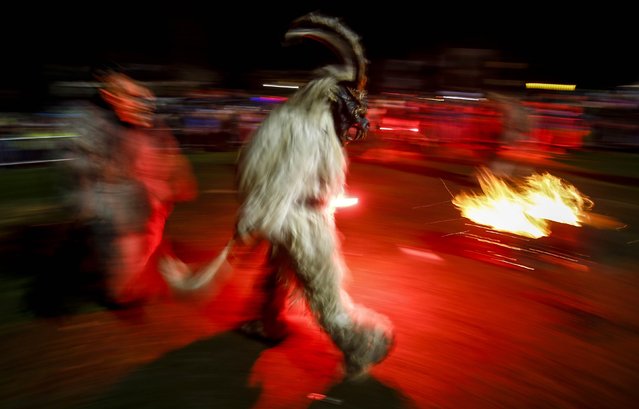
A man dressed in a traditional Perchten costume and mask performs during a Perchten festival in the western Austrian village of Huben November 22, 2014. Each year in November and January people in the western Austria regions dress up in Perchten (also known in some regions as Krampus or Tuifl) costumes and parade through the streets to perform a 1,500 year-old pagan ritual to disperse the ghosts of winter. (Photo by Dominic Ebenbichler/Reuters)
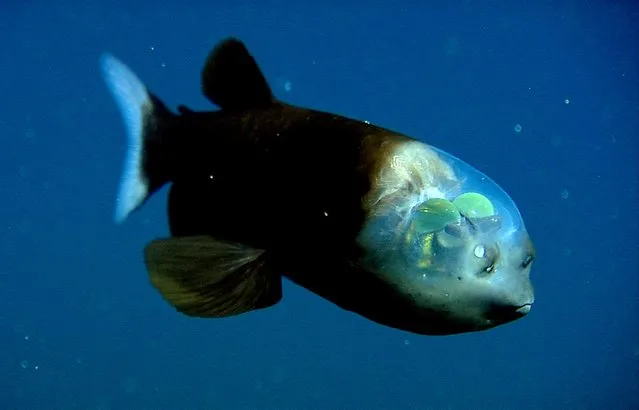
Macropinna microstoma is the only species of fish in the genus Macropinna, belonging to Opisthoproctidae, the barreleye family. It is recognized for a highly unusual transparent, fluid-filled dome on its head, through which the lenses of its eyes can be seen. The eyes have a barrel shape and can be rotated to point either forward or straight up, looking through the fish's transparent dome. M. microstoma has a tiny mouth and most of its body is covered with large scales.
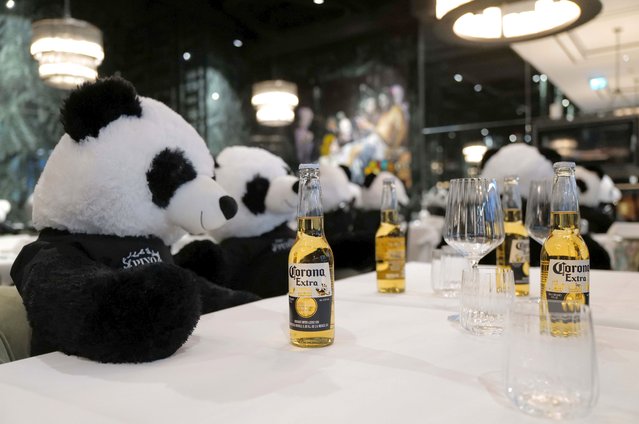
Fluffy toy panda bears as part of the art installation “Panda mie” by Italian restaurant owner Giuseppe “Pino” Fichera sit over beers at his restaurant “Pino's” to raise awareness of the COVID-19 lockdown's business impact on gastronomy in Frankfurt, Germany, November 24, 2020. (Photo by Kai Pfaffenbach/Reuters)
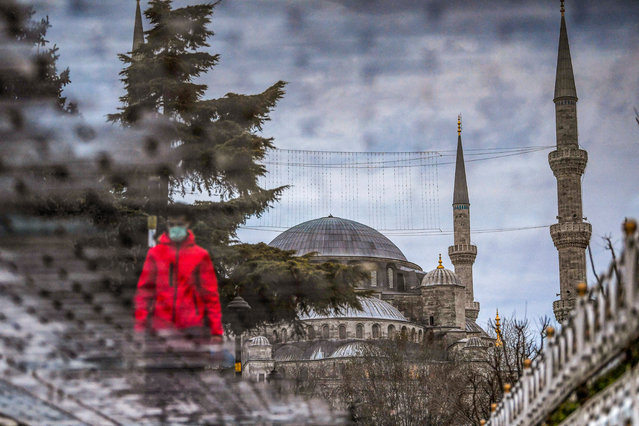
A reflection on waste liquid shows a tourist walking near the Blue mosque at the Sultanahmet Square on the first day of the Muslim fasting month of Ramadan in Istanbul on April 13, 2021. (Photo by Ozan Kose/AFP Photo)
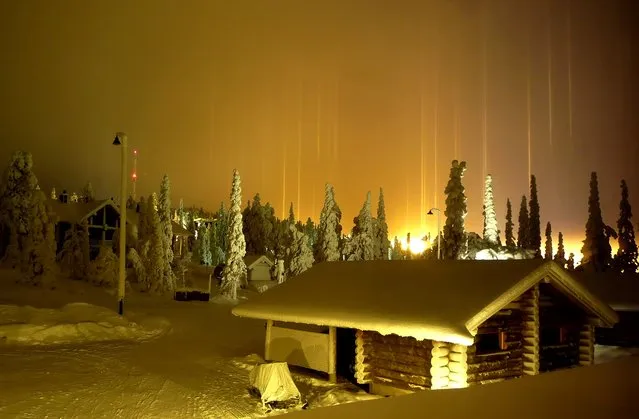
A light pillar is a visual phenomenon created by the reflection of light from ice crystals with near horizontal parallel planar surfaces. The light can come from the Sun (usually at or low to the horizon) in which case the phenomenon is called a sun pillar or solar pillar. It can also come from the Moon or from terrestrial sources such as streetlights.
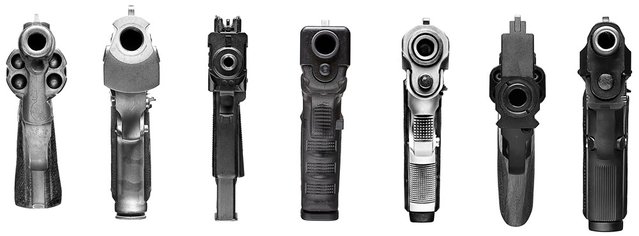
“Guns have a massive amount of power associated with them. They are designed to kill. We decided to photograph portraits of them in a similar way you might photograph a powerful person. Like powerful people, pistols have this “perfect” quality that we wanted to explore. As we started shooting them, we could see flaws in their design. Metal burring around the barrels, scratches in the metal. This imperfection and detail were very interesting to us; connecting us back to these images as portraits”. – Peter Andrew. (Photo by Peter Andrew/Simon Duffy/Derek Blais)