Loading...
Done
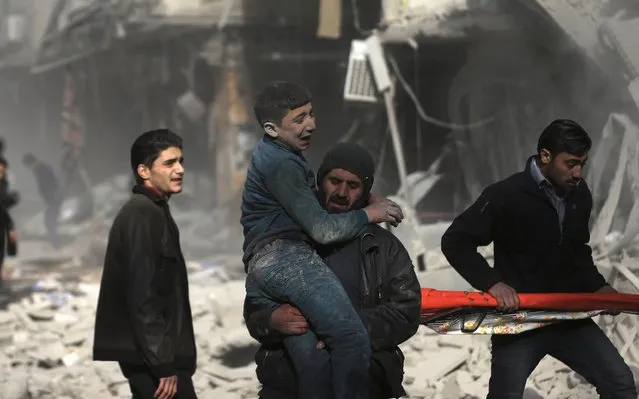
A man carries an injured civilian at a site hit by what activists said was an air strike by forces of Syria's President Bashar al-Assad in the Duma neighbourhood of Damascus December 27, 2014. (Photo by Bassam Khabieh/Reuters)

A man carries an injured civilian at a site hit by what activists said was an air strike by forces of Syria's President Bashar al-Assad in the Duma neighbourhood of Damascus December 27, 2014. (Photo by Bassam Khabieh/Reuters)
Details
28 Dec 2014 11:56:00
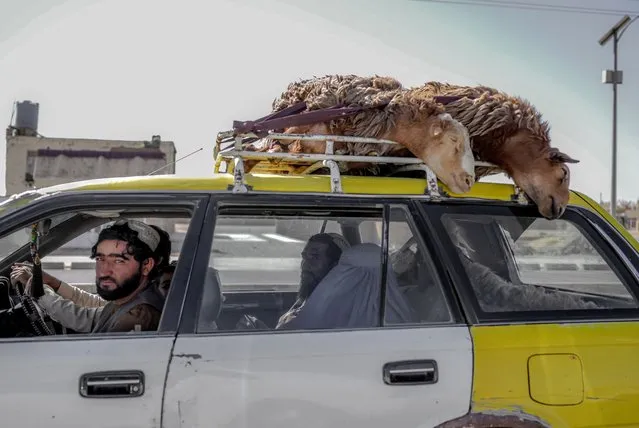
People travel in a taxi carrying sheep on a luggage carrier and in the car boot in Kandahar October 30, 2021. (Photo by Bulent Kilic/AFP Photo)

People travel in a taxi carrying sheep on a luggage carrier and in the car boot in Kandahar October 30, 2021. (Photo by Bulent Kilic/AFP Photo)
Details
06 Nov 2021 07:27:00
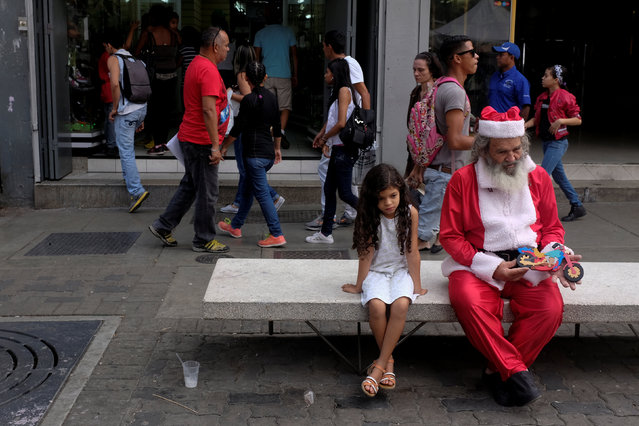
A street vendor wearing a Santa Claus costume sits next to a girl at the boulevard of Sabana Grande in Caracas, Venezuela December 19, 2016. (Photo by Marco Bello/Reuters)

A street vendor wearing a Santa Claus costume sits next to a girl at the boulevard of Sabana Grande in Caracas, Venezuela December 19, 2016. (Photo by Marco Bello/Reuters)
Details
27 Dec 2016 08:02:00
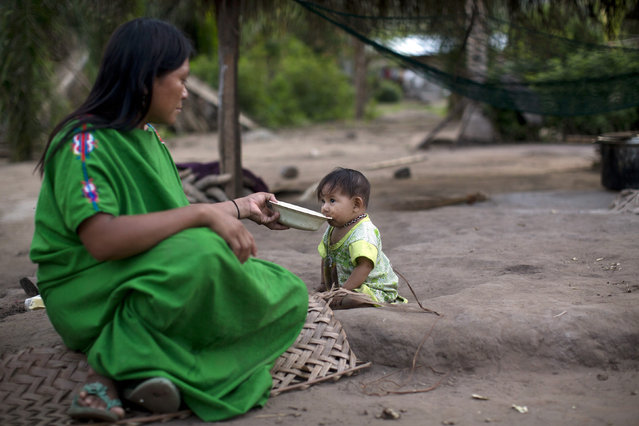
In this November 19, 2015 photo, Ester Melendez feeds banana porridge to her nine-month-old daughter Dina, in Pichiquia, an Ashaninka indigenous community in Peru's Junin region. Incursions and assaults by loggers, miners, colonists and leftist guerrillas have reduced the lands of the Ashaninka people in the Peruvian Amazon, leaving many of the 97,000 members of the group malnourished, despite efforts by the government and independent organizations to help. (Photo by Rodrigo Abd/AP Photo)

In this November 19, 2015 photo, Ester Melendez feeds banana porridge to her nine-month-old daughter Dina, in Pichiquia, an Ashaninka indigenous community in Peru's Junin region. Incursions and assaults by loggers, miners, colonists and leftist guerrillas have reduced the lands of the Ashaninka people in the Peruvian Amazon, leaving many of the 97,000 members of the group malnourished, despite efforts by the government and independent organizations to help. (Photo by Rodrigo Abd/AP Photo)
Details
10 Dec 2015 08:00:00
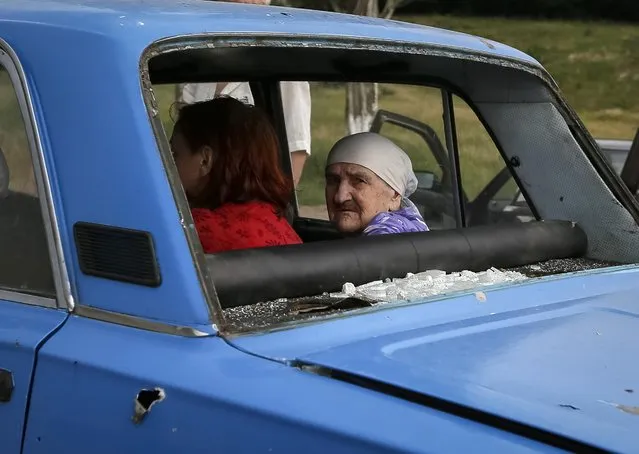
Caught In East Ukraine Crossfire

An old woman looks from inside a car with bullet holes and shattered windows as she flees fighting in the eastern Ukrainian town of Slaviansk June 9, 2014. REUTERS/Gleb Garanich.
Details
10 Jun 2014 11:15:00


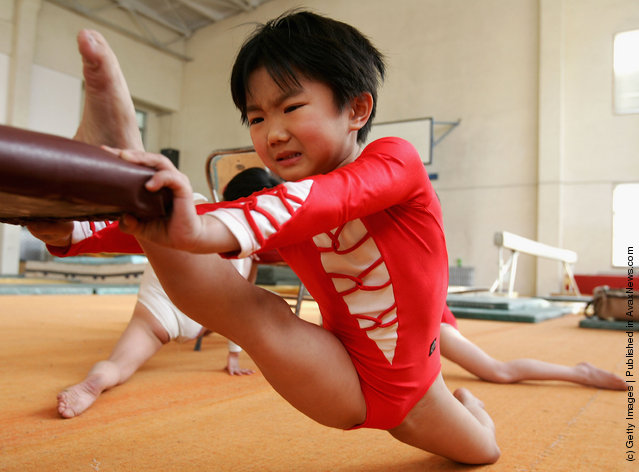
Eight-year-old Niu Dongfang trains at the No. 2 Beijing Shuangqiao School January 13, 2005 in Beijing, China. Most of students in the gymnastics school have to study more than five years from as young as age six before they become athletes. (Photo by Guang Niu/Getty Images)
Details
19 Jul 2011 11:25:00
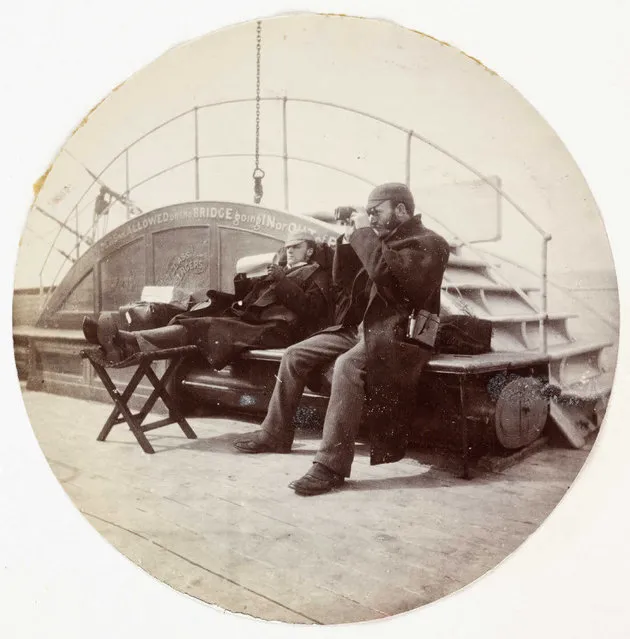
Two men on the deck of a ship, about 1890. (Photo by Collection of National Media Museum/Kodak Museum)

“Today, we take photography for granted. Anyone can take a photograph simply by pressing a button. Yet, it was not always so simple. The invention of photography was announced in 1839, but during its first fifty years taking a photograph was a complicated and expensive business. In 1888, all this was to change following the appearance of a camera that was to revolutionize photography. Popular photography can properly be said to have started 120 years ago with the introduction of the Kodak”. – The UK National Media Museum. Photo: Two men on the deck of a ship, about 1890. (Photo by Collection of National Media Museum/Kodak Museum)
Details
27 May 2014 10:31:00
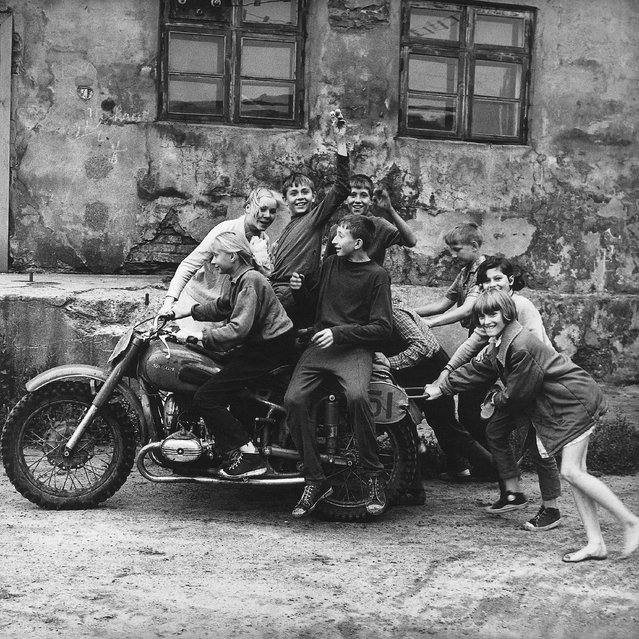
When he started using a camera there were very few documentary photographers working outside the government. Sutkus instead looked to writers and film-makers, and says he drew inspiration from the works of Franz Kafka, Jean-Paul Sartre, Ernest Hemingway and Vladimir Nabokov. Here: The first Lithuanian bikers, 1974. (Photo by Antanas Sutkus)

Rebelling against political propaganda, acclaimed photographer Antanas Sutkus embarked on a life-long journey to capture the everyday scenes around him. Antanas Sutkus, born in 1939, studied journalism at Vilnius University in the late 1950s before becoming disillusioned by the confines of the Soviet-controlled press. He began taking photographs instead, and soon co-founded the Lithuanian Association of Art Photographers. Here: The first Lithuanian bikers, 1974. (Photo by Antanas Sutkus)
Details
11 Apr 2016 10:54:00