Loading...
Done
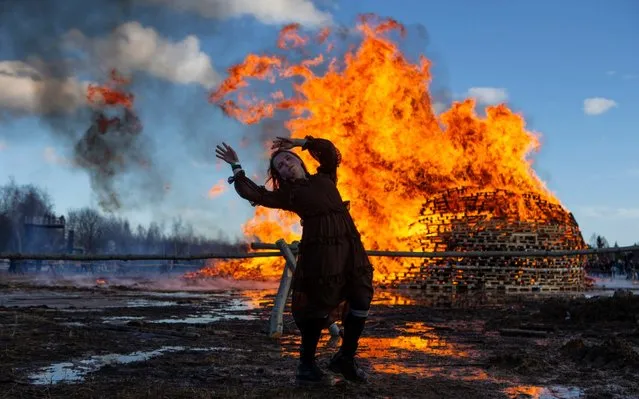
In this photo taken on Saturday, March 9, 2019, a visitor dances in front of a sculpture burning at the Maslenitsa (Shrovetide) festival at the Nikola-Lenivets art park in Nikola-Lenivets village, about 200 kilometers (125 miles) south-west of Moscow, Russia. As part of the celebrations of Maslenitsa (Shrovetide) Holiday in Russian, a folk holiday which heralds the beginning of spring, contemporary artist and park founder Nikolay Polissky built a giant sculpture made of wood and hay which was burnt to ashes during a traditional bonfire. (Photo by Alexander Zemlianichenko Jr./AP Photo)

In this photo taken on Saturday, March 9, 2019, a visitor dances in front of a sculpture burning at the Maslenitsa (Shrovetide) festival at the Nikola-Lenivets art park in Nikola-Lenivets village, about 200 kilometers (125 miles) south-west of Moscow, Russia. As part of the celebrations of Maslenitsa (Shrovetide) Holiday in Russian, a folk holiday which heralds the beginning of spring, contemporary artist and park founder Nikolay Polissky built a giant sculpture made of wood and hay which was burnt to ashes during a traditional bonfire. (Photo by Alexander Zemlianichenko Jr./AP Photo)
Details
27 Jul 2019 00:01:00
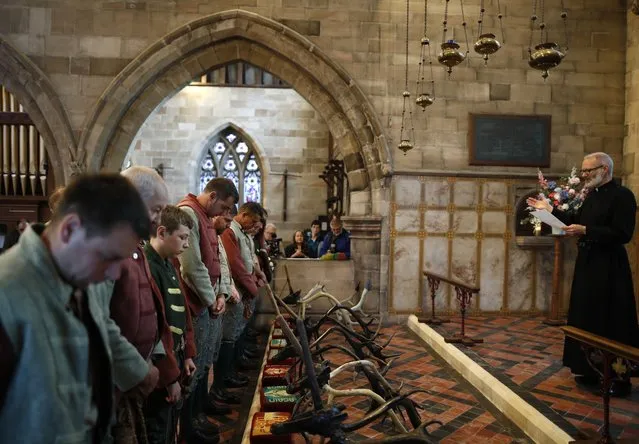
Reverend Simon Davis prays with the dancers before the Abbots Bromley Horn Dance in Abbots Bromley, Britain, September 12, 2016. The Abbots Bromley Horn Dance is an English folk dance dating back to the Middle Ages. The dance takes place each year in Abbots Bromley, a village in Staffordshire, England. The modern version of the dance involves reindeer antlers, a hobby horse, Maid Marian, and a Fool. According to some, the use of antlers suggests an Anglo-Saxon origin along with other native Anglo-Saxon traditions that have survived into modern times in various forms. (Photo by Darren Staples/Reuters)

Reverend Simon Davis prays with the dancers before the Abbots Bromley Horn Dance in Abbots Bromley, Britain, September 12, 2016. The Abbots Bromley Horn Dance is an English folk dance dating back to the Middle Ages. (Photo by Darren Staples/Reuters)
Details
13 Sep 2016 09:36:00
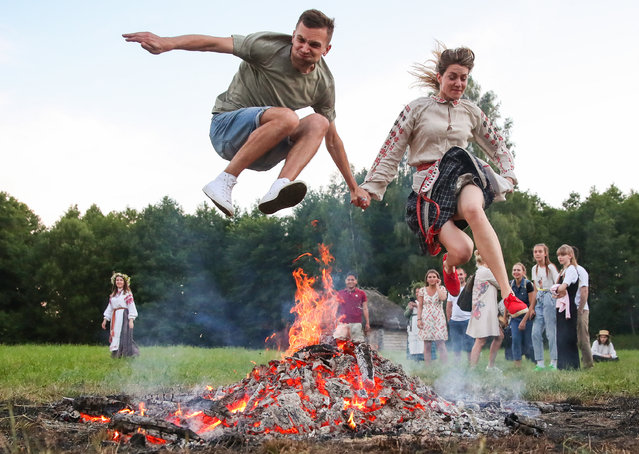
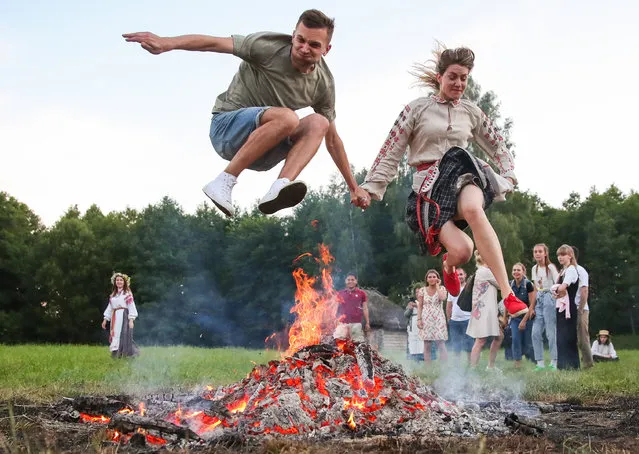
A man and a woman jump over a bonfire during Ivan Kupala Day celebrations held by the Belarusian State Museum of Folk Architecture and Rural Lifestyle in the village of Ozertso near Minsk, Belarus on July 4, 2020. Ivan Kupala Day, also known as Ivana-Kupala or Kupala Night, is a traditional pagan holiday celebrated in eastern Slavic cultures. Various rituals are traditionally performed on Kupala Night, including making flower wreaths, fortune-telling, jumping over bonfires, and burning a wheel-like effigy symbolizing the sun. (Photo by Natalia Fedosenko/TASS)

A man and a woman jump over a bonfire during Ivan Kupala Day celebrations held by the Belarusian State Museum of Folk Architecture and Rural Lifestyle in the village of Ozertso near Minsk, Belarus on July 4, 2020. Ivan Kupala Day, also known as Ivana-Kupala or Kupala Night, is a traditional pagan holiday celebrated in eastern Slavic cultures. Various rituals are traditionally performed on Kupala Night, including making flower wreaths, fortune-telling, jumping over bonfires, and burning a wheel-like effigy symbolizing the sun. (Photo by Natalia Fedosenko/TASS)
Details
23 Jan 2021 09:53:00
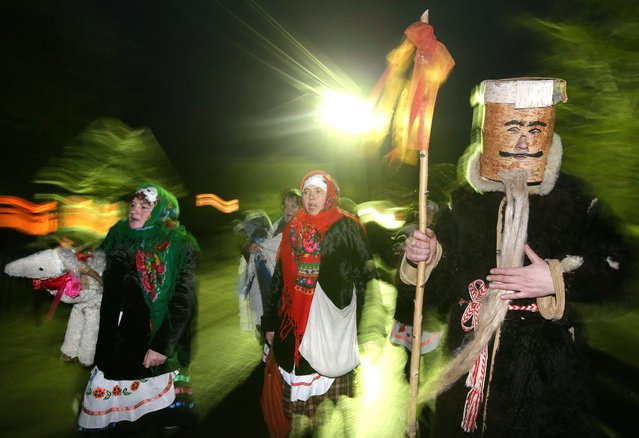
Belarussians in costumes sing songs during the traditional rite of Shchadrets (Schedry vecher or Generous Eve) in the village of Osovo, some 190 km from Minsk, Belarus, 13 January 2015. Shchadrets is a Belarusian folk holiday celebrated on the New Year's Eve in accordance with the Julian calendar (Old New Year). (Photo by Tatyana Zenkovich/EPA)

Belarussians in costumes sing songs during the traditional rite of Shchadrets (Schedry vecher or Generous Eve) in the village of Osovo, some 190 km from Minsk, Belarus, 13 January 2015. Shchadrets is a Belarusian folk holiday celebrated on the New Year's Eve in accordance with the Julian calendar (Old New Year). The holiday is similar to Koliady, when youth in costumes walk from house to house singing holiday songs, performing, and asking for a reward afterwards. (Photo by Tatyana Zenkovich/EPA)
Details
17 Jan 2015 12:21:00
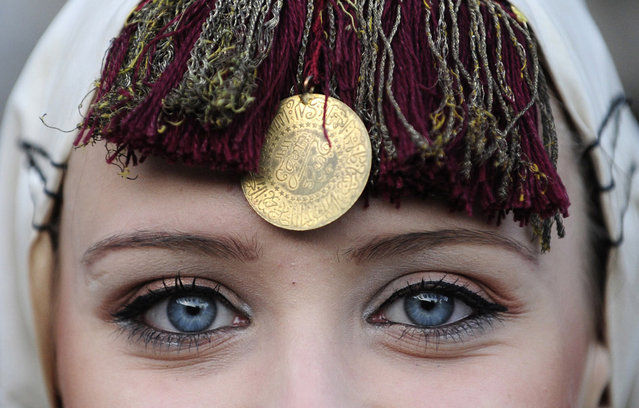
Women dressed in folk costumes take part in a traditional wedding ceremony in the village of Galicnik, west of Macedonia's capital Skopje, July 12, 2014. The Galicnik Wedding, a three-day traditional Macedonian wedding celebration held each “Petrovden” or St. Peter's Day, involves traditional customs, costumes, and rituals and dances that have been passed down over the centuries. (Photo by Ognen Teofilovski/Reuters)

Women dressed in folk costumes take part in a traditional wedding ceremony in the village of Galicnik, west of Macedonia's capital Skopje, July 12, 2014. The Galicnik Wedding, a three-day traditional Macedonian wedding celebration held each “Petrovden” or St. Peter's Day, involves traditional customs, costumes, and rituals and dances that have been passed down over the centuries. (Photo by Ognen Teofilovski/Reuters)
Details
19 Jul 2014 10:11:00
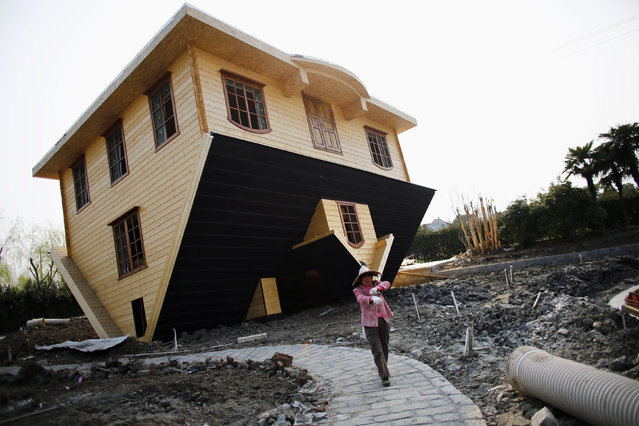
A laborer works at an upside-down house under construction at Fengjing Ancient Town, Jinshan District, south of Shanghai, March 17, 2014. Workers are putting the final touches on this eccentric tourist attraction built at the “China Folk Painting Village”. Furniture will also be placed upside down in the house, which is expected to open the public in April, according to local media. (Photo by Carlos Barria/Reuters)

A laborer works at an upside-down house under construction at Fengjing Ancient Town, Jinshan District, south of Shanghai, March 17, 2014. Workers are putting the final touches on this eccentric tourist attraction built at the “China Folk Painting Village”. Furniture will also be placed upside down in the house, which is expected to open the public in April, according to local media. (Photo by Carlos Barria/Reuters)
Details
21 Mar 2014 09:53:00
A man and a woman jump over a bonfire during Ivan Kupala Day celebrations held by the Belarusian State Museum of Folk Architecture and Rural Lifestyle in the village of Ozertso near Minsk, Belarus on July 4, 2020. Ivan Kupala Day, also known as Ivana-Kupala or Kupala Night, is a traditional pagan holiday celebrated in eastern Slavic cultures. Various rituals are traditionally performed on Kupala Night, including making flower wreaths, fortune-telling, jumping over bonfires, and burning a wheel-like effigy symbolizing the sun. (Photo by Natalia Fedosenko/TASS)

A man and a woman jump over a bonfire during Ivan Kupala Day celebrations held by the Belarusian State Museum of Folk Architecture and Rural Lifestyle in the village of Ozertso near Minsk, Belarus on July 4, 2020. Ivan Kupala Day, also known as Ivana-Kupala or Kupala Night, is a traditional pagan holiday celebrated in eastern Slavic cultures. Various rituals are traditionally performed on Kupala Night, including making flower wreaths, fortune-telling, jumping over bonfires, and burning a wheel-like effigy symbolizing the sun. (Photo by Natalia Fedosenko/TASS)
Details
07 Jul 2020 00:07:00
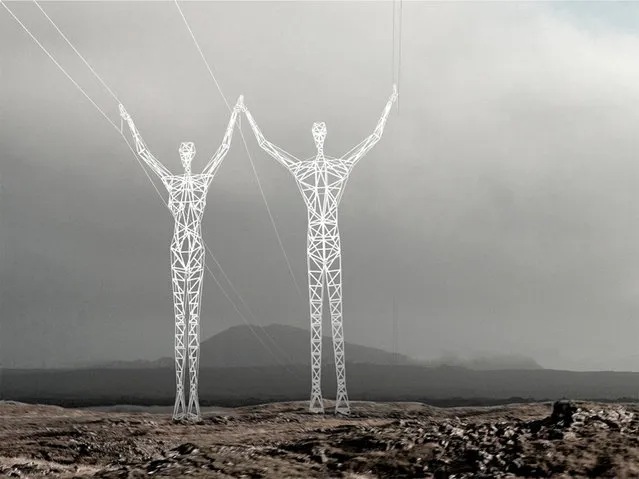
The Land Of Giants By Choi + Shine Architects

Power to the people! Giant transmission tower people that is… We can all agree that transmission towers (that’s an electricity pylon or ironman for you European and Aussie folk) are very necessary yet completely unsightly. These suspension towers dot our landscapes, typically soaring 15-55 meters (49 – 180 ft) high.
Details
07 Jun 2015 09:27:00