Loading...
Done


“Kumbh Mela is a mass Hindu pilgrimage in which Hindus gather at the Ganges river. The normal Kumbh Mela is celebrated every 3 years, the Ardh (half) Kumbh Mela is celebrated every six years at Haridwar and Prayag, the Purna (complete) Kumbh takes place every twelve years, at four places (Prayag (Allahabad), Haridwar, Ujjain, and Nashik). The Maha (great) Kumbh Mela which comes after 12 “Purna Kumbh Melas”, or 144 years, is held at Allahabad.

The last Ardh Kumbh Mela was held over a period of 45 days beginning in January 2007, more than 70 million Hindu pilgrims took part in the Ardh Kumbh Mela at Prayag, and on January 15, the most auspicious day of the festival of Makar Sankranti, more than 5 million participated. The previous Maha Kumbh Mela, held in 2001, was attended by around 60 million people, making it at the time the largest gathering anywhere in the world in recorded history”. – Wikipedia

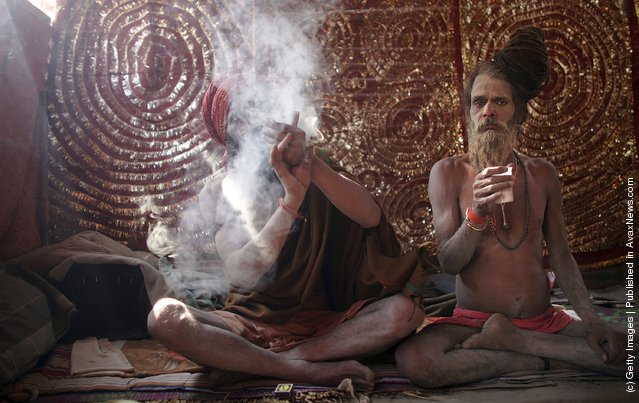
Photo: Sadhus (holy men) smoke at their camp near the ritual site at Sangam, the confluence of the Ganges, Yamuna and mythical Saraswati rivers during the Ardh Kumbh Mela festival (Half Pitcher festival) January 18, 2007 in Allahabad, India. Millions of Hindu pilgrims have flocked to the largest religious gathering in the world which lasts for 45 days in northern India. The festival commemorates the mythical conflict between gods and demons over a pitcher filled with the “nectar of immortality”. Devotees believe that taking a holy dip in the Ganges at this time washes away their sins and paves the path to salvation. (Photo by Mario Tama/Getty Images)
Details
30 Jun 2011 10:27:00
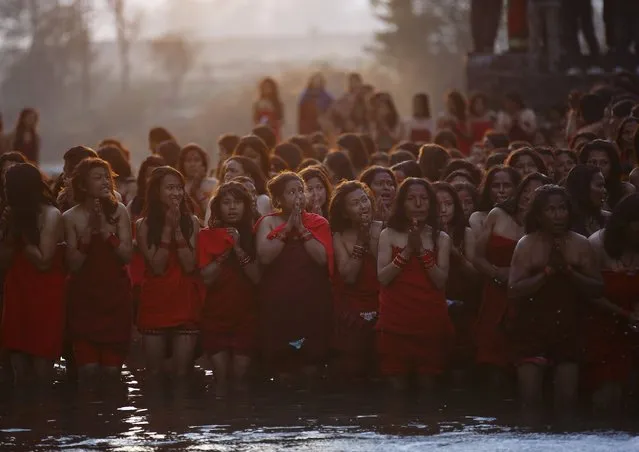
Devotees offer prayers before taking a holy bath during the Swasthani Bratakatha festival in the Triveni River in Panauti near Kathmandu January 24, 2015. (Photo by Navesh Chitrakar/Reuters)

Devotees offer prayers before taking a holy bath during the Swasthani Bratakatha festival in the Triveni River in Panauti near Kathmandu January 24, 2015. During the month long festival, devotees recite one chapter of a Hindu tale daily from the 31-chapter sacred Swasthani Brata Katha book that is dedicated to the God Madhavnarayan and the Goddess Swasthani, alongside various other gods and goddess and the miraculous feats performed by them. The devotees also go on pilgrimages to various temples, perform religious rituals, take a holy bath in the rivers and fast for a month, especially among women who believe fasting helps in their family's well-being or in getting them a good husband. (Photo by Navesh Chitrakar/Reuters)
Details
25 Jan 2015 10:02:00
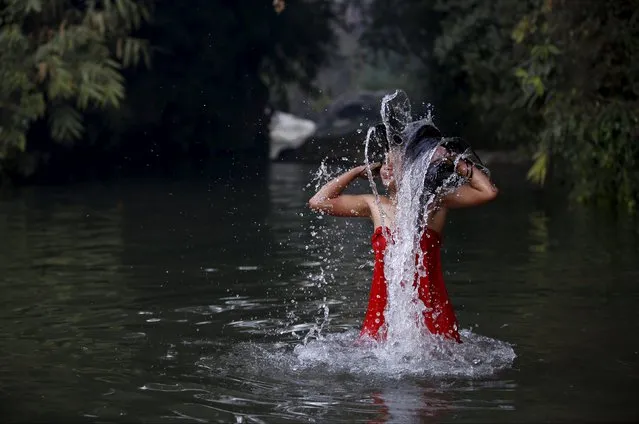
A devotee takes a holy bath in River Saali in Sankhu during the Swasthani Brata Katha festival in Kathmandu, Nepal, January 24, 2016. (Photo by Navesh Chitrakar/Reuters)

A devotee takes a holy bath in River Saali in Sankhu during the Swasthani Brata Katha festival in Kathmandu, Nepal, January 24, 2016. During the month long festival, devotees recite one chapter of a Hindu tale daily from the 31-chapter sacred Swasthani Brata Katha book that is dedicated to God Madhavnarayan and Goddess Swasthani, alongside various other gods and goddess and the miraculous feats performed by them. The devotees also go on pilgrimages to various temples, perform religious rituals, take a holy bath in the rivers and fast for a month, especially among women who believe fasting helps in their family's well-being or in getting them a good husband. (Photo by Navesh Chitrakar/Reuters)
Details
25 Jan 2016 12:05:00
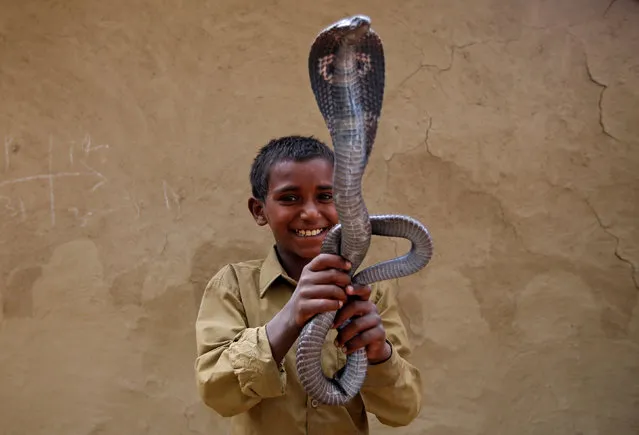
Ravi Nath poses for a photograph with a cobra snake in Jogi Dera (Snake charmers settlement), in the village of Baghpur, in the central state of Uttar Pradesh, India November 10, 2016. (Photo by Adnan Abidi/Reuters)

Ravi Nath poses for a photograph with a cobra snake in Jogi Dera (Snake charmers settlement), in the village of Baghpur, in the central state of Uttar Pradesh, India November 10, 2016. An ancient tribe of snake charmers, known as Saperas, have thrived over the generations by catching venomous snakes and making them dance to their music. Snakes are revered by Hindus in India and snake charmers are considered the followers of Lord Shiva, the blue-skinned Hindu god who is usually portrayed wearing a king cobra around his neck. (Photo by Adnan Abidi/Reuters)
Details
26 Jan 2017 13:06:00
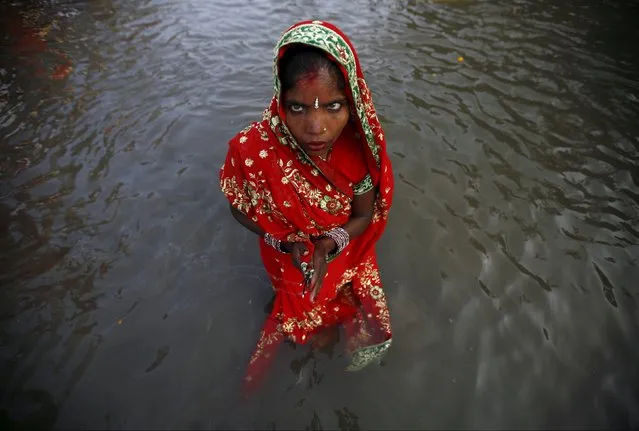
A devotee offers prayers to the setting sun during the "Chhat" festival at Bagmati river in Kathmandu, Nepal November 17, 2015. (Photo by Navesh Chitrakar/Reuters)

A devotee offers prayers to the setting sun during the "Chhat" festival at Bagmati river in Kathmandu, Nepal November 17, 2015. Hindus in Nepal celebrate "Chhat", a four-day festival that honours the sun god, by praying at sunrise and sunset, and seek blessings for one's family by giving offerings. (Photo by Navesh Chitrakar/Reuters)
Details
19 Nov 2015 08:01:00
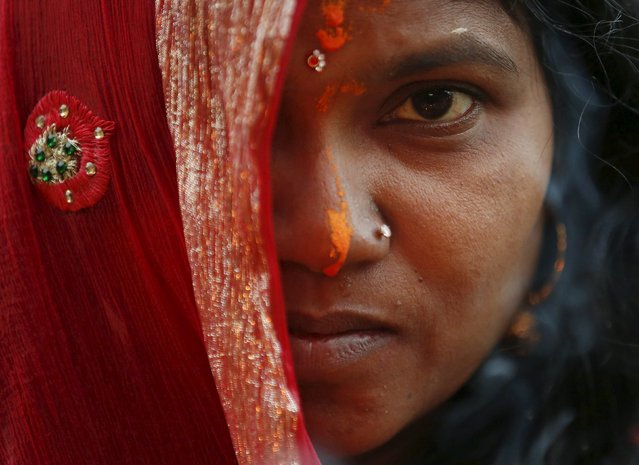
A face of a devotee covered with her cloth is pictured as she offers prayers to the rising sun during the "Chhat" festival in Kathmandu, Nepal November 18, 2015. (Photo by Navesh Chitrakar/Reuters)

A face of a devotee covered with her cloth is pictured as she offers prayers to the rising sun during the "Chhat" festival in Kathmandu, Nepal November 18, 2015. Hindus in Nepal celebrate "Chhat", a four-day festival that honours the sun god by praying at sunrise and sunset and seeking blessings for ones family by giving offerings. (Photo by Navesh Chitrakar/Reuters)
Details
20 Nov 2015 08:00:00
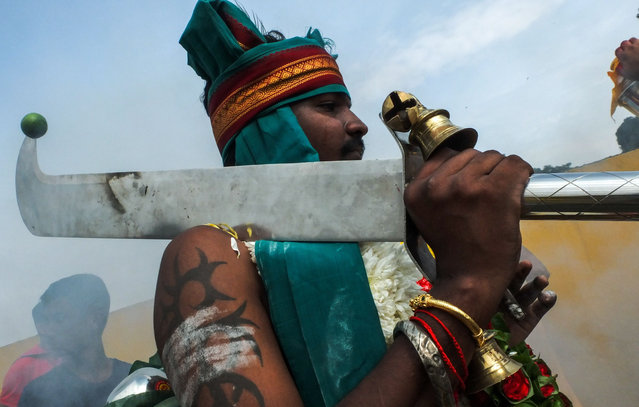
A Hindu devotee in a trance on their pilgrimage to the Batu Caves temple in Kuala Lumpur, Malaysia on January 28, 2018. Malaysian Hindu participate in the annual Hindu thanksgiving festival in which devotees subject themselves to painful rituals in a demonstration of faith and penance held in honour of Lord Murugan, Hindu in Malaysia celebrated Thaipusam begin on Jan 28 until 31 this year. (Photo by Aflo/Rex Features/Shutterstock)

A Hindu devotee in a trance on their pilgrimage to the Batu Caves temple in Kuala Lumpur, Malaysia on January 28, 2018. Malaysian Hindu participate in the annual Hindu thanksgiving festival in which devotees subject themselves to painful rituals in a demonstration of faith and penance held in honour of Lord Murugan, Hindu in Malaysia celebrated Thaipusam begin on Jan 28 until 31 this year. (Photo by Aflo/Rex Features/Shutterstock)
Details
30 Jan 2018 09:22:00
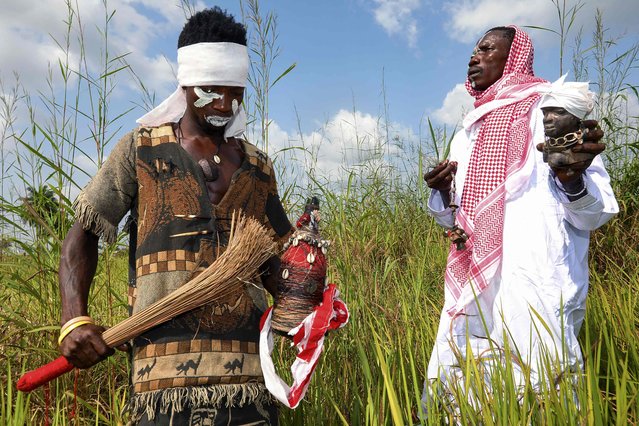
Raka Soko, a traditional healer and Poro society member is deep in prayer while holding a broom and a bottle filled with spiritual wine that is purified to show gratitude to the gods before a ceremony in Waterloo on November 26, 2018. Standing across the field from him another member, Amos Nicol, holds a statue of the spiritual god Sama Yorbu which is used to communicate directly to other gods for permission to perform. (Photo by Lynn Rossi/AFP Photo)

Raka Soko, a traditional healer and Poro society member is deep in prayer while holding a broom and a bottle filled with spiritual wine that is purified to show gratitude to the gods before a ceremony in Waterloo on November 26, 2018. Standing across the field from him another member, Amos Nicol, holds a statue of the spiritual god Sama Yorbu which is used to communicate directly to other gods for permission to perform. (Photo by Lynn Rossi/AFP Photo)
Details
07 Aug 2019 00:01:00