Loading...
Done
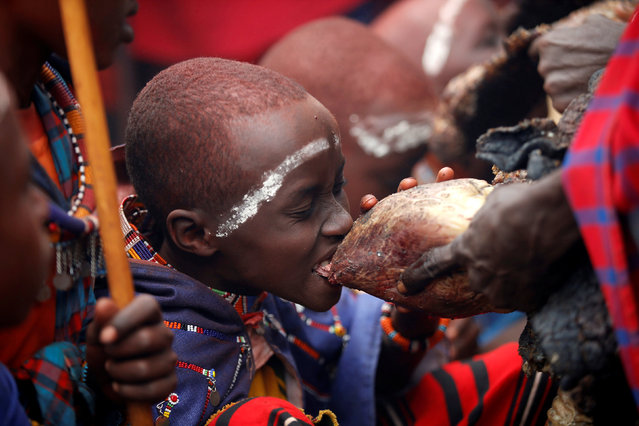
A Maasai boy bites a bull's heart during an initiation into an age group ceremony near the town of Bisil, Kajiado county, Kenya, August 23, 2018. (Photo by Baz Ratner/Reuters)

A Maasai boy bites a bull's heart during an initiation into an age group ceremony near the town of Bisil, Kajiado county, Kenya, August 23, 2018. Thousands of Kenyan boys had a blessing of milk and beer sprayed on them as part of a rare Maasai ethnic community initiation ceremony to mark their passing into early manhood. (Photo by Baz Ratner/Reuters)
Details
28 Aug 2018 00:01:00
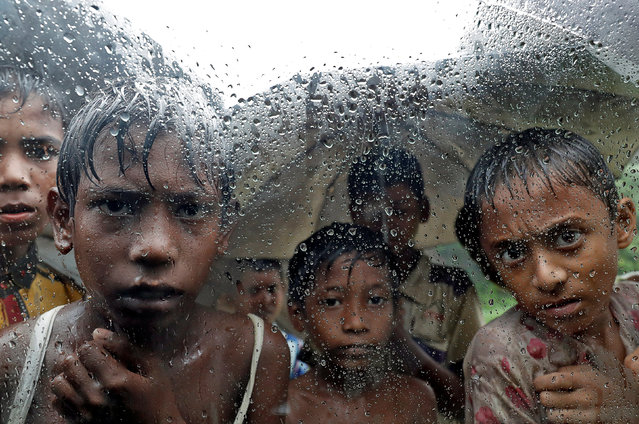
Rohingya refugee children pictured in a camp in Cox's Bazar, Bangladesh, September 19, 2017. (Photo by Cathal McNaughton/Reuters)

Rohingya refugee children pictured in a camp in Cox's Bazar, Bangladesh, September 19, 2017. With a mass exodus of Rohingya Muslims sparking accusations of ethnic cleansing from the United Nations and others, Myanmar leader Aung San Suu Kyi on Tuesday said her country does not fear international scrutiny and invited diplomats to see some areas for themselves. (Photo by Cathal McNaughton/Reuters)
Details
20 Sep 2017 08:36:00
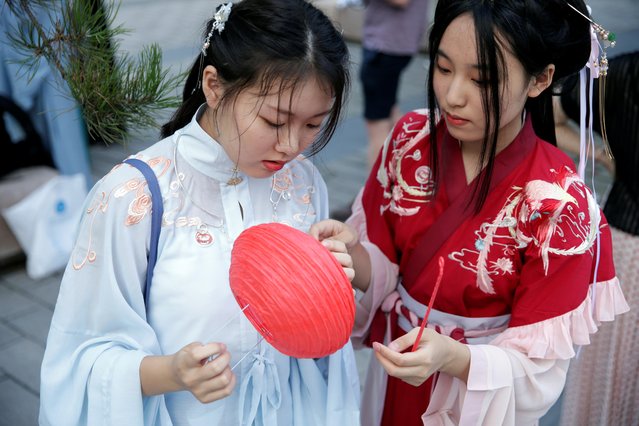
Girls dressed in “Hanfu”, or Han clothing, prepare for an event to mark the traditional Qixi festival, the Chinese equivalent of Valentine's Day, at a park in Beijing, China, August 7, 2019. Chinese for “Han clothing”, “Hanfu” is based on the idea of donning costumes worn in bygone eras by China's dominant Han ethnicity. Some of the most popular styles are from the Ming, Song and Tang dynasties. Hanfu enthusiasts doubled to two million in 2018 from a year earlier, according to a survey by Hanfu Zixun, a popular community account on the Wechat social media platform. (Photo by Jason Lee/Reuters)

Girls dressed in “Hanfu”, or Han clothing, prepare for an event to mark the traditional Qixi festival, the Chinese equivalent of Valentine's Day, at a park in Beijing, China, August 7, 2019. Chinese for “Han clothing”, “Hanfu” is based on the idea of donning costumes worn in bygone eras by China's dominant Han ethnicity. Some of the most popular styles are from the Ming, Song and Tang dynasties. Hanfu enthusiasts doubled to two million in 2018 from a year earlier, according to a survey by Hanfu Zixun, a popular community account on the Wechat social media platform. (Photo by Jason Lee/Reuters)
Details
23 Sep 2019 00:05:00
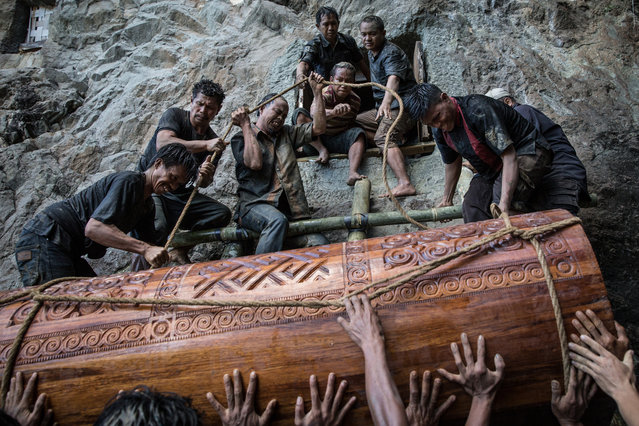
It is said that Torajans are people who “live to die”. For this Indonesian ethnic group, funerals are such extravagant events that they sometimes attract tourists. Families can postpone burials years (and the deceased are considered sick and hosted at home until the funeral) until the family can raise enough money and gather as many relatives as possible. And then it’s a jubilant multiday social event with a parade, dances and animal sacrifices. Agung Parameswara photographed these funerary practices when he traveled to South Sulawesi province, where the Torajans live. But often, their funeral isn’t the last time the dead are seen. In August, crypts are opened, coffins are slid back out and bodies delicately unsheathed. This tender ritual is known as Ma’Nene, which is customarily performed every few years. (Photo by Agung Parameswara/The Washington Post)

It is said that Torajans are people who “live to die”. For this Indonesian ethnic group, funerals are such extravagant events that they sometimes attract tourists. Families can postpone burials years (and the deceased are considered sick and hosted at home until the funeral) until the family can raise enough money and gather as many relatives as possible. And then it’s a jubilant multiday social event with a parade, dances and animal sacrifices. Agung Parameswara photographed these funerary practices when he traveled to South Sulawesi province, where the Torajans live. (Photo by Agung Parameswara/The Washington Post)
Details
06 Oct 2016 09:15:00
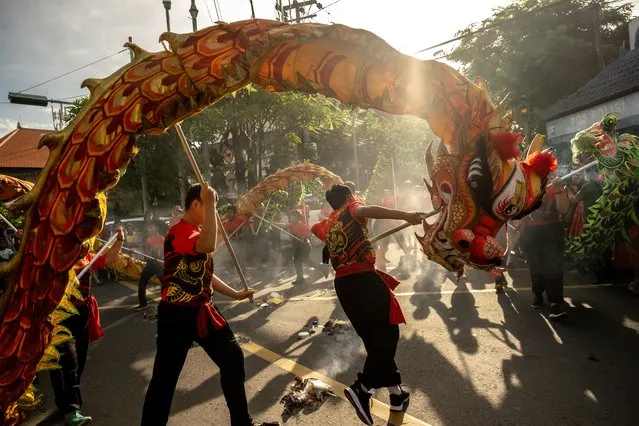
Balis Chinese community perform the dragon dance during Chinese New Year called Ngelawang ceremony on January 21, 2023 in Kuta, Bali, Indonesia. The Chinese diaspora of Southeast Asia is celebrating Lunar New Year, as COVID-19 restrictions have been removed, it is traditionally a time for people to meet their relatives and take part in celebrations with families. In Indonesia, ethnic Chinese families visited temples to celebrate the Year of the Rabbit on January 22. The Chinese community in Bali observes Chinese New Year in accordance with Balinese customs. In multiculturalism, the Balis-Chinese community believes that the performance of the dragon dance, the lion dance called Barong Sai, and offerings to the unseen world will safeguard the community from calamity and balance between the seen and unseen world. (Photo by Agung Parameswara/Getty Images)

Balis Chinese community perform the dragon dance during Chinese New Year called Ngelawang ceremony on January 21, 2023 in Kuta, Bali, Indonesia. The Chinese diaspora of Southeast Asia is celebrating Lunar New Year, as COVID-19 restrictions have been removed, it is traditionally a time for people to meet their relatives and take part in celebrations with families. In Indonesia, ethnic Chinese families visited temples to celebrate the Year of the Rabbit on January 22. (Photo by Agung Parameswara/Getty Images)
Details
29 Jan 2023 00:38:00
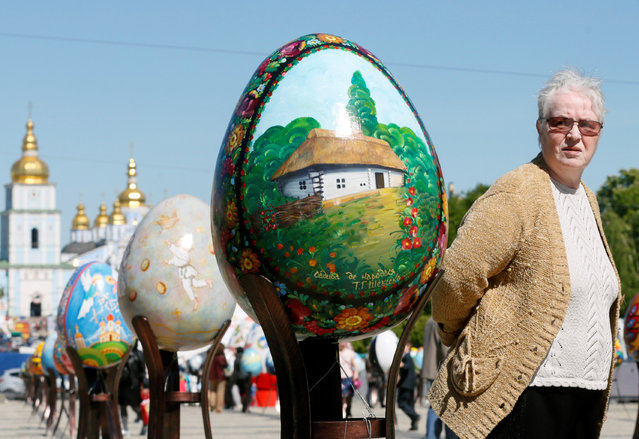
A woman looks at traditional Ukrainian Easter eggs “Pysanka”, installed as part of the upcoming celebrations of Easter, in central Kiev, Ukraine, April 29, 2016. A pysanka is a Ukrainian Easter egg, decorated with traditional Ukrainian folk designs using a wax-resist (batik) method. The word pysanka comes from the verb pysaty, “to write”, as the designs are not painted on, but written with beeswax. Many other eastern European ethnic groups decorate eggs using wax resist for Easter. These include the Belarusians, Bulgarians, Croats, Czechs, Hungarians, Lithuanians, Poles, Romanians, Serbs, Slovaks, Slovenes and Sorbs. (Photo by Valentyn Ogirenko/Reuters)

A woman looks at traditional Ukrainian Easter eggs “Pysanka”, installed as part of the upcoming celebrations of Easter, in central Kiev, Ukraine, April 29, 2016. A pysanka is a Ukrainian Easter egg, decorated with traditional Ukrainian folk designs using a wax-resist (batik) method. The word pysanka comes from the verb pysaty, “to write”, as the designs are not painted on, but written with beeswax. Many other eastern European ethnic groups decorate eggs using wax resist for Easter. These include the Belarusians, Bulgarians, Croats, Czechs, Hungarians, Lithuanians, Poles, Romanians, Serbs, Slovaks, Slovenes and Sorbs. (Photo by Valentyn Ogirenko/Reuters)
Details
30 Apr 2016 09:00:00
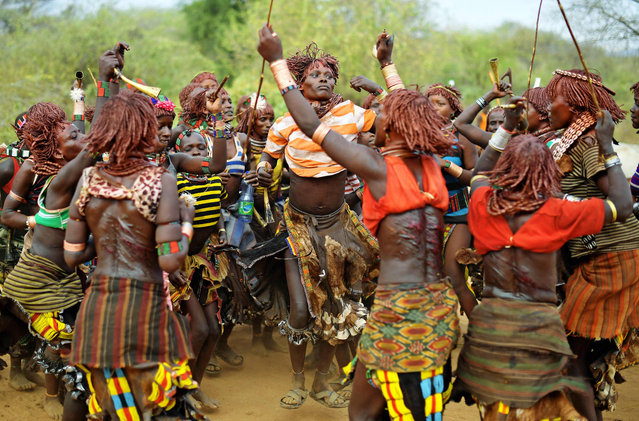
Hamar women dance before a bull jumping ceremony in Ethiopia's southern Omo Valley region near Turmi on September 19, 2016. The Hamar are a Nilotic ethnic group in Ethiopia. The construction of the Gibe III dam, the third largest hydroelectric plant in Africa, and large areas of very “thirsty” cotton and sugar plantations and factories along the Omo river are impacting heavily on the lives of tribes living in the Omo Valley who depend on the river for their survival and way of life. Human rights groups fear for the future of the tribes if they are forced to scatter, give up traditional ways through loss of land or ability to keep cattle as globalisation and development increases. (Photo by Carl De Souza/AFP Photo)

Hamar women dance before a bull jumping ceremony in Ethiopia's southern Omo Valley region near Turmi on September 19, 2016. The Hamar are a Nilotic ethnic group in Ethiopia. The construction of the Gibe III dam, the third largest hydroelectric plant in Africa, and large areas of very “thirsty” cotton and sugar plantations and factories along the Omo river are impacting heavily on the lives of tribes living in the Omo Valley who depend on the river for their survival and way of life. (Photo by Carl De Souza/AFP Photo)
Details
02 Oct 2016 08:45:00
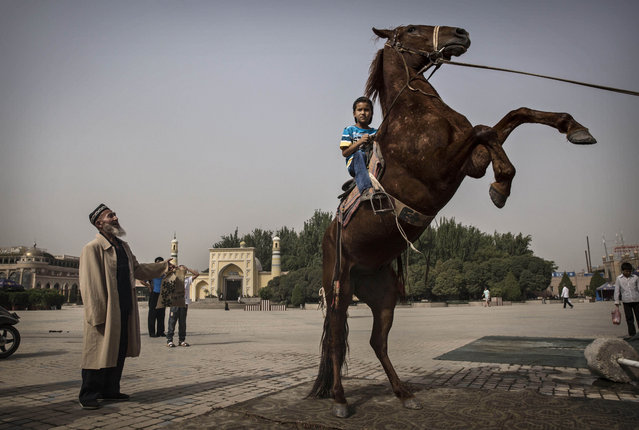
A Uyghur boy sits atop a horse as he has his picture taken outside the Id Kah Mosque before the Eid holiday  on July 28, 2014 in old Kashgar, Xinjiang Province, China. (Photo by Kevin Frayer/Getty Images)

A Uyghur boy sits atop a horse as he has his picture taken outside the Id Kah Mosque before the Eid holiday on July 28, 2014 in old Kashgar, Xinjiang Province, China. Nearly 100 people have been killed in unrest in the restive Xinjiang Province in the last week in what authorities say is terrorism but advocacy groups claim is a result of a government crackdown to silence opposition to its policies. China's Muslim Uyghur ethnic group faces cultural and religious restrictions by the Chinese government. Beijing says it is investing heavily in the Xinjiang region but Uyghurs are increasingly dissatisfied with the influx of Han Chinese and uneven economic development. (Photo by Kevin Frayer/Getty Images)
Details
10 Aug 2014 10:53:00