Loading...
Done
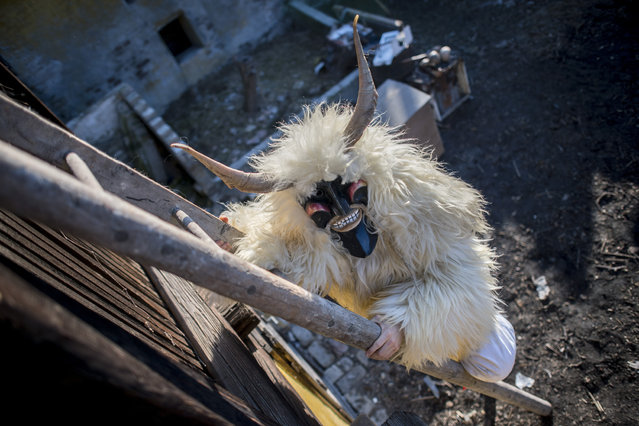
A man wears a busho mask and a costume made of sheep pelt while climbing up a ladder outside a barn in Mohacs, Hungary, 20 February 2020, on the first day of carnival. The traditional Busho carnival, which marks the end of winter, dates back to the 16th century. According to local legend, members of an ethnic South Slavic group living in Mohacs at the time dressed up in similar costumes and wore wooden masks to scare away Ottoman invaders, who mistook them for demons. (Photo by Tamas Soki/EPA/EFE)

A man wears a busho mask and a costume made of sheep pelt while climbing up a ladder outside a barn in Mohacs, Hungary, 20 February 2020, on the first day of carnival. The traditional Busho carnival, which marks the end of winter, dates back to the 16th century. According to local legend, members of an ethnic South Slavic group living in Mohacs at the time dressed up in similar costumes and wore wooden masks to scare away Ottoman invaders, who mistook them for demons. (Photo by Tamas Soki/EPA/EFE)
Details
23 Feb 2020 00:07:00
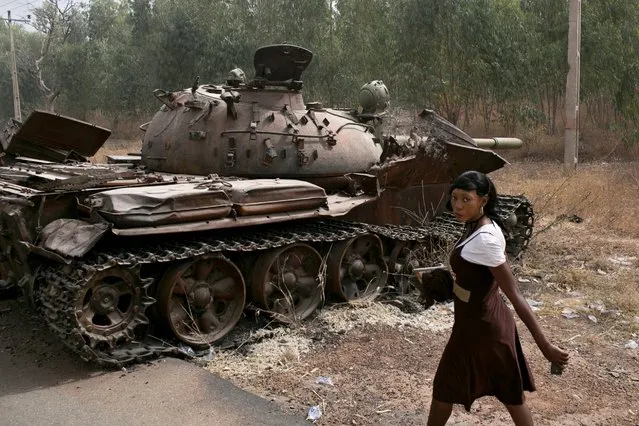
An abandoned tank left by Boko Haram, February 20, 2016, seen on the road to Michika, Nigeria – a town formerly occupied by the insurgents. On April 14, 2014, 300 schoolgirls in the Chibok village in Nigeria were kidnapped by the terrorist group, Boko Haram. Two years later, the majority of these girls are still missing. According to the Global Terrorism Index Report 2015, Boko Haram, which operates mainly in Nigeria, has become the most deadly terrorist group in the world. (Photo by Danielle Villasana)

An abandoned tank left by Boko Haram, February 20, 2016, seen on the road to Michika, Nigeria – a town formerly occupied by the insurgents. On April 14, 2014, 300 schoolgirls in the Chibok village in Nigeria were kidnapped by the terrorist group, Boko Haram. Two years later, the majority of these girls are still missing. According to the Global Terrorism Index Report 2015, Boko Haram, which operates mainly in Nigeria, has become the most deadly terrorist group in the world. (Photo by Danielle Villasana)
Details
22 Apr 2016 13:13:00
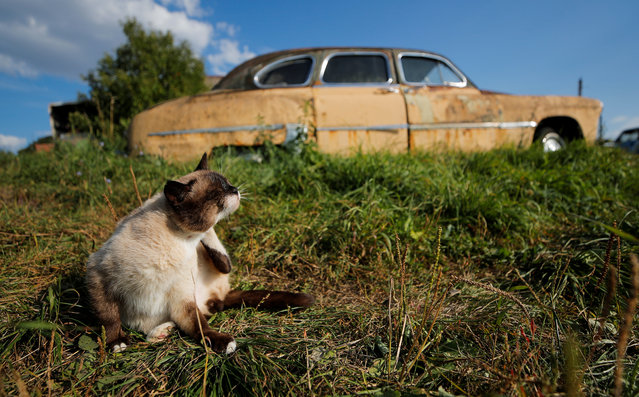
A cat sits in front of a retro car owned by retired mechanic Mikhail Krasinets at an open-air museum of Soviet-era vehicles in the village of Chernousovo, Tula region, Russia on September 27, 2018. In the remote village of Chernousovo, retired mechanic Mikhail Krasinets tends to more than 300 ramshackle, Soviet-era cars, remnants of a once vibrant auto industry that crumbled with the fall of the Soviet Union. (Photo by Maxim Shemetov/Reuters)

A cat sits in front of a retro car owned by retired mechanic Mikhail Krasinets at an open-air museum of Soviet-era vehicles in the village of Chernousovo, Tula region, Russia on September 27, 2018. In the remote village of Chernousovo, retired mechanic Mikhail Krasinets tends to more than 300 ramshackle, Soviet-era cars, remnants of a once vibrant auto industry that crumbled with the fall of the Soviet Union. (Photo by Maxim Shemetov/Reuters)
Details
01 Oct 2018 00:01:00
An indigenous girl carries a monkey inside her house in their village at Xingu national park in Mato Grosso, Brazil, October 2, 2015. (Photo by Paulo Whitaker/Reuters)

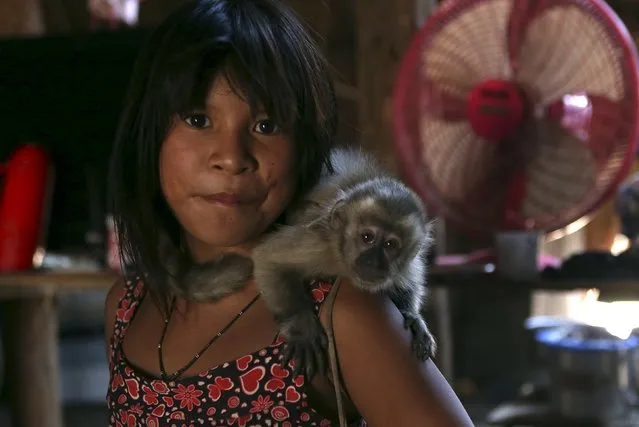
An indigenous girl carries a monkey inside her house in their village at Xingu national park in Mato Grosso, Brazil, October 2, 2015. The Kamayura tribe consists of around 300 people, and is one of the 16 ethnic groups living in the indigenous Xingu national park. (Photo by Paulo Whitaker/Reuters)
Details
18 Oct 2015 08:03:00
Tattoo Jam Festival

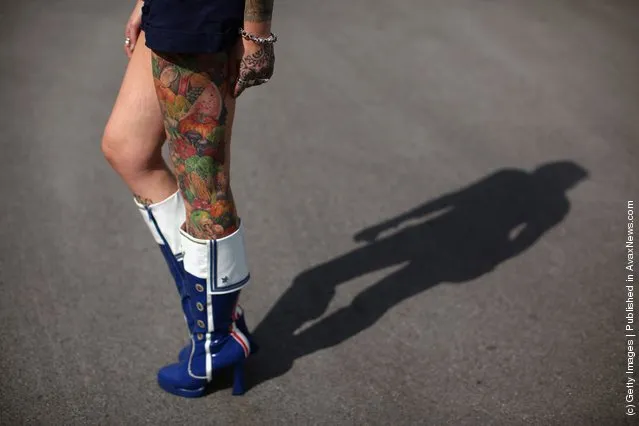
Tattoo devotee Edyta shows off her body art during The Tattoo Jam Festival on August 5, 2011 in Doncaster, England. The Tattoo Jam Festival is Britain's biggest gathering of tattoo professionals and skin art devotees. The event hosts over 300 artists working in the exhibition hall of Doncaster Racecourse revealing their latest designs and techniques. (Photo by Christopher Furlong/Getty Images)
Details
06 Aug 2011 13:06:00
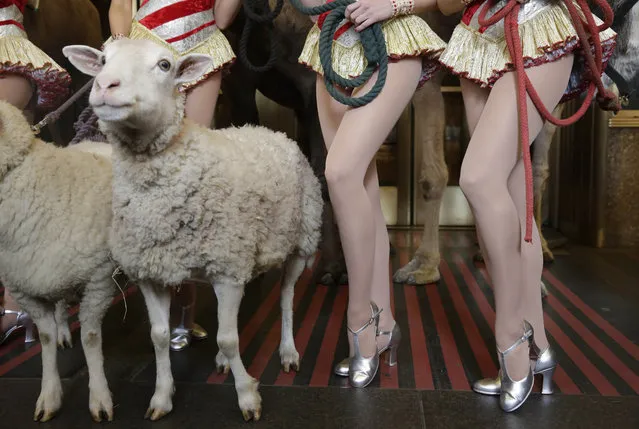
The legs of camel and sheep for the “Living Nativity” scene, and Rockettes, of the “Radio City Christmas Special”, are juxtaposed as they pose for photos outside New York's Radio City Music Hall, Tuesday, October 28, 2014. The show is scheduled to open Friday, November 7, 2014 and continue through Wednesday, December 31, 2014. The “Living Nativity” has been part of the Christmas Spectacular since its inception in 1933. (Photo by Richard Drew/AP Photo)

The legs of camel and sheep for the “Living Nativity” scene, and Rockettes, of the “Radio City Christmas Special”, are juxtaposed as they pose for photos outside New York's Radio City Music Hall, Tuesday, October 28, 2014. The show is scheduled to open Friday, November 7, 2014 and continue through Wednesday, December 31, 2014. The “Living Nativity” has been part of the Christmas Spectacular since its inception in 1933. (Photo by Richard Drew/AP Photo)
Details
01 Nov 2014 14:53:00
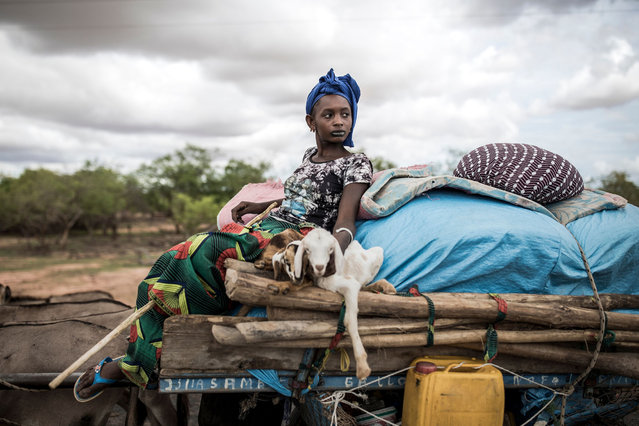
A Fulani Pastoralist carries two baby sheep on her donkey cart as her family move on northwards in Barkedji, Senegal on July 21, 2020. Thousands of Pastoralist families will start the movement north in the next weeks. With the first rains comes fresh grass and water for the Fulani herders' livestock, it also marks the point where most of the Pastoralist will move northwards until the dry season. (Photo by John Wessels/AFP Photo)

A Fulani Pastoralist carries two baby sheep on her donkey cart as her family move on northwards in Barkedji, Senegal on July 21, 2020. Thousands of Pastoralist families will start the movement north in the next weeks. With the first rains comes fresh grass and water for the Fulani herders' livestock, it also marks the point where most of the Pastoralist will move northwards until the dry season. (Photo by John Wessels/AFP Photo)
Details
04 Aug 2020 00:05:00
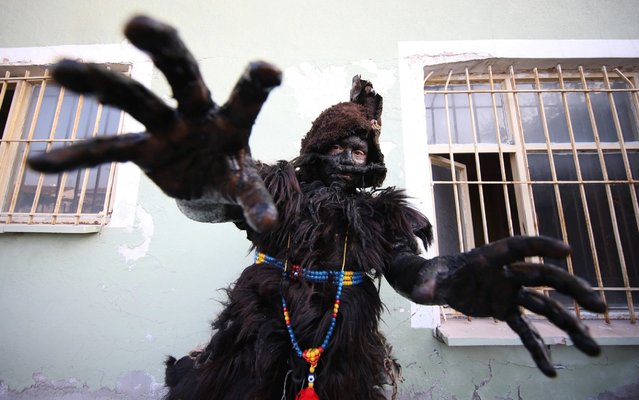
A leather worker with his frightening types of clothes prepares after painted themselves using chimney soot as they participate in a programme within the September 6 celebrations, in Balikesir, Turkey on September 06, 2019. According to the story, “Tulutabaklar” were painting themselves with ash and wearing goatskin or sheep skin to frighten the Greek soldiers occupying Balikesir during the National Struggle period. Every year on September 6, Tulutabaklar perform this ritual as part of the celebration of liberation of the city for 96 years. (Photo by Ali Atmaca/Anadolu Agency via Getty Images)

A leather worker with his frightening types of clothes prepares after painted themselves using chimney soot as they participate in a programme within the September 6 celebrations, in Balikesir, Turkey on September 06, 2019. According to the story, “Tulutabaklar” were painting themselves with ash and wearing goatskin or sheep skin to frighten the Greek soldiers occupying Balikesir during the National Struggle period. Every year on September 6, Tulutabaklar perform this ritual as part of the celebration of liberation of the city for 96 years. (Photo by Ali Atmaca/Anadolu Agency via Getty Images)
Details
09 Sep 2019 00:05:00