Loading...
Done
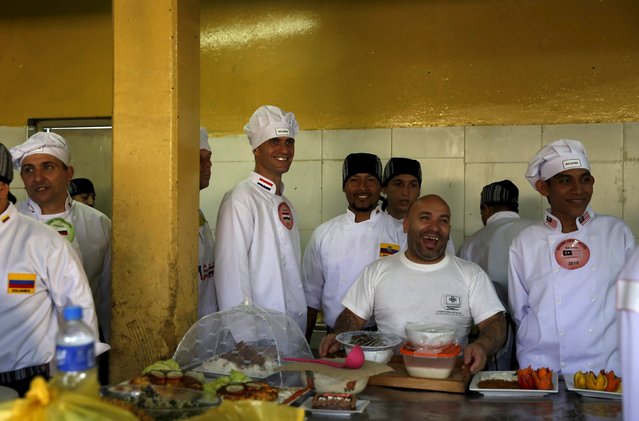
Inmates stand next to food during a Christmas event at Sarita Colonia male prison in Callao, Peru, December 18, 2015. For the event, inmates prepared Christmas meals for a culinary competition and took part in dances and songs. (Photo by Mariana Bazo/Reuters)

Inmates stand next to food during a Christmas event at Sarita Colonia male prison in Callao, Peru, December 18, 2015. For the event, inmates prepared Christmas meals for a culinary competition and took part in dances and songs. (Photo by Mariana Bazo/Reuters)
Details
20 Dec 2015 08:01:00
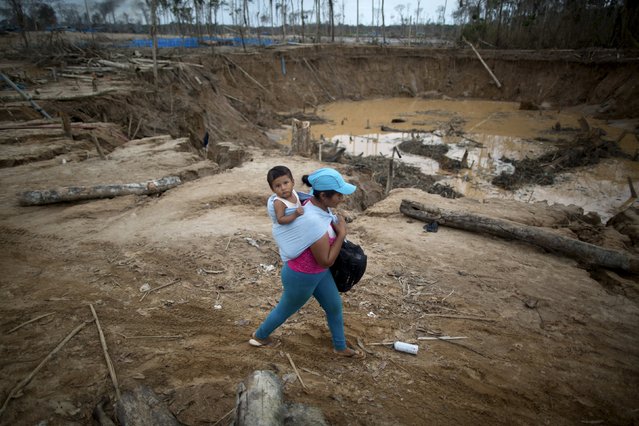
People leave a camp after a Peruvian police operation to destroy illegal gold mining camps in La Pampa, in the southern Amazon region of Madre de Dios, Peru  August 11, 2015. Picture taken August 11, 2015. (Photo by Sebastian Castaneda/Reuters)

People leave a camp after a Peruvian police operation to destroy illegal gold mining camps in La Pampa, in the southern Amazon region of Madre de Dios, Peru August 11, 2015. Picture taken August 11, 2015. (Photo by Sebastian Castaneda/Reuters)
Details
15 Aug 2015 11:26:00
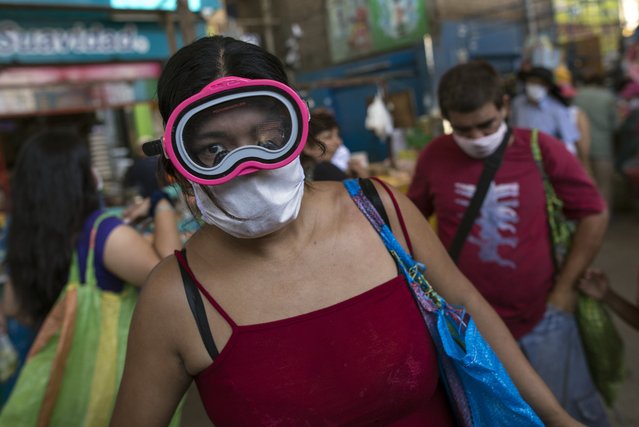
A woman wears a scuba mask and a surgical mask as a precaution against the spread of the new coronavirus, while buying food in a popular market in Lima, Peru, Monday, March 23, 2020. The vast majority of people recover from the COVID-19 disease. (Photo by Rodrigo Abd/AP Photo)

A woman wears a scuba mask and a surgical mask as a precaution against the spread of the new coronavirus, while buying food in a popular market in Lima, Peru, Monday, March 23, 2020. The vast majority of people recover from the COVID-19 disease. (Photo by Rodrigo Abd/AP Photo)
Details
25 Mar 2020 00:07:00
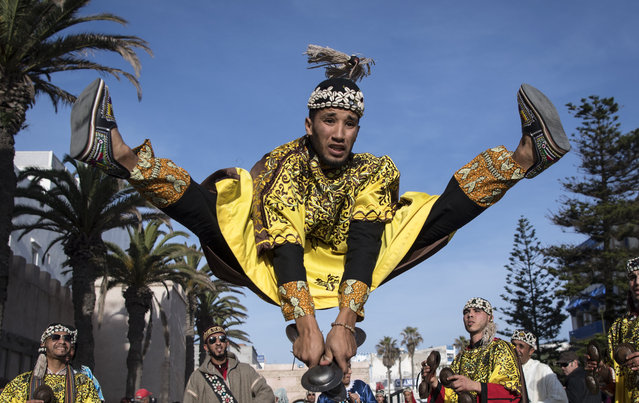
A Gnawa traditional group performs in the city of Essaouira on December 14, 2019, to celebrate the decision of adding the Gnawa culture to UNESCO's list of Intangible Cultural Heritage of Humanity. Gnawa culture, a centuries-old Moroccan practice rooted in music, African rituals and Sufi traditions, was added to UNESCO's list of Intangible Cultural Heritage of Humanity earlier in the week. Gnawa refers to a “set of musical productions, fraternal practices and therapeutic rituals where the secular mixes with the sacred”, according to the nomination submitted by Morocco. Often dressed in colourful outfits, Gnawa musicians play the guenbri, a type of lute with three strings, accompanied by steel castanets called krakebs. (Photo by Fadel Senna/AFP Photo)

A Gnawa traditional group performs in the city of Essaouira on December 14, 2019, to celebrate the decision of adding the Gnawa culture to UNESCO's list of Intangible Cultural Heritage of Humanity. Gnawa culture, a centuries-old Moroccan practice rooted in music, African rituals and Sufi traditions, was added to UNESCO's list of Intangible Cultural Heritage of Humanity earlier in the week. Gnawa refers to a “set of musical productions, fraternal practices and therapeutic rituals where the secular mixes with the sacred”, according to the nomination submitted by Morocco. Often dressed in colourful outfits, Gnawa musicians play the guenbri, a type of lute with three strings, accompanied by steel castanets called krakebs. (Photo by Fadel Senna/AFP Photo)
Details
18 Dec 2019 00:05:00
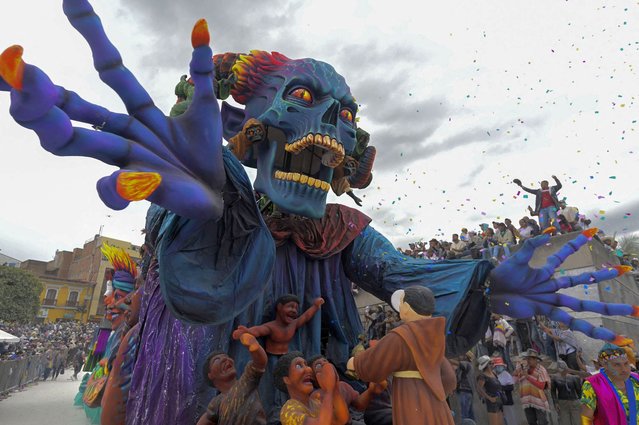
Picture of a float taking part in the “White Day” parade during the Carnival of Blacks and Whites in Pasto, Colombia on January 6, 2024. The Blacks and Whites carnival has its origins in a mix of Andean, Amazonian and Pacific cultural expressions, and it celebrates the ethnic diversity in the region and was proclaimed by UNESCO as intangible cultural heritage in 2009. (Photo by Joaquín Sarmiento/AFP Photo)

Picture of a float taking part in the “White Day” parade during the Carnival of Blacks and Whites in Pasto, Colombia on January 6, 2024. The Blacks and Whites carnival has its origins in a mix of Andean, Amazonian and Pacific cultural expressions, and it celebrates the ethnic diversity in the region and was proclaimed by UNESCO as intangible cultural heritage in 2009. (Photo by Joaquín Sarmiento/AFP Photo)
Details
17 Mar 2025 03:56:00
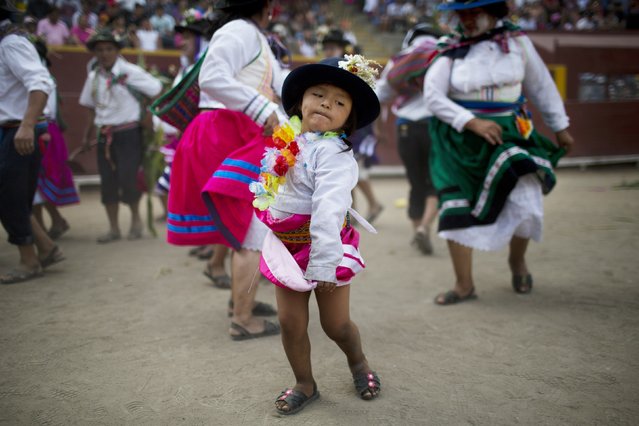
In this Sunday, March 29, 2015 photo, a young performer from the Parinacochas district of Ayacuhco dances in the Vencedores de Ayacucho dance festival, in the Acho bullring in Lima, Peru. The performers sang in the Quechua language, portraying the planting of corn and potatoes. From very young children to elderly people dressed as farmers, tigers, and foxes, as well as members of auto-defense groups, soldiers and police officers, to portray the violence that tore apart their families and communities. (Photo by Rodrigo Abd/AP Photo)

In this Sunday, March 29, 2015 photo, a young performer from the Parinacochas district of Ayacuhco dances in the Vencedores de Ayacucho dance festival, in the Acho bullring in Lima, Peru. The performers sang in the Quechua language, portraying the planting of corn and potatoes. From very young children to elderly people dressed as farmers, tigers, and foxes, as well as members of auto-defense groups, soldiers and police officers, to portray the violence that tore apart their families and communities. (Photo by Rodrigo Abd/AP Photo)
Details
01 Apr 2015 12:07:00
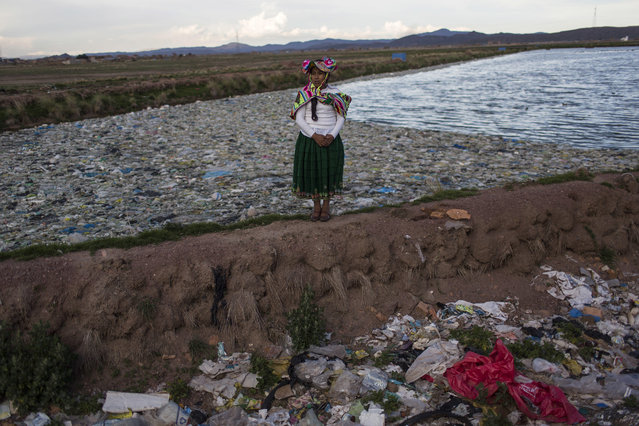
In this February 1, 2017 photo, environmental activist Maruja Inquilla poses for a photo next to a Municipal waste treatment plant with water that flows into Lake Titicaca, in Juliaca, in the Puno region of Peru. “If the frogs could talk they would say, This is killing me”," said Inquilla, who recently showed up at the Puno governor's house carrying plastic bags filled with hundreds of dead frogs in protest. (Photo by Rodrigo Abd/AP Photo)

In this February 1, 2017 photo, environmental activist Maruja Inquilla poses for a photo next to a Municipal waste treatment plant with water that flows into Lake Titicaca, in Juliaca, in the Puno region of Peru. “If the frogs could talk they would say, This is killing me”," said Inquilla, who recently showed up at the Puno governor's house carrying plastic bags filled with hundreds of dead frogs in protest. (Photo by Rodrigo Abd/AP Photo)
Details
04 Mar 2017 00:02:00
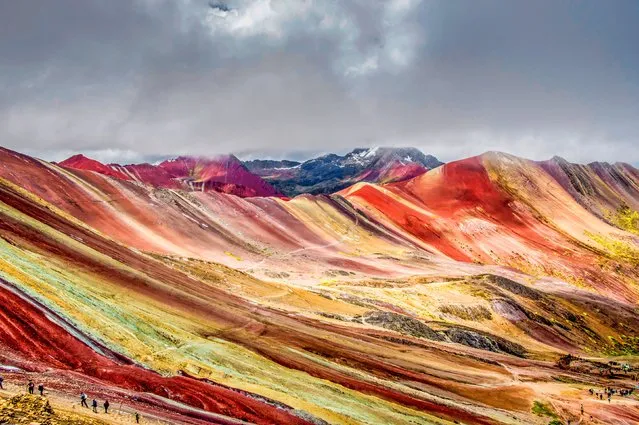
An array of colours dwarf visitors to the Rainbow Mountains in the Andes Cordillera in Peru in January 2023, which owes its colours to the minerals contained in the soil. The sulfur offers the yellow colour, iron oxide gives the red and copper sulfate is green. In total, it is made up of 14 different minerals. It was probably caused by weather and volcanic activity. (Photo by Guillaume Astruc/Naturagency/Solent News & Photo Agenc)

An array of colours dwarf visitors to the Rainbow Mountains in the Andes Cordillera in Peru in January 2023, which owes its colours to the minerals contained in the soil. The sulfur offers the yellow colour, iron oxide gives the red and copper sulfate is green. In total, it is made up of 14 different minerals. It was probably caused by weather and volcanic activity. (Photo by Guillaume Astruc/Naturagency/Solent News & Photo Agenc)
Details
15 Apr 2024 04:02:00