Loading...
Done
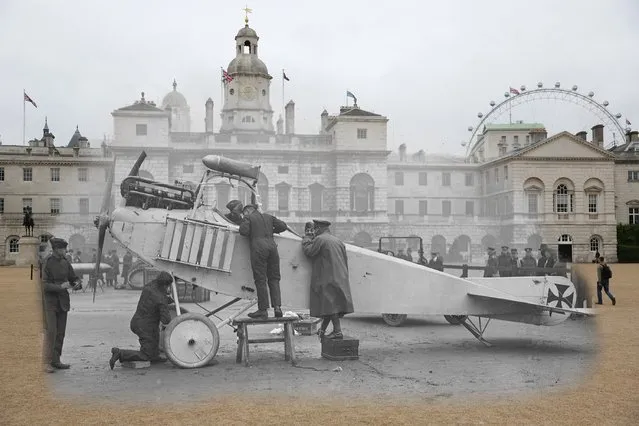
British soldiers inspect a captured German place in the Horseguards' Parade, London during World War I in November 1914, with the London Eye in the background as a reminder of just how much has changed in the last 100 years. (Photo by Peter Macdiarmid/Getty Images)

British soldiers inspect a captured German place in the Horseguards' Parade, London during World War I in November 1914, with the London Eye in the background as a reminder of just how much has changed in the last 100 years. (Photo by Peter Macdiarmid/Getty Images)
Details
29 Jul 2014 12:09:00
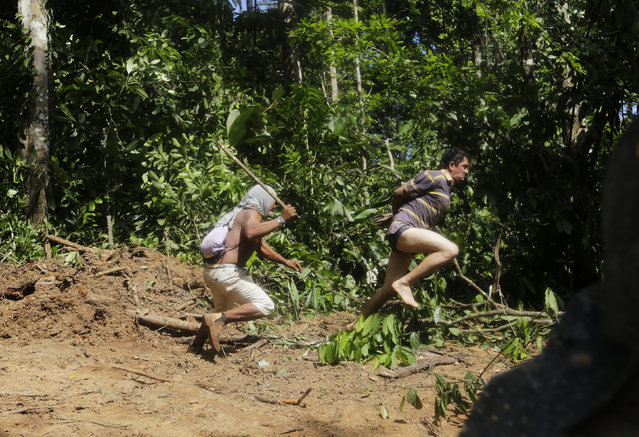
A Ka'apor Indian warrior (L) chases a logger who tried to escape after they captured him during a jungle expedition to search for and expel loggers from the Alto Turiacu Indian territory, near the Centro do Guilherme municipality in the northeast of Maranhao state in the Amazon basin, August 7, 2014. (Photo by Lunae Parracho/Reuters)

A Ka'apor Indian warrior (L) chases a logger who tried to escape after they captured him during a jungle expedition to search for and expel loggers from the Alto Turiacu Indian territory, near the Centro do Guilherme municipality in the northeast of Maranhao state in the Amazon basin, August 7, 2014. Tired of what they say is a lack of sufficient government assistance in keeping loggers off their land, the Ka'apor Indians, who along with four other tribes are the legal inhabitants and caretakers of the territory, have sent their warriors out to expel all loggers they find and set up monitoring camps in the areas that are being illegally exploited. (Photo by Lunae Parracho/Reuters)

Details
05 Sep 2014 11:41:00
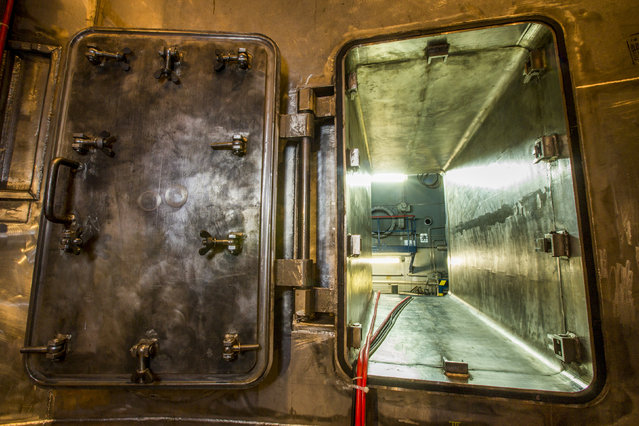
A view of an entrance to the concrete case surrounding the pressure vessel of the reactor is seen inside the decommissioned Unit Six of the Greifswald nuclear power station outside Lubmin August 5, 2014. (Photo by Thomas Peter/Reuters)

A view of an entrance to the concrete case surrounding the pressure vessel of the reactor is seen inside the decommissioned Unit Six of the Greifswald nuclear power station outside Lubmin August 5, 2014. Unit Six was a part of East Germany's largest nuclear power plant that was nearly completed in 1990, when the country's re-unification halted construction. (Photo by Thomas Peter/Reuters)
Details
22 Sep 2014 11:33:00
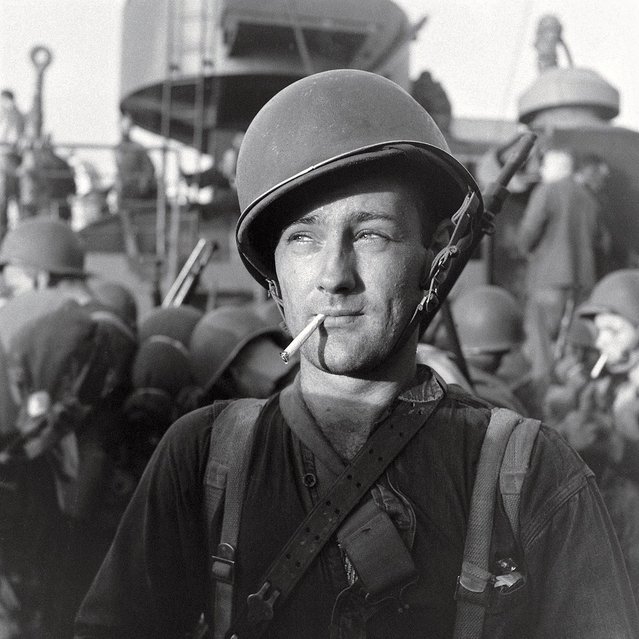
An American Marine readies to land on Guadalcanal during the five-month struggle for the island between late 1942 and early 1943. Three thousand miles south of Tokyo, Guadalcanal was a major shipping point for military supplies. The Allied victory there in February, 1943, marked a major turning point in the war after a string of Japanese victories in the Pacific. (Photo by Joe Scherschel/Time & Life Pictures)

An American Marine readies to land on Guadalcanal during the five-month struggle for the island between late 1942 and early 1943. Three thousand miles south of Tokyo, Guadalcanal was a major shipping point for military supplies. The Allied victory there in February, 1943, marked a major turning point in the war after a string of Japanese victories in the Pacific. (Photo by Joe Scherschel/Time & Life Pictures)
Details
10 Mar 2013 12:50:00
Residents of the Korean port of Inchon surrender to American troops

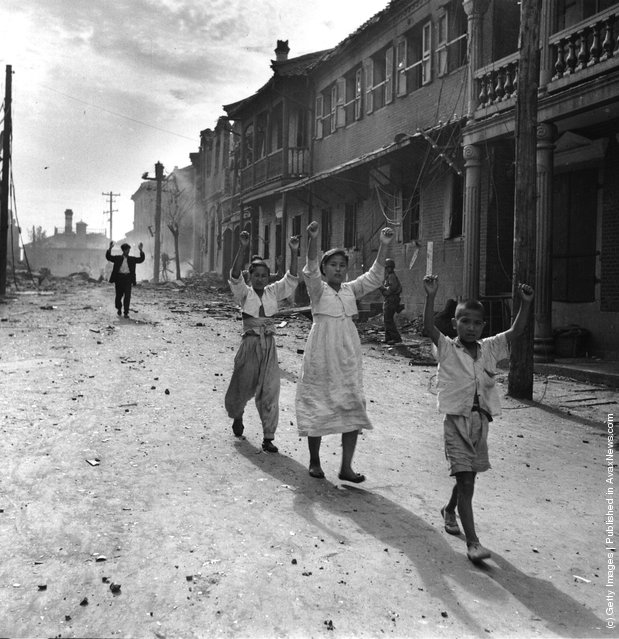
Residents of the Korean port of Inchon surrender to American troops. (Photo by Bert Hardy/Getty Images). 1950
Details
07 May 2011 10:24:00
Hacker Group Disrupts Bay Area Mass Transit System

A demonstrator wears a mask during a protest inside the Bay Area Rapid Transit (BART) Civic Center station on August 15, 2011 in San Francisco, California. The hacker group “Anonymous” staged a demonstration at a BART station this evening after BART officials turned off cell phne service in its stations last week during a disruptive protest following a fatal shooting of a man by BART police. (Photo by Justin Sullivan/Getty Images)
Details
16 Aug 2011 11:25:00
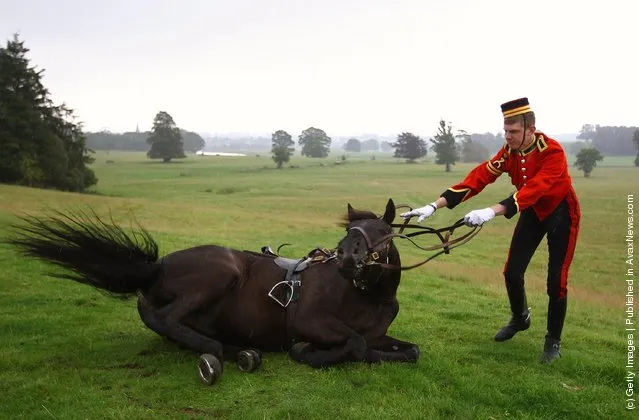
The Household Cavalry Prepare At Floors Castle Ahead Of Massed Pipe Bands Day

Lance Corpral Johnnie Miller of the Household Cavalry rehearses at Floors Castle in preparation for massed Pipe Band day on August 26, 2011 in Kelso, Scotland. The event, being held on August 28, will feature the first Scottish performance of the Household Cavalry's Musical ride in over 10 years. (Photo by Jeff J Mitchell/Getty Images)
Details
27 Aug 2011 14:31:00
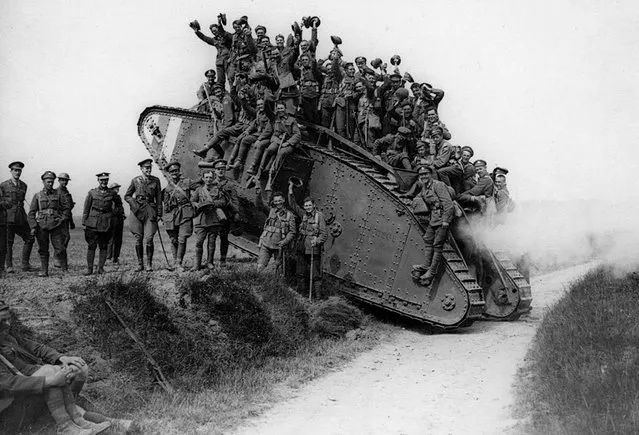
These black-and-white photos are taken from the new book “Armoured Warfare in the First World War 1916 – 1918” by Anthony Tucker-Jones and published by Pen & Sword Military. “Interestingly the British, French and Germans took completely different approaches with varying results”. The British military produced “Little Willie” in Autumn 1915 weighing 18 tonnes, which had a crew of two plus four gunners. “Inspired by a tracked artillery tractor “Little Willie” was referred to as a water tank – hence the name tank – to ensure secrecy”, said Anthony. “This led to the strange looking Mark I with its peculiar rhomboid shape, designed to cross trenches with guns in sponsons on either side. The Germans saw the tank as unchivalrous and were slow to grasp its utility. They favoured the Stormtrooper (specialist soldiers used to infiltrate enemy trenches) and artillery, not the tank”, said Anthony. “However, they didn’t hesitate to make use of captured British tanks. Although the tank helped secure victory and German soldiers dubbed it “Germany’s Downfall” the country was ultimately brought to its knees by the Allies blockade”. Here: British troops hitch a ride on a Mark IV after the massed tank fleet spearheading attack at Cambrai on November 20, 1917. (Photo by Anthony Tucker-Jones/Mediadrumworld.com)

These black-and-white photos are taken from the new book “Armoured Warfare in the First World War 1916 – 1918” by Anthony Tucker-Jones and published by Pen & Sword Military. Here: British troops hitch a ride on a Mark IV after the massed tank fleet spearheading attack at Cambrai on November 20, 1917. (Photo by Anthony Tucker-Jones/Mediadrumworld.com)
Details
23 Feb 2017 00:02:00