Loading...
Done
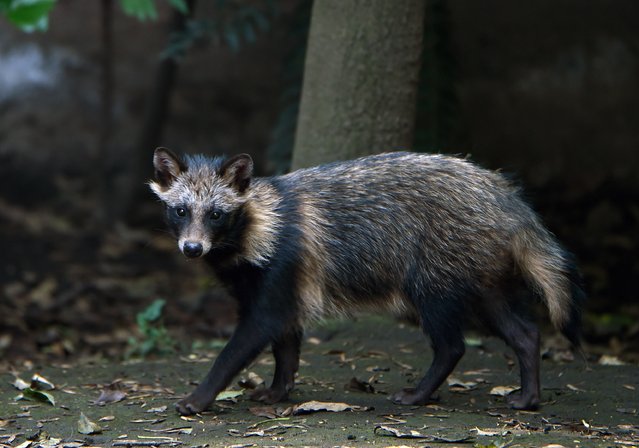
View of a raccoon dog or Tanuki (Nyctereutes procyonoides) at the Chapultpec Zoo in Mexico City on August 06, 2015. (Photo by Alfredo Estrella/AFP Photo)

View of a raccoon dog or Tanuki (Nyctereutes procyonoides) at the Chapultpec Zoo in Mexico City on August 06, 2015. This species is native from Japan and China. (Photo by Alfredo Estrella/AFP Photo)
Details
05 Mar 2016 11:37:00
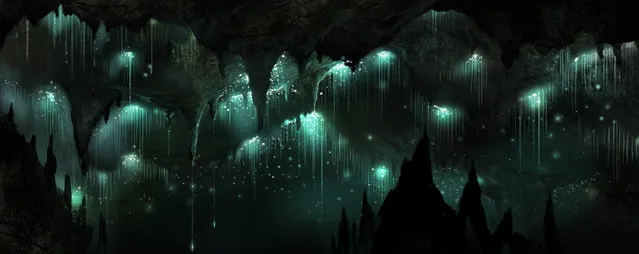
Waitomo Glowworm Caves New Zealand

The Waitomo Glowworm Caves attraction is a cave at Waitomo on the North Island of New Zealand, known for its population of glowworms, Arachnocampa luminosa. This species is found exclusively in New Zealand. They are around the size of an average mosquito. This cave is part of the Waitomo Caves system that includes the Ruakuri Cave and the Aranui Cave.
Details
12 May 2014 09:55:00
A monarch butterfly rests on a visitor's hand at the Monarch Grove Sanctuary in Pacific Grove, California December 30, 2014. Monarch butterflies may warrant U.S. Endangered Species Act protection because of farm-related habitat loss blamed for sharp declines in cross-country migrations of the orange-and-black insects, the U.S. Fish and Wildlife Service said. (Photo by Michael Fiala/Reuters)

A monarch butterfly rests on a visitor's hand at the Monarch Grove Sanctuary in Pacific Grove, California December 30, 2014. Monarch butterflies may warrant U.S. Endangered Species Act protection because of farm-related habitat loss blamed for sharp declines in cross-country migrations of the orange-and-black insects, the U.S. Fish and Wildlife Service said. (Photo by Michael Fiala/Reuters)
Details
01 Jan 2015 14:08:00
Snorkelers interact with a Florida Manatee inside of the Three Sisters Springs in Crystal River, Florida January 15, 2015. On winter days, Florida manatees flock by the hundreds to the balmy waters of Three Sisters Springs, drawing crowds of snorkelers and kayakers to the U.S. sanctuary, where people may swim with the endangered species. (Photo by Scott Audette/Reuters)

Snorkelers interact with a Florida Manatee inside of the Three Sisters Springs in Crystal River, Florida January 15, 2015. On winter days, Florida manatees flock by the hundreds to the balmy waters of Three Sisters Springs, drawing crowds of snorkelers and kayakers to the U.S. sanctuary, where people may swim with the endangered species. But as tolerant as the gentle, whiskered sea giants can be of the accidental kicks and splashes of delighted tourists, wild life regulators want to ban most canoes and paddle boards and create people-free zones to protect the wintering “sea cow”. Proposed limitations for this winter are awaiting approval by the U.S. Fish and Wildlife Service. (Photo by Scott Audette/Reuters)
Details
22 Jan 2015 13:34:00
A “jungle nymph” is measured during the annual weight-in ZSL London Zoo on August 21, 2014 in London, England. The height and mass of every animal in the zoo, of which there are over 16,000, is recorded and submitted to the Zoological Information Management System. This is combined with animal measurement data collected from over 800 zoos and aquariums in almost 80 countries, from which zoologists can compare information on thousands of endangered species.  (Photo by Oli Scarff/Getty Images)

A “jungle nymph” is measured during the annual weight-in ZSL London Zoo on August 21, 2014 in London, England. The height and mass of every animal in the zoo, of which there are over 16,000, is recorded and submitted to the Zoological Information Management System. This is combined with animal measurement data collected from over 800 zoos and aquariums in almost 80 countries, from which zoologists can compare information on thousands of endangered species. (Photo by Oli Scarff/Getty Images)
Details
22 Aug 2014 11:52:00
“Centuries ago, Inuit hunted the bowhead whale. At that time, whale hunting undoubtedly was part of a complex and very important ritual, if only because of the size of the catch. The position that the ancestors of today's Inuit occupied in the living world involved a relationship with the spirit that inhabited each animal but also their species”. (Photo by Robert Frechette/2014 Sony World Photography Awards)

“Centuries ago, Inuit hunted the bowhead whale. At that time, whale hunting undoubtedly was part of a complex and very important ritual, if only because of the size of the catch. The position that the ancestors of today's Inuit occupied in the living world involved a relationship with the spirit that inhabited each animal but also their species”. (Photo by Robert Frechette/2014 Sony World Photography Awards)
Details
16 Mar 2014 08:01:00
These heart-warming photograph show an incredible bond between a wild lioness and the men fighting to save her species. The picture show Sirga – a 110lb lioness – and her adopted pride Valentin Gruener (not pictured) and Mikkel Legarth. Incredibly she treats the two men just like she would other lions and with their help she can now hunt for prey on her own. (Photo by Caters News)

These heart-warming photograph show an incredible bond between a wild lioness and the men fighting to save her species. The picture show Sirga – a 110lb lioness – and her adopted pride Valentin Gruener (not pictured) and Mikkel Legarth. Incredibly she treats the two men just like she would other lions and with their help she can now hunt for prey on her own. As a cub she was driven out from a pride and rescued by German and Danish duo Valentin and Mikkel who could not stand by and watch her die. She is now a beacon for hoped success of the Modisa Wildlife Project, founded in Botswana, Africa, by Valentin and Mikkel with the hope of saving the lion population. (Photo by Caters News)
Details
27 Apr 2014 09:36:00
Tridacna Gigas, or Giant Clams

“The giant clam, Tridacna gigas (known as pā’ua in Cook Islands Māori), is the largest living bivalve mollusc. T. gigas is one of the most endangered clam species. It was mentioned as early as 1825 in scientific reports. One of a number of large clam species native to the shallow coral reefs of the South Pacific and Indian oceans, they can weigh more than 200 kilograms (440 lb) measure as much as 120 cm (47 in) across, and have an average lifespan in the wild of 100 years or more”. – Wikipedia

Photo: Tridacna Gigas, or Giant Clams spew water as a traditional fisherman passes by a small sanctuary on January 23, 2004 near Bolinao in the Northern Philippines. The clams, prime builders for coral reefs and providing shelter for spawning fish and other marine life, are exposed by low tides in the sanctuary. Overfishing and pollution throughout the country are not only threatening food security, but are also starting to choke one of the few working clam sanctuaries in the world. (Photo by David Greedy/Getty Images)
Details
01 Oct 2011 13:10:00