Loading...
Done
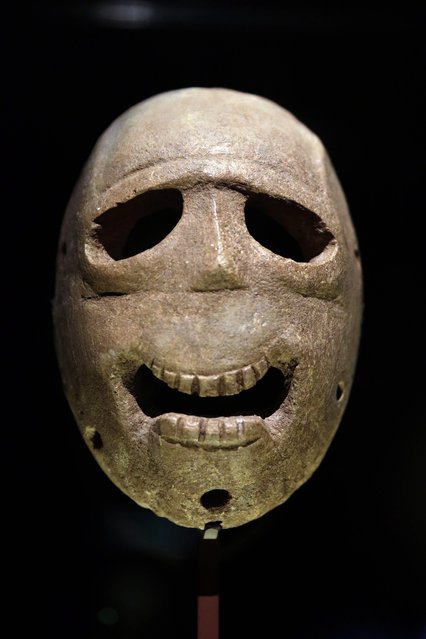
In this  Monday, March 10, 2014 photo, a 9,000 year-old mask is on display at the Israel Museum in Jerusalem.  (Photo by Tsafrir Abayov/AP Photo)

In this Monday, March 10, 2014 photo, a 9,000 year-old mask is on display at the Israel Museum in Jerusalem. The exhibition called “Face To Face” shows eleven stone masks, said to have been discovered in the Judean desert and hills near Jerusalem, which date back 9,000 years and offer a rare glimpse at some of civilization's first communal rituals. (Photo by Tsafrir Abayov/AP Photo)
Details
14 Mar 2014 08:25:00
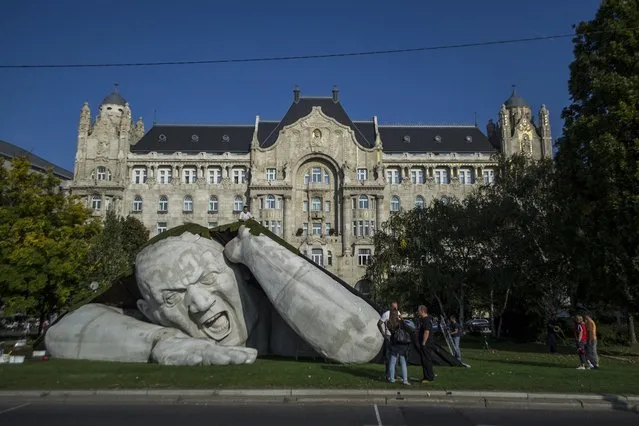
Sculpture By Ervin Loranth Herve

There are not many sculptures in the world that were purposely made to be grotesque, especially on such a large scale. Thus, a Hungarian artist Ervin Loránth Hervé has apparently decided that there isn’t enough horror in this world and created the Feltépve – a sculpture of a stone giant ripping apart the earth in order to break free. However, when we look from another perspective this sculpture might depict a grouchy giant trying to cover himself with a blanket of earth so that everyone would leave him alone. The latter interpretation of this sculpture was probably not intended by the sculptor; however, the way the arms of the giant are positioned makes it look as if it was truly the case.
Details
04 Nov 2014 11:49:00
Demonstrators help a fellow protester during clashes with security forces during an opposition rally in Caracas, Venezuela on April 4, 2017. (Photo by Carlos Garcia Rawlins/Reuters)

Demonstrators help a fellow protester during clashes with security forces during an opposition rally in Caracas, Venezuela on April 4, 2017. Protesters clashed with police in Venezuela Tuesday as the opposition mobilized against moves to tighten President Nicolas Maduro' s grip on power. Protesters hurled stones at riot police who fired tear gas as they blocked the demonstrators from advancing through central Caracas, where pro- government activists were also planning to march. (Photo by Carlos Garcia Rawlins/Reuters)
Details
05 Apr 2017 09:24:00
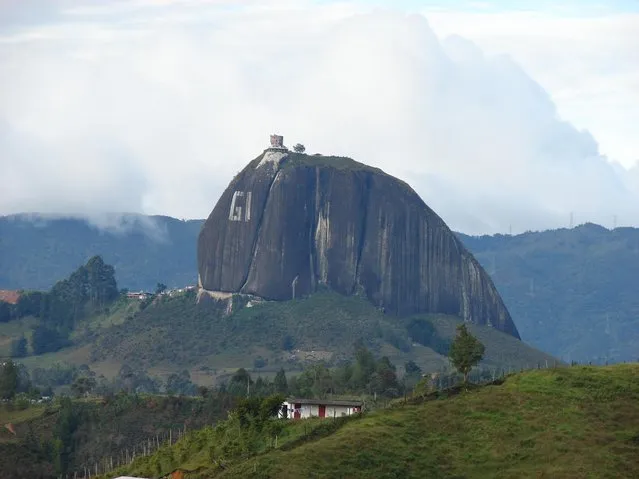
Guatape Rock In Colombia

Guatapé is a town and municipality in Antioquia Department, Colombia. Part of the subregion of Eastern Antioquia. Guatapé is located in the outskirts of Medellín, bordering a reservoir created by the Colombian government for a hydro-electric dam, built in the late 1960s. This quaint town is the gathering place for "Las Vegas", or the small farms of the area. It is also a growing area of recreation for citizens of Medellín, and aims to be a tourist destination for foreign travellers.
Guatapé was founded in 1811, by the Spaniard Don Francisco Giraldo y Jimenez. The name "Guatapé", comes from the Quechua language, related to "stones and water". The area was visited by the conquistadors circa 1551.
Details
25 Dec 2013 09:18:00
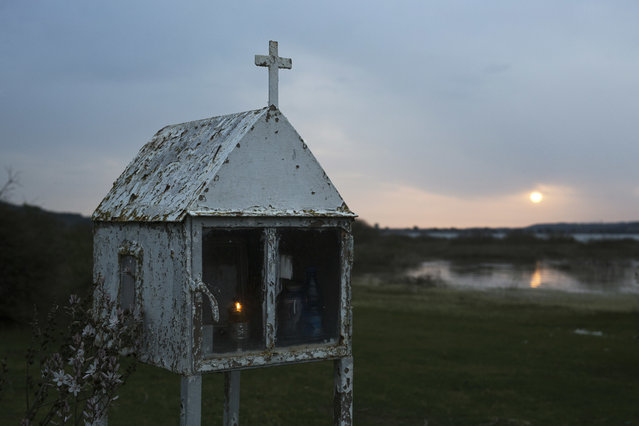
In this photo taken on Saturday, April 29, 2017, a candle is lit in a roadside shrine as the sun sets across a nearby lake of Pineia in the village of Souli, in the Peloponnese region of southern Greece. (Photo by Petros Giannakouris/AP Photo)

In this photo taken on Saturday, April 29, 2017, a candle is lit in a roadside shrine as the sun sets across a nearby lake of Pineia in the village of Souli, in the Peloponnese region of southern Greece. Made of iron sheeting, stone, wood, concrete or marble, tens of thousands of such shrines punctuate Greece’s roadside scenery, a common sight in a country that has one of the European Union’s worst road fatality rates. (Photo by Petros Giannakouris/AP Photo)
Details
13 May 2017 09:19:00
The finished photochromes were produced using at least six different tint stones, although many more were often used. Here: Street food in the Strada del Porto in Naples, Italy, 1899. (Photo by Swiss Camera Museum/The Guardian)

Photochromes are vibrant and nuanced prints hand-coloured from black-and-white negatives. Created using a process pioneered in the 1880s, these images offer a fascinating insight into the world when colour photography was still in its infancy. A Tour of the World in Photochromes is at the Swiss Camera Museum, Vevey, until 21 August. Here: Street food in the Strada del Porto in Naples, Italy, 1899. (Photo by Swiss Camera Museum/The Guardian)
Details
07 Jul 2016 10:56:00


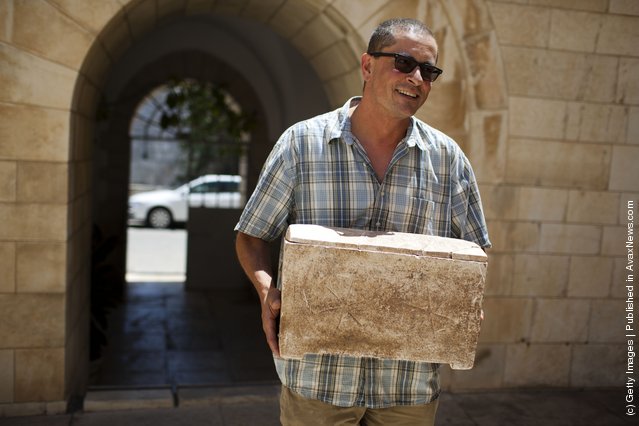
Doctor Boaz Zissu of the Bar Ilan University shows the inscription on a 2,000-year-old ossuary at the Rockefeller Museum on June 30, 2011 in Jerusalem, Israel. The Israel Antiquities Authority have confirmed the credibility of the ancient ossuary, otherwise known as a stone chest in which to store bones, as bearing the name of a relative of the high priest Caiaphas from the New Testament. Laboratory tests have come back saying that the inscription with the name of “Miriam daughter of Yeshua son of Caiaphas, priest of Maaziah from Beth Imri” is both “genuine and ancient”. (Photo by Uriel Sinai/Getty Images)
Details
01 Jul 2011 11:35:00
Cave Art By Ra Paulette

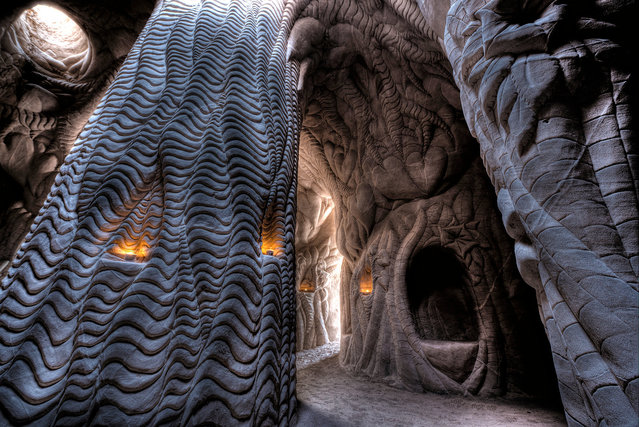
Ra Paulette is an American cave sculptor based in New Mexico who digs into hillsides to sculpt elaborate artistic spaces inside mountains. Reviewer Martha Mendoza in the Los Angeles Times described the caves he created as shrines, as hallowed places, a “sanctuary for prayer and meditation” while others describe the caves as works of art. The caves are finished with “scallops, molded curves, smooth ledges, inlaid stones, narrow pods and crusty ledges”. His caves attract visitors worldwide.
Details
24 Nov 2016 08:05:00