Loading...
Done
Animal rights activists covered with fake blood sit on the floor during a protest against the use of animals in research to mark World Day for Animals in Laboratories in central Madrid April 24, 2014. The sign reads, “How many rabbits do your shampoo kill?”. (Photo by Andrea Comas/Reuters)

Animal rights activists covered with fake blood sit on the floor during a protest against the use of animals in research to mark World Day for Animals in Laboratories in central Madrid April 24, 2014. The sign reads, “How many rabbits do your shampoo kill?”. (Photo by Andrea Comas/Reuters)
Details
26 Apr 2014 11:44:00
A student of the "Escola de Papai Noel do Brasil" (Brazil's school of Santa Claus) wears his hat before lessons in Rio de Janeiro, Brazil, October 27, 2015. (Photo by Pilar Olivares/Reuters)

A student of the "Escola de Papai Noel do Brasil" (Brazil's school of Santa Claus) wears his hat before lessons in Rio de Janeiro, Brazil, October 27, 2015. The school, which was founded since 1993, prepare men to represent Santa Claus during the Christmas season. Lessons include singing, physical activity, how to dress and how to care for their beard. (Photo by Pilar Olivares/Reuters)
Details
31 Oct 2015 08:03:00
17-year-old dance student Amelia Hubbard of Halesowen, West Midlands, takes to the park in south Birmingham, United Kingdom on April 14, 2022 to do some spring moves, as temperatures soar in the UK on Good Friday.(Photo by Peter Lopeman/Alamy Live News)

17-year-old dance student Amelia Hubbard of Halesowen, West Midlands, takes to the park in south Birmingham, United Kingdom on April 14, 2022 to do some spring moves, as temperatures soar in the UK on Good Friday.(Photo by Peter Lopeman/Alamy Live News)
Details
19 Jul 2022 05:02:00
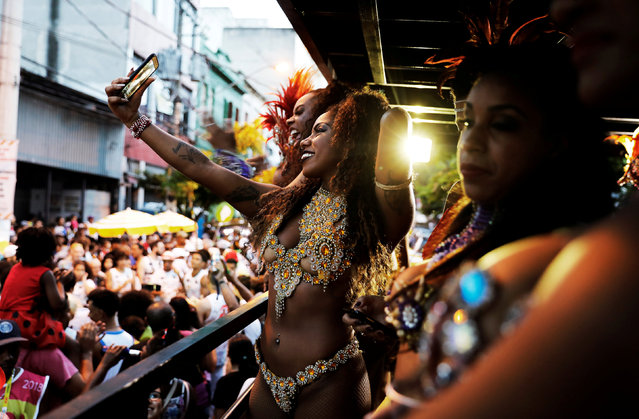
Women take part in an annual block party known as “Banda do Candinho e Mulatas” (Candinho Band and Mulatto Women), during carnival festivities at Bixiga neighbourhood in Sao Paulo, Brazil February 7, 2018. (Photo by Nacho Doce/Reuters)

Women take part in an annual block party known as “Banda do Candinho e Mulatas” (Candinho Band and Mulatto Women), during carnival festivities at Bixiga neighbourhood in Sao Paulo, Brazil February 7, 2018. (Photo by Nacho Doce/Reuters)
Details
09 Feb 2018 08:08:00
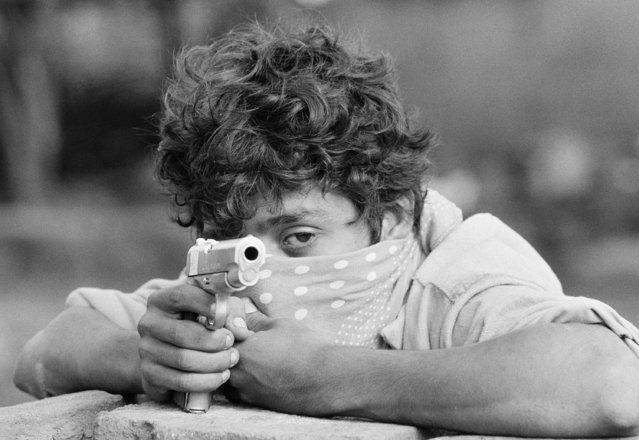
A young Sandinista guerrilla takes aim with his 45 pistol as he stands waiting to do combat with the Nicaraguan National Guard in Managua June 23, 1979. The guerrillas still occupy major parts of the Capitol City. (Photo by McLendon/AP Photo)

A young Sandinista guerrilla takes aim with his 45 pistol as he stands waiting to do combat with the Nicaraguan National Guard in Managua June 23, 1979. The guerrillas still occupy major parts of the Capitol City. (Photo by McLendon/AP Photo)
Details
01 Feb 2019 00:05:00
A caiman swims amidst trash in Canal das Taxas at the Recreio dos Bandeirantes neighborhood in west Rio de Janeiro, Brazil, on November 22, 2023. The urban expansion of the area and the resulting pollution have put the yacare caiman (Caiman latirostris) “in danger of extinction”. (Photo by Tercio Teixeira/AFP Photo)

A caiman swims amidst trash in Canal das Taxas at the Recreio dos Bandeirantes neighborhood in west Rio de Janeiro, Brazil, on November 22, 2023. The urban expansion of the area and the resulting pollution have put the yacare caiman (Caiman latirostris) “in danger of extinction”. (Photo by Tercio Teixeira/AFP Photo)
Details
12 Jun 2024 03:33:00
Famous Guns By Federico Mauro

Award-winning director Federico Mauro continues his “Famous…” series with a piece on iconic guns and the characters who toted them. With everything from James Bond’s silenced Walther PPK and Dirty Harry’s legendary Smith & Wesson Model 29 to more obscure models like the Green Hornet’s green gun, this list covers a unique range of the more memorable guns in cinema and pop culture history.

See also:Famous Eyeglasses By Federico Mauro
Details
01 Sep 2013 13:20:00
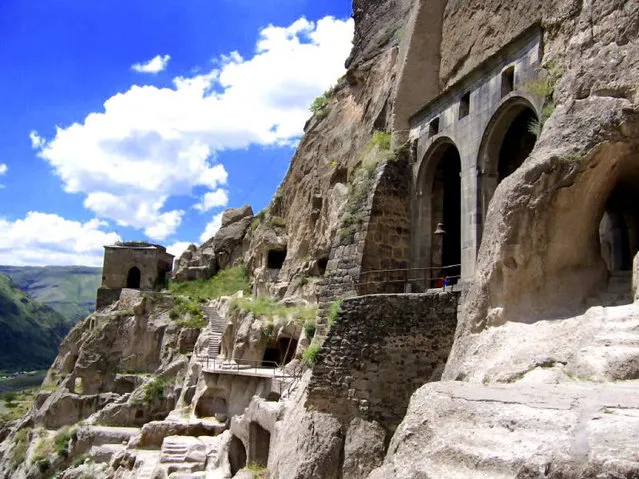
Vardzia Cave Monastery

Vardzia is a cave monastery site in southern Georgia, excavated from the slopes of the Erusheti Mountain on the left bank of the Mtkvari River, thirty kilometres from Aspindza. The main period of construction was the second half of the twelfth century. The caves stretch along the cliff for some five hundred metres and in up to nineteen tiers. The Church of the Dormition, dating to the 1180s during the golden age of Tamar and Rustaveli, has an important series of wall paintings. The site was largely abandoned after the Ottoman takeover in the sixteenth century. Now part of a state heritage reserve, the extended area of Vardzia-Khertvisi has been submitted for future inscription on the UNESCO World Heritage List
Details
04 Sep 2013 10:53:00