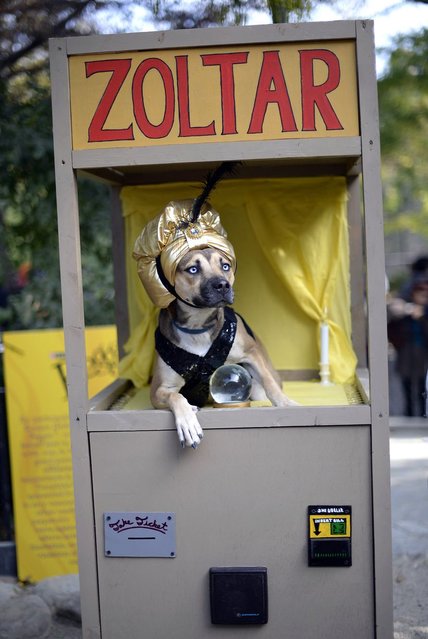
“I started photography in June 2009. At the time, I was searching for a way to express both the rigorous scientist and the creative artist in me. There are few hobbies that let these two approaches work together, so I really was enthusiastic about it: I am now spending all my free time studying various techniques, contemplating others' fantastic work, and of course, making pictures”. – Christophe Kiciak. Photo: “The Hero”. (Photo by Christophe Kiciak)
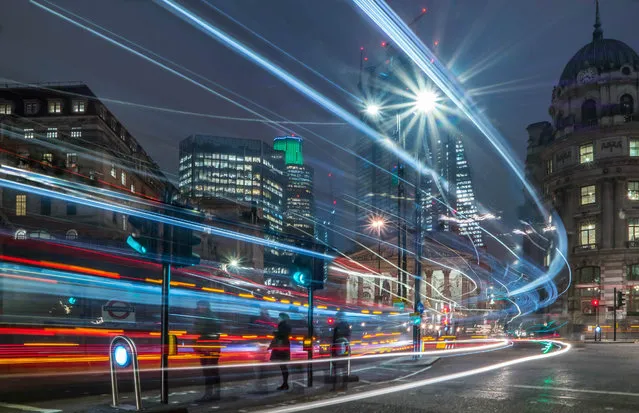
Runner-up. “The City of London, looking towards the Royal Exchange and the Bank of England. The ever-changing London skyline provides many excellent opportunities for cityscape photography, none more exciting than the ebb and flow of traffic at night”. (Photo by Mark Caldon/The Guardian)
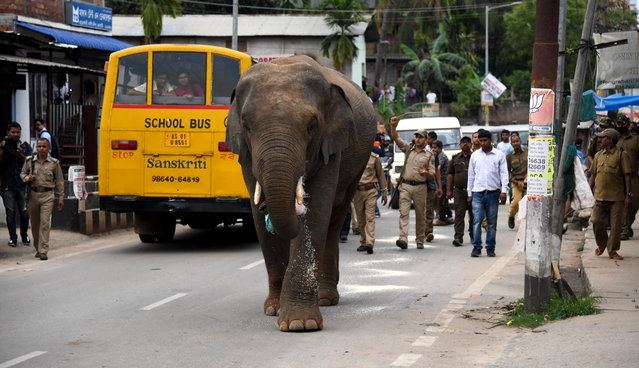
Indian forest officials and police personnel try to chase away a wild male elephant at Hengrabari area in Guwahati on April 30, 2019. The elephant came down from Amchang Wildlife Sanctuary in search of food and later forest official tranquillized it, local media reported. As the pressure of population pushes human habitation closer to forests incidents of wild animals straying into cities is increasingly reported. (Photo by Biju Boro/AFP Photo)
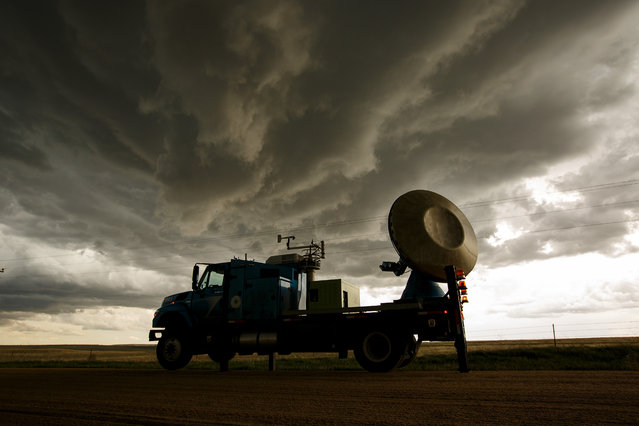
The Doppler on Wheels (DOW) vehicle scans a supercell thunderstorm during a tornado research mission, May 8, 2017 in Elbert County near Agate, Colorado. Doppler on Wheels (DOW) is a mobile doppler radar mounted on a truck that brings instruments directly into storms, allowing scientists to scan storms and tornadoes and make 3-D maps of wind and debris. (Photo by Drew Angerer/Getty Images)
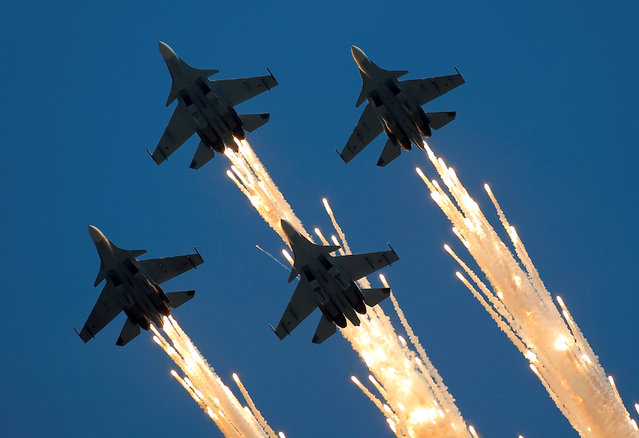
Sukhoi Su-30SM jet fighters of the Sokoly Rossii (Falcons of Russia) aerobatic team fly in formation during the International Army Games 2016, in Dubrovichi outside Ryazan, Russia, August 5, 2016. (Photo by Maxim Shemetov/Reuters)
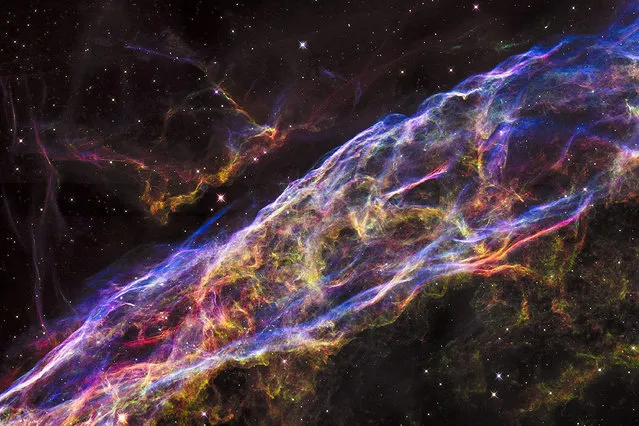
A small section of the expanding remains of the Veil Nebula, a massive star that exploded about 8,000 years ago. The entire nebula is 110 light-years across, covering six full moons on the sky as seen from Earth, and resides about 2,100 light-years away in the constellation Cygnus, the Swan. (Photo by Reuters/NASA/ESA/Hubble)