Loading...
Done
Ocean voyage

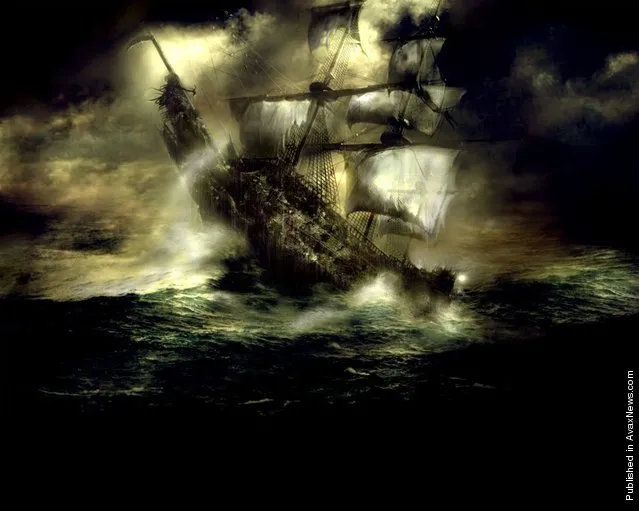
Do you think that history is a science? Well, not exactly. First, and foremost, history is the state's “legend of wars”, it’s official regalia. Of course, public historians are not interested in scientific truth – quite the opposite. In this respect, any attempt to present a state’s history as altruistic and benevolent as possible is welcomed and encouraged – as opposed to any revisionism attempts that may be more accurate. In this matter, Chinese have surpassed us all – they revised in highly creative manner (but rather shamelessly) the technology already invented by Europeans, a process that resulted in oldest state on the planet. Here is an interesting paradox: ask any sinologist about the Middle Kingdom during second century B.C., and he will describe it to you in such a vivid manner as if he has been living there all his life – but as soon as you will ask him to describe Chinese history in the 19-20th centuries… let's say, his eagerness will be greatly diminished. However, we will discuss China in a different article, and in the meantime we will try to understand how exactly historic “legend of wars” is formed and functions – based on a specific and well-known example. A great example is Ferdinand Magellan's first voyage around the world.
Details
14 Nov 2011 09:11:00
Female North Korean soldiers patrol along the banks of Yalu River, near the North Korean town of Sinuiju, opposite the Chinese border city of Dandong, April 11, 2013. South Korea and the United States were on high alert for a North Korean missile launch on Thursday as the hermit kingdom turned its attention to celebrating its ruling Kim dynasty and appeared to tone down rhetoric of impending war. (Photo by Jacky Chen/Reuters)

Female North Korean soldiers patrol along the banks of Yalu River, near the North Korean town of Sinuiju, opposite the Chinese border city of Dandong, April 11, 2013. South Korea and the United States were on high alert for a North Korean missile launch on Thursday as the hermit kingdom turned its attention to celebrating its ruling Kim dynasty and appeared to tone down rhetoric of impending war. (Photo by Jacky Chen/Reuters)

P.S. All pictures are presented in high resolution. To see Hi-Res images – just TWICE click on any picture. In other words, click small picture – opens the BIG picture. Click BIG picture – opens VERY BIG picture (if available; this principle works anywhere on the site AvaxNews)
Details
13 Apr 2013 14:48:00
Brazilian navy soldiers watch a woman as they patrol the area at the Copacabana Beach before carnival festivities in Rio de Janeiro, Brazil February 14, 2017. (Photo by Sergio Moraes/Reuters)

Brazilian navy soldiers watch a woman as they patrol the area at the Copacabana Beach before carnival festivities in Rio de Janeiro, Brazil February 14, 2017. (Photo by Sergio Moraes/Reuters)
Details
15 Feb 2017 10:00:00
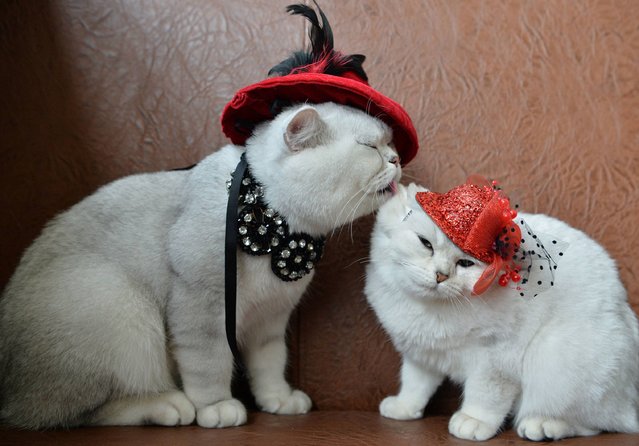
Two Scottish shorthair cats dressed with red hats are pictured during a cat exhibition in Bishkek, on October 16, 2016. Cat lovers from Kyrgyzstan, Kazakhstan and Uzbekistan took part in the exhibition. (Photo by Vyacheslav Oseledko/AFP Photo)

Two Scottish shorthair cats dressed with red hats are pictured during a cat exhibition in Bishkek, on October 16, 2016. Cat lovers from Kyrgyzstan, Kazakhstan and Uzbekistan took part in the exhibition. (Photo by Vyacheslav Oseledko/AFP Photo)
Details
17 Oct 2016 10:26:00
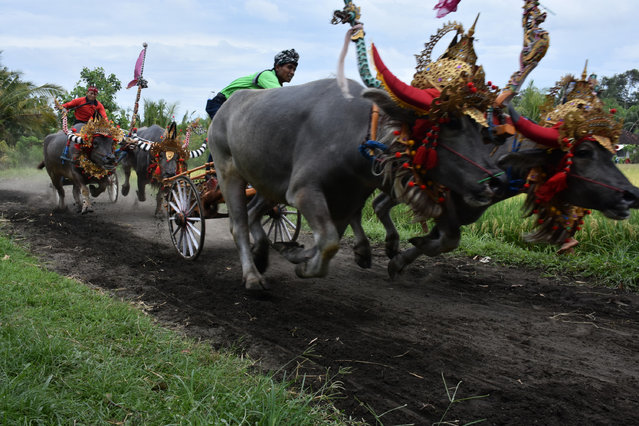
Jockeys spur buffalos during the Makepung buffalo races at Jembrana in Bali, Indonesia on October 23, 2016. Makepung is a tradition for farmers to celebrate a bumper harvest in Bali. (Photo by Kadek Raharja/Xinhua/Barcroft Images)

Jockeys spur buffalos during the Makepung buffalo races at Jembrana in Bali, Indonesia on October 23, 2016. Makepung is a tradition for farmers to celebrate a bumper harvest in Bali. (Photo by Kadek Raharja/Xinhua/Barcroft Images)
Details
25 Oct 2016 10:50:00


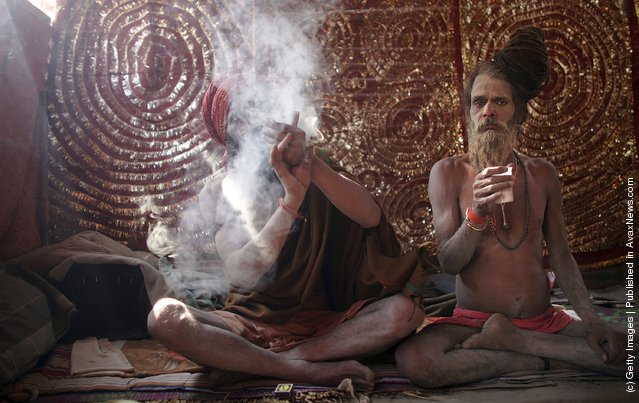
“Kumbh Mela is a mass Hindu pilgrimage in which Hindus gather at the Ganges river. The normal Kumbh Mela is celebrated every 3 years, the Ardh (half) Kumbh Mela is celebrated every six years at Haridwar and Prayag, the Purna (complete) Kumbh takes place every twelve years, at four places (Prayag (Allahabad), Haridwar, Ujjain, and Nashik). The Maha (great) Kumbh Mela which comes after 12 “Purna Kumbh Melas”, or 144 years, is held at Allahabad.

The last Ardh Kumbh Mela was held over a period of 45 days beginning in January 2007, more than 70 million Hindu pilgrims took part in the Ardh Kumbh Mela at Prayag, and on January 15, the most auspicious day of the festival of Makar Sankranti, more than 5 million participated. The previous Maha Kumbh Mela, held in 2001, was attended by around 60 million people, making it at the time the largest gathering anywhere in the world in recorded history”. – Wikipedia

Photo: Sadhus (holy men) smoke at their camp near the ritual site at Sangam, the confluence of the Ganges, Yamuna and mythical Saraswati rivers during the Ardh Kumbh Mela festival (Half Pitcher festival) January 18, 2007 in Allahabad, India. Millions of Hindu pilgrims have flocked to the largest religious gathering in the world which lasts for 45 days in northern India. The festival commemorates the mythical conflict between gods and demons over a pitcher filled with the “nectar of immortality”. Devotees believe that taking a holy dip in the Ganges at this time washes away their sins and paves the path to salvation. (Photo by Mario Tama/Getty Images)
Details
30 Jun 2011 10:27:00
Mario Huettenhofer, chief of the German company 3D Fab, presents his own face as 3d print during the international fairs FabCon 3.D and Rapid.Tech in Erfurt, Germany, Thursday, May 15, 2014. 130 exhibitors from all over the world present the entire world of 3D printing. (Photo by Jens Meyer/AP Photo)

Mario Huettenhofer, chief of the German company 3D Fab, presents his own face as 3d print during the international fairs FabCon 3.D and Rapid.Tech in Erfurt, Germany, Thursday, May 15, 2014. 130 exhibitors from all over the world present the entire world of 3D printing. The trade fairs are accompanied by specialist programs featuring 80 scientists, practitioners and trend analysts from ten countries, who will explain the latest findings, trends and applications for additive processes in industry and for 3D printing in the private sector to newcomers, experts and consumers alike. (Photo by Jens Meyer/AP Photo)
Details
17 May 2014 13:06:00
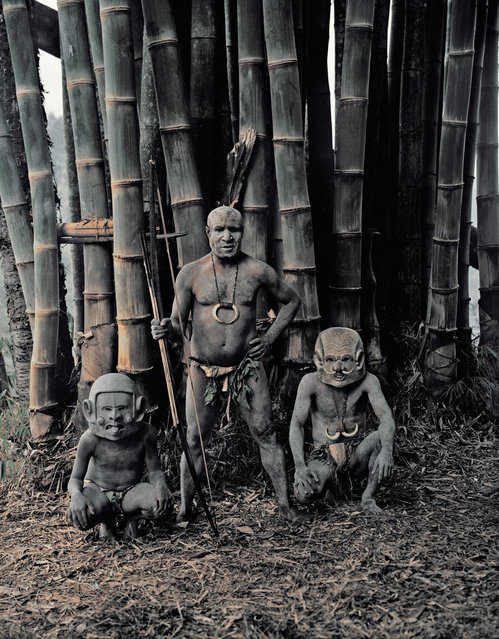
“Asaro from the Eastern Highlands”. The mudmen could not cover their faces with mud because the people of Papua New Guinea thought that the mud from the Asaro river was poisonous. So instead of covering their faces with this alleged poison, they made masks from pebbles that they heated and water from the waterfall, with unusual designs such as long or very short ears either going down to the chin or sticking up at the top, long joined eyebrows attached to the top of the ears, horns and sideways mouths. (Jimmy Nelson)

“Asaro from the Eastern Highlands”. The mudmen could not cover their faces with mud because the people of Papua New Guinea thought that the mud from the Asaro river was poisonous. So instead of covering their faces with this alleged poison, they made masks from pebbles that they heated and water from the waterfall, with unusual designs such as long or very short ears either going down to the chin or sticking up at the top, long joined eyebrows attached to the top of the ears, horns and sideways mouths. (Photo and caption by Jimmy Nelson)
Details
20 Oct 2013 08:54:00