Loading...
Done
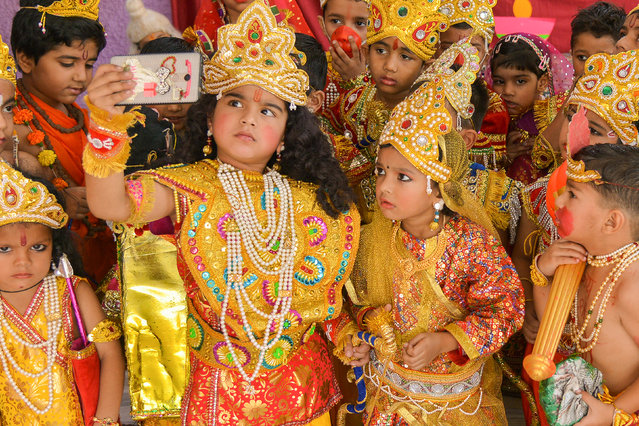
Indian children dressed up as the Hindu deities Rama and Sita take a selfie photograph at an event to celebrate the Diwali festival in Ajmer in western Rajasthan state on November 6, 2018. (Photo by Shaukat Ahmed/AFP Photo)

Indian children dressed up as the Hindu deities Rama and Sita take a selfie photograph at an event to celebrate the Diwali festival in Ajmer in western Rajasthan state on November 6, 2018. (Photo by Shaukat Ahmed/AFP Photo)
Details
08 Nov 2018 00:05:00
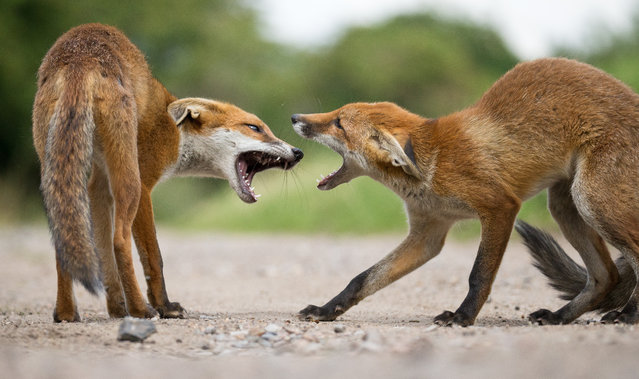
Four-month-old fox cubs squaring up to each other in Walthamstow, England on August 7, 2015. (Photo by Greg Morgan/Barcroft Media)

Four-month-old fox cubs squaring up to each other in Walthamstow, England on August 7, 2015. (Photo by Greg Morgan/Barcroft Media)
Details
09 Aug 2015 10:54:00
A firefighter breaks down after the World Trade Center buildings collapsed September 11, 2001

“The September 11 attacks (called September 11, September 11th or 9/11), were a series of four coordinated suicide attacks against targets in New York City and the Washington, D.C. area on September 11, 2001. On that morning, 19 terrorists from the Islamist militant group al-Qaeda hijacked four passenger jets. The hijackers intentionally crashed two planes into the Twin Towers of the World Trade Center in New York City; both towers collapsed within two hours. Hijackers crashed a third plane into the Pentagon in Arlington, Virginia. When passengers attempted to take control of the fourth plane, United Airlines Flight 93, it crashed into a field near Shanksville, Pennsylvania, preventing it from reaching its intended target in Washington, D.C. Nearly 3,000 died in the attacks”. – Wikipedia

Photo: A firefighter breaks down after the World Trade Center buildings collapsed September 11, 2001 after two hijacked airplanes slammed into the twin towers in a terrorist attack. (Photo by Mario Tama/Getty Images)

Details
10 Sep 2011 12:33:00
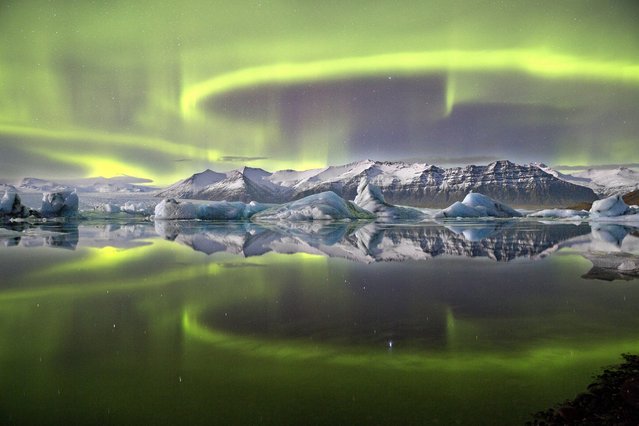
“Aurora over a glacier lagoon”. A vivid green overheaded aurrora pictured in Iceland's Vatnajokull National Park reflected almost symetrically in Jokulsrlon Glacier lagoon. A complete lack of wind and currrent combin in this sheltred lagoon scene to crete an arresting mirror effect giving the image a sensation of utter stillness. Despite theis there is motion on a suprising scale, as the loops and arcs of the aurora are shaped by the shifting forces of the Earth's magnetic field. (Photo by  James Woodend/The Astronomy Photographer of the Year 2014 Contest)

“Aurora over a glacier lagoon”. A vivid green overheaded aurrora pictured in Iceland's Vatnajokull National Park reflected almost symetrically in Jokulsrlon Glacier lagoon. A complete lack of wind and currrent combin in this sheltred lagoon scene to crete an arresting mirror effect giving the image a sensation of utter stillness. Despite theis there is motion on a suprising scale, as the loops and arcs of the aurora are shaped by the shifting forces of the Earth's magnetic field. James Woodend of Great Britain won the grand prize with the image, beating out more than 2,500 other entries. The Astronomy Photographer of the Year 2014 contest is judged by the Royal Observatory Greenwich and BBC Sky at Night magazine. (Photo by James Woodend/The Astronomy Photographer of the Year 2014 Contest)
Details
26 Sep 2014 13:39:00
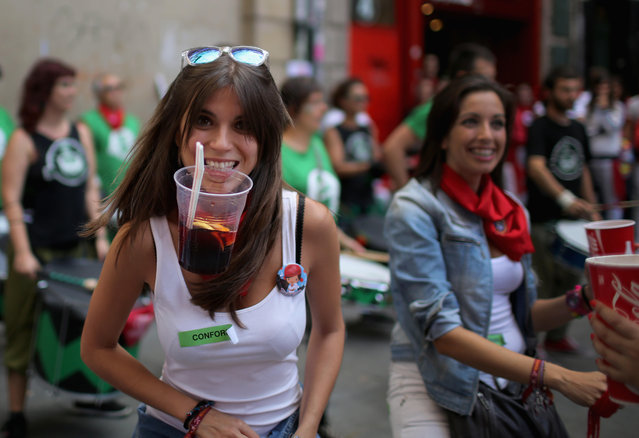
Revellers continue to party and dance through the night and day during the second day of the San Fermin Running Of The Bulls festival, on July 7, 2014 in Pamplona, Spain. The annual Fiesta de San Fermin, made famous by the 1926 novel of US writer Ernest Hemmingway “The Sun Also Rises”, involves the running of the bulls through the historic heart of Pamplona. (Photo by Christopher Furlong/Getty Images)

Revellers continue to party and dance through the night and day during the second day of the San Fermin Running Of The Bulls festival, on July 7, 2014 in Pamplona, Spain. The annual Fiesta de San Fermin, made famous by the 1926 novel of US writer Ernest Hemmingway “The Sun Also Rises”, involves the running of the bulls through the historic heart of Pamplona. (Photo by Christopher Furlong/Getty Images)
Details
08 Jul 2014 13:44:00
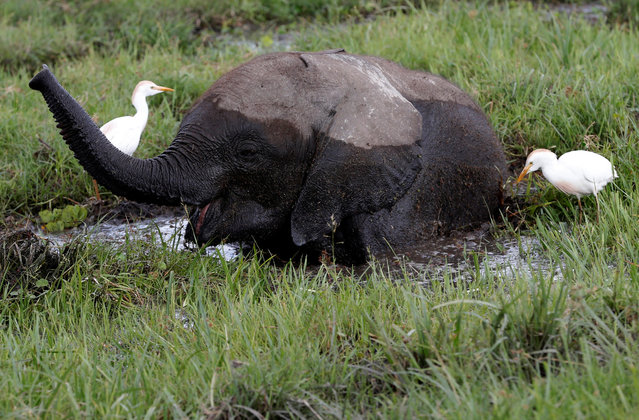
A baby elephant eats in a swamp in Amboseli national park, Kenya, March 19, 2017. (Photo by Goran Tomasevic/Reuters)

A baby elephant eats in a swamp in Amboseli national park, Kenya, March 19, 2017. (Photo by Goran Tomasevic/Reuters)
Details
26 Mar 2017 08:35:00
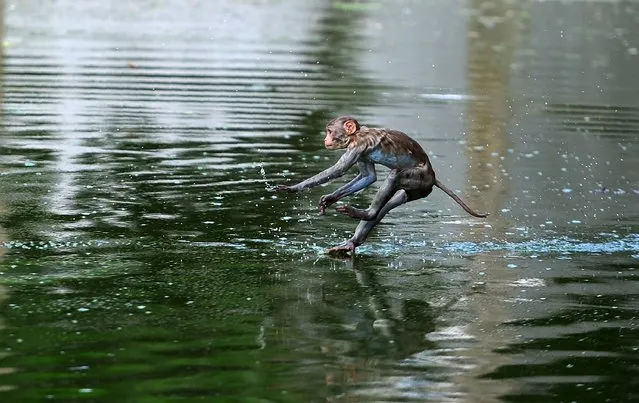
A monkey leaps into a pond on a hot day in Allahabad on May 19, 2017. According to local reports temperatures have soared in the northern Indian city to 47.28 Celsius. (Photo by Sanjay Kanojia/AFP Photo)

A monkey leaps into a pond on a hot day in Allahabad on May 19, 2017. According to local reports temperatures have soared in the northern Indian city to 47.28 Celsius. (Photo by Sanjay Kanojia/AFP Photo)
Details
21 May 2017 08:31:00
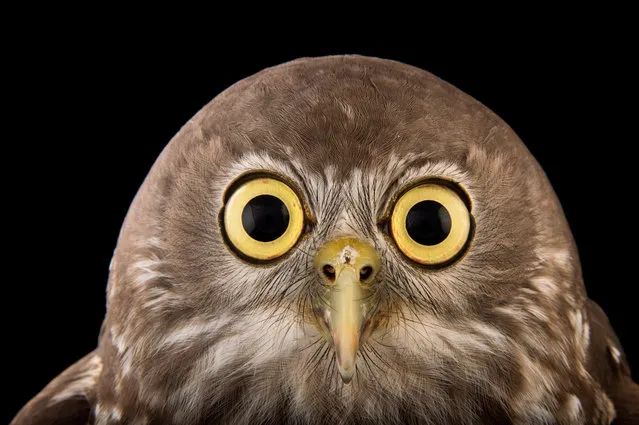
The National Geographic Photo Ark is a travelling exhibition of photographer Joel Sartore’s quest to create a photo archive of biodiversity around the world. So far, Sartore has captured studio portraits of more than 6,000 species – a number that he hopes to double. On 1 July, the ark will open at Melbourne zoo – the first time it has been exhibited in the southern hemisphere. More than 50 portraits will be on display, including many of Australian endangered animals being protected by programs at the zoo itself. These captions have been edited from text supplied by Melbourne zoo. Here: Barking owl. So-named because its call sounds like a barking dog, these birds are native to Australia, Indonesia and Papua New Guinea. In Victoria they are listed as an endangered species, and in 2003 there were estimated to be fewer than 50 breeding pairs. The main threat to the species in Victoria is loss of habitat, especially large trees with hollows in which they can nest and on which many of their prey depend. Apart from a bark, they may utter a chilling scream when they feel threatened. (Photo by Joel Sartore/National Geographic Photo Ark/The Guardian)

The National Geographic Photo Ark is a travelling exhibition of photographer Joel Sartore’s quest to create a photo archive of biodiversity around the world. So far, Sartore has captured studio portraits of more than 6,000 species – a number that he hopes to double. On 1 July, the ark will open at Melbourne zoo – the first time it has been exhibited in the southern hemisphere. More than 50 portraits will be on display, including many of Australian endangered animals being protected by programs at the zoo itself. These captions have been edited from text supplied by Melbourne zoo. Here: Barking owl. (Photo by Joel Sartore/National Geographic Photo Ark/The Guardian)
Details
01 Jul 2017 07:45:00