Loading...
Done
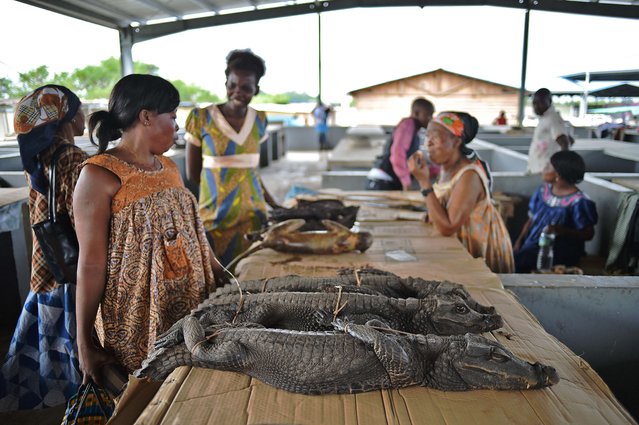
Shoppers walk past crocodiles for sale at a market in Bata on February 3, 2015. Markets in Equatorial Guinea sell a variety of animals including pangolins, monkeys and crocodiles as food. (Photo by Carl De Souza/AFP Photo)

Shoppers walk past crocodiles for sale at a market in Bata on February 3, 2015. Markets in Equatorial Guinea sell a variety of animals including pangolins, monkeys and crocodiles as food. (Photo by Carl De Souza/AFP Photo)
Details
07 Feb 2015 14:33:00
Tour guides wearing traditional Chinese dress practice smiling by biting chopsticks at Qingming Grand-River Park in Kaifeng, central China's Henan Province on March 2, 2017, aiming to provide better service for visitors. (Photo by IPA Asia via ZUMA Wire)

Tour guides wearing traditional Chinese dress practice smiling by biting chopsticks at Qingming Grand-River Park in Kaifeng, central China's Henan Province on March 2, 2017, aiming to provide better service for visitors. (Photo by IPA Asia via ZUMA Wire)
Details
03 Mar 2017 11:03:00
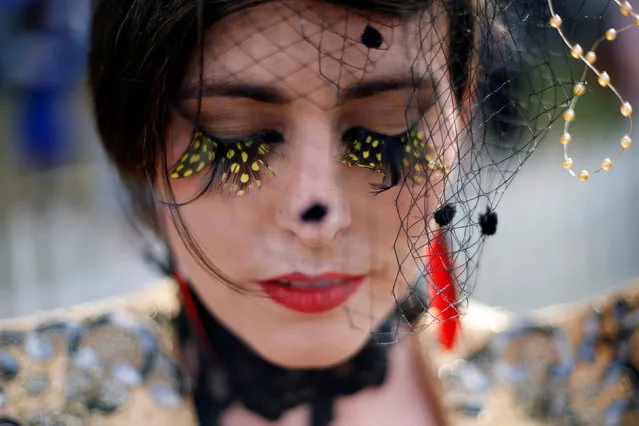
A person poses on the track during a fashion competition at the Durban July horse racing event in Durban, South Africa July 1, 2017. (Photo by Rogan Ward/Reuters)

A person poses on the track during a fashion competition at the Durban July horse racing event in Durban, South Africa July 1, 2017. (Photo by Rogan Ward/Reuters)
Details
02 Jul 2017 07:37:00
A protestor opposed to U.S. Republican presidential candidate Donald Trump's stance on immigration clashes with Trump supporters at a rally in Norcross, Georgia October 10, 2015. (Photo by Tami Chappell/Reuters)

A protestor opposed to U.S. Republican presidential candidate Donald Trump's stance on immigration clashes with Trump supporters at a rally in Norcross, Georgia October 10, 2015. (Photo by Tami Chappell/Reuters)
Details
12 Oct 2015 08:07:00
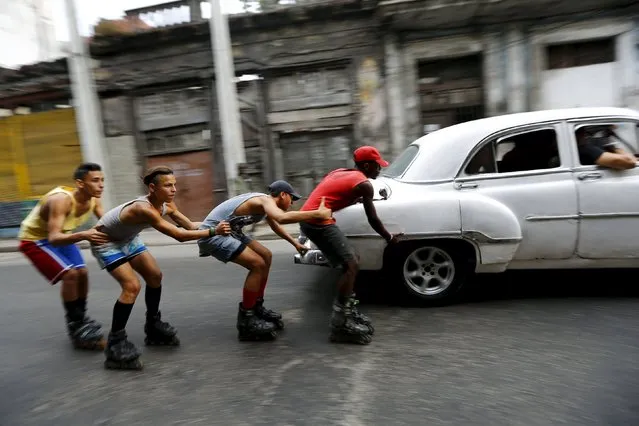
Teenagers on roller skates hold on to each other as they are pulled by a vintage car to move along a street in Havana, Cuba March 19, 2016. (Photo by Ivan Alvarado/Reuters)

Teenagers on roller skates hold on to each other as they are pulled by a vintage car to move along a street in Havana, Cuba March 19, 2016. (Photo by Ivan Alvarado/Reuters)
Details
21 Mar 2016 12:26:00
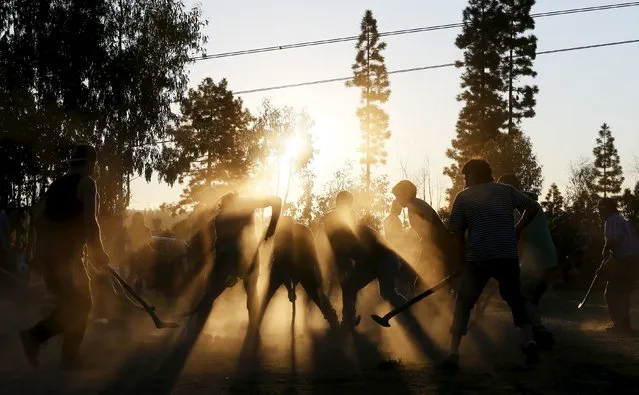
People play "Palin", a traditional ritual and ancestral Mapuche game played with curved sticks called "Chuecas" and a wooden ball, during a meet on Dia de la Raza (Day of the Races), also known as Columbus Day in Vina del Mar, Chile October 11, 2015. (Photo by Rodrigo Garrido/Reuters)

People play "Palin", a traditional ritual and ancestral Mapuche game played with curved sticks called "Chuecas" and a wooden ball, during a meet on Dia de la Raza (Day of the Races), also known as Columbus Day in Vina del Mar, Chile October 11, 2015. (Photo by Rodrigo Garrido/Reuters)
Details
15 Oct 2015 08:01:00
Lv Mengmeng, who was born in 1995, poses for a photograph in Shanghai August 22, 2014. When asked if she would like siblings, Mengmeng said: “Maybe brothers, because I think they could protect me”. (Photo by Carlos Barria/Reuters)

Reuters Photographer Carlos Barria photographed a person born in each year China's one child policy has been in existence; from a man born in 1979, to a baby born in 2014, and asked them if they would have like to have siblings. Here: Lv Mengmeng, who was born in 1995, poses for a photograph in Shanghai August 22, 2014. When asked if she would like siblings, Mengmeng said: “Maybe brothers, because I think they could protect me”. (Photo by Carlos Barria/Reuters)
Details
06 Oct 2014 08:20:00
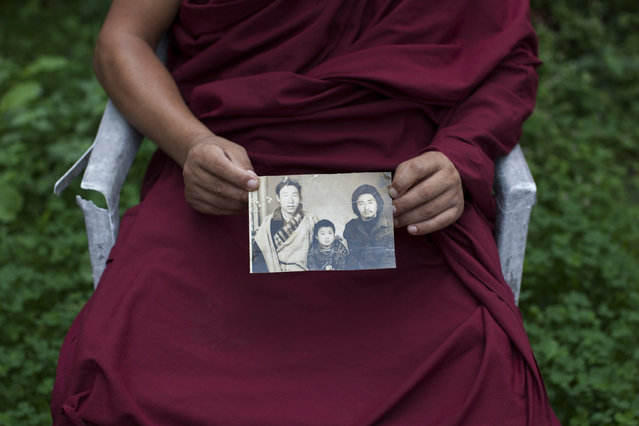
In this Saturday, September 27, 2014 photo, Tibetan monk Dorjee, 38, displays a photograph of his father, left, and himself, center, taken in Tibet, in Dharamsala, India. Dorjee said he held back his tears when he spoke with his parents on the phone after a separation period of 27 years. He exchanged a few words with his father but said his mother fainted on hearing his voice. (Photo by Tsering Topgyal/AP Photo)

“When I was 8 years old, my parents paid a smuggler to take me across the Himalayas, a weekslong walk over the mountains from Tibet to India. It was a trek that tens of thousands of other Tibetans have taken since the Dalai Lama fled a failed 1959 uprising against Chinese rule. My parents must have had their reasons to send me here; they must have had the best of intentions. But 18 years later, I still don't know why they did it. They are not political people. They are small farmers who raise barley and a few yak in a rural area not far from Lhasa, the Tibetan capital. I have not seen them since I left...”. – Tsering Topgyal via The Associated Press. (Photo by Tsering Topgyal/AP Photo)
Details
05 Nov 2014 12:27:00