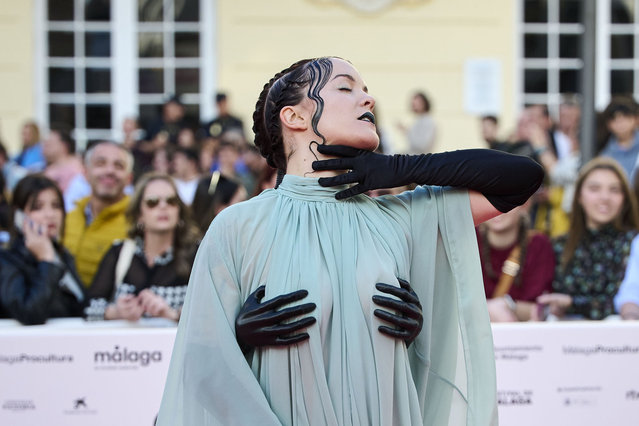
Spanish journalist and writer Noemi Casquet attends the 26th Malaga Film Festival closing ceremony at the Cervantes Theater on March 18, 2023 in Malaga, Spain. (Photo by Carlos Alvarez/Getty Images)
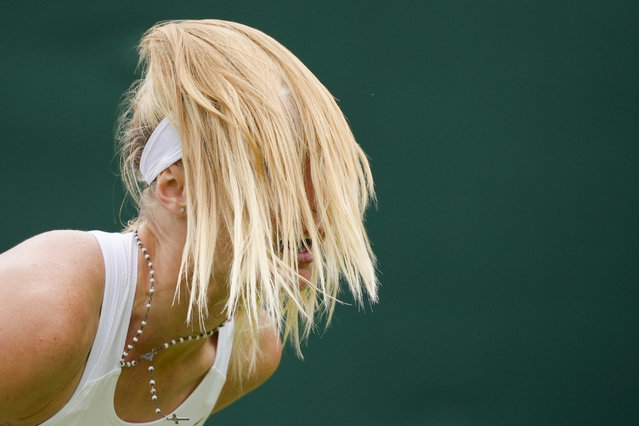
Rebecca Sramkova of Slovakia reacts during her first round match against Marta Kostyuk of Ukraine at the Wimbledon tennis championships in London, Monday, July 1, 2024. (Photo by Kirsty Wigglesworth/AP Photo)
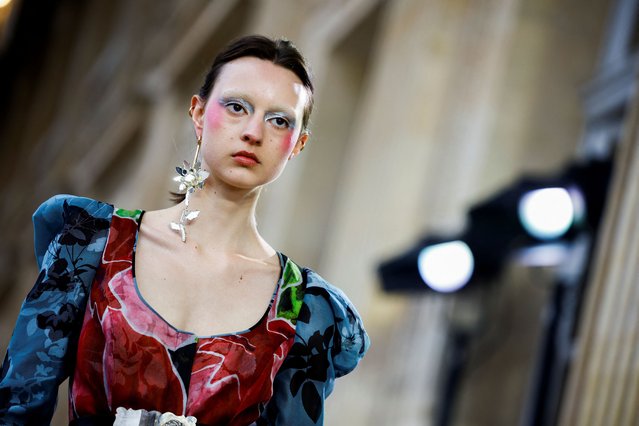
A model presents a creation by designer Andreas Kronthaler as part of his Fall-Winter 2023/2024 Women's ready-to-wear collection show for late designer Vivienne Westwood's namesake label during Paris Fashion Week in Paris, France on March 4, 2023. (Photo by Sarah Meyssonnier/Reuters)
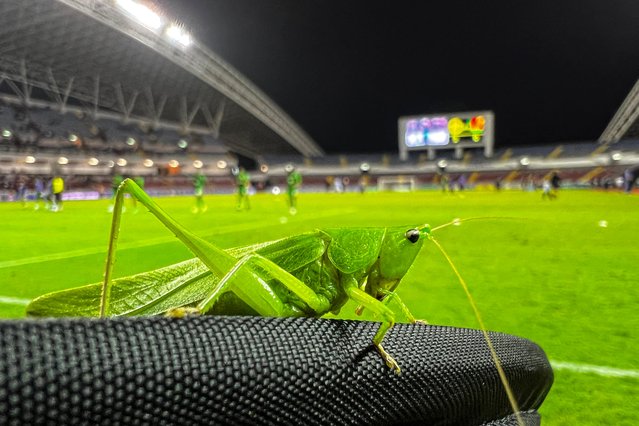
A cricket is seen posing on an advertising billboard during the Concacaf Nations League group stage football match between Costa Rica and Guadeloupe at the National Stadium in San Jose on September 5, 2024. (Photo by Ezequiel Becerra/AFP Photo)
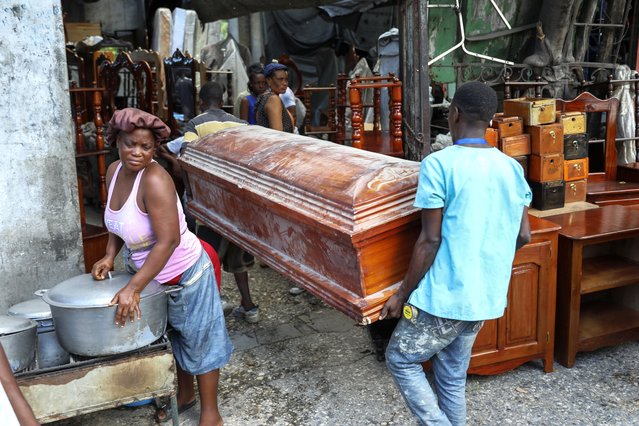
People carry an empty coffin past a street food vendor into the shop that is buying it to repair and sell in Port-au-Prince, Haiti, Friday, September 13, 2024. (Photo by Odelyn Joseph/AP Photo)
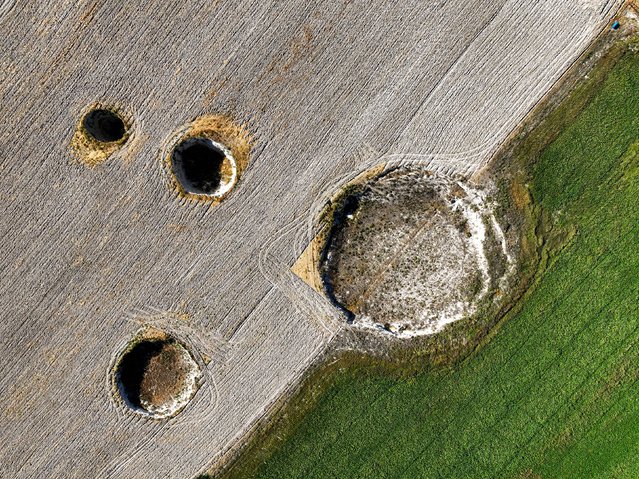
An aerial view of sinkholes (obruk), caused by some form of collapse of the surface layer, in Konya, Turkiye on September 17, 2024. Many sinkholes are observed in the fields of Eseli Plateau located within the borders of Resadiye Neighborhood in the north-west of Karapinar district, where sinkhole formation has increased rapidly in recent years. (Photo by Serhat Cetinkaya/Anadolu via Getty Images)