Loading...
Done
Underside of the Brown dog tick and Lonestar tick mouthparts; Confocal, 100X. Janelia Farm Research Campus, Howard Hughes Medical Institute (HHMI), Ashburn, Virginia, USA. (Photo by Dr. Igor Robert Siwanowicz/Nikon Small World 2014)

Now celebrating its 40th year, Nikon Small World is widely regarded as the leading forum to recognize proficiency and photographic excellence of photography taken under the microscope. To select the winners, competition judges analyzed entries from all over the world covering subjects ranging from chemical compounds to up-close-and-personal looks at biological specimens. The 2014 winners will be revealed on October 30th. In 2014, the competition received over 1,200 entries from more than 79 countries around the world. (Photo by Dr. Igor Robert Siwanowicz/Nikon Small World 2014)
Details
17 Oct 2014 13:10:00
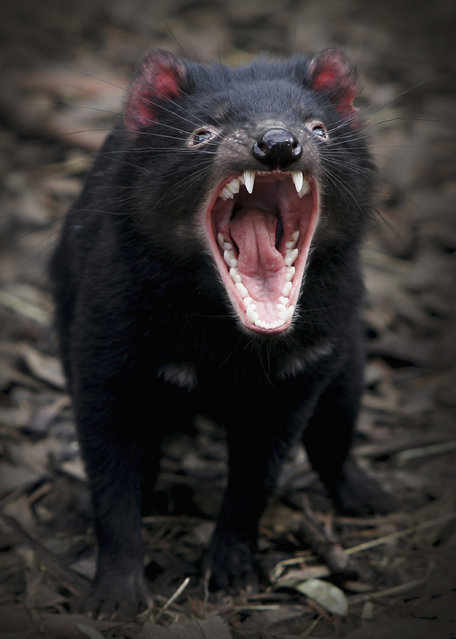
A Tasmanian Devil bears it's teeth at a quarantine facility August 31, 2005 in Hobart, Australia. The Devil, a native marsupial unique to Tasmania, is under threat from Devil Facial Tumor Disease (DFTD) which is decimating numbers throughout Tasmania. (Photo by Ian Waldie/Getty Images)

“The Tasmanian devil (Sarcophilus harrisii) is a carnivorous marsupial of the family Dasyuridae now found in the wild only in the Australian island state of Tasmania. The size of a small dog, it became the largest carnivorous marsupial in the world following the extinction of the thylacine in 1936. It is characterised by its stocky and muscular build, black fur, pungent odour, extremely loud and disturbing screech, keen sense of smell, and ferocity when feeding”. – Wikipedia. Photo: A Tasmanian Devil bears it's teeth at a quarantine facility August 31, 2005 in Hobart, Australia. (Photo by Ian Waldie/Getty Images)
Details
27 Jan 2014 09:45:00
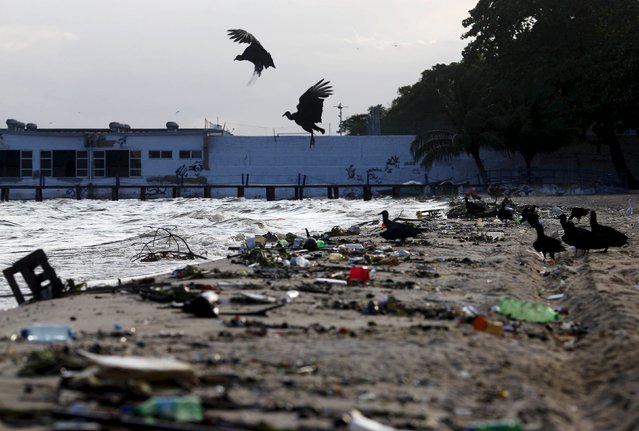
Vultures gather to eat waste in Bica beach, on the banks of the Guanabara Bay, with the Sugar Loaf mountain in background, 500 days ahead the Rio 2016 Olympic Games in Rio de Janeiro March 24, 2015. (Photo by Ricardo Moraes/Reuters)

Vultures gather to eat waste in Bica beach, on the banks of the Guanabara Bay, with the Sugar Loaf mountain in background, 500 days ahead the Rio 2016 Olympic Games in Rio de Janeiro March 24, 2015. As part of its Olympic bid, Rio promised to clean up 80 percent of the bay for the games. But local government officials have already admitted that a cleanup by 2016 is not achievable. Despite millions of dollars of investment over the years, the bay still stinks of sewage. Sailors who visited the city for test events complained of a floating sofa and a dead dog in the water. (Photo by Ricardo Moraes/Reuters)
Details
26 Mar 2015 12:16:00
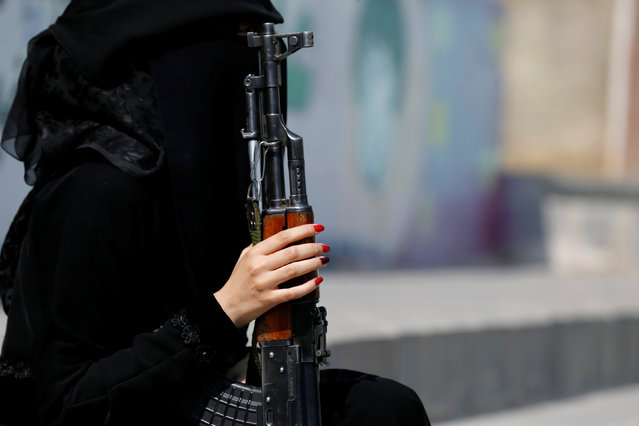
A woman loyal to the Houthi movement holds a rifle as she takes part in a parade to show support to the movement in Sanaa, Yemen September 6, 2016. Dressed in the head to toe garments which obscured their faces, the female fighters brandished machine guns, rocket launchers and grenades. The women also wore hats as they showed support for the Shiite Houthi rebels. The Saudi-led Arab coalition launched a military campaign against the Houthis and their allies in March 2015. It was after the rebels closed in on Gulf-backed President Abedrabbo Mansour Hadi in his southern refuge of Aden, forcing him into exile. The female protesters have pledged to remain supportive and do whatever they can to back the ongoing resistance against the kingdom. Yemen is in the grip of its most severe crisis in years, and is on the brink of civil war. (Photo by Khaled Abdullah/Reuters)

A woman loyal to the Houthi movement holds a rifle as she takes part in a parade to show support to the movement in Sanaa, Yemen September 6, 2016. The Saudi-led Arab coalition launched a military campaign against the Huthis and their allies in March 2015, after the rebels closed in on Gulf-backed President Abedrabbo Mansour Hadi in his southern refuge of Aden, forcing him into exile. (Photo by Khaled Abdullah/Reuters)
Details
07 Sep 2016 10:24:00
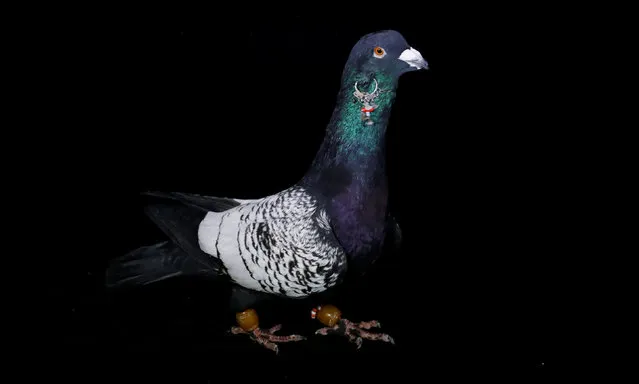
A pigeon, known as Siyah Kinifirli, with an approximate market value of 1000 Turkish Lira ($263), bred by 23-year-old Ismail Ozbek, is pictured in Sanliurfa, Turkey, December 23, 2016. As night-time approaches in Sanliurfa, southeastern Turkey, most of the alleyways of the city's old bazaar are emptying out of buyers and vendors, except for one. The bustle of daytime trading has died down, but on this little street, a stream of men carry cardboard boxes filled with pigeons to a cluster of three teahouses. Here, they sell the birds at Sanliurfa's famed auctions to a dedicated band of pigeon keepers and breeders, a pastime that has been thriving for hundreds of years across the region and over the nearby border into war-torn Syria. In a country where the minimum wage is about 1,400 Liras ($367) a month, enthusiasts regularly easily spend hundreds of dollars for one bird. “I once sold a pair of pigeons for 35,000 Turkish Lira”, says auctioneer Imam Dildas. “This is a passion, a hobby you cannot quit. I've been known to sell the fridge and my wife's gold bracelets to pay for pigeons”. (Photo by Umit Bektas/Reuters)

A pigeon, known as Siyah Kinifirli, with an approximate market value of 1000 Turkish Lira ($263), bred by 23-year-old Ismail Ozbek, is pictured in Sanliurfa, Turkey, December 23, 2016. As night-time approaches in Sanliurfa, southeastern Turkey, most of the alleyways of the city's old bazaar are emptying out of buyers and vendors, except for one. (Photo by Umit Bektas/Reuters)
Details
17 Jan 2017 12:05:00
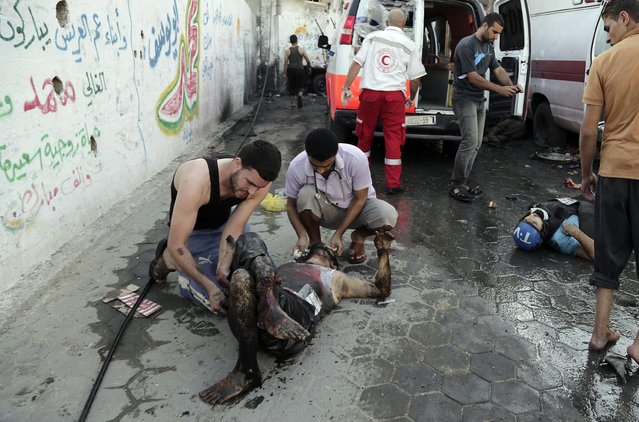
In this July 30, 2014 photo, neighbors help gravely injured Mohammed al-Selek, 39, wounded by an Israeli mortar strike as he lays next to the body of Palestinian journalist Rami Reyan who was killed, in the Shijaiyah neighborhood of the northern Gaza Strip. Al-Selek's life changed forever last July 30, when the shells slammed into his home killing all his three children, his father and six other relatives. (Photo by Adel Hana/AP Photo)

In this July 30, 2014 photo, neighbors help gravely injured Mohammed al-Selek, 39, wounded by an Israeli mortar strike as he lays next to the body of Palestinian journalist Rami Reyan who was killed, in the Shijaiyah neighborhood of the northern Gaza Strip. Al-Selek's life changed forever last July 30, when the shells slammed into his home killing all his three children, his father and six other relatives. A year later, al-Selek, who lost his leg during the airstrike, still struggles to recover and come to terms with his family's loss in the 50-day Israel-Hamas war. (Photo by Adel Hana/AP Photo)
Details
07 Jul 2015 11:28:00
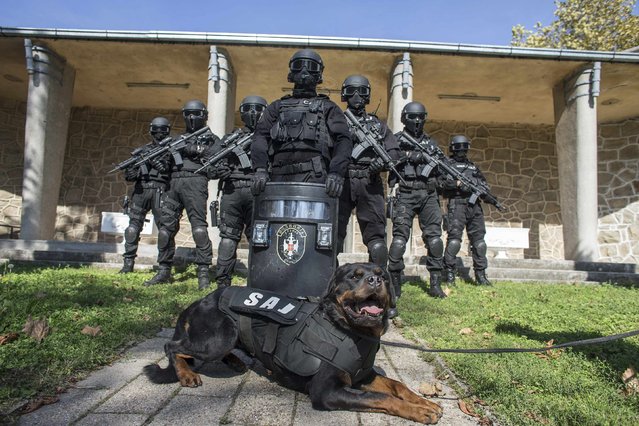
Serbian police officers of the Special Anti-Terrorist Unit pose for a picture in their base outside Belgrade October 8, 2014. (Photo by Marko Djurica/Reuters)

Serbian police officers of the Special Anti-Terrorist Unit pose for a picture in their base outside Belgrade October 8, 2014. When the killing of an unarmed black teenager by a white policeman in Ferguson, Missouri, in August sparked sometimes violent protests, the response of police in camouflage gear and armoured vehicles wielding stun grenades and assault rifles seemed more like a combat operation than a public order measure. Some U.S. police departments have recently acquired U.S. military-surplus hardware from wars abroad, but there are many law enforcers around the world whose rules of engagement also allow the use of lethal force with relatively few restrictions. But for every regulation that gives police wide scope to use firearms, there is another code that sharply limits their use. In Serbia, police may use measures ranging from batons to special vehicles, water cannon and tear gas on groups of people who have gathered illegally and are behaving in a way that is violent or could cause violence, but they may use firearms only when life is endangered. (Photo by Marko Djurica/Reuters)
Details
27 Nov 2014 14:53:00
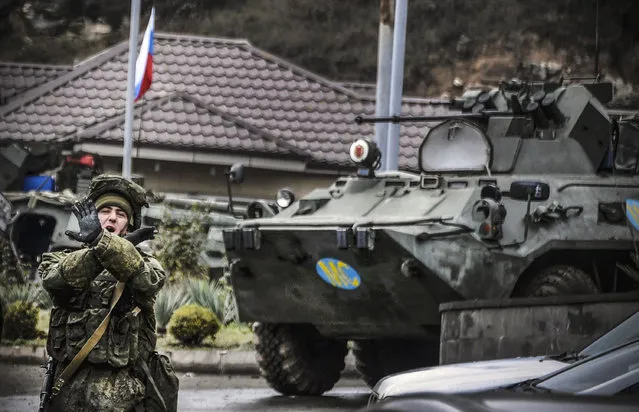
A Russian peacekeeper shouts “No pictures!” at a checkpoint outside the city of Stepanakert on November 13, 2020, during a ceasefire in the military conflict between Armenia and Azerbaijan over the breakaway region of Nagorno-Karabakh. Russian began deploying 2,000 peacekeepers to Nagorno-Karabakh on November 10 after Armenia and Azerbaijan agreed a peace deal to end weeks of fierce fighting over the disputed region. The Moscow-brokered agreement came after a string of Azerbaijani victories in its fight to retake the ethnic Armenian enclave. It sparked celebrations in Azerbaijan but fury in Armenia, where protesters took to the streets to denounce their leaders for losses in the territory, which broke from Azerbaijan's control during a war in the early 1990s. (Photo by Alexander Nemenov/AFP Photo)

A Russian peacekeeper shouts “No pictures!” at a checkpoint outside the city of Stepanakert on November 13, 2020, during a ceasefire in the military conflict between Armenia and Azerbaijan over the breakaway region of Nagorno-Karabakh. Russian began deploying 2,000 peacekeepers to Nagorno-Karabakh on November 10 after Armenia and Azerbaijan agreed a peace deal to end weeks of fierce fighting over the disputed region. (Photo by Alexander Nemenov/AFP Photo)
Details
15 Nov 2020 00:07:00