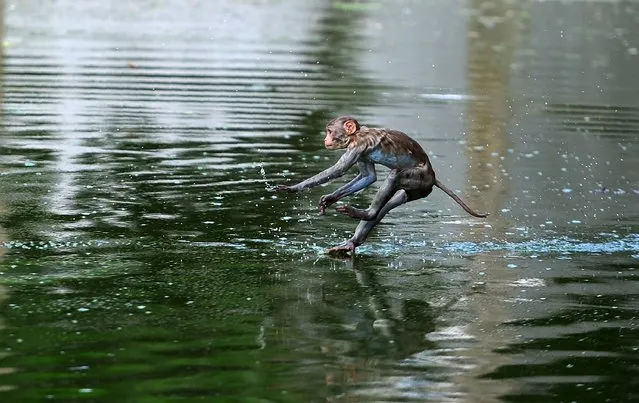
A monkey leaps into a pond on a hot day in Allahabad on May 19, 2017. According to local reports temperatures have soared in the northern Indian city to 47.28 Celsius. (Photo by Sanjay Kanojia/AFP Photo)
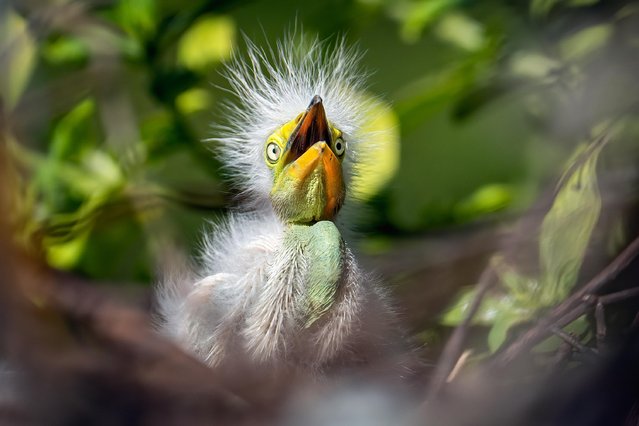
A recently hatched baby Egret bird seen in a nest at the Gatorland Bird Rookery in Kissimmee, Florida on March 17, 2022. Gatorland is known as The Alligator Capital of the World and has a 10 acre natural bird rookery. (Photo by Ronen Tivony/SOPA Images/Rex Features/Shutterstock)
A boy swims in Chao Phraya River as he helps to place a Krathong, or a “floating basket”, in the water amid a yearly festival during which rafts of neatly folded banana leaves, decorated with flowers, candles and incense, are offered to thank the water goddess for good luck and for using her water to grow crops and support all life, in Bangkok, Thailand on November 8, 2022. (Photo by Chalinee Thirasupa/Reuters)
A dachshund dressed as a leo walks a podium during a dachshund parade festival in St. Petersburg, Russia, Saturday, September 16, 2023. (Photo by Dmitri Lovetsky/AP Photo)
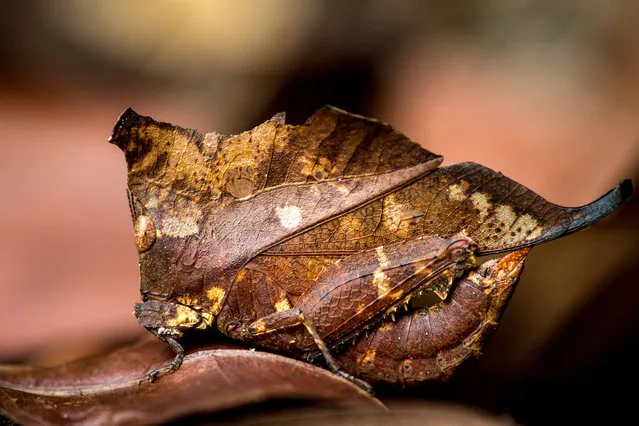
Dead leaf or almost by Guilhem Duvot. Taken in Nován Stráž, Slovakia. Describe what is pictured? A dead leaf grasshopper. How does this image fit with the theme of the competition? The perfect camouflage – nature is amazing. I saw the grasshopper only because it jumped. (Photo by Guilhem Duvot/Royal Society of Biology)
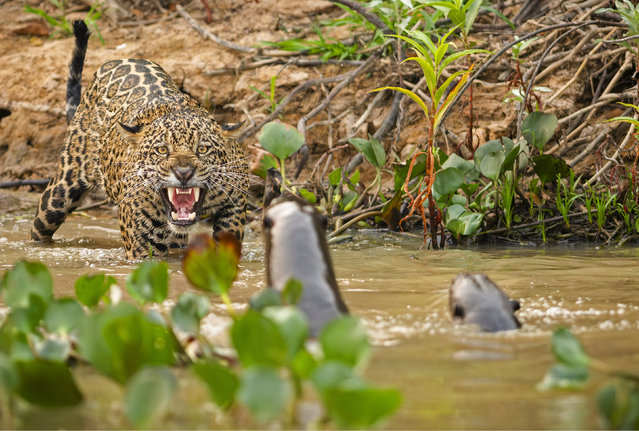
A jaguar eyes up a group of otters from a riverbank in Porto Jofre, North Pantanal, Brazil early November 2024. (Photo by Octavio Campos Salles/Solent News)
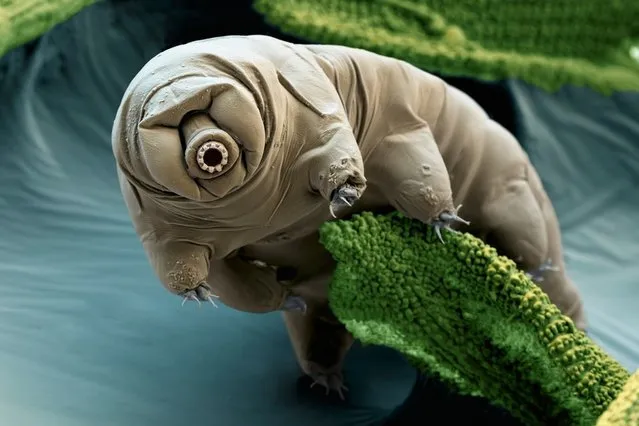
“Tardigrades (commonly known as waterbears or moss piglets) are small, water-dwelling, segmented animals with eight legs. Tardigrades were first discovered in 1773 by Johann August Ephraim Goeze, who called them kleiner Wasserbär, meaning “little water bear” in German. The name Tardigrada means “slow walker” and was given by Lazzaro Spallanzani in 1777. The name water bear comes from the way they walk, reminiscent of a bear's gait. The biggest adults may reach a body length of 1.5 millimetres (0.059 in), the smallest below 0.1 mm. Freshly hatched tardigrades may be smaller than 0.05 mm”. – Wikipedia. Photo: Tardigrades. (Photo by SPL/East News)