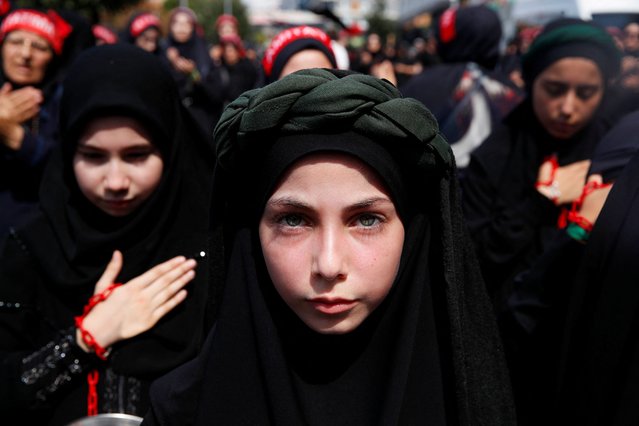
Shi'ite Muslim girls take part in a mourning procession to mark Ashura, the holiest day on the Shi'ite Muslim calendar, in Istanbul, Turkey, on July 16, 2024. (Photo by Dilara Senkaya/Reuters)
Spain's Paula Badosa gives a thumbs up after falling on the court during her women's singles semi-final match against Belarus' Aryna Sabalenka on day twelve of the Australian Open tennis tournament in Melbourne on January 23, 2025. (Photo by David Gray/AFP Photo)
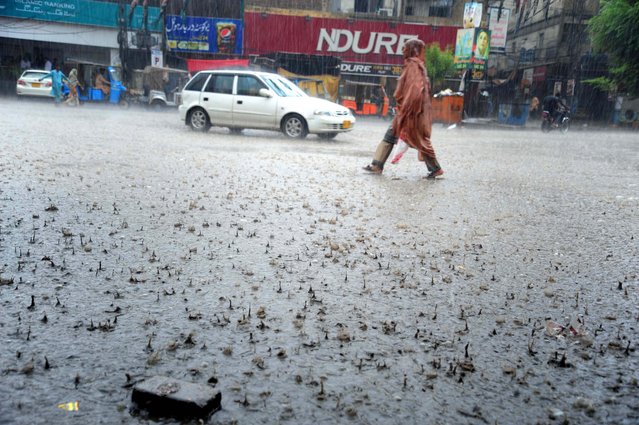
Vehicles drive amid rainfall in Hyderabad, Pakistan, 27 June 2025. Heavy monsoon rains have impacted major cities across Pakistan, including Islamabad, Lahore, Hyderabad and Karachi, triggering urban flooding and power outages. Authorities remain on high alert. (Photo by Nadeem Khawar/EPA)
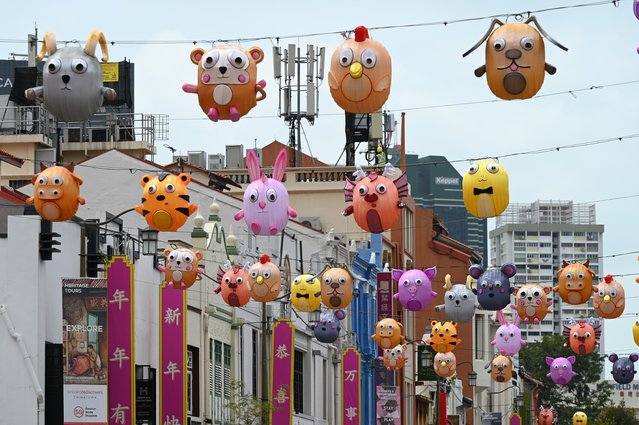
Figurative lanterns for Lunar New Year hang over a road to mark the upcoming Year of the Ox in Singapore on January 19, 2021. (Photo by Roslan Rahman/AFP Photo)
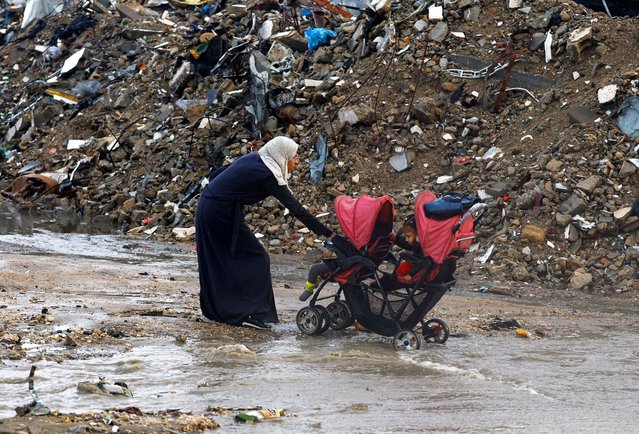
A Palestinian woman pulls a stroller with children, next to piles of rubble, during a rainy day in Gaza City,on November 25, 2025. (Photo by Mahmoud Issa/Reuters)
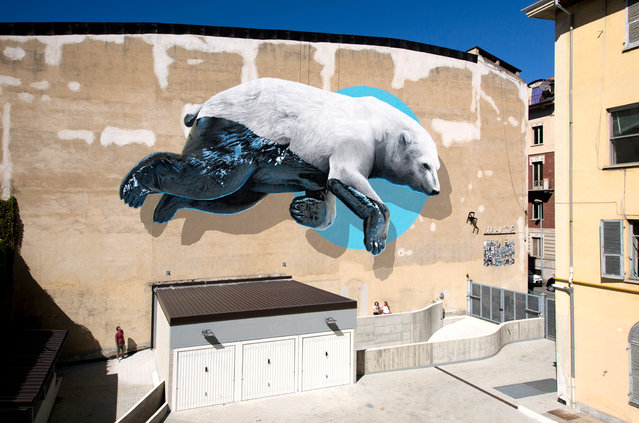
A polar bear whose bottom half is caked in oily black gunk. A whale wrapped in striped fabric: a pseudo straightjacket. These are the messes climate change leaves behind, the things we know are happening but often don’t have the opportunity to see with our own eyes. Swiss street art duo Christian Rebecchi and Pablo Togni, otherwise known as NeverCrew, met in art school when they were 15 and started making work together soon after. As a team, the artists adorn the world with eye-popping and gut-wrenching images depicting the consequences of humanity’s actions on earth. (Photo by NeverCrew/The Huffington Post)
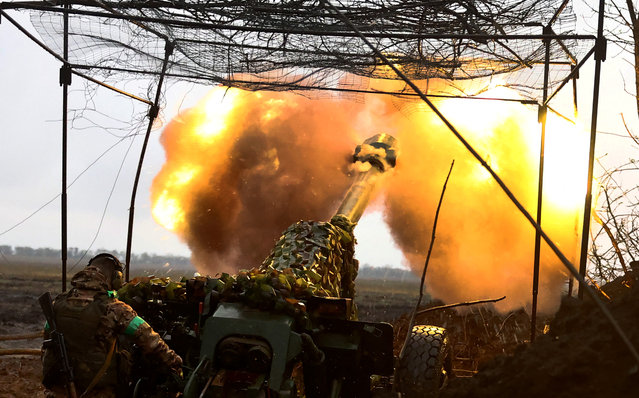
Ukrainian artillery fires towards the frontline during heavy fighting amid Russia's attack on Ukraine, near Bakhmut, Ukraine on April 13, 2023. (Photo by Kai Pfaffenbach/Reuters)
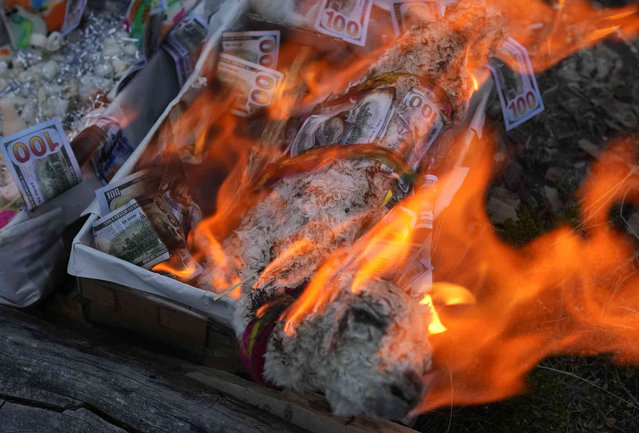
An offering of a dried baby llama and fake U.S. burn in honor of Pachamama, or Mother Earth, during a New Year ritual on Turriturrini Mountain on the outskirts of Huarina, Bolivia, Friday, June 21, 2024. Aymara Indigenous communities are celebrating the Andean New Year 5,532 or “Willka Kuti” which translates to “Return of the sun” in Aymara. (Photo by Juan Karita/AP Photo)